


 Preverite v realnem okolju
 Pošlji kot čestitko
 Deli
Deli
 Podrobnosti
 Priročnik

 Prenesi
 Podobni artefakti
 Rentgenski posnetek
 Predvajaj diaporama
 Statistika
Moa
 Akril na platnu
- Stenska umetnost
- Izpraznjenje
 1911
1911- Moderna doba
 315.0 x 478.0 cm
 Leopoldov muzej
 Preberi več
Ročno izdelana oljna reprodukcija
Ročno slikano olje na platnu v vaši izbiri velikosti in okvirja, izdelano po naročilu naših umetnikov. ( Preklop na tiskanine Preklop na digitalno sliko)




P118B €10

P118H €10

P118W €10

P438Z €10

P508JH €12

P508YH €12

P805H €10

P805Z €10

P919BZ €10

P919G €10

P919XJ €10

P959ZH €10

P968JZ €12

W106C €8

W218G €10

W218JH €8

W218Y €10

W307PJ €10

W316G €10

W316PJ €8

W316Y €10

W398PJ €8

W4111J €10

W500HY €15

W500JH €15

W692G €12

W849H €8

W940BG €15

W953PJ €8




Izberite eno od naših vnaprej določenih velikosti, ki ustrezajo prvotnim proporcijam umetničkega dela.

Type the width and the height you need, to fit your frame or your wall. This is hand-painted, so for a size with a different shape the artist can paint a bit more around the picture, or cut a bit — you choose. We send you a digital mockup to approve before the painting starts. The picture shown on this page does not show the real result — only the mockup does.
Po oddaji naročila bo ekipa ArtsDot.com stranki po e-pošti poslala navodila in predogled digitalnega predogleda.
Mednarodna dostava () v 3/4 tednih namesto običajnih 5 tednov. (14 oktober). Brez kompromisov pri kakovosti.

Brezplačna ekspresna dostava po vsem svetu

Visokokakovostno laneno platno

Popolno zavarovanje pošiljke

Garancija povračila carine in uvoznih davkov

Garancija popolnega barvnega ujemanja

Politika vračila v 100 dneh (le v primeru okvar)

Garancija 100% povračila denarja

Popust pri večjem naročilu
 Možnost stekla je na voljo le za velikosti pod 110 cm

Moa
Tehnika reprodukcije
Velikost reprodukcije
-


Skupna cena
€ 228
A Portrait of Modernity: Egon Schiele’s ‘Moa’ (1911)
This striking watercolor, *Moa*, offers a compelling glimpse into the burgeoning Expressionist style of early 20th-century Vienna and the artistic revolution spearheaded by Egon Schiele. Painted in 1911, this work transcends a simple portrait; it’s a powerful statement about identity, abstraction, and the rejection of established artistic conventions.The Subject & Her Circle
Moa was not merely a model but an integral part of Schiele's creative world – a dancer and close friend who, along with her partner Erwin Osen, frequently posed for the artist between 1910 and 1911. Their presence in Schiele’s work reflects his fascination with the performing arts and the human form as vehicles for emotional expression. The intimate connection he shared with his models is palpable in the intensity of their portrayals.Style & Technique: Breaking from Klimt
*Moa* exemplifies Schiele's departure from the decorative, often sensual style of his mentor, Gustav Klimt. While Klimt enveloped his figures in opulent ornamentation, Schiele strips away extraneous detail, focusing instead on a stark contrast between the realistically rendered face and the dramatically abstracted drapery. The watercolor technique itself – loose, gestural brushstrokes and layered washes – contributes to the painting’s raw emotional energy. The large scale of the work (315 x 478 cm) further amplifies its impact, enveloping the viewer in its presence.Decoding the Symbolism
The robe is not simply clothing; it's a symbolic enclosure. Its austere, geometric design completely conceals Moa’s body, creating a sense of mystery and perhaps even confinement. The angular shapes and blocks of color within the garment can be interpreted as representing fragmentation or internal emotional turmoil. This abstraction isn’t about hiding the figure but rather exploring the psychological space *around* her. The intentional flattening of perspective further emphasizes this symbolic weight, prioritizing shape and color over realistic representation.Historical Context: From Jugendstil to Expressionism
Schiele's work emerged during a period of profound social and artistic change. Vienna at the turn of the century was a hotbed of intellectual and creative ferment, witnessing the decline of the *Jugendstil* (Art Nouveau) and the rise of Expressionism. *Moa* is pivotal in this transition – it takes the robed figure motif from Klimt but transforms it into something entirely new, abandoning “seductive illusion” for a more direct and emotionally charged aesthetic.Emotional Impact & Legacy
The painting evokes a sense of melancholy and introspection. Moa’s gaze is bold yet distant, suggesting an inner life that remains partially obscured. The somber color palette reinforces this mood. *Moa* isn't simply a visual experience; it’s an invitation to contemplate the complexities of human emotion and the search for identity in a rapidly changing world. Schiele’s influence on subsequent generations of artists is undeniable, solidifying his place as a key figure in modern art history.Further Exploration
- Discover more about Egon Schiele's life and work at the ArtsDot artist page.
- Explore related works like "Reclining Girl, with Round Head" to understand the evolution of Schiele’s style.
- Visit the Leopold Museum in Vienna to view an extensive collection of his paintings.
Vprašanja in odgovori
Kakšen čustveni ton spremlja slog Izpraznjenje pri delu "Moa"?
"Moa" nosi Melanholičen čustveni ton znotraj gibanja Izpraznjenje.
Ali je "Moa" ostalo v domovini svojega avtorja?
Da – umetniško delo se nahaja v državi izvenca. "Moa" is held in Avstrija, while Egon Ščile was born in Avstrija.
Kolikšno je intenzivno barvno dojemanje v delu "Moa" avtorja Egon Ščile?
Intenzivnost barv dela "Moa" je Uravnotežen. Intenzivnost opisuje, kako močne se zameščajo barve.
Sorodna umetniška dela


Biografija umetnika
Egon Schiele: Austrian Expressionist Painter
Austrian art has since acquired legendary status in interdisciplinary cultural studies. Histories of modern Austrian art generally begin with the architectural boom that swept Vienna in the second half of the nineteenth century. During this period of strong economic growth, the Emperor Franz Josef constructed a necklace of public edifices along the broad Ringstrasse that encircles Vienna’s inner city, prompting artists to flock to the capital from all over to compete for decorative mural commissions. The most renowned painter of the era was Hans Makart, but the young Gustav Klimt also earned his reputation executing commissions on the interior walls of structures such as theaters and museums. The favored style combined a sort of blowsy eroticism with a firm grip on classical and historical allegory. Starting from his masterpiece *The Kiss*, Klimt gradually moved away from the accepted formula, however, evolving a personal symbolism that was less conventionally readable as well as more overtly sexual. This combination proved devastating so far as the tasted of staid Vienna were concerned: Klimt was banished from the ranks of public muralists, and henceforth had to seek support solely from well-heeled private patrons.
Early Life & Influences
Egon Schiele was born in Tulln an der Donau – a picturesque region with vineyards, onion-domed towers and Baroque monasteries. Yet this idyllic setting is hardly reflected in his work.
Instead, many of his landscapes appear melancholic, sometimes sombre. Perhaps he was processing the early death of his father from syphilis and the subsequent loss of his sister Elvira.
Raised initially by his mother and then under the somewhat controlling guardianship of his uncle Leopold Czihaczek, Schiele’s childhood lacked conventional stability but fostered a fiercely independent spirit. Even as a boy, he displayed an intense fascination with trains—a motif that subtly reappeared in later paintings—and a burgeoning talent for drawing, though this was initially met with disapproval from his father who saw it as a distraction from more practical pursuits. The early death of his sister Elvira also cast a long shadow over the young artist’s psyche. These formative experiences instilled within him a sensitivity and an emotional rawness that would become hallmarks of his artistic expression, a constant grappling with themes of life, death, and the human condition.
Vienna Secession & Artistic Breakthrough
Schiele's formal artistic training began at the Kunstgewerbeschule (School of Arts and Crafts) in Vienna, but he quickly found itself stifled by its conservative approach. He transferred to the Akademie der bildenden Künste (Academy of Fine Arts), only to become further disillusioned with its rigid academic traditions. This dissatisfaction led him to abandon formal training altogether, choosing instead to forge his own path, a testament to his unwavering artistic conviction.
The influence of Gustav Klimt was pivotal during these early years; Schiele admired Klimt’s decorative style and exploration of symbolism, even receiving mentorship from the established artist.
He co-founded the Neues Wiener Kunstgruppe (New Viennese Art Group) in 1909, aligning himself with other progressive artists who challenged the prevailing artistic norms. His distinctive style features elongated figures, contorted poses, and expressive lines that convey a sense of unease and emotional intensity.
Style Characteristics & Recurring Themes
Schiele’s art is immediately recognizable for its raw honesty and psychological depth.
He fearlessly confronted themes often considered taboo – sexuality, death, anxiety, isolation – with an unflinching gaze.
His distinctive style features elongated figures, contorted poses, and expressive lines that convey a sense of unease and emotional intensity. The human form, particularly the nude, became his primary subject, not as an object of idealized beauty but as a vessel for exploring the complexities of human experience.
Schiele didn’t shy away from depicting himself in unflattering or vulnerable poses, revealing a profound level of self-awareness and introspection.
Legacy & Recognition
Despite facing censorship and legal challenges – including a brief imprisonment for allegedly corrupting minors with his art – Schiele gained recognition within Vienna’s avant-garde circles.
His work challenged the conventions of the time, provoking both admiration and outrage.
By the time of his untimely death during the Spanish flu pandemic in 1918 at the age of twenty-eight, he had established himself as a leading figure in Austrian Expressionism. Significant works such as *Self-Portrait with Physalis*, *Couple Embracing*, and *Field Landscape (Kreuzberg near Krumau)* stand as testaments to his artistic genius.
His influence on subsequent generations of artists is undeniable, particularly those interested in exploring psychological themes and challenging conventional artistic norms.

Egon Ščile
1890 - 1918 , Avstrija
Ključne informacije
- Artistic Movement Or Style: Expresionismo
- Artists Who Influenced This Artist: ['Gustav Klimt']
- Date Of Birth: 12 giugno 1890
- Date Of Death: 31 octubre 1918
- Full Name: Egon Schiele
- Nationality: Austriaco
- Notable Artworks:
- Autoritratto con Physalis
- Giovane coppia
- Paesaggio campo (Kreuzberg)
- Place Of Birth: Tulln an der Donau, Austria
Sorodni članki

Ephemeral Visions: Exploring the Artistic Legacy & Contemporary Practice of Watercolor Painting
Explore the captivating world of watercolor painting! Discover its rich history, essential techniques, influential artists & collecting tips. A comprehensive guide for art enthusiasts from ArtsDot.
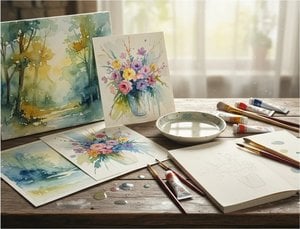
Ephemeral Visions: Exploring the Artistic Legacy & Nuances of Watercolor Painting
Explore the captivating world of watercolor painting! Discover its rich history, essential techniques, influential artists & collecting tips from art experts. A comprehensive guide for enthusiasts.

Egon Schiele: 25 Mojstrovin Ekspresionizma za Vaš Dom | ArtsDot
Odkrijte 25 mojstrovin Egona Schieleja – avstrijskega ekspresionista! Preberite zgodbe za vsako sliko, tehnike in simbolizem. Kvalitetne reprodukcije slik za vaš dom na ArtsDot.com. Raziskajte celotno zbirko online!

Watercolor Wonders: 10 Masterpieces That Redefined Art History | ArtsDot
Journey through 10 legendary watercolor masterpieces by Sargent, Turner & Homer! Explore iconic landscapes, portraits & floral art that redefined history. Find museum-quality reproductions and curated decor ideas at ArtsDot.com.

Ephemeral Visions: Exploring the History & Emotional Resonance of Watercolor Painting
Explore the captivating history of watercolor painting, from ancient techniques to modern masters like Kandinsky & Blake. Discover essential artists, collecting tips & the emotional power of this luminous medium. Expert insights for art enthusiasts.


