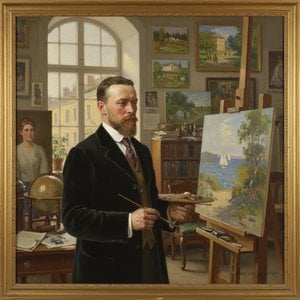
Rané roky, rodina a vzdelanie
Albert Edelfelt sa narodil 21. júla 1854 v Porvoo, v Fínsku. Jeho otec, Carl Albert Edelfelt, bol švédsky hovoriaci Fín a architekt, zatiaľ čo jeho matka, Alexandra Edelfelt, sa narodila ako Alexandra Brandt. Rané roky jeho života formovalo pokojné prostredie Porvoo. Už v roku 1869 ho záujem o kreslenie priviedol do kresliacej školy Fínskej umeleckej spoločnosti, kde začal svoje formálne štúdiá.
Jeho vzdelávanie sa nesťahovalo len do Fínska, keďže hľadal širšie technické vzdelanie. Medzi rokvami 1873 a 1874 trávil čas na Antverpskej akadémii výtvarných umení, kde sa sústredil na mechaniku historickej maľby. Toto obdobie štúdia mu poskytlo základ pre jeho presun do Francúzska. V roku 1874 sa zapísal na École Nationale des Beaux-Arts v Paríži. Tam študoval pod vedením Jean-Léon Gérôme, pričom si zaostril schopnosť pracovať so zložitými kompozíciami a špecifickými nárokmi akademického výcviku.
Umelecká cesta a parížske roky
V roku 1874, vo devätnástich rokoch, sa Edelfelt vydal na cestu do Paríža. Spoločne s priateľom z Fínska zdieľal skromné štúdio na adrese 24 Rue Bonaparte. Tento priestor, hoci bol skromný, slúžil ako miesto, kde mladý muž hľadal svoju stabilitu ďaleko od domova. Do roku 1876 sa už presťahoval do štúdia na 81 boulevard du Montparnasse. Práve počas týchto rokov začal odchádzať od formálnych obmedzení svojho raného výcviku a objavoval nový spôsob vnímania svetla a sveta, ktorý ho obklopoval.
Jeho parížsky život formovali ľudia, ktorých stretol v ateliéroch a v spoločenských kruhochach veľkomestským. Uzavrel blízke vzťahy s maliarom Jules Bastien-Lepage, ktorý naňho zásadným spôsobom ovplyvnil spôsob práce na plátne. Naozisto si vytvoril aj priateľstvo s Jean-Baptiste Pasteur, synom chemika Louis Pasteur. Tieto spojenia ho postavili do samého centra sa meniacej umeleckej krajiny, v ktorej sa strední bod pozornosti presúval k pozorovaniu života takého, aký skutočne bol. V roku 1881 sa usadil v novom štúdiu na 147, avenue des Villiers, kde počas nasledujúcej dekády pokračoval v neustálnom zdokonaľovaní svojho umeleckého majstrovstva.
Technika a umelecký štýl
Jeho prístup k plátnu bol hlboko zakorenený v naturalistickom štýle, ktorý uprednostňoval realistickú perspektívu so zameraním na dokumentovanie života presne tak, ako sa v danej chvíli prejavoval. Táto oddanosť pozorovaniu ho často vodila k malovaniu na pleinére, kde dokázal zachytiť jemnosť svetla dopadajúceho na krajinu alebo na konkrétnu de facto postavu. V týchto momentoch sa vzdal rigidných, formálnych akademických tradícií svojho raného vzdelávania a začal objavovať fluidnejšie, impresionistické techniky. Tento umelecký posun je jasne viditeľný v spôsobe, akým pracoval so svetlom a atmosférou v díelach, ako je napríklad The Eklöf Boys on the Veranda of Villa Sjökulla.
Často sa jeho myseľ orientovala na váhu histórie, pričom svoj pędzel využíval na vykreslenie hlbokých a detailných momentov minulých konfliktov. Jeho obrazy často zachytávali scény z dlhých vojnových dejín, ktoré zapletali Rusov, Švédov a Fínov, pričom venoval veľkú pozornosť textúram a detailom danej epóchy. Bol významným tvorcom Zlatého veku fínskeho umenia, ktorý využil svoju technickú maestriu na to, aby premostil priepasť medzi formálnym historickým malovaním a moderným, pozorovatelským spôsobom vnímania sveta.
Významné diela a úspechy
Jeho štetec zachytil tichú intenzitu vedeckých objavov aj prosté pohyby každodenného života. V roku 1886 nakreslil Louis Pasteur dans son laboratoire de l, dielo, ktoré so zachvátivou presnosťou skúmalo prostredie chemika. Tento hlboký vzťah k rodine Pasteur pokračoval aj v jeho Portrait of Louis Pasteur. Tieto štúdie svetla a predmetu mu priniesli uznanie vo Francúzsku, čo v roku 1886 vyústilo v jeho prijatie do Légie čestí. Neskôr, počas Parížskej svetovej výstavy v roku 1889, získal zlatú medailu.
V obraze Boys Playing on the Shore (1884) je cítiť zvláštna, až éterická pokojnosť. Toto dielo zostáva jedným z jeho najvýznamnejších pláten, ktoré zachytáva krehký okamih mladosti v kontraste s nehybnou krajinou. Jeho schopnosť pozorovať svet s takou hĺbkou ho priviedla až k pozívaniu na funkciu komisara pre finsku participáciu na Parížskej svetovej výstave v roku 1900. V svojej tvorbe dokázal plynule kráčať medzi prísnymi požiadavkami historickej maľby a priamou, úprimnou obskurčovosťou pozorovania ľudí v ich prirodzenom prostredí.
- Louis Pasteur dans son laboratoire de l (1886)
- Boys Playing on the Shore (1884)
- Portrait of Louis Pasteur
Odkaz a vplyv
Albert Edelfelt patril medzi prvých finských maliarov, ktorí si vybojovali svoje miesto na medzinárodnej umeleckej scéne. Do širšieho európskeho kontextu priniesol hlboký pocit fínskej identity a umožnil, aby sa kultúra jeho domoviny stala viditeľnou daleko za jeho hranicami. Jeho oddanosť realistickému umeleckému smeru vo FinSKu zásadným spôsobom ovplyvnila to, ako krajina začala vnímať samú seba prostredníctvom farieb; odklon od idealizovaných tém smeroval k čistejšej a úprimnejšej reprezentácii života. Tento prístup pomohol upevniť vizuálny jazyk národa v období významných spoločenských zmien.
Jeho prítomnosť v ateliéroch Paríža a Antverp zanechala nesmazateľnú stopu v generáciách umelcov, ktoré po ňom nasledovali. Mladší fínski maliari, vrátane Akseliho Gallena-Kallelu a Gunnara Berndtsona, sa obracali na jeho metódy a jeho schopnosť snášať sa s dynamickým svetom európskeho umenia. Albert Edelfelt pre týchto umelcov pripravil cestu a vytvoril most medzi miestnymi tradíciami a vyvíjajúcimi sa štýlmi kontinentu. Jeho vplyv bol jasne cítiť v tom, ako títo mladí tvorcovia pristupovali k práci so svetlom, k zachytávaniu krajiny a k vykresľovaniu ľudskej postavy.
V dejinách fínskeho umenia je Albert Edelfelt často považovaný za najvýznamnejšiu postavu obdobia od polovice 19. do polovice 20. storočia. Jeho tvor pozostáva istotným referenčným bodom pre vývoj národnej estetiky. Práve jeho schopnosť harmonicky prepojiť formálne akademické vzdelanie s hlbokým pozorovaním každodenného života pomohla definovať to, čo dnes poznávame ako Zlatý vek fínskeho umenia.
Kde dnes uvidieť jeho diela
Ak si chcete na vlastné oči vychutnať jeho majstrovské ťahy pędzla, vašou cestou by mala byť Helsinki. Ateliér Ateneum uchováva významnú časť jeho tvorby, vrátane ikonického obrazu z roku 1877 s názvom Kráľovná Bianca. Tieto diela sú súčasťou najväčšej kolekcie fínskeho umenia v krajine. Práve tam môžete nájsť jeho zachvatyľné zobrazenia vidieckeho života a historické scény, kde svetlo často odzrkadľuje tichú a pokynavú atmosféru krajín, ktoré kedysi študoval.
V Paríži je jeho prítomnosť cítiť na niekoľkých miestach. Musée d'Orsay v sebe hostí jeho portrét Louisa Pasteura z roku 1885. Ide o tiché, hĺbavé štúdium muža v jeho pracovnom prostredí. V blízkosti sa nachádza aj Musée Pasteur, ktoré si uchováva niekoľko jeho diel, z ktorých mnohé sa venujú rodine a vedeckému prostrediu, ktoré ho sprevádzalo počas jeho pobytu vo Francúzsku.
- Kráľovná Bianca (1877)
- Louis Pasteur (1885)
Otázky a odpovede
Kde si môžem pozrieť diela umelca Albert Edelfelt v 3D galérii?
Diela umelca Albert Edelfelt si môžete pozrieť v 3D galérii na jeho stránke 3D galéria.
Existuje kompletný zoznam všetkých diel umelca Albert Edelfelt?
Všetky diela umelca Albert Edelfelt na táto webstránka si môžete pozrieť na jeho stránke Všetky diela umelcov.
V akom historickom období tvoril/a Albert Edelfelt?
Albert Edelfelt tvoril v období .. Toto obdobie zasazuje umeleckú činnosť umelca do historického kontextu.