


 Zobraziť v interiéri
 Odoslať
 Zdieľať
 Podrobnosti
 Príručkovo

 Stiahnuť
 Podobné položky
 RTG skúška
 Prehliadanie diapo\]
 Štatistiky
Poem


 Prečítať si viac
Giclée / Umenotlač
Giclée tlač alebo plátno múzeálnej kvality s rýchlou výrobou a rôznymi možnosťami povrchovej úpravy. ( Objednať ručne maľovanú reprodukciu Prepnúť na digitálnu verziu obrazu)




P118B $10

P118H $10

P118W $10

P438Z $10

P508JH $12

P508YH $12

P805H $10

P805Z $10

P919BZ $10

P919G $10

P919XJ $10

P959ZH $10

P968JZ $12

W106C $8

W218G $10

W218JH $8

W218Y $10

W307PJ $10

W316G $10

W316PJ $8

W316Y $10

W398PJ $8

W4111J $10

W500HY $15

W500JH $15

W692G $12

W849H $8

W940BG $15

W953PJ $8




Vyberte si z našich preddefinovaných rozmerov, ktoré zodpovedajú pôvodným pomeroḿ diela.

Môžete zadať vlastné rozmery, aby sa reprodukcia prispôsobila konkrétnemu rámu alebo priestoru. Ak zvolená veľkosť nebude zodpovedať proporciám originálu, dielo buď orežeme, alebo obraz rozšírime pomocou zrkadlenia či farebného doplnenia okrajov. Pred začatím výroby vám pošleme digitálnu ukážku na schválenie.
Máte na vedomí, že náhľad na obrazovke neodzrkadľuje skutočné orezanie alebo rozšírenie. Len digitálna ukážka presne zobrazí finálnu kompozíciu.
Hoci sú k dispozícii vlastné rozmery, pre zachovanie pôvodných proporcií odporúčame vybrať si rozmer z vopred definovaného zoznamu.
Celosvetová doprava () do 2 týždňov namiesto štandardných 4 až 5 týždňov. (24 september)

Bezplatná expresná doprava po celom svete

Vysokokvalitné lnianske plátno

Úplné poistenie prepravy

Záruka vrátenia colného poplatku

Záruka presného farebného zhodnutia

100-dená politika vrátenia tovaru (iba pri vadách)

100% záruka vrátenia peňazí

Ponuka množstevnej zľavy
 Možnosť skla je dostupná len pri rozmeroch pod 110 cm

Poem
Giclée / Umenotlač
Veľkosť reprodukcie
-


Celková cena
$ 62
A Whispering Legacy in Ink
In the quiet intersection of spiritual devotion and artistic mastery lies the profound beauty of "Poem," a breathtaking work of calligraphy created in 1671 by the venerable monk Yinyuan Longqi. To gaze upon this piece is to step into a meditative trance, where every stroke of black ink serves as a rhythmic pulse of Zen philosophy. The artwork, currently preserved within the hallowed halls of the Museum of Zen Buddhist Culture in Setagaya, Japan, transcends mere writing; it is a visual manifestation of the soul's movement. The characters, rendered with a deliberate and graceful hand, dance across a striking blue background—a choice that provides a celestial contrast to the deep, obsidian tones of the ink, evoking the infinite depth of a twilight sky or the stillness of a mountain lake.
The technique employed by Yinyuan Longqi is a testament to the Ming-style calligraphy he brought from China to Japan, establishing the influential Ōbaku school of Zen. Each character is not merely formed but breathed into existence through a mastery of pressure and flow. The varying thickness of the lines reveals the artist's internal rhythm, capturing the essence of wabi-sabi—the beauty of imperfection and the transient nature of life. For the discerning collector or interior designer, this piece offers more than just aesthetic appeal; it provides a focal point of profound tranquility. Its presence in a room can transform a modern space into a sanctuary of contemplation, offering a sophisticated touch of historical weight and spiritual elegance.
The Spirit of the Ōbaku Tradition
To understand "Poem," one must understand the man behind the brush. Yinyuan Longqi, known in Japan as Ingen Ryūki, was far more than a calligrapher; he was a visionary who bridged two cultures. His journey from the Fujian province of China to the heart of Japan brought with it a wave of new artistic and religious energy. This specific work, dating from the height of his influence, embodies the synthesis of poetic thought and Zen discipline. The calligraphy acts as a bridge between the physical world and the metaphysical, where the ink represents the tangible presence of the monk, and the blue expanse represents the boundless void of enlightenment.
For those seeking to incorporate high-quality reproductions into their curated environments, "Poem" serves as an exquisite example of how historical art can breathe life into contemporary decor. The piece does not demand attention through loud colors or chaotic forms; instead, it commands respect through its understated power and the emotional resonance of its simplicity. It is a masterpiece of balance, making it an ideal selection for spaces dedicated to mindfulness, study, or refined luxury. Owning a reproduction of such a significant historical artifact allows one to keep the enduring spirit of the 17th-century Zen masters alive within the walls of a modern home.
Súvisiace diela


Biografia umelca
biography of a visionary artist
yinyuan longqi, also known as ingen ryūki, was a prominent chinese poet, calligrapher, and monk of linji chan buddhism from china. born on december 7, 1592, in fuqing, fujian, during the ming dynasty, yinyuan's life was marked by his significant contributions to the world of art and zen buddhism.early life and ordination
at the age of 20, while searching for his father, yinyuan arrived at mount putuo off zhejiang province, where he served tea to monks. this encounter sparked a spiritual journey that led him to be ordained as a monk at wanfu temple, mount huangbo, fujian, at the age of 28.founding the ōbaku school of zen in japan
in 1654, yinyuan traveled to nagasaki, japan with around 30 monks and artisans, including his disciple muyan. he established the ōbaku head temple manpuku-ji at uji, kyoto in 1661, founding the ōbaku school of zen.calligraphy and artistic legacy
yinyuan was a skilled calligrapher, introducing the ming style of calligraphy to japan. along with his disciples muyan and sokuhi nyoitsu, he was one of the ōbaku no sanpitsu ("three brushes of ōbaku"). his published writings encompass 35 works in 46 publications.- view yinyuan longqi's handscroll of calligraphy by ōbaku zen monks
- explore yinyuan longqi's artist page on ArtsDot
- read more about yinyuan longqi on wikipedia
legacy and remembrance
yinyuan passed away on may 21, 1673 (enpō 1, 5th day of the 4th month), at mampuku-ji. his legacy as a master of poetry, calligraphy, and zen buddhism continues to inspire artists and scholars alike. important dates: * december 7, 1592: born in fuqing, fujian * 1633: received dharma transmission from feiyin tongrong * 1654: traveled to nagasaki, japan with around 30 monks and artisans * may 21, 1673: passed away at mampuku-ji
yinyuan longqi
1592 - 1673 , China
Rýchle fakty
- Artistic Movement Or Style: Venetian School
- Artists Or Movements Influenced By This Artist:
- Titian
- Il Pordenone
- Artists Who Influenced This Artist: ['Bonifazio Veronese']
- Date Of Birth: c. 1510
- Date Of Death: 14 February 1592
- Full Name: Jacopo Bassano
- Nationality: Italian
- Notable Artworks:
- Baptism of Christ
- Flight into Egypt
- Supper at Emmaus
- Place Of Birth: Bassano del Grappa, Italy
Súvisiace články

Top 10 slávnych obrazov v odtieňoch sivomodrej: Umění pre váš domov s ArtsDot
Objavte top 10 slávnych obrazov v odtieňoch sivomodrej! Preskúmajte príbehy Van Gogha, Moneta a ďalších majstrov. Reprodukcie obrazov pre váš domov s ArtsDot – umenie online.

Top 10 slávnych obrazov s dominantnou čiernou farbou | ArtsDot.sk
Objavte top 10 slávnych obrazov s dominantnou čiernou farbou od Rembrandta, Goya a ďalších majstrov. Prežite príbehy umenia, techniky a nadčasovej krásy. Reprodukcie obrazov pre váš interiér na ArtsDot.sk – múzejná kvalita!

Ephemeral Lines: Exploring Emotional Resonance in Ink Sketching Traditions
Explore the profound art of ink sketching! Discover techniques to express emotion, master line work, and cultivate artistic sensitivity. Learn from historical masters & unlock your creative potential.

Ephemeral Expressions: Exploring the Nuances of Ink on Paper Through History & Contemporary Art
Explore the captivating world of ink wash painting – from its ancient origins to contemporary masters. Discover techniques, symbolism & conservation insights with ArtsDot.com.
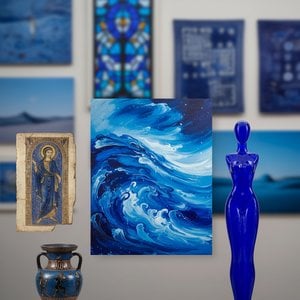
The Allure of Azure: Exploring the Symbolic & Aesthetic Depths of Blue in Art History
Explore the rich history of blue in art! Discover its symbolism, from ancient pigments to modern masterpieces by Kandinsky & Seurat. Uncover the psychological impact and cultural meanings behind this captivating hue.