

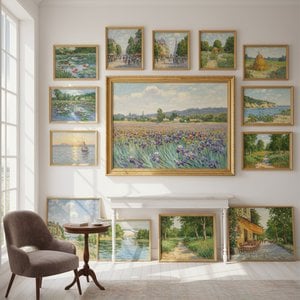
 Náhľad v interiéri
 Odoslať ako digitálnu kartu
 Zdieľať
 Podrobnosti o dielo
 Príručka

 Stiahnuť obraz
 Podobné položky
 RTG skúška
 Prehliadanie diapozoje
 Q&A
Q&A Štatistiky
Playing Children, Enghave Square

- 151.0 x 109.0 cm


 Zobraziť viac
Umelecké dielo zobrazené na tejto stránke je chránené autorským zákonom, čo znamená, že nemôžeme legálne vytvárať ani predávať jeho identickú reprodukciu. Táto ochrana je vymáhaná na základe medzinárodných dohôd, ako napríklad Bernská konvencia a národnými zákonmi, vrátane tých, ktoré sú stanovené v Autorské právo USA – Title 17. Všetky práva vyhradené.
Táto metóda plne dodržiava autorské práva, pretože nezahŕňa kopírovanie ani duplikovanie chráneného diela. Ide skôr o kreatívnu reinterpretáciu – nový obraz, ktorý je ovplybnený originálom, no nie je s ním identický.
Giclée / Umenotlač
Giclée tlač alebo plátno múzeálnej kvality s rýchlou výrobou a rôznymi možnosťami povrchovej úpravy. ( Kúpiť ručne maľovaný obraz Prepnúť na digitálny obraz)




P118B €10

P118H €10

P118W €10

P438Z €10

P508JH €12

P508YH €12

P805H €10

P805Z €10

P919BZ €10

P919G €10

P919XJ €10

P959ZH €10

P968JZ €12

W106C €8

W218G €10

W218JH €8

W218Y €10

W307PJ €10

W316G €10

W316PJ €8

W316Y €10

W398PJ €8

W4111J €10

W500HY €15

W500JH €15

W692G €12

W849H €8

W940BG €15

W953PJ €8




Vyberte si z našich preddefinovaných rozmerov, ktoré zodpovedajú pôvodným pomeroḿ diela.

Zadajte šírku a výšku, ktoré potrebujete, aby sa reprodukcia hodila k vášmu rámu alebo stene. Print možno len orezávať, nikdy však nemennú veľkosť zvětšiť oproti pôvodnému obrázku, preto pri inom formáte stráca časť obrazu. Pred samotným vytlačiacím procesom vám pošleme digitálny náhľad na schválenie. Obrázok zobrazený na tejto stránke nezobrazuje reálny rez — len digitálny náhľad ukazuje presný výsledok.
Celosvetová doprava () do 2 týždňov namiesto štandardných 4 až 5 týždňov. (2 november)

Bezplatná expresná doprava po celom svete

Vysokokvalitné lnianske plátno

Kompletné poistenie prepravy

Záruka vrátenia colného poplatku

Záruka presného farebného zhodnutia

100-dená politika vrátenia tovaru (iba pri vadách)

100% záruka vrátenia peňazí

Zľava pri väčšom množstve
 Možnosť skla je dostupná len pri rozmeroch pod 110 cm

Playing Children, Enghave Square
Giclée / Umenotlač
Veľkosť reprodukcie
-


Celková cena
€ 55
Peter Hansen’s “Playing Children, Enghave Square” – A Snapshot of Copenhagen Joy
“Playing Children, Enghave Square,” painted in 1908 by Peter Franklin Hansen, is more than just a depiction of children at play; it's a vibrant distillation of Impressionistic sensibility and a poignant observation of everyday life. Created during a period of significant artistic experimentation – the late 19th and early 20th centuries saw a fervent embrace of new techniques and subject matter – this work exemplifies Hansen’s ability to capture fleeting moments with remarkable immediacy. The painting, measuring 151 x 109 cm, transports the viewer directly into the heart of Copenhagen's Enghave neighborhood, offering an intimate glimpse into a scene brimming with youthful energy and social connection.
- Subject Matter: The central focus is undeniably the group of children engaged in playful activities. Their movements – running, dancing, swinging – are rendered with a dynamic sense of motion, reflecting Hansen’s keen eye for capturing transient moments.
- Composition: The artist employs abrupt cropping and flickering reflections to heighten the dynamism of the scene. This technique, characteristic of Impressionism, emphasizes the ephemeral nature of childhood joy and the subjective experience of perception.
- Setting: The painting is set in Enghave Square, a location that held personal significance for Hansen, adding an element of intimacy and authenticity to the work.
Impressionistic Technique and Color Palette
Hansen’s masterful use of oil on canvas demonstrates a deep understanding of Impressionist principles. He eschews meticulous detail in favor of capturing the effects of light and color, resulting in a luminous and atmospheric portrayal. The palette is dominated by bright, vibrant hues – greens, blues, and yellows – reflecting the dappled sunlight filtering through the new-leaved trees. Note the way he uses broken brushstrokes to create a sense of movement and texture, particularly evident in the children’s clothing and the foliage. This technique wasn't simply about replicating what Hansen *saw*, but rather conveying his *impression* of the scene – a feeling of joy, spontaneity, and youthful exuberance.
Historical Context and Social Commentary
Painted in 1908, “Playing Children” reflects the burgeoning interest in depicting everyday life within the art world. The rise of Impressionism challenged traditional academic styles, advocating for artists to capture scenes from modern life rather than historical or mythological subjects. Hansen’s focus on children playing also speaks to a broader social trend – an increasing fascination with childhood and its innocence. Furthermore, the painting subtly captures a moment of community interaction, highlighting the importance of social connection within the neighborhood.
Symbolism and Emotional Impact
The image resonates with a powerful sense of nostalgia and joy. The children’s hand-in-hand formation symbolizes unity and friendship, while their carefree play embodies the unburdened spirit of childhood. The flickering reflections in their faces suggest a fleeting moment captured in time – a reminder of the transient nature of beauty and happiness. “Playing Children, Enghave Square” is not merely a painting; it’s an emotional evocation of a cherished memory, inviting viewers to reconnect with their own sense of wonder and delight.
Otázky a odpovede
Aká konfigurácia tlače sa odporúča pre „Playing Children, Enghave Square“ od Peter Franklin Hansen?
Odporúčaná veľkosť pre tlač diela „Playing Children, Enghave Square“ od Peter Franklin Hansen je Large v orientácii Landscape.
Ako sa v diele „Playing Children, Enghave Square“ od Peter Franklin Hansen spájajú emócie a príležitosť na darovanie?
„Playing Children, Enghave Square“ vyžaruje Joyful pocit a ako vhodný darček sa odporúča Birthday.
Kedy bolo dielo „Playing Children, Enghave Square“ vytvorené a k ktorému umeleckému smeru patrí?
Dielo „Playing Children, Enghave Square“ od Peter Franklin Hansen pochádza z roku 1908 a patrí do smeru Impressionist Painting.
Podobné diela


Biografia umelca
The Dual Life of Peter Franklin Hansen: From Screen Legend to Canvas
In the grand tapestry of twentieth-century American culture, few figures embody the unexpected intersection of performance and fine art as poignantly as Peter Franklin Hansen. While millions of viewers worldwide recognized his face through the decades of dramatic tension on the iconic soap opera General Hospital, a much more private, contemplative dialogue was unfolding within the quiet confines of his studio. To many, he was the steadfast Lee Baldwin, a character defined by legal precision and moral gravity; yet, beneath this celebrated persona lay an artist whose brush sought to capture the ephemeral beauty of the human form and the subtle nuances of light.
Born on December 5, 1921, in Urbana, Illinois, Hansen’s early life was shaped by a family lineage rooted in Detroit, Michigan. Though the specific details of his childhood remain shrouded in a certain biographical mystery, there is an undeniable sense that his formative years were steeped in a burgeoning sensitivity to visual aesthetics. This innate curiosity would later manifest in a stylistic language heavily influenced by the profound legacies of European Impressionism and Expressionism. These movements, characterized by their emotive use of color and their ability to convey atmosphere over mere anatomical accuracy, provided the foundational vocabulary for his later explorations into figurative painting.
A Symphony of Light and Form
Hansen’s artistic development was a slow, deliberate process that ran parallel to his meteoric rise in Hollywood. As he mastered the art of character portrayal on screen—learning to convey deep-seated emotion through a single glance or a subtle shift in posture—he simultaneously applied these lessons to the canvas. His work in figurative painting serves as a fascinating counterpoint to his dramatic roles; where his acting required the projection of persona, his painting demanded an inward retreat into observation and texture.
His approach to the canvas was never merely about reproduction, but rather about capturing the essence of his subjects. Through his use of light, one can discern the echoes of the Impressionist masters, particularly in how he allowed shadows to breathe and colors to bleed into one another, creating a sense of movement within static figures. His paintings often possess a certain psychological depth, perhaps a byproduct of his years spent inhabiting the complex emotional landscapes of dramatic scripts. In his hands, the human figure becomes more than just a subject; it becomes a vessel for light, shadow, and the silent narratives of existence.
Legacy Beyond the Spotlight
The historical significance of Peter Franklin Hansen lies in this rare, seamless bridge between two seemingly disparate worlds: the ephemeral, public spectacle of television and the enduring, private intimacy of fine art. While his cinematic contributions—ranging from his long-standing tenure on General Hospital to appearances in films like The War of the Roses—secured his place in the annals of American entertainment, his paintings offer a more profound look into his soul.
To study Hansen’s oeuvre is to witness a life lived in pursuit of multifaceted expression. He reminds us that creativity is not a singular path but a sprawling landscape where the actor and the painter can coexist, each informing and enriching the other. His legacy remains a testament to the idea that true artistry knows no boundaries, flourishing equally under the bright lights of a television set and the soft, focused glow of a studio lamp.

Peter Franklin Hansen
1921 - 2017 , United States of America
Základné informácie
- Artistic Movement Or Style: Impressionism and Expressionism
- Artists Who Influenced This Artist:
- European Impressionism
- Expressionism
- Full Name: Peter Franklin Hansen
- Nationality: American
- Notable Artworks: ['Playing Children, Enghave Square']
- Place Of Birth: Urbana, United States of America
- Date Of Birth: 1921
- Date Of Death: 2017
Súvisiace články
Top 10 impresionistických krajín: Majstrovské diela, ktoré zmenili umenie a dekoráciu interiéru
Ponorte sa do sveta impresionizmu! Objavte top 10 majstrovských diel krajinárstva od Monet, Renoir a ďalších. Inšpirujte sa farebnými plátnami a dekorujte svoj dom s ArtsDot.com – múzejnou kvalitou pre váš interiér. Preskúmajte kolekciu online!

Impressionistic Realism's Finest: 10 Masterpieces for Your Home | ArtsDot
Journey through Impressionistic Realism with 10 iconic masterpieces by Monet, Renoir & Van Gogh. Explore art history, techniques & find museum-quality reproductions for your home at ArtsDot.com. Discover all masterpieces online!

Pierre-Auguste Renoir: Top 25 diel pre milovníkov umenia a dokonalý domov | ArtsDot
Ponorte sa do sveta Pierra-Augusta Renoira! Objavte 25 ikonických obrazov impresionizmu, ich príbehy a techniky. Reprodukcie diel Renoira pre váš domov na ArtsDot.com – múzejná kvalita a inšpirácia pre interiér.

Capturing Light & Emotion: A Beginner's Guide to the Impressionist Aesthetic
Discover the beauty of Impressionism. Learn how masters like Monet and Renoir use light and color to evoke emotion, and explore how to bring this luminous aesthetic into your home with museum-quality, hand-painted reproductions.

Top 10 impresionistických krajín: Majstrovské diela, ktoré zmenili umenie
Ponorte sa do sveta impresionizmu! Objavte top 10 majstrovských diel krajinárskej maľby od Monet, Renoir a ďalších. Inšpirujte sa farebnými plátnami a prineste si kúsok francúzskeho umenia do vášho interiéru s ArtsDot.com. Preskúmajte rozsiahlu kolekciu online!