

 Náhľad v interiéri
 Odoslať ako digitálnu kartu
 Zdieľať
 Podrobnosti o dielo
 Príručka

 Stiahnuť obraz
 Podobné položky
 RTG skúška
 Prehliadanie diapozoje
 Otázky a odpovede
 Štatistiky
The Summer Evening

- 60.0 x 42.0 cm


 Zobraziť viac
Získajte súbor pripravený na tlač, ktorý ponúka oveľa vyššiu kvalitu než online náhľad. Každý predávaný digitálny obraz pochádza z vysokorozlíseného originálu v našej databáze – zvyčajne s šírkou 5 000 až 15 000 pixelov – takže môžete s istotou tlačiť vo veľkom formáte, vytvárať detailné výrezy alebo reprodukovať jemné detaily.
Žiadny súbor neopustí naše štúdio bez úprav. Digitálny expert kontroluje farby v porovnaní s originálnym obrazom a v prípade potreby ich opraví, následne nástrojmi na profesionálnu retuš zvyšuje mieru ostrosti a detailov — pričom vždy zostáva verný umeleckému ťahu štetca a štýlu autora. Výsledkom je obraz, ktorý pôsobí ako samotné dielo, nie ako naskenovaný snímok s filtrom.
Schvaľujete ešte pred dokončením: náš expert vám obrazový súbor do 72 hodín pošle e-mailom na kontrolu. Nie ste spokojní? Požiadajte o vylepšenia alebo opravy, prípadne si môžete vyžiadať vrátenie platby, ak kvalita nedosahuje očakávanú úroveň.
Táto kvalita je základom dôvery vydavateľov, dizajnových štúdií, galérií a tlačovníkov.
Digitálny obraz
Stiahnite si vysokorozlíšený súbor na osobné zobrazovanie, tlačenie a kreatívne projekty. ( Prepnúť na tlač Kúpiť ručne maľovaný obraz)
Súčasťou každej objednávky digitálneho obrazu
Garantovaná expertná digitálna distribúcia
Keď si vyberiete ArtsDot.com, nezískate len obyčajný obrázok – získate profesionálne upravené digitálne umenie, vytvorené s maximálnou precíznosťou a podložené zárukou vašej spokojnosti. Tu je všetko, čo je súčasťou vašej objednávky automaticky:

Rýchle doručenie e-mailom
Vaša vysokorozlíšená digitálna súprava obrázkov vám bude zaslaná e-mailom do 72 hodín od objednávky – pripravená na okamžité použitie.

Digitálny súbor s vylepšením AI
Vaše dielo je profesionálne optimalizované pomocou pokročilých nástrojov umelej inteligencie a manuálnej úpravy, čo zaručuje maximálnu mieru detailov, čistotu a presnosť farieb.

Bezplatné celoživotné opätovné doručenie
Súbor ste náhodou zmazali alebo ste ho stratili? Žiadne starosti – kedykoľvek vám ho môžeme poslať znova, úplne bez poplatkov.

Bez poplatkov za dovoz – navždy
Užite si svoje umenie okamžite bez colných poplatkov, daní alebo nákladov na dopravu – digitálne stiahnutia sú vždy oslobodené od dane.

Garantovaná presnosť farieb
Pomocou profesionálnych nástrojov a farebného manažmentu zabezpečujeme, aby vaša digitálna fotografia čo najpresnejšie odrážala pôvodné farby.

Záruka spokojnosti 100 dní
Ak nebudete spokojní so svojím digitálnym obrázkom, upravíme ho alebo vám v priebehu 100 dní vrátime 100% – bez zbytočných otázok.

100% Záruka vrátenia peňazí
Nie ste spokojní? Získajte plnú náhradu platby do 100 dní od prijatia digitálneho súboru – bez zbytočných otázok.

Zľavy pri veľkom odbere
Pri kúpe 3 obrázkov získate zľavu 10% - Pri kúpe 5 obrázkov získate zľavu 15% - Pri kúpe 10+ obrázkov získate zľavu 20%. Ideálne pre kreatívne projekty, galérie a agentúry.
A Window into Chagall’s Dreamscape
Marc Chagall's "The Summer Evening," painted in 1968, isn’t simply a depiction of a woman gazing out at flowers; it’s an invitation to step inside the artist’s extraordinarily imaginative world. Born Moishe Shagal in Liozna, Belarus, Chagall possessed a singular ability to transform observation into myth—to distill the essence of memory and experience into canvases ablaze with color and imbued with fantastical elements. This painting exemplifies his characteristic style: Surrealism blended seamlessly with Jewish folklore and deeply personal symbolism.- Subject Matter: The artwork centers around a woman seated before a window, bathed in the soft glow of twilight. Alongside her is another figure, subtly positioned on the right, creating a dynamic interplay between stillness and movement.
- Style: Chagall’s Surrealist approach rejects realistic representation, prioritizing emotional expression over factual accuracy. Figures appear distorted, perspectives are skewed, and objects float or overlap in ways that defy conventional logic—a deliberate tactic designed to bypass conscious thought and tap into the subconscious mind.
Technique: Color as Emotion
Chagall’s masterful use of color is paramount to conveying the painting's profound emotional resonance. He employed a technique known as cloisonné enamel, which involved applying thin layers of colored glass paste onto metal supports—typically zinc alloy—and fusing them together in a kiln. This method produced incredibly vibrant hues and luminous surfaces, capturing the ethereal quality of dusk and highlighting the beauty of the floral arrangement outside the window. The palette is dominated by warm yellows and oranges – colors associated with warmth, optimism, and remembrance – juxtaposed against cooler blues and greens that evoke tranquility and serenity.Historical Context: Vitebsk’s Influence
The painting's genesis lies in Chagall’s formative years spent in Vitebsk, Belarus, a town steeped in Jewish tradition and Russian Orthodox heritage. This duality profoundly shaped his artistic vision. Vitebsk served as both a physical location and an emotional landscape—a place of pilgrimage for Chagall, where he revisited cherished memories and drew inspiration from the rhythms of daily life. The imagery reflects this cultural confluence: the stylized depiction of figures reminiscent of biblical narratives alongside elements of Jewish ritualistic art speaks to Chagall’s enduring fascination with spirituality and storytelling.Symbolism: Flowers, Flight, and Remembrance
The flowers outside the window are more than just decorative elements; they represent fertility, beauty, and the cyclical nature of life—themes central to Jewish mysticism. The woman's gaze outward symbolizes contemplation and longing for connection – perhaps a yearning for lost loved ones or a desire to recapture moments of idyllic happiness. Furthermore, Chagall’s signature motif of flight—evident in the figures depicted—represents liberation from earthly constraints and an aspiration towards transcendence. This visual language reinforces the painting’s overarching message: a celebration of beauty, memory, and the enduring power of dreams.Emotional Impact: A Balm for the Soul
“The Summer Evening” possesses an undeniable calming effect on the viewer. Its luminous colors and dreamlike atmosphere invite contemplation and evoke feelings of peace and nostalgia. Chagall’s ability to capture not just what he saw but how he *felt*—to translate emotion into visual form—solidifies his place as one of the most influential artists of the 20th century. Reproductions of this artwork offer a chance to bring a touch of Chagall's visionary spirit into any interior space, fostering a sense of serenity and inspiring imaginative thought.Otázky a odpovede
Kde môžem kúpiť print diela „The Summer Evening“ od Marc Chagall?
„The Summer Evening“ je dostupná ako umelecká tlač na bavlnenom plátne alebo archivnom plátnovom papieri. Objednávky môžete zadávať na jej stránke Fine art tlač v rozmeroch podľa vašej voľby.
Pôsobia farby diela „The Summer Evening“ výrazne alebo jemne?
Intenzita farieb diela „The Summer Evening“ je Balanced. Intenzita vyjadruuje, ako výrazne pôsobia farby.
Kedy bolo dielo „The Summer Evening“ vytvorené a k ktorému umeleckému smeru patrí?
Dielo „The Summer Evening“ vzniklo v roku 1968 v rámci smeru Surrealist Expression. Časové určenie a umelecký smer zakotvujú toto dielo v dejinách umenia.
Podobné diela


Životopis umelca
A Life Painted in Dreams: The World of Marc Chagall
Marc Chagall, born Moishe Shagal in 1887 in the small Belarussian town of Liozna near Vitebsk, wasn’t merely a painter; he was a poet of color, a weaver of dreams, and a chronicler of memory. His life, spanning nearly a century, mirrored the tumultuous currents of the 20th century, yet his art remained steadfastly rooted in a deeply personal vision—one infused with the folklore of his Hasidic Jewish upbringing and an unwavering belief in the power of imagination. Vitebsk itself was more than just a birthplace; it became the emotional core of his artistic universe, a recurring motif populated by flying figures, whimsical animals, and the vibrant hues of remembered landscapes. The town’s unique blend of cultures—Russian Orthodox churches alongside bustling Jewish marketplaces—forged an aesthetic sensibility that would defy easy categorization throughout his long career. Though he sought formal training first with a local sign painter and later in St. Petersburg under Léon Bakst, and then in Paris at the Académie de la Grande Chaumière, Chagall never fully embraced any single artistic movement. He absorbed elements of Cubism, Symbolism, and Fauvism, but always filtered them through his own intensely personal lens, creating a style that was uniquely, unmistakably Chagall.Early Years and Artistic Formation
Chagall’s formative years were marked by hardship and displacement. Born into a Jewish family in Vitebsk—a town steeped in Orthodox tradition—he experienced firsthand the challenges faced by Jews living under Tsarist rule. Despite limited formal education, he possessed an innate artistic talent that quickly blossomed. His initial training began with a local sign painter, honing his skills in draftsmanship and color theory. Subsequently, he pursued studies at St. Petersburg’s Zvantseva School of Drawing and Painting, where he encountered the influential teachings of Léon Bakst—a pioneer of theatrical design who championed avant-garde aesthetics. This exposure to Bakst's ideas profoundly shaped Chagall’s artistic sensibilities, introducing him to the principles of Cubism and fostering his fascination with geometric abstraction. Recognizing the importance of broadening his horizons, he traveled to Paris in 1908, immersing himself in the vibrant intellectual and artistic milieu of the École de Paris—a collective of artists who rejected academic conventions and embraced experimentation. During this period, he befriended fellow artists like Pablo Picasso and André Derain, absorbing their stylistic innovations and refining his own visual language.The Symbolist Vision
Chagall’s early paintings—such as I and the Village (1911)—demonstrate a distinctive preoccupation with symbolism and memory. Unlike traditional landscapes that strive for objective representation, Chagall's depictions of Vitebsk are fragmented recollections imbued with emotional significance. Figures float amidst stylized forms, conveying feelings of longing and nostalgia—a characteristic trait that would define his artistic style throughout his career. The artist’s palette is bold and expressive, employing vibrant hues to communicate emotion rather than literal accuracy. This stylistic approach reflects Chagall's deep connection to Jewish folklore and mythology, as well as his profound engagement with the spiritual traditions of his upbringing. His use of color—particularly yellows, blues, and reds—is deliberately unconventional, creating a dreamlike atmosphere that transcends rational perception.The Turbulent Years: Revolution and Exile
The Russian Revolution dramatically altered Chagall’s life trajectory. Returning to Vitebsk in 1917 amidst the upheaval of Bolshevik rule, he became involved in cultural initiatives aimed at revitalizing Belarusian art and culture. He established an Art School in Vitebsk—a bold experiment in artistic education that briefly flourished before succumbing to political pressures. During this period, Chagall wrestled with conflicting ideological impulses—embracing socialist ideals while simultaneously cherishing his Jewish heritage. The outbreak of World War I forced him into exile, disrupting his creative pursuits and propelling him back to Paris. Despite the hardships endured during wartime, Chagall continued to produce artwork that reflected the anxieties and uncertainties of the era. His painting White Crucifixion (1938)—a poignant meditation on suffering and persecution—stands as a testament to this period’s emotional intensity.International Recognition and Artistic Legacy
Chagall achieved international acclaim during World War II, escaping occupied France with his wife in May 1941. He found refuge in New York City, where he resided for seven years, fostering collaborations with fellow artists and engaging in prolific creative activity. His work gained prominence during the Abstract Expressionist movement, cementing his reputation as one of the most influential figures in modern art. Following the war, Chagall returned to France, continuing to paint until his death in 1985 at Saint-Paul-de-Vence—a picturesque Provençal village that served as his artistic sanctuary for decades. His enduring legacy resides not only in his stunning paintings and stained glass windows but also in his unwavering commitment to artistic integrity and imaginative vision—a vision that continues to inspire artists and audiences alike. Chagall’s art transcends cultural boundaries, conveying universal themes of love, loss, faith, and remembrance—a testament to the transformative power of creativity and the enduring beauty of dreams.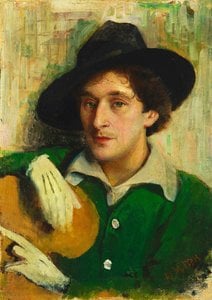
Marc Chagall
1887 - 1985 , Bieľorusko
Základné informácie
- Artistic Movement Or Style: Expresionizmus, kubizmus, fauvizmus, surrealizmus
- Artists Or Movements Influenced By This Artist: ['Surrealisti']
- Artists Who Influenced This Artist: ['Léon Bakst']
- Date Of Birth: 1887
- Date Of Death: 1985
- Full Name: Moishe Shagal
- Nationality: rusko-francúzska
- Notable Artworks:
- I and the Village
- The Birthday
- The Wedding
- White Crucifixion
- Over Vitebsk
- Place Of Birth: Liovana, Bielorusko