


 Náhľad
 Odoslať
 Zdieľať
 Podrobnosti o dielo

 Stiahnuť
 Podobné diela
 RTG skúška
 Prezentácia
Noah and the Rainbow
 Oil On Canvas
- WallArt
- Surrealism
 1963
1963- Modern
 16.0 x 21.0 cm
 Zobraziť viac
Ručne maľovaná olejová reprodukcia
Ručne maľovaný olej na plátne vo vašej zvolenej veľkosti a v ráme, vyrobený na mieru našimi umelcami. ( Kúpiť tlač Kúpiť obrázok)




P118B $10

P118H $10

P118W $10

P438Z $10

P508JH $12

P508YH $12

P805H $10

P805Z $10

P919BZ $10

P919G $10

P919XJ $10

P959ZH $10

P968JZ $12

W106C $8

W218G $10

W218JH $8

W218Y $10

W307PJ $10

W316G $10

W316PJ $8

W316Y $10

W398PJ $8

W4111J $10

W500HY $15

W500JH $15

W692G $12

W849H $8

W940BG $15

W953PJ $8




Vyberte si z našich preddefinovaných rozmerov, ktoré zodpovedajú pôvodným pomeroḿ diela.

Môžete zadať vlastné rozmery tak, aby sa hodili do konkrétneho rámu alebo priestoru. Ak sa váš zvolený rozmer nezhoduje s pôvodnými proporciami obrazu, dielo buď orezáme, alebo ho doplníme ručne maľovanými prvkami. Pred začiatkom výroby vám zašleme digitálny náhľad na schválenie.
Upozorňujeme, že ukážka na obrazovke neodráža skutočné orezanie alebo doplnenie. Skutočnú finálnu kompozíciu zobrazuje iba digitálny náhľad.
Hoci sú k dispozícii vlastné rozmery, odporúčame vybrať rozmer z preddefinovaného zoznamu, aby sme zachovali pôvodné proporcie.
Po odoslaní objednávky vám tím ArtsDot.com pošle e-mail s pokynmi a poskytne náhľad na návrh.
Celosvetová doprava () za 3 až 4 týždne namiesto štandardných 5 týždňov. (7 september). Bez kompromisov v kvalite.

Bezplatná expresná doprava po celom svete

Prémiové lnianske plátno

Kompletné poistenie prepravy

Záruka vrátenia colného poplatku

Záruka presného farebného zhodnutia

100-dená politika vrátenia tovaru (iba pri vadách)

100% záruka vrátenia peňazí

Výhodná množstevná zľava
 Možnosť skla je dostupná len pri rozmeroch pod 110 cm

Noah and the Rainbow
Technika reprodukcie
Veľkosť reprodukcie
-


Celková cena za vybrané možnosti
$ 263
A Symphony of Dreams: The Ethereal Vision of Noah and the Rainbow
In the vast, kaleidoscopic universe of Marc Chagall, certain moments transcend the boundaries of mere biblical retelling to become profound meditations on the human spirit. His 1963 masterpiece, Noah and the Rainbow, is one such portal. This work does not simply depict a post-diluvian promise; it invites the viewer into a surrealist dreamscape where the weight of history meets the lightness of divine hope. Chagall, a poet of the brush, weaves a narrative that feels less like a historical record and more like a luminous memory, captured in a moment of celestial grace. The painting serves as a visual poem, brimming with symbolism that speaks directly to the subconscious mind, inviting us to witness a universe where the boundaries between reality and fantasy dissolve into a single, breathtaking vision.
The composition is an intricate dance of life and color, featuring Noah's Ark nestled within a lush, almost fantastical landscape. Within the vessel, a bustling assembly of creatures—at least thirteen different animals, from soaring birds to grounded beasts—occupimos their own unique spaces, creating a sense of harmonious coexistence. Interspersed among these animals are figures representing the passengers of the ark, their presence adding a layer of human emotion to the scene. The overall effect is one of joyous celebration; rather than focusing on the harrowing drama of the flood, Chagall captures the feeling of liberation and gratitude following the storm. A vibrant rainbow arches above the scene, acting as a celestial bridge that connects the earthly struggle with divine peace.
Technique and the Surrealist Soul
Chagall’s artistic voice in this period was characterized by a masterful blend of Surrealism, Expressionism, and Fauvism. The painting employs a loose, expressive brushstroke technique that is a hallmark of his oeuvre, characterized by vibrant colors applied with impulsive, rhythmic gestures. Through the use of thick impasto, Chagall creates textural surfaces that capture the dynamism of movement, evoking a sense of immediacy as if the paint itself were still breathing. Unlike the meticulous precision of realism, this work prioritizes atmosphere and psychological resonance over photographic accuracy. The flattened perspective and dreamlike quality blur the lines between the physical world and the spiritual realm, allowing the viewer to drift into a state of pure contemplation.
For the collector or interior designer, this piece offers more than just aesthetic beauty; it provides a profound emotional anchor. The way the light seems to emanate from within the canvas makes it an ideal centerpiece for spaces designed for reflection and inspiration. Whether placed in a quiet study or a grand living area, the painting’s ability to evoke both resilience and hope makes it a timeless addition to any curated collection.
A Legacy of Resilience and Remembrance
To truly appreciate Noah and the Rainbow, one must understand the historical shadows from which it emerged. Painted in 1963, the work arrived during a period when Chagall was grappling with the profound trauma of Nazi persecution and his expulsion from France following the events of Kristallnacht. This experience of exile and loss deeply informed his artistic sensibility, fueling a lifelong desire to express themes of spiritual yearning and the endurance of faith. The biblical narrative of Noah serves as a powerful metaphor for confronting overwhelming adversity and finding the strength to maintain hope amidst the darkness.
Ultimately, Chagall’s work is a testament to the power of the imagination to heal and transcend. By revisiting the myth of the rainbow, he offers a universal symbol of renewal that resonates across cultures and generations. Owning a high-quality reproduction of this masterpiece allows one to bring a piece of this enduring optimism into the home—a constant reminder that even after the most turbulent storms, a new dawn of peace and color awaits.
Podobné diela


Biografia umelca
A Life Painted in Dreams: The World of Marc Chagall
Marc Chagall, born Moishe Shagal in 1887 in the small Belarussian town of Liozna near Vitebsk, wasn’t merely a painter; he was a poet of color, a weaver of dreams, and a chronicler of memory. His life, spanning nearly a century, mirrored the tumultuous currents of the 20th century, yet his art remained steadfastly rooted in a deeply personal vision—one infused with the folklore of his Hasidic Jewish upbringing and an unwavering belief in the power of imagination. Vitebsk itself was more than just a birthplace; it became the emotional core of his artistic universe, a recurring motif populated by flying figures, whimsical animals, and the vibrant hues of remembered landscapes. The town’s unique blend of cultures—Russian Orthodox churches alongside bustling Jewish marketplaces—forged an aesthetic sensibility that would defy easy categorization throughout his long career. Though he sought formal training first with a local sign painter and later in St. Petersburg under Léon Bakst, and then in Paris at the Académie de la Grande Chaumière, Chagall never fully embraced any single artistic movement. He absorbed elements of Cubism, Symbolism, and Fauvism, but always filtered them through his own intensely personal lens, creating a style that was uniquely, unmistakably Chagall.Early Years and Artistic Formation
Chagall’s formative years were marked by hardship and displacement. Born into a Jewish family in Vitebsk—a town steeped in Orthodox tradition—he experienced firsthand the challenges faced by Jews living under Tsarist rule. Despite limited formal education, he possessed an innate artistic talent that quickly blossomed. His initial training began with a local sign painter, honing his skills in draftsmanship and color theory. Subsequently, he pursued studies at St. Petersburg’s Zvantseva School of Drawing and Painting, where he encountered the influential teachings of Léon Bakst—a pioneer of theatrical design who championed avant-garde aesthetics. This exposure to Bakst's ideas profoundly shaped Chagall’s artistic sensibilities, introducing him to the principles of Cubism and fostering his fascination with geometric abstraction. Recognizing the importance of broadening his horizons, he traveled to Paris in 1908, immersing himself in the vibrant intellectual and artistic milieu of the École de Paris—a collective of artists who rejected academic conventions and embraced experimentation. During this period, he befriended fellow artists like Pablo Picasso and André Derain, absorbing their stylistic innovations and refining his own visual language.The Symbolist Vision
Chagall’s early paintings—such as I and the Village (1911)—demonstrate a distinctive preoccupation with symbolism and memory. Unlike traditional landscapes that strive for objective representation, Chagall's depictions of Vitebsk are fragmented recollections imbued with emotional significance. Figures float amidst stylized forms, conveying feelings of longing and nostalgia—a characteristic trait that would define his artistic style throughout his career. The artist’s palette is bold and expressive, employing vibrant hues to communicate emotion rather than literal accuracy. This stylistic approach reflects Chagall's deep connection to Jewish folklore and mythology, as well as his profound engagement with the spiritual traditions of his upbringing. His use of color—particularly yellows, blues, and reds—is deliberately unconventional, creating a dreamlike atmosphere that transcends rational perception.The Turbulent Years: Revolution and Exile
The Russian Revolution dramatically altered Chagall’s life trajectory. Returning to Vitebsk in 1917 amidst the upheaval of Bolshevik rule, he became involved in cultural initiatives aimed at revitalizing Belarusian art and culture. He established an Art School in Vitebsk—a bold experiment in artistic education that briefly flourished before succumbing to political pressures. During this period, Chagall wrestled with conflicting ideological impulses—embracing socialist ideals while simultaneously cherishing his Jewish heritage. The outbreak of World War I forced him into exile, disrupting his creative pursuits and propelling him back to Paris. Despite the hardships endured during wartime, Chagall continued to produce artwork that reflected the anxieties and uncertainties of the era. His painting White Crucifixion (1938)—a poignant meditation on suffering and persecution—stands as a testament to this period’s emotional intensity.International Recognition and Artistic Legacy
Chagall achieved international acclaim during World War II, escaping occupied France with his wife in May 1941. He found refuge in New York City, where he resided for seven years, fostering collaborations with fellow artists and engaging in prolific creative activity. His work gained prominence during the Abstract Expressionist movement, cementing his reputation as one of the most influential figures in modern art. Following the war, Chagall returned to France, continuing to paint until his death in 1985 at Saint-Paul-de-Vence—a picturesque Provençal village that served as his artistic sanctuary for decades. His enduring legacy resides not only in his stunning paintings and stained glass windows but also in his unwavering commitment to artistic integrity and imaginative vision—a vision that continues to inspire artists and audiences alike. Chagall’s art transcends cultural boundaries, conveying universal themes of love, loss, faith, and remembrance—a testament to the transformative power of creativity and the enduring beauty of dreams.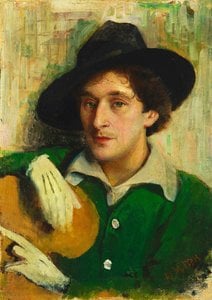
Marc Chagall
1887 - 1985 , Bielorusko
Základné informácie
- Artistic Movement Or Style: Modernizmus, Kubizmus
- Artists Or Movements Influenced By This Artist:
- Surrealizmus
- Cubizmus
- Artists Who Influenced This Artist:
- Leon Bakst
- Pablo Picasso
- Jean Metzinger
- Date Of Birth: 7. júl 1887
- Date Of Death: 28. marec 1985
- Full Name: Marc Chagall
- Nationality: Rusínsky-Francúzsky
- Notable Artworks:
- I a dedina
- Žltý osol
- Kôň s tiennikom
- Place Of Birth: Ľozna, Bielorusko
Súvisiace články
Dreamscapes & Disrupted Realities: Exploring Surrealism's Enduring Influence
Explore the fascinating world of Surrealism! Discover its origins, key artists like Dalí & Magritte, and enduring influence on art & culture. Expert insights & high-quality reproductions at ArtsDot.

Illuminating Faith: Biblical Narrative & Artistic Expression Through the Ages
Explore the rich history of biblical art from Giotto to the Renaissance masters with ArtsDot. Discover symbolism, techniques & enduring legacies. Museum-quality reproductions & expert insights.

Top 10 surrealistických majstrovských diel, ktoré definovali umelecký pohyb | ArtsDot.sk
Ponorte sa do sveta surrealizmu s top 10 majstrovskými dielami od Dalího, Magritta a Miróa. Objavte príbehy za ikonickými obrazmi, techniky a umelecké motívy. Kvalitné reprodukcie na ArtsDot.com – pre váš jedinečný interiér.

Pop Surrealism: A Collision of Culture, Dreams & the Subconscious in Post-War Art
Explore the captivating world of Pop Surrealism with ArtsDot. Discover key artists like George Condo & Robert Williams, investment potential, and the movement's cultural impact. Expert insights for collectors.
Max Ernst: Top 25 diel surrealistického majstra pre váš domov | ArtsDot
Ponorte sa do sveta Maxa Ernsta! Objavte top 25 diel surrealistického majstra – od Frottage po snové krajiny. Kúpiť reprodukcie obrazov online na ArtsDot.com a doprajte si luxusný dekor do interiéru.


