


 Zobraziť v interiéri
 Odoslať
 Zdieľať
 Podrobnosti
 Príručkovo

 Stiahnuť
 Podobné položky
 RTG skúška
 Prehliadanie diapo\]
 Štatistiky
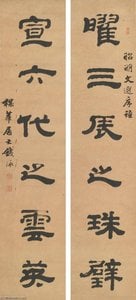
CALLIGRAPHY IN RUNNING SCRIPT
 Traditional Chinese Art
 173.0 x 41.0 cm
 Prečítať si viac
Ručne maľovaná olejová reprodukcia
Ručne maľovaný olej na plátne vo vašej zvolenej veľkosti a v ráme, vyrobený na mieru našimi umelcami. ( Prepnúť na tlač Prepnúť na digitálnu verziu obrazu)




































Vyberte si z našich preddefinovaných rozmerov, ktoré zodpovedajú pôvodným pomeroḿ diela.

Môžete zadať vlastné rozmery tak, aby sa hodili do konkrétneho rámu alebo priestoru. Ak sa váš zvolený rozmer nezhoduje s pôvodnými proporciami obrazu, dielo buď orezáme, alebo ho doplníme ručne maľovanými prvkami. Pred začiatkom výroby vám zašleme digitálny náhľad na schválenie.
Upozorňujeme, že ukážka na obrazovke neodráža skutočné orezanie ani doplnenie. Skutočnú finálnu kompozíciu zobrazuje iba digitálny náhľad.
Hoci sú k dispozícii vlastné rozmery, odporúčame vybrať rozmer z preddefinovaného zoznamu, aby sme zachovali pôvodné proporcie.
Po odoslaní objednávky vám tím ArtsDot.com pošle e-mail s pokynmi a poskytne náhľad na návrh
Celosvetová doprava () za 3 až 4 týždne namiesto štandardných 5 týždňov. (23 september). Bez kompromisov v kvalite.

Bezplatná expresná doprava po celom svete

Vysokokvalitné lnianske plátno

Úplné poistenie prepravy

Záruka vrátenia colného poplatku

Záruka presného farebného zhodnutia

100-dená politika vrátenia tovaru (iba pri vadách)

100% záruka vrátenia peňazí

Ponuka množstevnej zľavy
 Možnosť skla je dostupná len pri rozmeroch pod 110 cm

CALLIGRAPHY IN RUNNING SCRIPT
Spôsob reprodukcie
Veľkosť reprodukcie
-


Celková cena
$ 263
Súvisiace diela




Biografia umelca
The Calligraphic Soul of a Reformer
In the turbulent twilight of the Qing Dynasty, few figures loomed as large or as complexly as Kang Youwei. To view his calligraphy is to witness more than mere ink on paper; it is to encounter the rhythmic pulse of a man caught between the ancient weight of Confucian tradition and the surging tides of Western modernity. Born in 1858 in the village of Su, within Guangdong province, Kang was a scholar whose intellect was forged in the rigorous fires of classical study but tempered by a visionary's desire to reshape a nation. His life was a profound struggle to reconcile the eternal ethics of the past with the urgent political necessities of a changing world, a tension that found its most graceful expression in the fluid, decisive strokes of his brushwork.
The intellectual foundation of Kang’s artistry was deeply rooted in the Confucian classics, yet he possessed an uncommon ability to reinterpret these ancient texts through a lens of progress. While many of his contemporaries clung to a reactionary preservation of tradition, Kang sought a way to revitalize the very essence of Chinese identity. This philosophical duality—the reverence for heritage and the hunger for reform—is palpable in his artistic output. His work often reflects a sense of intellectual rigor paired with an artistic sensitivity, where the structural discipline of formal scripts meets the spontaneous energy of more liberated styles. In his hands, calligraphy became a medium through which the stability of the old world and the dynamism of the new could coexist.
A Legacy Written in Ink and Action
The historical significance of Kang Youwei cannot be decoupled from his political audacity. As a primary architect of the Hundred Days’ Reform in 1898, he attempted to steer the Guangxu Emperor toward a constitutional monarchy, seeking to modernize education, strengthen the military, and overhaul the bureaucracy. This period of intense creativity and political maneuvering was marked by a high-stakes drama that eventually led to his exile following the coup by Empress Dowager Cixi. Yet, even in displacement, Kang’s influence remained undiminished. He continued to advocate for a reformed China, influencing generations of thinkers, including the prominent scholar Liang Qichao, who found inspiration in Kang's revolutionary reinterpretations of classical thought.
His artistic achievements serve as a serene counterpoint to his often violent political reality. The works that survive him, such as his Calligraphy in Running Script and various poetic scrolls, offer a window into a more meditative aspect of his character. In these pieces, one can observe:
- The Mastery of Line: A meticulous command of brushwork that balances formal structure with the organic flow of ink.
- Symbolic Resonance: The use of traditional characters to convey complex political and philosophical ideologies.
- Rhythmic Balance: A sense of movement within his scrolls that mirrors the ebb and flow of historical change.
Ultimately, Kang Youwei remains a monumental figure whose legacy is etched into both the political history of China and the aesthetic heritage of East Asian calligraphy. He was a man who lived through the collapse of an empire, yet through his art, he achieved a form of immortality, capturing the spirit of an era in every stroke of black ink upon white paper.

kang youwei
1858 - 1927
Rýchle fakty
- Artistic Movement Or Style: Calligraphy
- Date Of Birth: 1858
- Date Of Death: 1927
- Full Name: Kang Youwei
- Nationality: Chinese
- Notable Artworks:
- Poems on Swiss Excursions
- CALLIGRAPHY IN RUNNING SCRIPT
- A Thought on Wire Fences
- Place Of Birth: Guangdong Province, China
Súvisiace články

Ephemeral Lines: Exploring Emotional Resonance in Ink Sketching Traditions
Explore the profound art of ink sketching! Discover techniques to express emotion, master line work, and cultivate artistic sensitivity. Learn from historical masters & unlock your creative potential.

Xie Zhiliu: A Legacy of Ink Wash Painting & Modern Chinese Literati Tradition
Explore the legacy of Xie Zhiliu, a master of Chinese ink wash painting & prominent figure in modern art. Discover his techniques, influences, and contributions to literati tradition. A guide for discerning collectors.

Timeless Elegance: Discovering the Soulful Beauty of Chinese Calligraphy for Sophisticated Home Interiors
Elevate your home with the serene beauty of Chinese calligraphy art. Explore our collection of hand-painted ink wash reproductions and bespoke commissions at ArtsDot.com. Discover museum-quality pieces designed to bring cultural elegance and tranquility to your modern interior.

Ephemeral Expressions: Exploring the Nuances of Ink on Paper Through History & Contemporary Art
Explore the captivating world of ink wash painting – from its ancient origins to contemporary masters. Discover techniques, symbolism & conservation insights with ArtsDot.com.

Top 10 slávnych obrazov s dominantnou čiernou farbou | ArtsDot.sk
Objavte top 10 slávnych obrazov s dominantnou čiernou farbou od Rembrandta, Goya a ďalších majstrov. Prežite príbehy umenia, techniky a nadčasovej krásy. Reprodukcie obrazov pre váš interiér na ArtsDot.sk – múzejná kvalita!