


 Zobraziť v interiéri
 Odoslať
 Zdieľať
 Podrobnosti
 Príručkovo

 Stiahnuť
 Podobné položky
 RTG skúška
 Prehliadanie diapo\]
 Štatistiky
Monstrance


 Prečítať si viac
Giclée / Umenotlač
Giclée tlač alebo plátno múzeálnej kvality s rýchlou výrobou a rôznymi možnosťami povrchovej úpravy. ( Objednať ručne maľovanú reprodukciu Prepnúť na digitálnu verziu obrazu)




































Vyberte si z našich preddefinovaných rozmerov, ktoré zodpovedajú pôvodným pomeroḿ diela.

Môžete zadať vlastné rozmery, aby sa reprodukcia prispôsobila konkrétnemu rámu alebo priestoru. Ak zvolená veľkosť nebude zodpovedať proporciám originálu, dielo buď orežeme, alebo obraz rozšírime pomocou zrkadlenia či farebného doplnenia okrajov. Pred začatím výroby vám pošleme digitálnu ukážku na schválenie.
Máte na vedomí, že náhľad na obrazovke neodzrkadľuje skutočné orezanie alebo rozšírenie. Len digitálna ukážka presne zobrazí finálnu kompozíciu.
Hoci sú k dispozícii vlastné rozmery, pre zachovanie pôvodných proporcií odporúčame vybrať si rozmer z vopred definovaného zoznamu.
Celosvetová doprava () do 2 týždňov namiesto štandardných 4 až 5 týždňov. (24 september)

Bezplatná expresná doprava po celom svete

Vysokokvalitné lnianske plátno

Úplné poistenie prepravy

Záruka vrátenia colného poplatku

Záruka presného farebného zhodnutia

100-dená politika vrátenia tovaru (iba pri vadách)

100% záruka vrátenia peňazí

Ponuka množstevnej zľavy
 Možnosť skla je dostupná len pri rozmeroch pod 110 cm

Monstrance
Giclée / Umenotlač
Veľkosť reprodukcie
-


Celková cena
$ 62
Súvisiace diela


Biografia umelca
The Enigmatic Legacy of Jan Geldolfs Hoghenzoon
In the quiet annals of the sixteenth-century Netherlands, certain names resonate with a brilliance that transcends their biographical scarcity. Jan Geldolfs Hoghenzoon is such a figure—a master whose life remains shrouded in the mists of history, yet whose tangible creations continue to radiate a profound spiritual light. While the specific details of his personal journey are lost to time, the echoes of his workshop in Breda tell a story of immense craftsmanship and religious devotion. During an era defined by the turbulent winds of the Reformation, Hoghenzoon operated within a thriving hub of sacred artistry, where the production of religious objects was not merely a trade, but a vital expression of communal faith.
To understand Hoghenzoon is to understand the pulse of Breda in the early 1500s. The city served as a prestigious center for the creation of ecclesiastical treasures, and within this industrious landscape, Hoghenzoon emerged as a premier silversmith. His work was deeply intertwined with the theological currents of his age, translating the complex doctrines of the Catholic Church into shimmering, physical forms. There is a certain poetic tension in his history; though he remains a silent master, his hands spoke through the meticulous manipulation of precious metals, leaving behind a legacy that far outweighs the biographical fragments available to modern scholars.
Mastery of Silver and Sacred Symbolism
The true essence of Hoghenzoon’s genius lies in his ability to marry technical precision with profound religious iconography. His specialty was not merely in the shaping of silver, but in the creation of objects that acted as windows to the divine. His most notable achievements are found in his monstrances—exquisite reliquaries designed to hold the sacred Host. These pieces were far more than decorative vessels; they were architectural marvels in miniature, echoing the soaring Gothic arches and intricate stone traceries of the great cathedrals of the period.
When observing a masterpiece such as his silver and gold-leaf monstrance, one is immediately struck by the breathtaking complexity of the design. The artist utilized several sophisticated techniques to evoke a sense of celestial grandeur:
- Intricate Silver Filigree: A delicate web of metalwork that creates a sense of lightness and ethereal beauty.
- Gothic Architectural Influence: The use of structural elements that mirror the sacred spaces where these objects were displayed.
- Symbolic Ornamentation: Every curve and engraved detail served to reinforce the importance of the Eucharist and the presence of the divine.
Through the use of parcel-gilt silver and glass, Hoghenzoon achieved a play of light that would have captivated the faithful during liturgical processions. His work possessed a rhythmic beauty, where the shimmering surfaces caught the candlelight, transforming a metal object into a living testament of devotion.
Historical Significance and Artistic Endurance
Though his active period is centered around 1520, the impact of Hoghenzoon’s craftsmanship extends far beyond the sixteenth century. He represents a pivotal moment in the decorative arts, where the boundaries between silversmithing, sculpture, and theology blurred into a single, unified expression of art. His ability to capture the opulence of the Netherlands—a region then burgeoning with trade and wealth—allowed him to create objects that reflected both the economic power and the spiritual hunger of his society.
Today, the works attributed to Hoghenzoon, preserved in esteemed collections such as the Rijksmuseum, serve as vital links to a lost world of liturgical splendor. He stands alongside the great decorative masters of European history, reminding us that art is often most powerful when it serves a higher purpose. His legacy is not found in written memoirs, but in the enduring, luminous presence of his silverwork, which continues to command reverence and inspire awe in all who behold its intricate, sacred geometry.

Rýchle fakty
- Artistic Movement Or Style: Religious objects
- Full Name: Jan Geldolfs Hoghenzoon
- Nationality: Dutch
- Notable Artworks: ['Monstrance']
- Place Of Birth: Breda
Súvisiace články

Jan Gossaert (Mabuse): Pioneering Renaissance Style & the Birth of Netherlandish Antiquity
Explore the groundbreaking art of Jan Gossaert (Mabuse), a pioneer of Renaissance painting in the Low Countries. Discover his Romanist style, stunning portraits, and influence on Northern European art history.

The Shadow of Faith: Exploring Gothic Art's Spiritual Intensity & Architectural Innovation
Explore the spiritual intensity & architectural innovation of Gothic art! Discover the symbolism behind cathedrals, stained glass & master artists like Giotto and Monet. A deep dive into medieval history & artistic expression.

Beyond Borders: The Spiritual & Stylistic Innovations of International Gothic Art
Explore the exquisite beauty & spiritual depth of International Gothic art. Discover key artists like Simone Martini & Pol de Limbourg, its origins, symbolism, and lasting influence on European painting. Expert insights at ArtsDot.
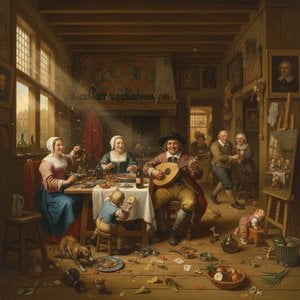
Jan Steen: A Master of Dutch Genre Painting & the Golden Age
Explore the life & art of Jan Steen, a leading Dutch Golden Age painter renowned for his humorous genre scenes & insightful social commentary. Discover his techniques, legacy, and collecting tips.

The Radiant Dusk of Medieval Vision: Exploring Late Gothic Art's Synthesis of Faith, Form & Emotionality (c. 1300-1500)
Explore the exquisite beauty & spiritual depth of Late Gothic art (c. 1300-1500). Discover key artists, symbolism, and its lasting influence on the Renaissance. Expert insights at ArtsDot.