


 Zobraziť v interiéri
 Odoslať
 Zdieľať
 Podrobnosti
 Príručka

 Stiahnuť
 Podobné položky
 RTG skúška
 Prehliadanie diapo\]
 Štatistiky
Untitled


 Prečítať si viac
Umelecké dielo zobrazené na tejto stránke je chránené autorským zákonom, čo znamená, že nemôžeme legálne vytvárať ani predávať jeho identickú reprodukciu. Táto ochrana je vymáhaná na základe medzinárodných dohôd, ako napríklad Bernská konvencia a národnými zákonmi, vrátane tých, ktoré sú stanovené v Autorské právo USA – Title 17. Všetky práva vyhradené.
Táto metóda plne dodržiava autorské práva, pretože nezahŕňa kopírovanie ani duplikovanie chráneného diela. Ide skôr o kreatívnu reinterpretáciu – nový obraz, ktorý je ovplybnený originálom, no nie je s ním identický.
Giclée / Umenotlač
Giclée tlač alebo plátno múzeálnej kvality s rýchlou výrobou a rôznymi možnosťami povrchovej úpravy. ( Objednať ručne maľovanú reprodukciu Prepnúť na digitálnu verziu obrazu)




P118B €10

P118H €10

P118W €10

P438Z €10

P508JH €12

P508YH €12

P805H €10

P805Z €10

P919BZ €10

P919G €10

P919XJ €10

P959ZH €10

P968JZ €12

W106C €8

W218G €10

W218JH €8

W218Y €10

W307PJ €10

W316G €10

W316PJ €8

W316Y €10

W398PJ €8

W4111J €10

W500HY €15

W500JH €15

W692G €12

W849H €8

W940BG €15

W953PJ €8




Vyberte si z našich preddefinovaných rozmerov, ktoré zodpovedajú pôvodným pomeroḿ diela.

Zadajte šírku a výšku, ktoré potrebujete, aby sa reprodukcia hodila k vášmu rámu alebo stene. Print možno len orezávať, nikdy však nemennú veľkosť zvětšiť oproti pôvodnému obrázku, preto pri inom formáte stráca časť obrazu. Pred samotným vytlačiacím procesom vám pošleme digitálny náhľad na schválenie. Obrázok zobrazený na tejto stránke nezobrazuje reálny rez — len digitálny náhľad ukazuje presný výsledok.
Celosvetová doprava () do 2 týždňov namiesto štandardných 4 až 5 týždňov. (23 október)

Bezplatná expresná doprava po celom svete

Vysokokvalitné lnianske plátno

Úplné poistenie prepravy

Záruka vrátenia colného poplatku

Záruka presného farebného zhodnutia

100-dená politika vrátenia tovaru (iba pri vadách)

100% záruka vrátenia peňazí

Ponuka množstevnej zľavy
 Možnosť skla je dostupná len pri rozmeroch pod 110 cm

Untitled
Giclée / Umenotlač
Veľkosť reprodukcie
-


Celková cena
€ 54
Súvisiace diela


Biografia umelca
The Architect of Geometric Light: The Life and Legacy of Jacques Villon
Jacques Villon, born Émile Méry Frédéric Gaston Duchamp, was far more than a mere participant in the avant-garde; he was a foundational architect of modern visual language. Born in 1875 in the quiet region of Normandy, his early life was steeped in an artistic lineage that would eventually shape the course of twentieth-century art. As the elder brother to the legendary Marcel Duchamp, the sculptor Raymond Duchamp-Villon, and the painter Suzanne Duchamp-Crotti, Villon emerged from a family where creativity was as much a vocation as a way of life. To distinguish his identity from his siblings, he adopted the pseudonym of the medieval poet François Villon, a choice that hinted at the rebellious, bohemian spirit that would define his journey through the radical art movements of Paris. His early years were characterized by a fascinating tension between tradition and rebellion. While he initially pursued a legal education at the University of Paris, the magnetic pull of Montmartre’s artistic fervor proved irresistible. Before fully committing to the canvas, Villon honed his craft through graphic media, contributing sharp, witty illustrations to Parisian satirical newspapers like Le Couriente français. This period of printmaking was crucial; it instilled in him a profound understanding of line, contrast, and the structural power of black and white—elements that would later become hallmarks of his Cubist explorations. His early influences were diverse, ranging from the meticulous Symbolism of Gustave Moreau to the vibrant energy of the Belle Époque, creating a stylistic foundation that was both intellectually rigorous and visually evocative.The Puteaux Group and the Geometry of Vision
As the twentieth century dawned, Villon became a central figure in one of art history's most transformative movements: Cubism. Moving to the outskirts of Paris, he joined the influential Puteaux Group, a circle of artists including his brother Marcel and the masters Picasso and Braque. Unlike the more fragmented approach of early Analytic Cubism, Villon’s contribution was marked by a unique preoccupation with tonal modulation and mathematical rhythm. He sought to dismantle the physical world into geometric fragments not merely to destroy form, but to reconstruct it through a lens of light and depth. His mastery of technique allowed him to bridge the gap between the tangible and the abstract. In his printmaking, particularly his work with drypoint, he achieved a velvety, atmospheric quality that gave weight to his geometric compositions. He utilized subtle shifts in color intensity and carefully orchestrated tonal gradients to convey a sense of atmosphere that felt almost sculptural. This approach allowed him to explore the intersection of structure and sensation, creating works where the rigid boundaries of Cubist planes seemed to vibrate with an inner light. His ability to balance the intellectual precision of geometry with an emotional, almost ethereal resonance set him apart from his contemporaries.A Lasting Impression on Modernity
The historical significance of Jacques Villon lies in his role as a bridge between eras. He did not merely follow trends; he helped synthesize them. From his early roots in Symbolism to his pivotal role in the birth of Cubism and his eventual explorations into abstract expression, his oeuvre represents a continuous dialogue with the evolution of modern perception. His work serves as a testament to the idea that abstraction need not be devoid of soul, and that geometry can be a vessel for profound atmospheric beauty. Today, Villon is remembered as a master of form and light, an artist whose disciplined approach to composition paved the way for the abstract movements that followed. His legacy is found in every line that seeks to find order within chaos and every shade that attempts to capture the fleeting essence of light. Through his paintings, prints, and drawings, he remains a monumental figure, reminding us that the true power of art lies in its ability to reshape the very way we see the world.
Jacques Villon
1875 - 1963
Rýchle fakty
- Artistic Movement Or Style: Cubism
- Artists Or Movements Influenced By This Artist: ['Neo-classical Architecture']
- Artists Who Influenced This Artist:
- Pablo Picasso
- Georges Braque
- Date Of Birth: 1875
- Date Of Death: 1963
- Full Name: Jacques Villon
- Nationality: French
- Notable Artworks:
- Untitled
- Portrait of Jacques Villon
- Gaby
- Place Of Birth: Paris
Súvisiace články

Top 10 slávnych obrazov s dominantnou čiernou farbou | ArtsDot.sk
Objavte top 10 slávnych obrazov s dominantnou čiernou farbou od Rembrandta, Goya a ďalších majstrov. Prežite príbehy umenia, techniky a nadčasovej krásy. Reprodukcie obrazov pre váš interiér na ArtsDot.sk – múzejná kvalita!

Monochrome Visions: Exploring the Aesthetic & Historical Significance of Black & White Photography
Explore the rich history & artistic power of black and white photography. From early techniques to iconic masters like Ansel Adams, discover why monochrome continues to captivate art lovers today. Expert insights for collectors.
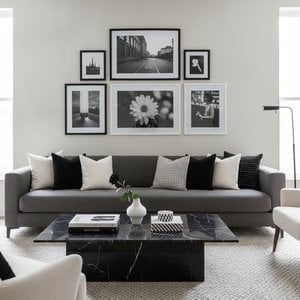
Timeless & Chic: Elevating Your New Home with the Sophistication of Black and White Photography
Transform your new home with the timeless allure of black and white photography. ArtsDot.com specializes in elegant monochrome decor and custom hand-painted wedding portraits that turn cherished milestones into lasting, soulful masterpieces. Elevate your space with ease.
Top 10 slávnych obrazov s dominantnou čiernou farbou – Umění pre váš domov | ArtsDot
Objavte top 10 slávnych obrazov s dominantnou čiernou farbou od Rembrandta, Goya a ďalších majstrov. Prežite príbeh umenia, techniky a nadčasovej krásy. Reprodukcie obrazov pre váš domov na ArtsDot.com

Top 10 slávnych obrazov v odtieňoch bielej: Krása, história a dekor pre váš domov
Objavte top 10 slávnych obrazov v odtieňoch bielej – Monet, Renoir a ďalší majstri. História umenia, techniky a inšpirácia pre váš interiér. Reprodukcie obrazov najvyššej kvality na ArtsDot.com.