

 Náhľad v interiéri
 Odoslať ako digitálnu kartu
 Zdieľať
 Podrobnosti o dielo
 Príručka

 Stiahnuť obraz
 Podobné položky
 RTG skúška
 Prehliadanie diapozoje
 Otázky a odpovede
 Štatistiky
Hope Diamond package

- 28.0 x 36.0 cm


 Zobraziť viac
Umelecké dielo zobrazené na tejto stránke je chránené autorským zákonom, čo znamená, že nemôžeme legálne vytvárať ani predávať jeho identickú reprodukciu. Táto ochrana je vymáhaná na základe medzinárodných dohôd, ako napríklad Bernská konvencia a národnými zákonmi, vrátane tých, ktoré sú stanovené v Autorské právo USA – Title 17. Všetky práva vyhradené.
Táto metóda plne dodržiava autorské práva, pretože nezahŕňa kopírovanie ani duplikovanie chráneného diela. Ide skôr o kreatívnu reinterpretáciu – nový obraz, ktorý je ovplybnený originálom, no nie je s ním identický.
Giclée / Umenotlač
Giclée tlač alebo plátno múzeálnej kvality s rýchlou výrobou a rôznymi možnosťami povrchovej úpravy. ( Kúpiť ručne maľovaný obraz Prepnúť na digitálny obraz)




P118B €10

P118H €10

P118W €10

P438Z €10

P508JH €12

P508YH €12

P805H €10

P805Z €10

P919BZ €10

P919G €10

P919XJ €10

P959ZH €10

P968JZ €12

W106C €8

W218G €10

W218JH €8

W218Y €10

W307PJ €10

W316G €10

W316PJ €8

W316Y €10

W398PJ €8

W4111J €10

W500HY €15

W500JH €15

W692G €12

W849H €8

W940BG €15

W953PJ €8




Vyberte si z našich preddefinovaných rozmerov, ktoré zodpovedajú pôvodným pomeroḿ diela.

Zadajte šírku a výšku, ktoré potrebujete, aby sa reprodukcia hodila k vášmu rámu alebo stene. Print možno len orezávať, nikdy však nemennú veľkosť zvětšiť oproti pôvodnému obrázku, preto pri inom formáte stráca časť obrazu. Pred samotným vytlačiacím procesom vám pošleme digitálny náhľad na schválenie. Obrázok zobrazený na tejto stránke nezobrazuje reálny rez — len digitálny náhľad ukazuje presný výsledok.
Celosvetová doprava () do 2 týždňov namiesto štandardných 4 až 5 týždňov. (5 november)

Bezplatná expresná doprava po celom svete

Vysokokvalitné lnianske plátno

Kompletné poistenie prepravy

Záruka vrátenia colného poplatku

Záruka presného farebného zhodnutia

100-dená politika vrátenia tovaru (iba pri vadách)

100% záruka vrátenia peňazí

Zľava pri väčšom množstve
 Možnosť skla je dostupná len pri rozmeroch pod 110 cm

Hope Diamond package
Giclée / Umenotlač
Veľkosť reprodukcie
-


Celková cena
€ 56
A Journey in Paper and Ink: The Allure of the Hope Diamond Package
In the quiet intersection of postal history and fine art lies "Hope Diamond package," a captivating work by Harry Weinstein that invites viewers into a world of international intrigue and historical transit. At first glance, the painting presents us with a humble brown envelope, yet beneath its weathered surface lies a rich tapestry of global connection. This is not merely a depiction of mail; it is a window into a moment in time, captured through the meticulous rendering of a mailing wrapper destined for the Smithsonian's National Postal Museum. The piece breathes life into the mundane, transforming a simple object of logistics into a vessel of storytelling and mystery.
Symbolism and the Weight of History
Beyond its visual charm, the painting carries a heavy symbolic resonance. The handwritten note, "Please deliver registered mail," acts as a poignant reminder of the care and gravity associated with precious cargo. It hints at the legendary status of the Hope Diamond itself, suggesting that even in its most transit-oriented form, the object possesses an aura of importance that demands protection. This tension between the fragility of paper and the permanence of historical legend creates a compelling emotional pull for the observer. The artwork serves as a meditation on communication—how ideas, treasures, and histories are packaged, sent, and eventually preserved for posterity.
For the discerning collector or interior designer, this piece offers a unique opportunity to introduce a conversation starter into a curated space. Its aesthetic is both scholarly and soulful, making it an ideal centerpiece for a library, a study, or a sophisticated gallery wall. As a high-quality reproduction, it brings the meticulous craftsmanship of Weinstein’s era into the modern home, offering a touch of academic elegance and a deep connection to the global heritage of the postal arts. To possess this work is to hold a fragment of a world where every stamp told a story and every envelope carried the weight of the world.
Otázky a odpovede
Kde kúpiť ručne maľované kópie diela „Hope Diamond package“ od Harry Weinstein?
Ručne maľovanú reprodukciu diela „Hope Diamond package“ od Harry Weinstein si môžete objednať priamo na jeho stránke Ručne maľovaná reprodukcia: ručne maľovaná olejná reprodukcia na ľanovom plátne, vyrábanú na mieru.
Sú farby diela „Hope Diamond package“ od Harry Weinstein sýte alebo tlmené?
Saturácia palety diela „Hope Diamond package“ je na úrovni Clear Color Presence.
Akú atmosféru vyžaruje dielo „Hope Diamond package“?
„Hope Diamond package“ od Harry Weinstein má v nálade charakterizovanú ako Nostalgic. Táto klasifikácia môže pomôcť pri vhodnom umiestnení diela.
Podobné diela


Biografia umelca
The Eye of the Apprentice
New York City, 1896. A child is born to Jacob Weinstein, a man who navigated the uncertainties of the Russian Empire before arriving at Ellis Island in 1890. The boy, Harry, grows up within the walls of his father's jewelry shop, a place defined by the sharp judgment required for the trade. He moves through the Diamond District as a runner and messenger, absorbing the language of gems and the weight of commerce. A single moment shifts everything. In a pawnshop, a tray of discarded items catches his attention. He spots a ring with a green stone, priced at a mere twenty-five cents. He buys it. Two days later, that same stone—a two-carat emerald—is sold for eight hundred dollars.
This instinct for value becomes the foundation of his life. By 1920, he adopts a new name, Winston, and establishes The Premier Diamond Company. He is no longer just a messenger; he is an architect of acquisition.
The King of Diamonds
The business expands with calculated precision. In 1932, Harry Winston, Inc. opens its doors in New York City. His method relies on a specific philosophy: finding beauty in historic collections and modernizing them for a new era. He does not merely collect; he transforms. The acquisition of the Arabella Huntington jewelry collection in 1926 marks a turning point. He takes pieces that feel anchored to the past and redesigns them, focusing on the brilliance of the stone itself rather than heavy, old-fashioned settings.
His influence reaches into the heart of popular culture through the red carpet. In 1944, he initiates a practice that changes Hollywood forever, lending diamonds to Jennifer Jones for the Academy Awards. This creates a direct link between the jewelry house and the stars of the screen. His technical innovations also leave a mark on the industry:
- The development of the Winston Cluster design in the 1940s.
- A focus on arranging gemstones to minimize visible metal settings.
- The organization of the Court of Jewels exhibitions starting in 1949.
A Legacy in Stone
The stones he handles carry their own histories, often more famous than the man himself. He manages the division of the 726-carat Jonker Diamond and acquires the Vargas Diamond. Yet, his most significant contribution to public history involves a blue stone of immense legend. In 1958, he donates the 45.5-carat Hope Diamond to the Smithsonian Institution. He sends it via U.S. registered mail, a simple act of transit for an object of such gravity. This gift helps establish the foundation of the Smithsonian National Gem Collection.
Harry Weinstein died in 1978, leaving behind a name synonymous with the highest tier of the diamond trade. His life was defined by the ability to see value where others saw nothing, turning a twenty-five cent investment into a global empire of light and stone.

Harry Weinstein
1896 - 1978 , United States of America
Základné informácie
- Full Name: Harry Weinstein
- Notable Artworks: ['Hope Diamond package']
- Note: The subject was an American jeweler.
- Place Of Birth: New York, United States of America
- Date Of Birth: 1896
- Date Of Death: 1978
Súvisiace články

Echoes of Time: Nostalgia, Technique & Cultural Significance in Vintage Paintings
Explore the captivating world of vintage paintings! Discover key styles, cultural significance & collecting tips from art experts at ArtsDot. Find authentic reproductions and elevate your home décor.

Top 10 slávnych obrazov v odtieňoch pieskovohnedej: Krása a história umenia pre váš domov
Objavte top 10 slávnych obrazov v odtieňoch pieskovohnedej! Prežite príbehy Van Gogha, Rembrandta a ďalších majstrov. Reprodukcie obrazov pre váš domov – impresionizmus, renesancia a viac na ArtsDot.com

Mark Rothko: Top 25 dielo pre milovníkov umenia a luxusného interiéru
Ponorte sa do sveta Marka Rothka s ArtsDot.com! Objavte top 25 diel abstraktného expresionizmu, farebných plôch a hlbokých emócií. Kúpiť reprodukcie obrazov online a inšpirujte sa pre luxusný interiérový dizajn. Preskúmajte celú kolekciu na ArtsDot.com

Top 10 slávnych obrazov v odtieňoch hľuzoviek: Umění pre váš domov s ArtsDot
Ponorte sa do sveta 10 slávnych obrazov v odtieňoch hľuzoviek! Objavte príbehy Van Gogha, Moneta a ďalších majstrov. Reprodukcie pre váš domov s ArtsDot – umenie online.
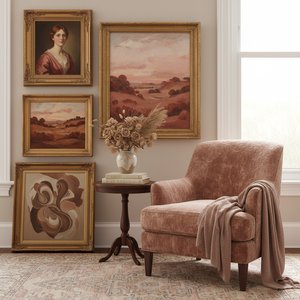
Top 10 slávnych obrazov v odtieňoch ružovej a hnedé: Krása a história umenia pre váš domov
Objavte top 10 slávnych obrazov v ružových a hnedých odtieňoch! Prežite príbehy impresionistických majstrov, renesančných umelcov a ikonické diela. Reprodukcie obrazov pre váš domov na ArtsDot.com – múzejná kvalita a inšpirácia pre interiér.