


 Zobraziť v interiéri
 Odoslať
 Zdieľať
 Podrobnosti
 Príručkovo

 Stiahnuť
 Podobné položky
 RTG skúška
 Prehliadanie diapo\]
 Štatistiky
A Concert
 Oil
Oil- WallArt
- Baroque
 1675
1675- Early Modern
 58.0 x 47.0 cm
 Art Museum
 Prečítať si viac
Giclée / Umenotlač
Giclée tlač alebo plátno múzeálnej kvality s rýchlou výrobou a rôznymi možnosťami povrchovej úpravy. ( Objednať ručne maľovanú reprodukciu Prepnúť na digitálnu verziu obrazu)




P118B $10

P118H $10

P118W $10

P438Z $10

P508JH $12

P508YH $12

P805H $10

P805Z $10

P919BZ $10

P919G $10

P919XJ $10

P959ZH $10

P968JZ $12

W106C $8

W218G $10

W218JH $8

W218Y $10

W307PJ $10

W316G $10

W316PJ $8

W316Y $10

W398PJ $8

W4111J $10

W500HY $15

W500JH $15

W692G $12

W849H $8

W940BG $15

W953PJ $8




Vyberte si z našich preddefinovaných rozmerov, ktoré zodpovedajú pôvodným pomeroḿ diela.

Môžete zadať vlastné rozmery, aby sa reprodukcia prispôsobila konkrétnemu rámu alebo priestoru. Ak zvolená veľkosť nebude zodpovedať proporciám originálu, dielo buď orežeme, alebo obraz rozšírime pomocou zrkadlenia či farebného doplnenia okrajov. Pred začatím výroby vám pošleme digitálnu ukážku na schválenie.
Máte na vedomí, že náhľad na obrazovke neodzrkadľuje skutočné orezanie alebo rozšírenie. Len digitálna ukážka presne zobrazí finálnu kompozíciu.
Hoci sú k dispozícii vlastné rozmery, pre zachovanie pôvodných proporcií odporúčame vybrať si rozmer z vopred definovaného zoznamu.
Celosvetová doprava () do 2 týždňov namiesto štandardných 4 až 5 týždňov. (23 september)

Bezplatná expresná doprava po celom svete

Vysokokvalitné lnianske plátno

Úplné poistenie prepravy

Záruka vrátenia colného poplatku

Záruka presného farebného zhodnutia

100-dená politika vrátenia tovaru (iba pri vadách)

100% záruka vrátenia peňazí

Ponuka množstevnej zľavy
 Možnosť skla je dostupná len pri rozmeroch pod 110 cm

A Concert
Giclée / Umenotlač
Veľkosť reprodukcie
-


Celková cena
$ 62
A Symphony of Stillness: The Intimate World of Gerard ter Borch
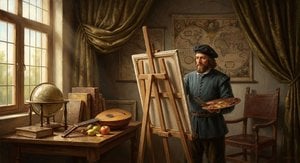
In the quiet corners of the Dutch Golden Age, few artists possessed the ability to transform a domestic moment into a profound psychological study as masterfully as Gerard ter Borch. His 1675 masterpiece, A Concert, invites the viewer into a private sanctuary of melody and companionship. The scene unfolds around a central dining table, where three figures are gathered in an atmosphere of focused, quiet devotion to music. On the left, a figure cradles a book, perhaps a collection of musical notation, while across from them, the delicate presence of a violin and a lute rests near their companions. This is not a boisterous celebration, but rather a captured breath—a moment of shared harmony that transcends the mere act of playing instruments.
The composition is anchored by a sense of grounded realism, a hallmark of Ter Borch’s pioneering genre painting. The table, occupying much of the midground, serves as the stage for this domestic drama, adorned with a simple bowl that hints at a shared meal interrupted or perhaps accompanied by song. A solitary chair stands poised at the edge of the frame, an evocative element that suggests the possibility of another guest joining the circle, or perhaps the recent departure of one. This subtle use of negative space and placement creates a narrative tension, making the viewer feel less like a distant observer and more like an unobserved guest in the room.
Mastery of Texture and Light
To behold A Concert is to witness the technical brilliance of a painter who understood that light is the soul of texture. Ter Borch was renowned for his ability to render the tactile qualities of fabric, skin, and wood with an almost supernatural precision. In this work, the soft glow illuminating the figures highlights the smooth grain of the lute and the polished surface of the violin, contrasting beautifully with the matte textures of the clothing and the heavy, lived-in feel of the indoor setting. The light does not merely illuminate; it sculptates, carving out the depth of the room and lending a three-dimensional weight to the figures that makes them feel palpably present.
For the discerning collector or interior designer, this painting offers more than just historical significance; it provides a sophisticated focal point for any curated space. The muted, earthy palette—rich with deep shadows and warm, amber tones—allows the piece to integrate seamlessly into classical or contemporary settings alike. Whether placed in a library, a formal dining room, or a quiet study, the painting exudes an aura of timeless elegance. It serves as a window into a bygone era, bringing with it a sense of calm, intellectual depth, and the enduring beauty of the Dutch tradition.
The Emotional Resonance of Harmony
Beyond the technical execution lies the emotional heartbeat of the work. There is a profound sense of tranquility embedded in the arrangement of the musicians. The interplay between the visual elements—the book, the instruments, the shared table—symbolizes the harmony that music brings to human connection. Ter Borch captures the concept of "musica reservata," the private music intended for small, intimate circles, reflecting a period where art was deeply intertwined with personal emotion and domestic stability.
Owning a high-quality reproduction of this work allows one to inhabit this atmosphere of peace daily. It is an invitation to slow down, to appreciate the subtle nuances of light and shadow, and to find beauty in the quietest moments of life. As a piece of decor, A Concert does not shout for attention; instead, it commands respect through its understated grace, making it an incomparable choice for those who seek to surround themselves with art that speaks to the soul.
Súvisiace diela


Biografia umelca
Gerard ter Borch – Pionier Nederlandse Genre Schilderkunst
Gerard ter Borch (1617-1681), ook bekend als Gerard Terburg, was een invloedrijke en baanbrekende Nederlandse genre schilder die woonde tijdens de Gouden Eeuw van Nederland. Hij beïnvloedde zijn tijdgenoten Gabriel Metsu, Gerrit Dou, Eglon van der Neer en Johannes Vermeer.
Zijn geboorte vond plaats in december 1617 in Zwolle, provincie Overijssel, het huidige Nederlands Koninkrijk. Hij ontving een uitstekende opleiding van zijn vader Gerard ter Borch sr., ook een kunstenaar, en ontwikkelde zijn talent zeer vroeg.
De exacte omstandigheden rondom zijn jeugd zijn weinig gedocumenteerd, maar het staat vast dat hij uitgebreid reisde door Europa, waaronder Londen, Duitsland, Frankrijk, Spanje en Italië. Deze ervaring gaf hem een brede kijk op kunst en cultuur, wat zich terugvond in zijn stijl.
Vroege Levensloop en Onderwijs
Gerard ter Borch sr., een bekroonde kunstenaar zelf, zorgde ervoor dat zijn zoon een goede opleiding kreeg. Een belangrijke gebeurtenis was de studie van het hoofd bij Willem Cornelisz Duyster en Pieter Codde in Amsterdam in 1632. Deze invloedrijke leraren legden de basis voor Ter Borch’s artistieke ontwikkeling.
Hij studeerde verder onder Pieter de Molijn in Haarlem in 1634, waar hij een belangrijke stijlvorming doormaakte. Zijn zus Gesina volgde ook een carrière als kunstenaar en draagde bij aan het kunsthistorische bewustzijn van het gezin.
Beknopte Werken en Stijl
Ter Borch’s stijl werd gekenmerkt door een combinatie van realisme en aandacht voor licht en schaduw. Hij gebruikte vaak een gedetailleerde techniek om de atmosfeer en emoties binnen zijn composities weer te geven.
Een van zijn meest bekende werken is “De Brief” (1634), een meesterwerk dat laat zien hoe Ter Borch het licht en de textuur beheerst. Ook “Het elegante gesprek” (1646), uitgevoerd door Johann Georg Wille, illustreert zijn vermogen om complexe emoties op een subtiele manier weer te geven.
Hij schilderde onder andere het portret van Adrian Pauw bij aankomst in Münster en verschillende andere belangrijke historische gebeurtenissen. Zijn werk wordt vaak beschouwd als een voorbeeld van Nederlandse genre kunst uit de Gouden Eeuw.
Musea en Collecties met Ter Borch’s Kunst
Ter Borch’s werken bevinden zich nu in verschillende musea wereldwijd, waaronder het Hermitage Paleis in Sint Petersburg, Rusland; het Gemäldegalerie Alte Meister in Berlijn, Duitsland; en het Getty Center voor de Kunst in Los Angeles, Verenigde Staten.
Deze musea bieden bezoekers een prachtige kans om zijn kunstwerken te bewonderen en kennis te maken met zijn stijl en historische context. Een belangrijke verzameling vindt je ook in het Mauritshuis te Den Haag.
Erfenis en Impact
Gerard ter Borch wordt beschouwd als een pionier van Nederlandse genre schilderkunst en hij oefende grote invloed uit op zijn tijdgenoten. Zijn stijl werd gekopieerd door andere kunstenaars, zoals Gabriel Metsu, Gerrit Dou en Johannes Vermeer.
Hij staat bekend om zijn innovatieve manier van werken en zijn aandacht voor het weergeven van het dagelijks leven met een hoog niveau van detail en emotionele expressie. Ter Borch’s werk blijft een belangrijk onderdeel van de kunstgeschiedenis en wordt nog steeds gewaardeerd door kunsthistorici en verzamelaars wereldwijd.

Gerard ter Borch mladší
1617 - 1681 , Nemecko
Rýchle fakty
- Artistic Movement Or Style: Genre painting
- Artists Or Movements Influenced By This Artist:
- Gabriel Metsu
- Gerrit Dou
- Artists Who Influenced This Artist:
- Willem Cornelisz Duyster
- Pieter Codde
- Date Of Birth: December 1617
- Date Of Death: 8 december 1681
- Full Name: Gerard ter Borch
- Nationality: Dutch
- Notable Artworks:
- The Letter
- The Gallant Conversation
- Place Of Birth: Zwolle, Netherlands
Súvisiace články

Top 10 majstrovských diel holandskej Zlatej éry: Umění pre váš domov s ArtsDot.com
Ponorte sa do sveta holandskej Zlatej éry s ArtsDot.com! Objavte príbehy Rembrandta, Vermeera a ďalších majstrov baroka. Reprodukcie obrazov pre váš domov – inšpirujte sa nadčasnými dielami. Preskúmajte kolekciu online!

Charles Leickert: Capturing the Dutch Golden Age Light – A Comprehensive Study of Technique, Context, and Legacy
Explore the captivating winter landscapes of Charles Leickert, a master of Dutch Golden Age light & atmosphere. Discover his techniques, symbolism, and lasting legacy – a comprehensive study for art enthusiasts and collectors.

Illuminating Innovation: Exploring the Dutch Golden Age of Painting
Explore the Dutch Golden Age of painting with ArtsDot. Discover Rembrandt, Vermeer & other Masters. Learn about key characteristics, iconic artworks, and lasting influence. Expert insights for collectors & enthusiasts.

Golden Age Reflections: Dutch Baroque Painting & Cultural Innovation
Explore the Dutch Golden Age of painting! Discover key artists like Vermeer & ter Borch, their innovative techniques, and the rich cultural context behind these Baroque masterpieces. Learn about collecting & appreciating this iconic art period.
Illuminating Realism: Exploring the Dutch Golden Age of Painting (1600-1700)
Explore the Dutch Golden Age of painting (1600-1700) with ArtsDot. Discover Rembrandt, Vermeer & other masters. Learn about techniques, history & find museum-quality reproductions.


