


Obraz sa prispôsobuje vašim voľbám: , .
Popis zberateľského predmetu
Deimantas Narkevičius’ ‘The Head’ – a monumental, unfinished marble bust of Marx. Explore this photographic documentation of the sculpture's creation & its symbolic weight.
 Zobraziť viac
Biografia umelca
Lithuanian artist Deimantas Narkevičius explores memory & political history through film & video. Exhibited at Venice Biennale, Centre Pompidou & more. Explore his impactful work.
Ručne maľovaná olejová reprodukcia
Ručne maľovaný olej na plátne vo vašej zvolenej veľkosti a v ráme, vyrobený na mieru našimi umelcami. ( Prepnúť na tlač Prepnúť na digitálny obraz)
Toto dielo je chránené autorským právom
Umelecké dielo zobrazené na tejto stránke je chránené autorským zákonom, čo znamená, že nemôžeme legálne vytvárať ani predávať jeho identickú reprodukciu. Táto ochrana je vymáhaná na základe medzinárodných dohôd, ako napríklad Bernská konvencia a národnými zákonmi, vrátane tých, ktoré sú stanovené v Autorské právo USA – Title 17. Všetky práva vyhradené.
Ako rešpektujúca a legálna alternatíva ponúkame vlastné, ručne maľované diela inšpirované originálom. Naši skúsení a profesionálni umelci dôkladne študujú štýl, náladu a umelecký podnet originálu, aby vytvorili nové, jedinečné dielo, ktoré vyvoláva rovnaký pocit – pričom samo ostáva vlastným originálnym dielom.
Táto metóda plne dodržiava autorské práva, pretože nezahŕňa kopírovanie ani duplikovanie chráneného diela. Ide skôr o kreatívnu reinterpretáciu – nový obraz, ktorý je ovplybnený originálom, no nie je s ním identický.
Viac informácií o tomto obraze
 Náhľad v interiéri
 Odoslať ako digitálnu kartu
 Zdieľať
 Podrobnosti o dielo
 Príručka

 Stiahnuť obraz
 Podobné položky
 RTG skúška
 Prehliadanie diapozoje
 Otázky a odpovede
 Štatistiky
Objednajte si svoj obraz v štyroch jednoduchých krokoch
Nespáľujte sa. Každú odpoveď môžete zmeniť; cena vo vašej objednávke sa prispôsobí každej zvolenej možnosti.
1 Prvý krok zo štyroch
Akú veľkosť si prajete?
Tieto veľkosti zachovávajú proporcie originálneho obrazu. Ilustrácia zobrazuje vašu voľbu na stene, nad dvometrovou pohovkou.
alebo zadajte vlastné rozmery
Vyberte si z našich preddefinovaných rozmerov, ktoré zodpovedajú pôvodným pomeroḿ diela.

Zadajte šírku a výšku, ktoré potrebujete, aby sa dielo hodilo k vášmu rámu alebo stene. Keďže ide o ručnú maľbu, pri rozmeroch s odlišným pomerom strán môže umelec namalovať o niečo viac okolo obrázka alebo ho mierne orezatú — výber patrí vám. Pred začatím maľovania vám pošleme digitálnu ukážku na schválenie. Obrázok zobrazený na tejto stránke nenahrádza reálny výsledok — ten zobrazuje iba digitálna ukážka.
2 Druhý krok zo štyroch
Ako by mal byť pripravený: rolovaný, natiahnutý alebo v ráme?
Ceny nižšie sa týkajú veľkosti, ktorú ste si vybrali v prvom kroku.
Vyberte si opletenie plátna
Vyberte si rám

Biele okraje €1

rozostrené okraje €1

Vytiahnutý okraj €1

P118B €10

P118H €10

P118W €10

P438Z €10

P508JH €12

P508YH €12

P805H €10

P805Z €10

P919BZ €10

P919G €10

P919XJ €10

P959ZH €10

P968JZ €12

W106C €8

W218G €10

W218JH €8

W218Y €10

W307PJ €10

W316G €10

W316PJ €8

W316Y €10

W398PJ €8

W4111J €10

W500HY €15

W500JH €15

W692G €12

W849H €8

W940BG €15

W953PJ €8

H24-GOLD €30

H24-SILVER €30

H36-GOLD €45

H36-SILVER €45
V rámoch
Profil: . Celkový rozmer vrátane rámov: .
3 Tretí krok zo štyroch
Chceli by ste v obraze niečo zmeniť?
Väčšina ľudí odpovedá nie. Keďže každý obraz je vytvorený ručne, náš umelec ho však dokáže prispôsobiť aj vám.
Po objednávke vám tím ArtsDot.com pošle e-mail s pokynmi a poskytne náhľad návrhu
4 Štvrtý krok zo štyroch
Niekoľko možností finálnej úpravy
Všetky sú voliteľné. Už zvolené odpovede nesú žiadne dodatočné náklady.
Kto je autorom?
Celosvetová doprava () za 3 až 4 týždne namiesto štandardných 5 týždňov. (5 november). Bez kompromisov v kvalite.
Štítok, ako v múzeu?
Detaily vygravírovaného bronzového pláka
This elegant plaque features the artist's name and the title of the artwork, finely engraved for a timeless presentation.
It is made from bronze with a refined, elegant finish. The text is precisely laser-engraved for a sharp and permanent result. Measuring 9x2 cm, the plaque is compact yet easy to read. It's built to be durable and scratch-resistant, offering a professional, museum-quality look. Mounting is simple thanks to the included adhesive backing.
Detaily transparentnej akrylovej plăty
The plaque includes essential engraved details such as the artist's name, the title of the artwork, the date it was created, the type of media used-like oil on canvas or watercolor-a brief description of the piece, and a QR code that links to the complete artwork information.
It is crafted from clear acrylic, offering a sleek, modern appearance. The text is UV-engraved in black to ensure strong visual contrast. With a size of 10x15 cm, it ensures optimal readability. It comes equipped with two metal hooks for secure wall mounting. The plaque is designed to be weather-resistant, making it suitable for various environments, and it includes interactive features that work seamlessly with smartphone scanning.
Detaily čiernej akrylovej plăty
This elegant plaque includes engraved information such as the artist's name, the title of the artwork, the date it was created, the type of media used (like oil on canvas or watercolor), a short description of the artwork, and a QR code for quick access to more information.
The plaque itself is made from refined black acrylic with a premium finish. The text is laser-engraved in white for high contrast and readability. Its size is 10x15 cm, designed to be easy to read. It comes with two metal hooks for professional mounting. The design is sleek and fits any interior style. It is also weather-resistant and durable, with built-in digital integration for mobile compatibility.
Ochranný lak?
Kedy vám má byť doručené?
✓ Kontrola a objednávka
Vaša maľba presne podľa vašej objednávky

The Head
Technika reprodukcie
Veľkosť reprodukcie
-

Výborne skúsený umelec
Viac detailov, jemnosti a dodatočného času na výrobu
-

Rámovanie reprodukcie
-
-
V prípade umeleckých diel alebo reprodukcií, ktorých ktorákoľvek strana je väčšia ako 105 cm (cca 41 palcov), sa rám dodáva v rozloženom stave ako sada. Táto metóda zabezpečuje bezpečnú доставu a chráni pred poškodením počas prepravy.
Vyžaduje sa odborná montáž – toto nie je produkt na vlastnú prípravu (DIY).
Sada musí byť zmontovaná a plátno napnuté skúseným profesionálnym rámovaníkom, s použitím drevárneho lepidla (nie je súčasťou sady), klieš na napínanie plátna a svoriek na udržanie prav角的 rámov počas schnutia lepidla. Nesprávna montáž alebo nerovnomerné napnutie plátna môže trvalo poškodiť umelecké dielo, čo nie je kryté našou zárukou.
 V prípade umeleckých diel alebo reprodukcií, ktorých ktorákoľvek strana je väčšia ako 105 cm (cca 41 palcov), sa rám dodáva v rozloženom stave ako sada. Táto metóda zabezpečuje bezpečnú доставu a chráni pred poškodením počas prepravy.
Všetky lišty z masívneho dreva sú súčasťou balenia, presne narezané na mieru.
Montuje sa pomocou súčasťou balenia dodaných skrutiek, plus drevolepu na spoje v rohoch, ktorý nie je súčasťou balenia a musí si ho zabezpečiť váš montážnik.
Vyžadujú sa profesionálne nástroje, ktoré nie sú súčasťou sady: kliešte na napínanie plátna (napínací nástroj) a svorky na udržanie pravých uhlov rámov počas schnutia lepidla.
Dôležité:
Spoje v rohoch si vyžadujú lepidlo na drevo, tyče je potrebné upevniť pomocou svoriek, kým lepidlo úplne newyschne, a napnutie plátna na zostavený rám si vyžaduje klieže na napínanie plátna. Žiadna z týchto pomôcok nie je súčasťou sady. Pred objednaním tejto veľkosti si, prosím, zabezpečte skúseného odborníka na zakladanie rámov.

Popisné označenie
-
-

Ochranný lak
Lesklý lak (zvýrazňuje farby, chráni pred svetlom a vlhkosťou)
-

Prispôsobiť moje dielo
Príklady možností úprav: nahradenie tváre vlastnou fotografiou; pridanie domáceho zvieraťa (napr. nahradenie mačky psom); vloženie skrytého odkazu do pozadia; zmena krajiny alebo prvkov v pozadí.
-

Prioritné doručenie
Celosvetová doprava () za 3 až 4 týždne namiesto štandardných 5 týždňov. (5 november). Bez kompromisov v kvalite.
-
Rýchle doručenie
Celosvetová doprava do za 5 týždňov. (12 november).
V cene
Celková cena
€ 234
Možnosť skla je dostupná len pri rozmeroch pod 110 cm
Súčasťou každej objednávky
- Bezplatná expresná doprava po celom svete
- Vysokokvalitné lnianske plátno
- Kompletné poistenie prepravy
- Záruka vrátenia colného poplatku
- Záruka presného farebného zhodnutia
- 100-dená politika vrátenia tovaru (iba pri vadách)
- 100% záruka vrátenia peňazí
- Zľava pri väčšom množstve


A Fragment of Monumental Ideals: Deimantas Narkevičius’ ‘The Head’
Deimantas Narkevičius' “The Head” stands as a striking testament to the intersection of artistic vision and historical circumstance—a monumental, unfinished marble bust of Karl Marx meticulously documented through cinematic observation. Captured in black and white film footage originating from East Germany during the creation and inauguration of the Marx Monument in 1971, this artwork transcends mere representation; it embodies the spirit of a bygone era and probes profound questions about legacy and artistic process. The photograph itself serves as both record and catalyst for contemplation, inviting viewers to consider not just what is seen but also what remains unseen—the latent potential within an incomplete work.The Sculptor’s Vision: Contextualizing Kerbel's Creation
The sculpture’s genesis lies in the ambitious project spearheaded by sculptor Lev Kerbel, commissioned to honor Karl Marx amidst the ideological fervor of the GDR. The film documentation illuminates the meticulous planning and logistical challenges inherent in erecting such a grand monument within the constraints of Soviet artistic dogma. Every frame captures the raw physicality of construction—scaffolding, marble dust, and the purposeful movements of artisans striving to realize Kerbel’s vision. This context is crucial for understanding “The Head” not simply as an aesthetic object but as a symbol of political aspiration and the enduring struggle to commemorate influential figures. The GDR's propagandistic intent underscores the artwork’s significance beyond its formal qualities, prompting reflection on how artistic endeavors are shaped by broader societal forces.Formal Analysis: Texture, Light, and Geometric Precision
A careful examination reveals a masterful command of sculptural technique combined with photographic realism. The dominant form—a colossal marble bust—commands attention through its sheer scale and assertive contours. Strong lines delineate the face’s musculature and facial features, emphasizing anatomical accuracy while simultaneously conveying solidity and permanence. The texture is deliberately rendered to convey the unfinished state of the sculpture; chisel marks and imperfections in the marble contribute to a tactile quality that invites viewers to imagine the sculptor's hand at work. Artificial lighting directs shadows across the surface, highlighting three-dimensional form and enhancing visual drama. Geometric shapes—spheres for the head and planes for facial features—provide structural stability and reinforce compositional balance. The flattened perspective of the photograph subtly diminishes atmospheric depth but effectively communicates the monument’s imposing presence.Symbolism Beyond Representation: An Unfinished Echo
The deliberate omission of completion speaks volumes about Narkevičius' artistic intent. “The Head” isn’t merely a depiction of Marx; it embodies the ongoing process of shaping historical memory and confronting complex ideological narratives. The unfinished state symbolizes not only the challenges inherent in achieving lasting legacies but also the dynamism of ideas themselves—their capacity to evolve and transform over time. Like Kerbel's sculpture, Narkevičius’ photograph invites viewers to contemplate the elusive nature of representation and the power of suggestion. It compels us to consider what is absent as powerfully as what is present, fostering a deeper engagement with both art and history.Emotional Resonance: Memory and Reflection
Ultimately, “The Head” resonates with an emotional depth rooted in its connection to Lithuania’s Soviet past. The artwork evokes feelings of contemplation, nostalgia, and perhaps even unease—a recognition that monumental gestures can simultaneously celebrate achievement and grapple with unresolved contradictions. Narkevičius' masterful use of photographic documentation transforms a simple image into a conduit for profound reflection on identity, trauma, and the enduring influence of ideology. It serves as an invitation to consider how art can illuminate the complexities of history while prompting viewers to confront their own perspectives on memory and legacy.Otázky a odpovede
K ktorej fáze tvorivého rozvoja Deimantas Narkevičius patrí dielo „The Head“?
V rámci kariéry umelca Deimantas Narkevičius spadá dielo „The Head“ do obdobia Mature Period, čo umožňuje jeho porovnanie s ostatnými prácami tohto umelca.
Kde sa v rámci opakujúcich sa tém umelca Deimantas Narkevičius umiestňuje dielo „The Head“?
Medzi zaznamenané témy umelca Deimantas Narkevičius – eisenstein's monumental forms, soviet propaganda & memory, cold war anxieties & power, lithuanian identity struggle, historical reconstruction film, marxist ideals, unfinished legacy – prináša dielo „The Head“ vlastný dôraz na marxism, sculpture, monument, history, cold war, soviet art, unfinished, portrait.
Ako môžem získať digitálnu verziu diela „The Head“ od Deimantas Narkevičius?
Digitálnu podobu diela „The Head“ od Deimantas Narkevičius si môžete zakúpiť na jeho stránke Digitálna fotografia: stiahnutie digitálneho obrázka vo vysokom rozlíšení.
Podobné diela


Deimantas Narkevičius
1964 - , Lithuania
Biografia umelca
The Cinematic Architect of Memory
In the quiet, evocative landscapes of Lithuania, where the echoes of a complex Soviet past still linger in the architecture and the atmosphere, the work of Deimantas Narkevičius emerges as a profound meditation on time itself. Born in 1964 in Utena, Narkevičius began his artistic journey not with the lens of a camera, but with the tactile discipline of a sculptor. This foundational training at the Vilnius Art Institute instilled in him a unique sensitivity to form, space, and materiality—a sensibility that would later breathe life into his cinematic explorations. While many artists use film merely as a medium for documentation, Narkevičius treats the moving image as a sculptural element, carving out narratives from the raw materials of historical footage, found photographs, and the heavy silence of abandoned industrial sites.
His transition from the physical weight of sculpture to the ephemeral nature of video and film was not a departure, but an evolution. As Lithuania navigated the turbulent disintegration of the Soviet Union and its subsequent rebirth as a democratic state, Narkeyičius found himself at the intersection of personal recollection and political upheaval. He became a chronicler of the "rupture"—that delicate, often painful space between what was lived and what is remembered. His work does not simply present history; it interrogates the very mechanisms by which we construct myths from reality, using techniques such as voice-overs, interviews, and carefully staged re-enactments to blur the lines between documentary truth and cinematic imagination.
Layers of History and the Poetics of Space
The brilliance of Narkevičius’s practice lies in his ability to transform historical trauma into a poetic inquiry. He often directs his gaze toward the remnants of the Soviet era—monumental structures, decommissioned missile bases, and industrial hubs like the town of Elektrėnai. In works such as Energy Lithuania, he explores the symbiotic relationship between human vitality and the mechanical energy of power plants, treating these sites not merely as relics of a failed ideology, but as melancholic monuments to an era of vanished utopias. Through his lens, the decay of an industrial landscape becomes a metaphor for the fragility of political structures and the enduring persistence of cultural identity.
Influenced by the atmospheric depth of filmmakers like Andrei Tarkovsky and the structural experimentation of Peter Watkins, Narkevičius employs a visual language that is both intimate and expansive. He frequently utilizes close-ups to capture the nuances of human expression, grounding his larger political critiques in the lived experiences of individuals. This approach allows him to navigate the tension between the macro-history of nations and the micro-histories of the soul. His films act as a bridge, connecting the viewer to a past that may feel unrecognizable, yet remains fundamentally intertwined with the present through the persistent pull of collective memory.
A Global Presence and Lasting Legacy
The international recognition of Deimantas Narkevičius has solidified his position as one of the most significant voices in contemporary moving-image art. His presence on the global stage is marked by participation in the world's most prestigious cultural institutions, where his work challenges audiences to confront the fluidity of truth. His achievements include:
- Representing Lithuania at the 49th Venice Biennale, a pivotal moment that introduced his nuanced explorations of identity to a global audience.
- Exhibiting in premier institutions such as the Centre Pompidou in Paris, the Tate Modern in London, and the Museum of Modern Art (MoMA) in New York.
- Contributing to the discourse of contemporary curation through his roles as an art critic and exhibition curator, further enriching the dialogue surrounding political and social art.
Ultimately, the significance of Narkevičius’s oeuvre lies in its refusal to offer easy answers. He does not seek to provide a definitive record of history, but rather to highlight the cracks and shadows where memory resides. By treating history as both material and methodology, he invites us to witness the ongoing process of creation—the way we constantly mold our past to make sense of our present. His work remains a vital, haunting testament to the power of art to navigate the complexities of time, identity, and the enduring human spirit.
Súvisiace články

Monumentálna integrácia umenia do interiéru: Proporčné stratégie a vizuálne vyjadrenie luxusu
Odborné stratégie pre monumentálnu integráciu umenia do luxusných interiérov. Zvoľte si kvalitné maľby, perfektnú kompozíciu a osvetlenie s ArtsDot.com – váš partner pre vizuálne pôsobivé priestory.
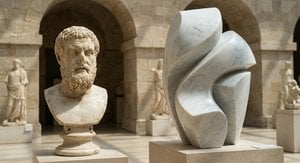
The Enduring Allure of Marble in Art History: From Classical Sculpture to Modern Abstraction
Explore the captivating history of marble sculpture from ancient Greece to modern art. Discover renowned artists like Canova & Michelangelo, carving techniques, and investment insights at ArtsDot.

Karl Blossfeldt's 'Urformen der Kunst': Pioneering Botanical Photomicrography & Aesthetic Form
Explore Karl Blossfeldt's groundbreaking *Urformen der Kunst* & pioneering botanical photography. Discover the aesthetic power of nature, New Objectivity influences, and his lasting impact on modern art. Learn about collecting key works.