1of 20
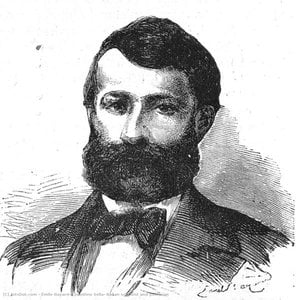
Поль Деларош 1797–1856
Француз From Париж Романтизм и неоклассицизм On Wikipedia in 26 of 32 languages

The Academicist names to know
If you remember one Academicist художник, make it Поль Деларош (1797–1856), the name behind Бонапарт, переходящий Альпы и Napoleon Crossing the Alps. After that come Фридрих фон Амерлинг, Эжен де Блаас, Жан-Поль Лоранс и Эдуар Деба-Понсан. Our 20 picks go from Johann Christian von Mannlich (born 1741) to Чарли Чаплин (born 1889), from 15 countries.
How we picked them. We list the artists our catalogue links to Academicist, from the most famous down. Artists born after 1955 that we cannot yet check on Wikidata are left out. The Wikipedia number shows in how many of our 32 languages Wikipedia writes about them.
Quick facts
Meet them one by one
1of 20
Француз From Париж Романтизм и неоклассицизм On Wikipedia in 26 of 32 languages
2of 20
Австриец From Вена Академизм On Wikipedia in 20 of 32 languages

3of 20
Итальянец From Альбано-Лациале Академический классицизм On Wikipedia in 19 of 32 languages

5of 20
Французский From Тулуза Академистическое искусство On Wikipedia in 14 of 32 languages

7of 20
American From Бостон Orientalist On Wikipedia in 12 of 32 languages

«Ресторан под открытым небом у мечети Вазир Хан в Лахоре».
8of 20
Бельгиец From Брюссель Академический реализм On Wikipedia in 12 of 32 languages

9of 20
Немецкий From Франкфурт-на-Майне Ориентализм, Дюссельдорфская школа живописи On Wikipedia in 9 of 32 languages

10of 20
Британский From Йорк Эстетическое движение On Wikipedia in 11 of 32 languages

12of 20
French From La Ferté-sous-Jouarre Illustration, Romanticism

Émile-Antoine Bayard, born in the tranquil French town of La Ferté-sous-Jouarre in 1837, emerged as a pivotal figure in 19th-century illustration. The years between 1857 and 1864 were formative for Bayard, a period dedicated to exhaustive exploration across various artistic mediums. From 1864 onward, Bayard's career blossomed as an illustrator, initially documenting current events for magazines—including the tumultuous period of the Franco-Prussian War (1870–71).
13of 20
Французский From Кукурон Академическая живопись On Wikipedia in 9 of 32 languages

La Sieste: Блестящий пример его мастерства в создании чувственного портрета.
14of 20
From Kinghorn On Wikipedia in 9 of 32 languages

Born: December 17, 1796, in Kinghorn, Fife, Scotland (though records indicate Edinburgh). Early Training: She received foundational training from her uncle, George Saunders, in London, mastering the art of miniature painting before expanding into oils and watercolors.
15of 20
German From Neukosenow Classical German Art

Manzel’s formative years were marked by exposure to influential artistic currents circulating in Berlin. The Academy's curriculum emphasized classical sculpture techniques, drawing inspiration from Michelangelo and Canova, shaping Manzel’s stylistic sensibilities profoundly.
16of 20
German From Strasbourg On Wikipedia in 5 of 32 languages

Born in the city of Strasbourg, Johann Christian von Mannlich entered a world where art was deeply intertwined with the service of nobility. He was the son of Konrad von Mannlich, a man who held the position of court painter to Christian IV, Duke of Zweibrücken. Under Charles II August, Duke of Zweibrücken, his responsibilities expanded from the canvas to the very stones of the landscape.
17of 20
Austrian From Vienna Realist On Wikipedia in 6 of 32 languages

In the golden light of the nineteenth century, few artists captured the rhythmic pulse of Mediterranean life with as much tenderness and precision as Ludwig Johann Passini. Born in Vienna on July 9, 1832, Passini was a man of dual heritage, an Austrian by birth whose artistic soul became irrevocably entwined with the canals and cobblestones of Italy.
18of 20
Англичанин From Вильнюс Романтизм, предвпечатленнический стиль On Wikipedia in 4 of 32 languages

«Купание» (Литовский художелоственный фонд, Вильнюс, Литва), демонстрирующее его мастерство в изображении повседневных сцен;.
19of 20
Italian From Salvarosa Venetian Genre Painting On Wikipedia in 3 of 32 languages

Noè Bordignon (1841–1920) remains one of the most tender chroniclers of the Venetian spirit, an artist whose brush captured not just the light of the Adriatic, but the very heartbeat of nineteenth-century domesticity. Born in Salvorosa, near Castelfranco Veneto—a region then under the dominion of the Austrian Empire—Bordignon’s early life was steeped in the rich academic traditions of Italy.
20of 20
Russian From Saint Petersburg On Wikipedia in 2 of 32 languages

In the quiet studios of the nineteenth century, Pyotr Petrovich Zabolotsky sought to capture the very essence of the human countenance. His life was one dedicated to the observation of character, finding truth in the subtle shifts of a gaze or the slight tension of a jawline. He moved through a world of shifting social hierarchies, translating the presence of individuals into the permanent language of oil and canvas.
Pictures worth knowing
When it happened
Fun figures
| Франция | 4 |
|---|---|
| США | 2 |
| France | 2 |
| Австрия | 1 |
| Италия | 1 |
| Англия | 1 |
| Бельгия | 1 |
| Германия | 1 |
| 1740s | 1 |
|---|---|
| 1790s | 3 |
| 1800s | 1 |
| 1820s | 2 |
| 1830s | 3 |
| 1840s | 6 |
| 1850s | 1 |
| 1860s | 2 |
| 1880s | 1 |
| Государственный Эрмитаж | 3 |
|---|---|
| Институт искусств Чикаго | 2 |
| Лувр | 1 |
| Walker Art Gallery | 1 |
| Liechtenstein Museum | 1 |
| Petit Palais | 1 |
| Bowes Museum | 1 |
| Walters Art Museum | 1 |
Just the names
Поль ДеларошФранцуз · 1797–1856Фридрих фон АмерлингАвстриец · 1803–1887Эжен де БлаасИтальянец · 1843–1931 Жан-Поль Лоранс1838–1921Эдуар Деба-ПонсанФранцузский · 1847–1913
 Чарли ЧаплинАнглийский · 1889–1977Эдвин Лорд УиксAmerican · 1849–1903Альфред СтевенсБельгиец · 1823–1906Адольф ШрейерНемецкий · 1828–1899Альберт Джозеф МёррБританский · 1841–1893
 Жан Леон Жером Феррис1863–1930Émile BayardFrench · 1837–1891Дельфин АнжольраФранцузский · 1865–1945Christina Robertson1796–1854Ludwig ManzelGerman · 1858–1936Johann Christian von MannlichGerman · 1741–1822Ludwig PassiniAustrian · 1832–1903Винценты СмоковскийАнгличанин · 1797–1876Noè BordignonItalian · 1841–1920Pyotr Petrovich ZabolotskyRussian · 1842–2000
Good questions
Поль Деларош (#1) is first in this ranking, followed by Фридрих фон Амерлинг (#2) and Эжен де Блаас (#3).
Поль Деларош (#1), Фридрих фон Амерлинг (#2), Эжен де Блаас (#3), Жан-Поль Лоранс (#4) и Эдуар Деба-Понсан (#5).
The museums holding the most key works of this list are Государственный Эрмитаж (3), Институт искусств Чикаго (2) и Лувр (1).
Most художники in this list were born in the 1840s (6 of 20), between 1741 and 1889 overall.
Франция: 4 of the 20 художники in this list were born there, then США (2) и France (2).
1 women are in this ranking: Christina Robertson (#14).
“In his watercolors, he achieved a luminous quality that captured the fleeting effects of light, while his oil paintings, such as the evocative A Bridge in Venice, utilized masterful composition to draw the viewer into the heart of the scene.” — from our biography of Ludwig Passini (#17).
The earliest-born художник in this list is Johann Christian von Mannlich (#16), born in 1741.
Our catalogue holds 1,524 works by these художники. Each one can be ordered as a hand-painted oil reproduction or a print.
Read more
Other styles
 Знаменитые художники BaroqueРембрандт ван Рейн · Рембрандт
 Знаменитые художники Contemporary RealistСборецы · Жан-Франсуа Милле
 Знаменитые художники ImpressionistЗвёздная ночь (Нью-Йорк, MoMA) · Винсент Ван Гог
 Знаменитые художники RomanticistСатурн пожирающий своего сына · Франсиско Гойя
 Знаменитые художники NeoclassicistСмерть Марата · Жак-Луи Давид
 Знаменитые художники RealistПроисхождение мира · Гюстав Курбе
 Знаменитые художники RenaissanceМона Лиза (Джоконда) · Леонардо Да Винчи
 Знаменитые художники Dutch Golden AgeДевушка с жемчужной серёжкой · Ян Вермеер
 Знаменитые художники ExpressionistКомпозиция VII · Василий Васильевич Кандинский
 Знаменитые художники RococoОтплытие на Кифере · Антуан Ватто
Other eras
 Знаменитые художники Early MedievalSnowy River · Ван Вэй
 Знаменитые художники High MedievalМадонна в Маэсти (Мадонна Оньисанти) · Джотто Ди Бондоне
 Знаменитые художники Late MedievalБлаговещение и два святых · Симоне Мартини
 Знаменитые художники RenaissanceСотворение Адама · Микеланджело
 Знаменитые художники Early ModernПризвание святого Матфея · Караваджо
 Знаменитые художники 19th CenturyВодяные лилии (или Нимфеи) · Клод Моне
 Знаменитые художники ModernГерника · Пабло Пикассо
 Знаменитые художники ContemporaryWind Sculpture III (one in a series of nine) · Yinka Shonibare
Keep exploring