
The Rococo names to know
100 Famous Rococo Художники You Should Know
If you remember one Rococo художник, make it Антуан Ватто (1684–1721), the name behind Паломничество на Киферу и Отплытие на Кифере. After that come Каналетто, Джованни Баттиста Тьеполо, Франсуа Буше и Жан-Оноре Фрагонар. Our 100 picks go from Франсуа де Труа (born 1645) to Эдуар Оноре Аве (born 1818), from 18 countries.
How we picked them. We list the artists our catalogue links to Rococo, from the most famous down. Artists born after 1955 that we cannot yet check on Wikidata are left out. The Wikipedia number shows in how many of our 32 languages Wikipedia writes about them.


Quick facts
Rococo in a nutshell
- 100Художники
- 1645–1818Годы рождения
- 18Страны рождения
- 5Женщины
- 1Живые художники
- 11 037Работы в нашем каталоге
- Музеи с наибольшим количеством ключевых работ
- Лувр (14), Государственный Эрмитаж (11), Метрополитен-музей (11), Национальный музей Швеции (8)
- Женщины в этом списке
- Розальба Каррьера, Adélaïde Labille-Guiard, Анна Валлайе-Костер, Elisabeth-Louise Vigée-Lebrun, Anna Dorothea Therbusch
Meet them one by one
The 100 famous Rococo художники, from most famous down


2of 100
Каналетто 1697–1768
Итальянец From Венеция Вьюты, топографический стиль On Wikipedia in 30 of 32 languages

Giovanni Antonio Canal, known to many as Canaletto, was born in Venice, Italy, on October 18, 1697. These years spent working on stage sets provided the technical foundation for his later interest in the actual buildings and waterways of Venice.
See them at His presence remains felt in the collections of major institutions across Europe and beyond.


3of 100
Джованни Баттиста Тьеполо 1696–1770
Итальянец From Венеция Рококо и барокко On Wikipedia in 30 of 32 languages


6of 100
Жан-Батист-Симеон Шарден 1699–1779
Француз From Париж Натурализм On Wikipedia in 27 of 32 languages


7of 100
Томас Гейнсборо 1727–1788
Британская From Садбери Рококо, романтизм On Wikipedia in 29 of 32 languages


8of 100
Джошуа Рейнолдс 1723–1792
Британская From Плимптон Великий стиль On Wikipedia in 31 of 32 languages


9of 100
Жан-Батист Грёз 1725–1805
Француз From Турню Рококо, Жанровое живопись On Wikipedia in 22 of 32 languages


10of 100
Бернардо Беллотто 1722–1780
Итальянец From Венеция Ведута, городской пейзаж, гравер On Wikipedia in 27 of 32 languages


11of 100
Франческо Гварди 1712–1793
Итальянец From Венеция *Vedute*, *Pittura di tocco* On Wikipedia in 27 of 32 languages

Francesco Lazzaro Guardi, born into a family deeply rooted in artistic tradition on October 5th, 1712, stands as a poignant and ultimately tragic figure at the close of the illustrious Venetian School.


12of 100
Пьетро Лонги 1701–1785
Итальянский From Венеция Венская живопись, Рококо On Wikipedia in 18 of 32 languages

Pietro Longhi's formative years were marked by a privileged upbringing within Venice’s artisan community.


13of 100
Джованни Доменико Тьеполо 1727–1804
Итальянец From Венеция Рококо On Wikipedia in 18 of 32 languages


14of 100
Джованни Баттиста Пьяццетта 1683–1754
Итальянец From Венеция Рококо On Wikipedia in 16 of 32 languages


17of 100
Розальба Каррьера 1675–1757
Итальянка From Венеция Рококо On Wikipedia in 23 of 32 languages


19of 100
Морис Кантен де Латур 1704–1788
Французский From Сен-Кантен Рококо On Wikipedia in 23 of 32 languages


20of 100
Александр Рослин 1718–1793
Шведский From Мальмё Санкт-Петри Рококо On Wikipedia in 21 of 32 languages


21of 100
Йоганн Цоффани 1733–1810
Немецкий From Франкфурт-на-Майне Неоклассицизм, Реализм On Wikipedia in 15 of 32 languages


22of 100
Луи Мишель Ван Лоо 1707–1771
From Тулон On Wikipedia in 17 of 32 languages

Learned from Jean-Baptiste van Loo #53


26of 100
Жан-Баптист Патер 1695–1736
Француз From Валансьен Рококо, пастельная палитра On Wikipedia in 13 of 32 languages

Jean-Baptiste Pater (December 29, 1695 – July 25, 1736) – a name that resonates within the halls of French Rococo art as a singular and profoundly influential figure. The Parisian Apprenticeship: In 1713, Pater sought mentorship from Watteau himself in Paris. Atmospheric Perspective: Pater’s work demonstrates a keen understanding of atmospheric perspective, anticipating the later explorations of Francesco Guardi.


27of 100
Шарль Андре Ван Лоо 1705–1765
Французский From Ницца Рококо On Wikipedia in 16 of 32 languages

Learned from Jean-Baptiste van Loo #53


28of 100
Франческо Дзуккарелли 1702–1788
Итальянец From Питильяно Рококо, Барокко On Wikipedia in 15 of 32 languages


29of 100
Якопо Амигони 1682–1752
Итальянец From Неаполь Позднее барокко и рококо On Wikipedia in 21 of 32 languages


31of 100
Франц Антон Маульберч 1724–1796
Немец/Австриец From Лангенарген Рококо, Барокко On Wikipedia in 16 of 32 languages


32of 100
Шарль Антуан Куапель 1694–1752
Француз From Париж Барокко, Рококо On Wikipedia in 11 of 32 languages

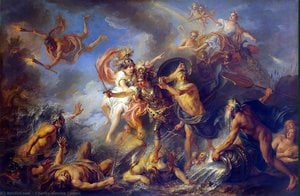


33of 100
Adélaïde Labille-Guiard 1749–1803
French From Paris Rococo to Neoclassicism On Wikipedia in 20 of 32 languages

Adélaïde Labille-Guiard (1749–1803) stands as a remarkable figure in the history of French art, not merely for her exquisite portraits but also for her courageous challenge to the restrictive conventions that governed women’s roles within the artistic world.


34of 100
Дмитрий Григорьевич Левицкий 1735–1822
Украинско-русский From Киев Классический портрет On Wikipedia in 16 of 32 languages


36of 100
Анна Валлайе-Костер 1744–1818
Французская From Париж Рококо, Живопись натюрмортов On Wikipedia in 14 of 32 languages


37of 100
Лагренье (старший) 1756–1827
Француз From Париж Рококо, Неоклассицизм

Lagrenée’s dedication quickly bore fruit; in 1749, he secured the prestigious Prix de Rome with his depiction of Joseph interpreting the dreams of Pharaoh, an achievement that unlocked the doors to further study at the French Academy in Rome from 1750 to 1754.


38of 100
Джамбаттиста Питтони 1687–1767
From Венеция Late Baroque, Rococo On Wikipedia in 19 of 32 languages

In the vibrant, water-bound splendor of eighteenth-century Venice, few artists captured the theatrical essence of the late Baroque and Rococo periods as fluently as Giambattista Pittoni. His early training was deeply personal, conducted under the guidance of his uncle, Francesco Pittoni, a painter of the Venetian Baroque.
Learned from Antonio Balestra #69


39of 100
Гаспар ван Виттель 1653–1736
Голландец From Амерсфорт Живопись ведута On Wikipedia in 14 of 32 languages


45of 100
Elisabeth-Louise Vigée-Lebrun

Élisabeth -Louise Vigée Le Brun, a name synonymous with the elegance and refinement of 18th-century French portraiture, was more than just a painter; she was a master of capturing not merely likeness, but the very essence of her sitters.


46of 100
Коррадо Джаквинто 1703–1766
Итальянский From Мольфетта Рококо On Wikipedia in 11 of 32 languages


48of 100
Кристиан Вильгельм Эрнст Дитрих 1712–1774
Немец From Веймар Имитация голландских и итальянских мастеров On Wikipedia in 11 of 32 languages


49of 100
Charles Amédée Philippe Van Loo 1719–1795
French From Rivoli Rococo, Portraiture On Wikipedia in 13 of 32 languages

At the heart of this vibrant scene stood Charles Amédée Philippe Vanloo (1719 – 1795), a painter whose career spanned decades and encompassed a remarkable range of subjects—from allegorical scenes brimming with mythological figures to strikingly realistic portraits that captured the essence of his aristocratic patrons. Born in Aix-en-Provence, Vanloo’s artistic journey began under the tutelage of his father, Jean-Baptiste van Loo—himself a respected painter—in Turin and Rome.
Learned from Jean-Baptiste van Loo #53


50of 100
Густав Лундберг 1695–1786
Швед From Стокгольм Пастелист рококо On Wikipedia in 14 of 32 languages


51of 100
Луи Жан-Франсуа Лагрене 1725–1805
English From Париж Romanticism, Animal Painting On Wikipedia in 15 of 32 languages

«Пейзаж с Салмакидой и Гермафродитом», великолепный пример его мастерства в масляной живописи, ныне хранящийся в Маурицхаусе (Гаага, Нидерланды);.


52of 100
Якоб Де Вит 1695–1754
Голландец From Амстердам Живопись рококо On Wikipedia in 10 of 32 languages


53of 100
Jean-Baptiste van Loo 1684–1745
French From Aix-en-Provence Baroque, Rococo On Wikipedia in 15 of 32 languages

A pivotal moment arrived with the patronage of Prince Emmanuel Philibert of Carignano, who recognized van Loo’s burgeoning talent and sponsored his journey to Rome. Following Rome, van Loo’s artistic path led him to Turin, where he painted portraits of Charles Emmanuel II, Duke of Savoy, and members of his court, further solidifying his reputation among European nobility.


54of 100
John Wollaston 1742–1775
English Rococo Painting

While later giants like Benjamin West and Gilbert Stuart would command the spotlight of American portraiture, Wollaston’s true contribution lies in his role as a pioneer, introducing the delicate elegance and shimmering sophistication of the Rococo style to North America.


56of 100
Anna Dorothea Therbusch 1721–1782
German From Berlin Rococo On Wikipedia in 13 of 32 languages

Anna Dorothea Therbusch (1721-1782) stands as a remarkable figure in the annals of Rococo art history —a woman artist who defied societal expectations and achieved considerable renown during the Enlightenment. Born into a family steeped in artistic tradition, her father, Georg Lisiewski, was himself a celebrated Berlin portrait painter, establishing a lineage dedicated to visual representation.


57of 100
Иоганн Георг Платцер 1704–1761
Австриец From Аппьяно-сулла-Страда-дель-Вино Рококо On Wikipedia in 8 of 32 languages


59of 100
Michele Marieschi 1710–1743
Italian From Venice Vedute Venice On Wikipedia in 9 of 32 languages

In the golden age of the Venetian Rococo, few artists captured the ephemeral magic of the Serenissima with as much vitality as Michele Giovanni Marieschi. Scholars often point to the influence of masters such as Gaspare Diziani and the legendary Canaletto, whose works provided a blueprint for capturing the grandeur of urban environments.


60of 100
Antonio Corradini 1668–1752
Italian From Este Rococo

Corradini’s talent quickly blossomed, gaining recognition around 1709 with his contributions to the façade of San Stae in Venice. A pivotal period unfolded between 1716 and 1723 with extensive work for Russian and Saxon patrons. In 1729, a new chapter commenced with his appointment as court sculptor to Charles VI in Vienna.


61of 100
Мейсенский Фарфоровый Завод род. 1710
немецкая From Мейсен Твердый фарфор

«Аллегорические фигуры добродетели» — демонстрируют способность фабрики воплощать сложные концепции в скульптурной форме, показывая тщательную детализацию и утонченное художественное видение. «Лежащий леопард» — представляет собой виртуозное сочетание реализма и элегантности, отражая стремление Мейсена изображать животных с поразительной точностью и грацией.


62of 100
Gerard van Spaendonck 1746–1822
From Tilburg On Wikipedia in 12 of 32 languages

Van Spaendonck came from an artistic family; his younger brother, Cornelis van Spaendonck, also became a successful painter. This early exposure shaped his meticulous attention to detail and refined technique.


63of 100
Джозеф Хаймор 1692–1780
Британский From Лондон Рококо On Wikipedia in 10 of 32 languages

Joseph Highmore, born in London in 1692, emerged as a pivotal figure within the evolving landscape of 18th-century English art. Initially influenced by the grand Baroque tradition exemplified by Kneller, Highmore’s style would gradually embrace the more delicate aesthetics of the Rococo period, a shift reflective of broader cultural currents sweeping across Europe.


67of 100
Луи Токке 1696–1772
Француз From Париж Портретная живопись On Wikipedia in 11 of 32 languages


69of 100
Antonio Balestra 1666–1740
From Verona On Wikipedia in 11 of 32 languages

Antonio Balestra (born August 12, 1666, Verona, Italy – died April 21, 1740) was a prominent Italian painter of the Rococo period. This foundational training provided him with early skills in drawing and painting techniques.


70of 100
Гаспаре Траверси 1722–1770
Итальянский From Неаполь Рококо On Wikipedia in 11 of 32 languages


71of 100
Georg Desmarées 1697–1776
Swedish-German From Stockholm City Rococo, Portraiture On Wikipedia in 9 of 32 languages

Born in Stockholm in 1697 to parents with French roots and artistic lineage – his mother descended from the Dutch Mijtens family of painters – his journey was one of continuous learning and adaptation, ultimately leading him to become a celebrated court painter in Munich.


72of 100
Жан Батист Пиллеман 1728–1808
Француз From Лион Рококо и неоклассицизм On Wikipedia in 8 of 32 languages


73of 100
Корнелис Трост 1696–1750
Голландский From Амстердам Рококо жанровые сцены On Wikipedia in 8 of 32 languages


74of 100
Jacques De Lajoue 1686–1761
French From Paris Neoclassical Painting On Wikipedia in 8 of 32 languages

Born in the vibrant heart of Paris in 1686, Jacques de Lajoue emerged as a painter of profound elegance, a master capable of weaving architectural precision with the ethereal softness of the French landscape. His life unfolded during one of the most opulent eras in European history, moving through the twilight of Louis XIV’s reign and into the burgeoning grace of the 18th century.


75of 100
Ричард Косвей 1742–1821
Британский From Тивертон Портретные миниатюры эпохи Регентства On Wikipedia in 10 of 32 languages


77of 100
Per Krafft the Elder 1724–1793
Swedish From Arboga Rococo On Wikipedia in 7 of 32 languages

To step into the world of Per the Elder Krafft is to enter a realm of gilded salons and breathless elegance, where the light of the Enlightenment meets the delicate ornamentation of the Rococo.


78of 100
Johann Georg Pinzel 1715–1761
Ukrainian, Czech From Buchach Baroque, Rococo

Active in Eastern Galicia – a region encompassing parts of modern-day Ukraine and Poland – Pinsel’s work embodies a unique fusion of Western Baroque exuberance and deeply felt religious emotion. Discovered relatively late by scholar Jan Bołoz Antoniewicz in 1923, Pinsel's story began to unfold through fragmented records and, most powerfully, through the astonishing artistry of his sculptures themselves.


79of 100
Alessandro Longhi 1733–1813
From Venice On Wikipedia in 10 of 32 languages

He came from an artistic family; his father was the celebrated genre painter Pietro Longhi. Alessandro received his initial training under his father’s guidance, developing a foundation in observation and detail.


80of 100
Giuseppe Bonito 1707–1789
Italian From Castellammare di Stabia Rococo On Wikipedia in 11 of 32 languages

In the sun-drenched, vibrant landscape of eighteenth-century Naples, few artists captured the rhythmic pulse of urban life and the theatrical splendor of the era as intimately as Giuseppe Bonito. Born in 1707 in Castellammare di Stabia, Bonito emerged from a period of profound artistic transition, where the dramatic weight of the Baroque was beginning to soften into the playful elegance of the Rococo.


81of 100
Юэ, Кристоф 1700–1759
Француз From Понтуаз Идиллические сцены On Wikipedia in 4 of 32 languages


82of 100
Луи Де Сильвестр 1675–1760
Француз From Со, Франция Барокко, Рококо On Wikipedia in 7 of 32 languages


83of 100
Luis Paret Y Alcázar 1746–1799
Spanish From Madrid Rococo On Wikipedia in 8 of 32 languages

In the vibrant, sun-drenched tapestry of 18th-century Spain, few artists captured the delicate interplay of light and social elegance as masterfully as Luis Paret y Alcázar. His life, spanning from his birth in Madrid in 1746 to his passing in 1799, was a journey through the heart of Spanish cultural evolution. Paret’s artistic foundation was laid within the prestigious halls of the Academia Real de San Fernando.


84of 100
Йоханн Саломон Валь 1689–1765
Немец, датчанин From Хемниц On Wikipedia in 5 of 32 languages


85of 100
Giuseppe Nogari 1699–1766
Italian From Venice Rococo On Wikipedia in 8 of 32 languages

Born in 1699, Nogari emerged during a transformative era when the heavy, dramatic shadows of the Baroque were beginning to yield to the light, airy grace of the Rococo. This lineage, combined with the delicate pastel sensibilities of Rosalba Carriera and the sophisticated elegance of Jacopo Amigoni, allowed him to weave together a style that was simultaneously much more grounded than the typical Rococo flourish and yet exquisitely refined.


86of 100
Жан Ран 1674–1735
Француз From Монпелье Барокко/Неоклассицизм On Wikipedia in 8 of 32 languages


87of 100
Натаниэль Хон Старший 1718–1784
Ирландец From Дублин Пейзажи в стиле Барбизон и рококо-портрет On Wikipedia in 4 of 32 languages

«Достопочтенная миссис Керзон» (1778): Эта миниатюра демонстрирует исключительное мастерство Хона в передаче тончайших нюансов мимики и позы, что является визитной карточкой портретной живописи рококо. Мягкая пастельная гамма создает атмосферу утонченной грации, отражая социальные каноны той эпохи.


88of 100
Jean Raoux 1677–1734
French From Montpellier Symbolist Art On Wikipedia in 7 of 32 languages

Jean Raoux, born in Montpellier, France in 1677, emerged as a captivating figure within the French artistic landscape of the early 18th century. He spent three formative years in Italy, specifically Venice, undertaking decorative commissions for the palace of Giustiniani Solini. Raoux’s talent quickly garnered attention, leading to his acceptance into the prestigious Académie Royale de Peinture et de Sculpture in 1717 as an historical painter.


90of 100
Francesco Zugno 1708–1787
Italian From Venice Rococo On Wikipedia in 6 of 32 languages

Within the luminous and often overwhelming splendor of eighteenth-century Venice, the name Francesco Zugno emerges as a vital, if somewhat enigmatic, thread in the tapestry of the Rococo era.


91of 100
Joseph Boze 1745–1826
French From Martigues Portraiture On Wikipedia in 7 of 32 languages

Joseph Boze (1745-1826) stands as a fascinating figure in the annals of French art history —a portraitist who navigated the turbulent currents of the Enlightenment and Revolution with remarkable resilience. Born in Les Matiques, France, Boze’s artistic journey began amidst a period of significant social and political upheaval, shaping his oeuvre and cementing his place as one of Louis XVI's most trusted artists.


92of 100
Louis Joseph Watteau 1731–1798
French From Valenciennes Fêtes galantes On Wikipedia in 6 of 32 languages

His father, Jean Watteau, was a silk merchant and instilled in François a keen appreciation for craftsmanship and visual aesthetics. He subsequently studied under Nicolas Frémiet, further honing his skills in drawing and etching, disciplines that would serve as crucial tools throughout his career.


93of 100
Jacobus Buys 1724–1801
Dutch From Amsterdam Rococo On Wikipedia in 5 of 32 languages

Born in Amsterdam in 1724, Jacobus Buys emerged into a world steeped in the refined sensibilities of the Dutch Rococo period. He embarked on his formal training under Cornelis Pronk and later with Jacob de Wit, both established figures within Amsterdam's art circles.


94of 100
Жеремия Теус 1716–1774
Швейцарец From Кур Рококо On Wikipedia in 5 of 32 languages

Jeremiah Theus (1716 – 1774) stands as a singular figure in the artistic landscape of colonial South Carolina, recognized primarily for his masterful portraits that captured the essence of Charleston society during its golden age. Born in Chur, Switzerland—the eldest son of Simeon and Anna Walser Theüs—his early life was marked by Huguenot heritage and familial migration to America in 1735, driven by religious persecution.


95of 100
Vigilius Eriksen 1722–1782
Danish From Copenhagen Rococo On Wikipedia in 7 of 32 languages

Born in Copenhagen, Denmark, he began his artistic journey under the guidance of the portrait painter Johann Salomon Wahl. Although he achieved significant recognition, his path was not without its hurdles; notably, despite winning a gold medal at the Royal Danish Academy of Fine Arts in 1755, he was denied formal entry into the institution itself.


96of 100
Georg David Matthieu 1737–1778
German From Berlin Rococo On Wikipedia in 6 of 32 languages

The air in the studio of David Matthieu carries the scent of oil and pigment, a workspace where Georg David Matthieu begins his life within a family of established artists. This connection extends through his stepmother, Anna Rosina, linking Georg to the influential Georg Lisiewski and the talented Anna Dorothea Therbusch.


97of 100
Robert Tournières 1667–1752
From Ifs On Wikipedia in 6 of 32 languages

Robert Le Vrac de Tournières was born in Caen, France, in 1667. He further honed his skills under the tutelage of Bon Boullogne and Rigaud, both prominent figures in French painting, setting the stage for a successful career.


98of 100
Jose Del Castillo 1737–1793
Spanish From Madrid Neoclassical On Wikipedia in 7 of 32 languages

Born in Madrid on October 14, 1737, Castillo emerged from a world where the flamboyant flourishes of the Rococo were beginning to yield to the disciplined rigor of Neoclassicism. His early life was marked by an extraordinary precocity; at just ten years old, he was already serving as an assistant in the preparatory drawing classes at the prestigious Real Academia de Bellas Artes de San Fernando.


100of 100
Domenico Duprà 1689–1770
Italian From Turin Rococo On Wikipedia in 6 of 32 languages

Born in the historic city of Turin in 1689, Duprà emerged as a master of the Rococo style, an era defined by grace, light, and an almost ethereal sense of movement. Between 1719 and 1730, he found himself in Lisbon, serving the illustrious House of Braganza under King John V.


Pictures worth knowing
Famous Rococo works to recognise
When it happened
Rococo, step by step
- 1695
- 1717
- 1724
- 1730
- 1737
- 1745
- 1748
- 1753
- 1754
- 1762
- 1765
- 1767
- 1769
- 1777
Fun figures
The numbers behind the list
| Франция | 30 |
|---|---|
| Италия | 16 |
| Italy | 9 |
| Германия | 7 |
| France | 7 |
| Великобритания | 6 |
| Швеция | 3 |
| Нидерланды | 3 |
| 17th век | 36 |
|---|---|
| 18th век | 62 |
| 19th век | 1 |
| Лувр | 14 |
|---|---|
| Государственный Эрмитаж | 11 |
| Метрополитен-музей | 11 |
| Национальный музей Швеции | 8 |
| Музей Прадо | 7 |
| Yale Center for British Art | 7 |
| Statens Museum For Kunst | 7 |
| Рейксмюзеум | 6 |
Just the names
List of 100 famous Rococo художники to know
- 1
 Антуан ВаттоФранцуз · 1684–1721
- 2КаналеттоИтальянец · 1697–1768
- 3Джованни Баттиста ТьеполоИтальянец · 1696–1770
- 4
 Франсуа БушеФранцуз · 1703–1770
- 5
 Жан-Оноре ФрагонарФранцуз · 1732–1806
- 6Жан-Батист-Симеон ШарденФранцуз · 1699–1779
- 7Томас ГейнсбороБританская · 1727–1788
- 8Джошуа РейнолдсБританская · 1723–1792
- 9Жан-Батист ГрёзФранцуз · 1725–1805
- 10Бернардо БеллоттоИтальянец · 1722–1780
- 11Франческо ГвардиИтальянец · 1712–1793
- 12Пьетро ЛонгиИтальянский · 1701–1785
- 13Джованни Доменико ТьеполоИтальянец · 1727–1804
- 14Джованни Баттиста ПьяццеттаИтальянец · 1683–1754
- 15
 Никола Ланкре1689–1743
- 16
 Клод-Жозеф Верне1714–1789
- 17Розальба КаррьераИтальянка · 1675–1757
- 18
 Жан-Марк НатьеФранцуз · 1685–1766
- 19Морис Кантен де ЛатурФранцузский · 1704–1788
- 20Александр РослинШведский · 1718–1793
- 21Йоганн ЦоффаниНемецкий · 1733–1810
- 22Луи Мишель Ван Лоо1707–1771
- 23
 Жан-Этьен ЛиотарШвейцарец · 1702–1789
- 24
 Франсуа Лемуан1688–1737
- 25
 Франсуа де Труа1645–1730
- 26Жан-Баптист ПатерФранцуз · 1695–1736
- 27Шарль Андре Ван ЛооФранцузский · 1705–1765
- 28Франческо ДзуккареллиИтальянец · 1702–1788
- 29Якопо АмигониИтальянец · 1682–1752
- 30
 Шарль-Жозеф НатуарФранцуз · 1700–1777
- 31Франц Антон МаульберчНемец/Австриец · 1724–1796
- 32Шарль Антуан КуапельФранцуз · 1694–1752
- 33Adélaïde Labille-GuiardFrench · 1749–1803
- 34Дмитрий Григорьевич ЛевицкийУкраинско-русский · 1735–1822
- 35
 Жан-Батист Пигаль1725–1805
- 36Анна Валлайе-КостерФранцузская · 1744–1818
- 37Лагренье (старший)Француз · 1756–1827
- 38Джамбаттиста Питтони1687–1767
- 39Гаспар ван ВиттельГолландец · 1653–1736
- 40
 Фёдор Рокотов1730–1808
- 41
 Франсуа-Юбер Друэ1727–1775
- 42
 Владимир Лукич Боровиковский1757–1825
- 43
 Антуан ПэнФранцуз · 1683–1757
- 44
 Аллан Рэмзи1713–1784
- 45Elisabeth-Louise Vigée-Lebrun
- 46Коррадо ДжаквинтоИтальянский · 1703–1766
- 47
 Йоханн Генрих ТишбайнНемец · 1722–1789
- 48Кристиан Вильгельм Эрнст ДитрихНемец · 1712–1774
- 49Charles Amédée Philippe Van LooFrench · 1719–1795
- 50Густав ЛундбергШвед · 1695–1786
- 51Луи Жан-Франсуа ЛагренеEnglish · 1725–1805
- 52Якоб Де ВитГолландец · 1695–1754
- 53Jean-Baptiste van LooFrench · 1684–1745
- 54John WollastonEnglish · 1742–1775
- 55
 Пило Карл ГустафШведский · 1711–1793
- 56Anna Dorothea TherbuschGerman · 1721–1782
- 57Иоганн Георг ПлатцерАвстриец · 1704–1761
- 58
 Натаниэль ХонГолландец · 1718–1784
- 59Michele MarieschiItalian · 1710–1743
- 60Antonio CorradiniItalian · 1668–1752
- 61Мейсенский Фарфоровый Заводнемецкая · род. 1710
- 62Gerard van Spaendonck1746–1822
- 63Джозеф ХайморБританский · 1692–1780
- 64
 Жан-Жак КаффиериФранцуз · 1678–1755
- 65
 Жан-Батист ПерронноФранцуз · 1715–1783
- 66
 Фрэнсис ХейманАнглийский · 1708–1776
- 67Луи ТоккеФранцуз · 1696–1772
- 68
 Донато Крети1671–1749
- 69Antonio Balestra1666–1740
- 70Гаспаре ТраверсиИтальянский · 1722–1770
- 71Georg DesmaréesSwedish-German · 1697–1776
- 72Жан Батист ПиллеманФранцуз · 1728–1808
- 73Корнелис ТростГолландский · 1696–1750
- 74Jacques De LajoueFrench · 1686–1761
- 75Ричард КосвейБританский · 1742–1821
- 76
 Филипп МерсьеФранцуз · 1689–1760
- 77Per Krafft the ElderSwedish · 1724–1793
- 78Johann Georg PinzelUkrainian, Czech · 1715–1761
- 79Alessandro Longhi1733–1813
- 80Giuseppe BonitoItalian · 1707–1789
- 81Юэ, КристофФранцуз · 1700–1759
- 82Луи Де СильвестрФранцуз · 1675–1760
- 83Luis Paret Y AlcázarSpanish · 1746–1799
- 84Йоханн Саломон ВальНемец, датчанин · 1689–1765
- 85Giuseppe NogariItalian · 1699–1766
- 86Жан РанФранцуз · 1674–1735
- 87Натаниэль Хон СтаршийИрландец · 1718–1784
- 88Jean RaouxFrench · 1677–1734
- 89
 Эдуар Оноре АвеФранцуз · 1818–1890
- 90Francesco ZugnoItalian · 1708–1787
- 91Joseph BozeFrench · 1745–1826
- 92Louis Joseph WatteauFrench · 1731–1798
- 93Jacobus BuysDutch · 1724–1801
- 94Жеремия ТеусШвейцарец · 1716–1774
- 95Vigilius EriksenDanish · 1722–1782
- 96Georg David MatthieuGerman · 1737–1778
- 97Robert Tournières1667–1752
- 98Jose Del CastilloSpanish · 1737–1793
- 99
 Агостино Брунияс1730–1796
- 100Domenico DupràItalian · 1689–1770
Good questions
What people ask about Rococo
Who is the most famous Rococo художник?
Антуан Ватто (#1) is first in this ranking, followed by Каналетто (#2) and Джованни Баттиста Тьеполо (#3).
Who are the 5 most famous Rococo художники?
Антуан Ватто (#1), Каналетто (#2), Джованни Баттиста Тьеполо (#3), Франсуа Буше (#4) и Жан-Оноре Фрагонар (#5).
Who are the great Rococo художники of Франция?
The highest-ranked художники born in Франция are Антуан Ватто (#1), Франсуа Буше (#4), Жан-Оноре Фрагонар (#5), Жан-Батист-Симеон Шарден (#6) и Жан-Батист Грёз (#9).
Which country produced the most Rococo художники?
Франция: 30 of the 100 художники in this list were born there, then Италия (16) и Italy (9).
Which city produced the most Rococo художники?
Париж: 15 of the художники in this list were born there.
Who are the most famous living Rococo художники?
The highest-ranked living художники in this list are Мейсенский Фарфоровый Завод (#61).
Which women Rococo художники are the most famous?
5 women are in this ranking: Розальба Каррьера (#17), Adélaïde Labille-Guiard (#33), Анна Валлайе-Костер (#36), Elisabeth-Louise Vigée-Lebrun (#45) и Anna Dorothea Therbusch (#56).
What techniques did Rococo художники use?
“Beyond his oil paintings, he was an important printmaker who utilized the etching technique to spread his visual records.” — from our biography of Каналетто (#2).
Who was the first Rococo художник?
The earliest-born художник in this list is Франсуа де Труа (#25), born in 1645.
When were most Rococo художники born?
Most художники in this list were born in the 18th век (62 of 100), between 1645 and 1818 overall.
Who are the great Rococo художники of Италия?
The highest-ranked художники born in Италия are Каналетто (#2), Джованни Баттиста Тьеполо (#3), Бернардо Беллотто (#10), Франческо Гварди (#11) и Пьетро Лонги (#12).
Can I order a painting by a famous Rococo художник?
Our catalogue holds 11,037 works by these художники. Each one can be ordered as a hand-painted oil reproduction or a print.
Read more
More stories on ArtsDot.com
Other styles
Famous artists of other styles
 Знаменитые художники BaroqueРембрандт ван Рейн · Рембрандт
 Знаменитые художники Contemporary RealistСборецы · Жан-Франсуа Милле
 Знаменитые художники ImpressionistЗвёздная ночь (Нью-Йорк, MoMA) · Винсент Ван Гог
 Знаменитые художники RomanticistСатурн пожирающий своего сына · Франсиско Гойя
 Знаменитые художники NeoclassicistСмерть Марата · Жак-Луи Давид
 Знаменитые художники RealistПроисхождение мира · Гюстав Курбе
 Знаменитые художники RenaissanceМона Лиза (Джоконда) · Леонардо Да Винчи
 Знаменитые художники Dutch Golden AgeДевушка с жемчужной серёжкой · Ян Вермеер
 Знаменитые художники ExpressionistКомпозиция VII · Василий Васильевич Кандинский
 Знаменитые художники Pop ArtКампанельские банки с томатом и рисом · Энди Уорхол
Other eras
Famous artists of other eras
 Знаменитые художники Early MedievalSnowy River · Ван Вэй
 Знаменитые художники High MedievalМадонна в Маэсти (Мадонна Оньисанти) · Джотто Ди Бондоне
 Знаменитые художники Late MedievalБлаговещение и два святых · Симоне Мартини
 Знаменитые художники RenaissanceСотворение Адама · Микеланджело
 Знаменитые художники Early ModernПризвание святого Матфея · Караваджо
 Знаменитые художники 19th CenturyВодяные лилии (или Нимфеи) · Клод Моне
 Знаменитые художники ModernГерника · Пабло Пикассо
 Знаменитые художники ContemporaryWind Sculpture III (one in a series of nine) · Yinka Shonibare
Keep exploring