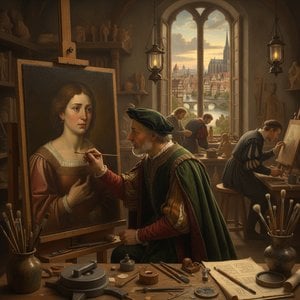
Kai-Christian Bruhn: Bridging Archaeology and Artistic Vision
Kai-Christian Bruhn is a German computational archaeologist whose fascination with the intersection of science and art has yielded remarkable results. Born in Hamburg in 1970, his academic pursuits at Mainz University of Applied Sciences combined with an innate artistic sensibility have propelled him to become a celebrated figure both within the scientific community and as a distinctive artist recognized for his evocative depictions of monastic cells.- Early Life & Education: Bruhn’s formative years were marked by a keen interest in history and mathematics, laying the groundwork for his future career path.
- Computational Archaeology: He earned his doctorate specializing in geoinformatics, applying cutting-edge analytical tools to unravel the mysteries of ancient sites. This expertise proved pivotal in his groundbreaking contribution to archaeological research.
The Discovery That Launched His Artistic Career
Bruhn’s fame gained international attention following the sensational discovery of a colossal Ramses II statue in Egypt—a monumental undertaking that demanded meticulous planning and collaborative effort. This experience solidified his understanding of complex projects and fueled his desire to translate intricate data into visually compelling artworks.- Monastic Cells Series: Bruhn’s artistic output centers around a series of paintings titled “Monastic Cells,” which explore the architectural spaces of medieval monasteries.
- Technique & Style: Utilizing digital painting techniques, he meticulously recreates these cells with remarkable accuracy and sensitivity to light and shadow. His style is characterized by muted palettes and textured surfaces that convey a profound sense of atmosphere.
Influences & Artistic Philosophy
Bruhn’s artistic vision draws inspiration from both the precision of archaeological research and the contemplative beauty of monastic traditions. He believes that art can serve as a powerful medium for communicating complex ideas—much like how geoinformatics illuminates hidden patterns within geographical data.Historical Significance & Legacy
Kai-Christian Bruhn’s work stands apart in its ability to bridge the gap between scientific inquiry and artistic creativity. He exemplifies the potential for interdisciplinary collaboration to yield transformative results, reminding us that profound insights can emerge from unexpected combinations of knowledge.Вопросы и ответы
В какой исторический период работал(а) Kai-Christian Bruhn?
Kai-Christian Bruhn работал в период Contemporary. Эта эпоха позволяет определить место творчества художника в истории.
В каком городе и стране родился(ась) Kai-Christian Bruhn?
Kai-Christian Bruhn родился в городе Hamburg, страна — Germany.
Как я могу проследить творческий путь Kai-Christian Bruhn по годам?
Работы Kai-Christian Bruhn можно увидеть в хронологическом порядке на странице Хронология произведений.
Где и в каком году родился Kai-Christian Bruhn?
Kai-Christian Bruhn родился в Hamburg, 1970 год.
Можно ли просматривать работы Kai-Christian Bruhn по цветовой палитре?
На странице По цветовым палитрам работы Kai-Christian Bruhn сгруппированы по их цветовым палитрам.
Какие работы Kai-Christian Bruhn просматривают чаще всего?
Статистика работ Kai-Christian Bruhn доступна на странице Статистика художника.
Можно ли изучить работы Kai-Christian Bruhn по цветовому спектру?
На странице Цветовой индекс работы Kai-Christian Bruhn распределены по цветам.
Где я могу увидеть произведения Kai-Christian Bruhn в 3D-галерее?
Возможен виртуальный визит: на странице 3D-музей работы Kai-Christian Bruhn представлены в трехмерной галерее.