Портрет John Simpson

Ваш путеводитель по 20 самым известным картинам художника John Simpson

Обновлено Ноябрь 2026 · рейтинг на основе нашего показателя популярности (количество поисковых запросов, посещений и заказов для каждой работы) · 22 работ John Simpson в нашем каталоге

Вкратце

Самое известное произведение John Simpson — это The Duke of Wellington (1769–1852). Вы можете увидеть его в Королевская военная больница Челси в городе Лондон. Следующие в списке — Clarkson Frederick Stanfield (1829) и D. Maria II, Queen of Portugal (1819-1853) (1837). В нашем каталоге представлено 22 работ John Simpson; в этом путеводителе мы выбрали 20 самых известных произведений с указанием года создания, музея и истории каждого шедевра.

1782 – 1847, London Больше всего работ: Национальная портретная галерея

10 главных картин John Simpson, которые стоит знать в первую очередь

1
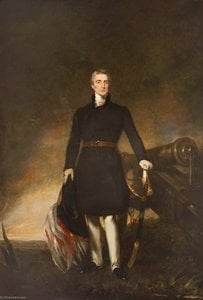
The Duke of Wellington (1769–1852) работы John Simpson

The Duke of Wellington (1769–1852)

To gaze upon this depiction of the Duke of Wellington is to encounter not merely a likeness, but an embodiment of British martial spirit and enduring historical gravity. John Simpson has captured a moment steeped in ceremony and authority. The subject stands with an undeniable bearing, clad in formal attire that speaks volumes of his station—a man whose life was inextricably linked to the grand sweep of military history. His…

Репродукция маслом ручной работы от $175 26 × 38 cm
Заказать это произведение Подробнее об этой работе
2
Clarkson Frederick Stanfield (1829) работы John Simpson

Clarkson Frederick Stanfield

A somber dignity settles over the figure in this 1829 oil portrait. He sits in a quiet, bust-length pose, his body angled slightly toward the right while his gaze drifts toward the same unseen horizon. The lighting is dramatic, a heavy chiaroscuro that spills from the upper left to catch the ridge of his brow and the bridge of his nose. This directional light carves his features out of a…

Репродукция маслом ручной работы от $175 29 × 35 cm Размер как у оригинала $289 64 × 77 cm Заказать в оригинальном размере →
Заказать ручную работу Узнать историю
3
D. Maria II, Queen of Portugal (1819-1853) (1837) работы John Simpson

D. Maria II, Queen of Portugal (1819-1853)

1837 · Oil On Canvas · Imperial Museum of Brazil, Petrópolis

The air in the chamber feels heavy with the scent of old velvet and the quiet weight of authority. Queen Maria II sits poised, her figure centered within an ornate, gilded throne that seems to grow from the very shadows of the room. The light catches the shimmering white of her satin gown, turning the fabric into a luminous landscape of folds and soft highlights. A vibrant sash, striped with…

Репродукция маслом ручной работы от $175 28 × 36 cm
Заказать ручную работу Узнать историю
4
Retrato de D. Pedro, Duque de Bragança (1834) работы John Simpson

Retrato de D. Pedro, Duque de Bragança

1834 · Oil On Canvas

This formal and dignified 19th-century portrait depicts D. Pedro, Duque de Bragança in a three-quarter length composition. The subject is positioned slightly off-center, creating a sense of dynamic presence within the frame. He is dressed in an ornate military uniform, which is heavily adorned with medals, stars, and gold embroidery. A vibrant red and green ceremonial sash cuts across the dark tones of the attire, complemented by the bright white…

Репродукция маслом ручной работы от $175 28 × 36 cm Размер как у оригинала $533 102 × 130 cm Заказать в оригинальном размере →
Заказать это произведение Подробнее об этой работе
5
Portrait of the Duke of Terceira (1832) работы John Simpson

Portrait of the Duke of Terceira

John Simpson executed the Portrait of the Duke of Terceira about 1832. The sitter is António José Severim de Noronha, 1st Duke of Terceira, a prominent Portuguese military officer and statesman. His life was defined by significant political and military engagement during the nineteenth century.

Репродукция маслом ручной работы от $175 29 × 35 cm Размер как у оригинала $291 64 × 77 cm Заказать в оригинальном размере →
Заказать это произведение Подробнее об этой работе
6
Prince Auguste de Beauharnais, Duke of Leuchtenberg (1834) работы John Simpson

Prince Auguste de Beauharnais, Duke of Leuchtenberg

1834 · Oil On Canvas

The portrait titled Prince Auguste de Beauharnais, Duke of Leuchtenberg is a work by the artist John Simpson. The canvas captures Auguste Charles Eugène Napoléon de Beauharnais in a moment of formal stillness. He was a man of significant lineage, serving as the first prince consort of Maria II of Portugal. His presence in this work carries the weight of his many titles, including the 2nd Duke of Leuchtenberg and…

Репродукция маслом ручной работы от $175 28 × 36 cm
Заказать это произведение Подробнее об этой работе
7
Captain Peter Heywood (1773–1831) (1822) работы John Simpson

Captain Peter Heywood (1773–1831)

1822 · Oil On Canvas · National Maritime Museum, Лондон

The man stares directly through the darkness, his gaze steady and unyielding. He sits enveloped in the heavy, dark atmosphere of the early 19th century, his presence defined by the sharp contrast of his military attire against an indistinct, shadowy background. A dark blue coat clings to his shoulders, weighted by the glint of gold epaulettes that signal his rank and the gravity of his station. His white shirt rises…

Репродукция маслом ручной работы от $175 29 × 35 cm Размер как у оригинала $289 64 × 76 cm Заказать в оригинальном размере →
Заказать это произведение Подробнее об этой работе
8
William IV (1765–1837) (1830) работы John Simpson

William IV (1765–1837)

1830 · Oil On Canvas

In this 1830 portrait, we find ourselves in the presence of William IV, a man whose likeness was captured during a period of significant transition in British history. The subject is positioned centrally, commanding the space with a quiet, regal authority. He is draped in formal attire that speaks to his high station, holding a scepter that serves as a direct symbol of his sovereign power. Behind him, a heavy…

Репродукция маслом ручной работы от $175 25 × 39 cm
Заказать это произведение Подробнее об этой работе
9
Head of a Man ( Ira Frederick Aldridge) (1827) работы John Simpson

Head of a Man ( Ira Frederick Aldridge)

1827 · Oil

The gaze of the subject meets the viewer through the layers of history in Head of a Man ( Ira Frederick Aldridge). This portrait, painted by John Simpson, captures a moment of profound stillness. The man stares into the distance, his thoughts seemingly drifting far beyond the edges of the frame. He wears a red robe that catches the light, a striking contrast against his dark skin. Around him, the…

Репродукция маслом ручной работы от $175 28 × 36 cm
Заказать это произведение Подробнее об этой работе
10
Sir John Fleming Leicester (1762–1827), 1st Lord de Tabley, in Peer's Robes (1826) работы John Simpson

Sir John Fleming Leicester (1762–1827), 1st Lord de Tabley, in Peer's Robes

1826 · Oil On Canvas

In this large-scale portrait, we encounter Sir John Fleming Leicester, 1st Lord de Tabley, captured in a moment of profound dignity. He is depicted in his peer's robes, a garment that carries the weight of his status and the recent elevation to the peerage in 1826. The subject is positioned with his back partially turned toward us, a choice that creates a sense of looking into a private, ceremonial space.…

Репродукция маслом ручной работы от $175 24 × 42 cm
Станьте владельцем Узнать больше

От 11 до 20: еще картины художника John Simpson

Что чаще всего писал John Simpson

Четыре наиболее часто встречающихся сюжета в этих работах, каждый из которых представлен своим самым известным примером.

Где можно увидеть картины John Simpson

8 музеев, в которых находится большинство картин со страницы.

Музей Город Работы John Simpson Картины из этого списка
Национальная портретная галерея, ЛондонНациональная портретная галерея Лондон 3 Clarkson Frederick Stanfield, Frederick Marryat (engraved 1826), Sir Herbert Taylor
National Maritime Museum, ЛондонNational Maritime Museum Лондон 2 Captain Peter Heywood (1773–1831), Clarkson Stanfield (1793–1867)
Королевская военная больница Челси, ЛондонКоролевская военная больница Челси Лондон 1 The Duke of Wellington (1769–1852)
Imperial Museum of Brazil, PetrópolisImperial Museum of Brazil Petrópolis 1 D. Maria II, Queen of Portugal (1819-1853)
Национальный музей Соареш-душ-Рейш, ПортуНациональный музей Соареш-душ-Рейш Порту 1 Portrait of the Duke of Terceira
Leeds Civic Hall, LeedsLeeds Civic Hall Leeds 1 George Goodman, Mayor (1836)
Шотландская национальная портретная галерея, ЭдинбургШотландская национальная портретная галерея Эдинбург 1 Sir Charles Napier (1786–1860), Admiral
English Heritage, ЛондонEnglish Heritage Лондон 1 Arthur Wellesley (1769–1852), 1st Duke of Wellington, KG

Десятилетие за десятилетием: самые известные работы John Simpson каждого периода

Произведения по десятилетиям

Выберите десятилетие, чтобы увидеть его шедевр.

John Simpson: краткие ответы о картинах

Какая самая известная картина John Simpson?Посмотреть ответ

В начале списка — The Duke of Wellington (1769–1852), Королевская военная больница Челси, Лондон. Сразу за ней: Clarkson Frederick Stanfield (1829) и D. Maria II, Queen of Portugal (1819-1853) (1837).

Какие 10 лучших картин John Simpson?Посмотреть ответ

The Duke of Wellington (1769–1852), Clarkson Frederick Stanfield, D. Maria II, Queen of Portugal (1819-1853), Retrato de D. Pedro, Duque de Bragança, Portrait of the Duke of Terceira, Prince Auguste de Beauharnais, Duke of Leuchtenberg, Captain Peter Heywood (1773–1831), William IV (1765–1837), Head of a Man ( Ira Frederick Aldridge) и Sir John Fleming Leicester (1762–1827), 1st Lord de Tabley, in Peer's Robes. Год создания и музей каждой работы указаны в списке выше.

Сколько работ John Simpson в вашем каталоге?Посмотреть ответ

В нашем каталоге 22 работ John Simpson, созданных в период с 1822 по 1841.

В каких музеях можно увидеть знаменитые работы John Simpson?Посмотреть ответ

Большинство из них можно найти в Национальная портретная галерея (Лондон), National Maritime Museum (Лондон) и Королевская военная больница Челси (Лондон). Полный список музеев представлен выше.

В какой период John Simpson создал свои самые известные работы?Посмотреть ответ

В 1830s — больше, чем в любой другой период: 9 из 20 работ на этой странице относятся к этому времени, D. Maria II, Queen of Portugal (1819-1853) из них.

Какие первые и последние известные работы есть у John Simpson?Посмотреть ответ

Самая ранняя работа здесь датирована Captain Peter Heywood (1773–1831) (1822), а самая поздняя — Sir Charles Napier (1786–1860), Admiral (1841).

Какие сюжеты John Simpson писал чаще всего?Посмотреть ответ

Man (13), Dark background (5) и Portrait (4) из 20 работ на этой странице.

Какая техника чаще всего встречается в работах John Simpson?Посмотреть ответ

Oil On Canvas, использовано в 10 из 20 работ на этой странице.

Какие знаменитые картины John Simpson находятся в Национальная портретная галерея?Посмотреть ответ

На этой странице вы можете увидеть 3 произведений из коллекции Национальная портретная галерея, Лондон, включая Clarkson Frederick Stanfield, Frederick Marryat (engraved 1826) и Sir Herbert Taylor.

Где я могу заказать репродукцию John Simpson?Посмотреть ответ

Да. Каждая картина на этой странице доступна в виде написанной вручную масляной репродукции или в виде печати в подходящем вам размере. Чтобы оформить заказ, просто перейдите на страницу картины.

История John Simpson

John Simpson: A Life in Portraiture

Early Life and Training

  • Born in London in 1782, John Simpson embarked on a career as a portrait painter during a vibrant period of British art.
  • He received his foundational training at the prestigious Royal Academy, honing his skills and establishing himself within the artistic community.
  • Crucially, Simpson spent several years as an assistant to Sir Thomas Lawrence, PRA – a leading portraitist of the era. This mentorship profoundly shaped his style and approach to capturing likenesses.

Artistic Development and Style

  • Simpson’s early work reflects the influence of Sir Thomas Lawrence, characterized by a refined technique and attention to detail. He quickly gained recognition for his ability to create flattering and accurate portraits.
  • He exhibited regularly at the Royal Academy from 1807 until his death, demonstrating consistent productivity and engagement with the art world.
  • While primarily a portraitist, Simpson’s work occasionally ventured beyond conventional society portraiture, hinting at a broader artistic sensibility.

Major Achievements and Commissions

  • Royal Patronage: In 1834, Simpson received a significant commission to travel to Portugal and paint portraits in Lisbon.
  • His success led to an appointment as Painter to the Queen of Portugal, solidifying his reputation on the international stage.
  • Notable Sitters: Simpson painted numerous prominent figures, including William IV and many other notable individuals of his time. His portraits provide valuable visual records of British society during the 19th century.

‘The Captive Slave’ and Rediscovery

  • A Turning Point: Simpson's painting, ‘The Captive Slave,’ created a significant shift in his artistic legacy. It remained largely unseen for nearly 180 years.
  • Acquisition and Recognition: The Art Institute of Chicago acquired the work in 2008, bringing it to public attention.
  • Abolitionist Significance: ‘The Captive Slave’ is now recognized as a powerful statement against slavery. It demonstrates Simpson's capacity for venturing beyond conventional portraiture and engaging with important social issues.

Legacy and Historical Significance

  • Despite some contemporary criticism suggesting his work lacked “instinct and penetration,” John Simpson established a successful career as a respected portrait painter.
  • Family of Artists: He had two sons who also pursued artistic careers – Charles, who died young, and Philip, who found success with small domestic subjects.
  • Enduring Impact: The rediscovery of ‘The Captive Slave’ has elevated Simpson's status, highlighting his talent and the painting’s importance as a symbol of the abolitionist movement. He is now recognized not only for his technical skill but also for his contribution to social commentary through art.