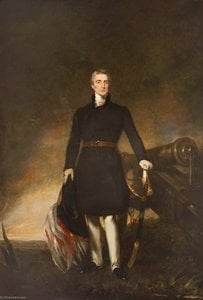
Краткая справка

  • Nationality: United Kingdom
  • Top-ranked work: The Duke of Wellington (1769–1852)
  • Museums on this site:
    • Институт искусств Чикаго
    • Национальная портретная галерея
    • National Maritime Museum
    • English Heritage
    • Национальный музей Соареш-душ-Рейш
  • Also known as:
    • John Philip Simpson
    • Τζον Σίμπσον
    • Джон Симпсон
    • 約翰·辛普森
  • Lifespan: 65 years
  • Works on this site: 22
  • Typical colors: phthalo green
  • Copyright status: Public domain

John Simpson: A Life in Portraiture

Early Life and Training

  • Born in London in 1782, John Simpson embarked on a career as a portrait painter during a vibrant period of British art.
  • He received his foundational training at the prestigious Royal Academy, honing his skills and establishing himself within the artistic community.
  • Crucially, Simpson spent several years as an assistant to Sir Thomas Lawrence, PRA – a leading portraitist of the era. This mentorship profoundly shaped his style and approach to capturing likenesses.

Artistic Development and Style

  • Simpson’s early work reflects the influence of Sir Thomas Lawrence, characterized by a refined technique and attention to detail. He quickly gained recognition for his ability to create flattering and accurate portraits.
  • He exhibited regularly at the Royal Academy from 1807 until his death, demonstrating consistent productivity and engagement with the art world.
  • While primarily a portraitist, Simpson’s work occasionally ventured beyond conventional society portraiture, hinting at a broader artistic sensibility.

Major Achievements and Commissions

  • Royal Patronage: In 1834, Simpson received a significant commission to travel to Portugal and paint portraits in Lisbon.
  • His success led to an appointment as Painter to the Queen of Portugal, solidifying his reputation on the international stage.
  • Notable Sitters: Simpson painted numerous prominent figures, including William IV and many other notable individuals of his time. His portraits provide valuable visual records of British society during the 19th century.

‘The Captive Slave’ and Rediscovery

  • A Turning Point: Simpson's painting, ‘The Captive Slave,’ created a significant shift in his artistic legacy. It remained largely unseen for nearly 180 years.
  • Acquisition and Recognition: The Art Institute of Chicago acquired the work in 2008, bringing it to public attention.
  • Abolitionist Significance: ‘The Captive Slave’ is now recognized as a powerful statement against slavery. It demonstrates Simpson's capacity for venturing beyond conventional portraiture and engaging with important social issues.

Legacy and Historical Significance

  • Despite some contemporary criticism suggesting his work lacked “instinct and penetration,” John Simpson established a successful career as a respected portrait painter.
  • Family of Artists: He had two sons who also pursued artistic careers – Charles, who died young, and Philip, who found success with small domestic subjects.
  • Enduring Impact: The rediscovery of ‘The Captive Slave’ has elevated Simpson's status, highlighting his talent and the painting’s importance as a symbol of the abolitionist movement. He is now recognized not only for his technical skill but also for his contribution to social commentary through art.

Короткий тест

В каждом вопросе только один правильный ответ.

Вопрос 1:
John Simpson was a student and assistant to which prominent British painter?
Вопрос 2:
Simpson received a commission that led him to paint portraits in which European capital city?
Вопрос 3:
What is the title of John Simpson's rediscovered painting, now considered his masterpiece and a significant work of abolitionist art?
Вопрос 4:
According to a 19th-century biographer, Sidney Lee, what was a noted characteristic of Simpson's portraiture?
Вопрос 5:
Besides John Simpson, how many of his sons also practiced as artists?

Вопросы и ответы

Можно ли просматривать работы John Simpson по направлениям искусства?

На странице Все направления работы John Simpson сгруппированы по направлениям в искусстве.

Можно ли увидеть обзор всех сюжетов, которые писал John Simpson?

На странице Атлас сюжетов работы John Simpson распределены по темам.

К какой исторической эпохе относится John Simpson?

John Simpson работал в эпоху 19th Century. Этот период позволяет определить место творчества художника в истории.

Можно ли посетить виртуальный 3D-тур по работам John Simpson?

Страница художника художника John Simpson — это страница, на которой произведения автора представлены в виртуальной трехмерной галерее.

Как я могу проследить творческий путь John Simpson по годам?

Существует хронология работ John Simpson: на странице Хронология работ произведения художника расположены в порядке даты их создания.

Можно ли просматривать работы John Simpson по настроению?

На странице Подбор по настроению художника John Simpson произведения автора распределены по настроению.

Какие работы John Simpson просматривают чаще всего?

Страница со статистикой Статистика просмотров для John Simpson содержит данные, рассчитанные на основе произведений этого художника, представленных на данный сайт.

Где можно посмотреть все работы John Simpson?

Все работы John Simpson на данный сайт можно найти на странице Все работы художника художника.

Как мне найти работы John Simpson по определенной теме?

Чтобы найти работы John Simpson на определенную тему, воспользуйтесь страницей По ключевым словам, где произведения художника сгруппированы по ключевым словам.