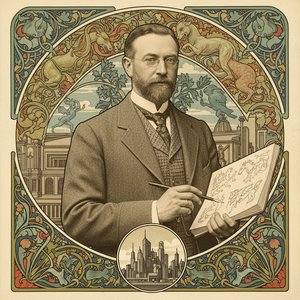
A Quiet Presence in Mid-Century Portraiture
The brushstrokes of G. Hattink offer a window into the social fabric of the mid-nineteenth century. Working primarily during the active years between 1849 and 1854, this painter focused on the quiet dignity of the individual. There is a sense of stillness in the works that survived, capturing people in moments of repose or formal presentation. These paintings do not shout; instead, they settle into the room with a steady, composed presence.
The artist's output is most clearly understood through the intimate connections found in their subjects. Rather than painting grand historical scenes, Hattink turned toward the private lives of specific families, documenting the faces of those who lived through a changing era. This focus on the personal rather than the monumental gives the work a grounded, human quality.
The Faces of Utrecht
Much of the legacy of G. Hattink is preserved within the walls of the Museum Catharijneconvent in Utrecht. The collection held there provides a glimpse into the artist's ability to render character through portraiture. The works from 1849, in particular, show a dedication to capturing the likenesses of specific individuals and their spouses, preserving their identities for future generations.
The surviving records highlight a specific period of productivity:
- 1849: Portrait of Theresia Derckson, echtgenote van Henricus Johannes Hageman
- 1849: Portrait of Henricus Johannes Hageman, echtgenoot van Theresia Derckson
These pieces, depicting Henricus Johannes Hageman and his wife Theresia Derckson, serve as the primary evidence of Hattink's skill. They represent a time when portraiture was a vital way to anchor a family's history. Through these canvases, the artist helped ensure that the likenesses of these individuals remained part of the cultural record in Utrecht.
A Legacy of Observation
While the active years of G. Hattink were relatively brief, the impact of their work remains visible in museum archives. The ability to capture the essence of a person through paint is a skill that requires patience and a keen eye for detail. Hattink's work remains a part of the historical landscape, offering a look at the people who formed the community of the mid-1800s.
Вопросы и ответы
Как мне найти работы G. Hattink по определенной теме?
Работы G. Hattink можно найти по ключевым словам на странице художника По ключевым словам. Каждое ключевое слово объединяет соответствующие произведения искусства.
На какие периоды делится карьера G. Hattink?
Хронологический обзор творчества G. Hattink представлен на странице Хронология работ, где произведения сменяют друг друга в порядке их создания, разделенные по периодам.
Какие настроения передают работы G. Hattink?
На странице Подбор по настроению работы G. Hattink распределены по настроению.
Сколько работ G. Hattink представлено в каталоге?
Вы можете просмотреть 2 произведений работ G. Hattink на странице Все работы художника.