


 Предпросмотр
 Поделиться
 Поделиться
 Детали произведения

 Скачать
 Похожие работы
 Рентгенография
 Слайд-шоу
Izu


 Читать далее
Жикле / Арт-принт
Печать (жикле) или холст музейного качества с быстрыми сроками изготовления и широким выбором вариантов отделки. ( Купить картину ручной работы Купить изображение)




P118B $10

P118H $10

P118W $10

P438Z $10

P508JH $12

P508YH $12

P805H $10

P805Z $10

P919BZ $10

P919G $10

P919XJ $10

P959ZH $10

P968JZ $12

W106C $8

W218G $10

W218JH $8

W218Y $10

W307PJ $10

W316G $10

W316PJ $8

W316Y $10

W398PJ $8

W4111J $10

W500HY $15

W500JH $15

W692G $12

W849H $8

W940BG $15

W953PJ $8




Выберите один из наших стандартных размеров, соответствующих оригинальным пропорциям произведения искусства.

Вы можете указать свои собственные размеры, чтобы репродукция идеально подошла под конкретную раму или пространство. Если выбранный вами размер не будет соответствовать пропорциям оригинала, мы либо обрежем произведение, либо дополним изображение зеркальным отражением краев или однотонной заливкой. Перед началом производства вам будет отправлен цифровой макет для утверждения.
Пожалуйста, обратите внимание, что предварительный просмотр на экране не отображает фактическую обрезку или расширение изображения. Только макет точно покажет финальную композицию.
Несмотря на возможность заказа индивидуальных размеров, мы рекомендуем выбирать размер из предопределенного списка, чтобы сохранить оригинальные пропорции.
Доставка по всему миру () за 2 недели вместо стандартных 4/5 недель. (13 Август)

Бесплатная экспресс-доставка по всему миру

Высококачественный льняной холст

Полное страхование доставки

Гарантия возмещения таможенных пошлин

Гарантия точного соответствия цветов

Политика возврата в течение 60 дней (только при наличии дефектов)

Гарантия возврата 100% средств

Предложение оптовых скидок
 Вариант со стеклом доступен только для размеров менее 110 см

Izu
Жикле / Арт-принт
Размер репродукции
-


Итоговая стоимость
$ 62
Описание предмета коллекционирования
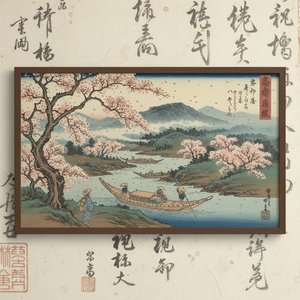
A Serene Descent: The Poetic Landscape of Izu
In the quietude of the mid-19th century, amidst the shifting tides of Japan's Edo period, Utagawa Hiroshige captured a moment of profound stillness in his masterpiece, Izu. This exquisite woodblock print invites the viewer into a realm where the boundaries between the earthly and the ethereal dissolve. The composition is anchored by the majestic presence of distant mountains, their peaks softened by a delicate atmospheric haze that suggests the cool, damp air of a high-altitude morning. Cascading down these rugged slopes, waterfalls emerge as silver threads of movement, breathing life into the stationary stone and providing a rhythmic pulse to the landscape. This interplay of vertical descent and horizontal stability creates a visual harmony that has captivated collectors for generations.
The artistry of Hiroshige lies in his ability to translate the ephemeral qualities of nature into the structured medium of ukiyo-e. Through masterful use of line and subtle gradations of color, he achieves a sense of depth that draws the eye deep into the heart of the Izu landscape. The scattered trees, rendered with meticulous care, act as organic anchors within the scene, their verdant textures contrasting beautifully against the misty backdrop. Every element, from the delicate calligraphy on the periphery to the soft shadows cast by the mountain ridges, serves a singular purpose: to evoke a sense of mono no aware—the bittersweet pathos of the fleeting beauty found in all living things.
Historical Resonance and Artistic Legacy
Created in 1853, Izu stands as a testament to Hiroshige's role as Japan's last great master of the floating world. During this era, Japan was on the precipice of monumental change, yet within this print, time seems to stand perfectly still. The landscape does not merely depict a geographical location; it embodies a spiritual sanctuary. For the contemporary art enthusiast or interior designer, this piece offers more than just aesthetic pleasure; it provides a window into a lost era of tranquility. The subtle textures and muted palette make it an incredibly versatile choice for sophisticated spaces, offering a calming focal point that complements both minimalist modern interiors and more traditional, classical settings.
The influence of Hiroshige’s vision extends far beyond the borders of Japan, having famously ignited the imaginations of Western Impressionists like Vincent van Gogh. When integrating a high-quality reproduction of Izu into a curated collection, one is not merely displaying a landscape, but participating in a global dialogue of beauty and emotion. The print's ability to evoke a sense of peace and natural wonder ensures that it remains a timeless investment, capable of transforming any room into a meditative retreat. It is an invitation to pause, to breathe, and to reconnect with the enduring majesty of the natural world.
Похожие произведения


Биография художника
A Poetic Vision of Edo Japan: The Life and Art of Utagawa Hiroshige
Utagawa Hiroshige, born Andō Tokutarō in 1797 in the bustling city of Edo (modern Tokyo), stands as a pivotal figure in the world of *ukiyo-e*, or “pictures of the floating world.” Though deeply rooted in the traditions of Japanese woodblock printing, Hiroshige transcended mere replication, imbuing his landscapes with a poetic sensibility that resonated profoundly both within Japan and, later, across the Western art world. His life unfolded during a period of relative peace and prosperity under the Tokugawa shogunate, yet also one marked by increasing social change and eventual westernization – forces that would ultimately contribute to the decline of *ukiyo-e* even as they amplified Hiroshige’s enduring legacy. Initially destined for a more conventional path within a samurai family—his father served as a fire warden—Hiroshige's artistic inclinations led him to apprenticeship under Utagawa Toyohiro, a master of the Utagawa school. This proved a crucial turning point, steering him away from the popular depictions of courtesans and actors favored by many *ukiyo-e* artists toward a focus on landscape, a genre he would ultimately redefine.Early Years and Artistic Training
Hiroshige’s early artistic development was shaped by his family background and formal training. Born into a samurai lineage—his grandfather had served as an archery instructor for the Tsugaru clan—he initially seemed destined for a life of bureaucratic service, but his innate talent for art quickly became apparent. At the age of twelve, following the tragic loss of both his parents, he entered the studio of Utagawa Toyohiro, a respected master of the Utagawa school known for his portraits and scenes from daily life. This apprenticeship provided him with a solid foundation in traditional *ukiyo-e* techniques, including woodblock carving, printing, and composition. However, it was during this period that Hiroshige began to develop his own distinctive style, moving beyond the conventional subjects of the school and gravitating towards the burgeoning interest in landscape prints—a genre still considered somewhat niche at the time. He initially adopted the *nom d’artiste* “Hiroshige,” a name that would become synonymous with his artistic identity.The Rise of Landscape Ukiyo-e
The late Edo period witnessed a shift in Japanese art, driven by factors such as increased travel and trade, and a growing appreciation for nature. While traditional *ukiyo-e* continued to thrive on depictions of courtesans, actors, and urban scenes, a new interest emerged in capturing the beauty of the natural world—mountains, rivers, forests, and seasonal landscapes. Hiroshige was at the forefront of this movement, skillfully blending Western artistic principles with Japanese aesthetics. He drew inspiration from Chinese landscape painting, particularly its emphasis on atmospheric perspective and the use of subtle color gradations to convey mood and atmosphere. His early works, such as *Famous Places in the Eastern Capital*, demonstrated his mastery of these techniques, creating images that were both visually stunning and emotionally evocative.Masterpieces: The Fifty-Three Stations and Beyond
Hiroshige’s most celebrated achievement is undoubtedly *The Fifty-three Stations of the Tōkaidō* (1833–1834). This monumental series documented a journey along the main road connecting Edo and Kyoto, not as a straightforward travelogue but as a collection of carefully crafted vignettes—each print capturing a specific moment in time and place. Hiroshige’s approach was revolutionary; he didn't simply depict the stations themselves, but rather the atmosphere surrounding them – rain-swept roads, misty mountains, bustling marketplaces. His use of *bokashi*, or multiple blocks for a single color, created subtle gradations of tone that enhanced the sense of depth and realism. Similarly, his series *One Hundred Famous Views of Edo* (1856–1858) offered intimate glimpses into the life and landscapes of his beloved city, showcasing his ability to capture both the grandeur and the everyday details of Edo’s urban environment. These works are not merely representations of places; they are poetic evocations of mood, atmosphere, and time.Influence and Legacy
Despite the decline of *ukiyo-e* following Hiroshige's death in 1858, his influence on Western art was profound. During the late 19th century, Japanese prints flooded Europe, sparking a phenomenon known as *Japonisme*. Artists such as Édouard Manet, Claude Monet, and Edgar Degas were captivated by the bold compositions, flattened perspectives, and unconventional color schemes of *ukiyo-e*, incorporating these elements into their own work. Vincent van Gogh was particularly enthralled with Hiroshige’s prints, creating copies of several, including “Flowering Plum Tree after Hiroshige,” demonstrating his deep admiration for the Japanese master's use of color and composition. Hiroshige’s legacy extends far beyond painting; it can be seen in architecture, design, and even literature. His serene landscapes continue to inspire awe and contemplation, reminding us of the beauty and transience of the natural world. He remains a pivotal figure in the history of art, bridging East and West through his poetic vision of Japan.Notable Works
- The Fifty-three Stations of the Tōkaidō: Hiroshige’s most famous series, documenting a journey along the main road between Edo and Kyoto.
- One Hundred Famous Views of Edo: A captivating portrayal of life and landscapes in his beloved city.
- Influence on Vincent van Gogh's Japonaiserie Series: Including “Flowering Plum Tree after Hiroshige,” demonstrating Van Gogh’s deep admiration for the Japanese master.

Утагава Хиросиге
1797 - 1858 , Япония
Основные сведения
- Artistic Movement Or Style: *Ukiyo-e*
- Artists Or Movements Influenced By This Artist:
- Manet
- Monet
- Van Gogh
- Artists Who Influenced This Artist: ['Hokusai']
- Date Of Birth: 1797
- Date Of Death: 1858
- Full Name: Utagawa Hiroshige
- Nationality: Японский
- Notable Artworks:
- Пятьдесят три станции Тōkaidō
- Сто знаменитых видов Эдо
- Place Of Birth: Токио, Япония
Похожие статьи

Топ-25 шедевров Кацусики Хокусая: Искусство Японии для вашего интерьера
Погрузитесь в мир гения Кацусики Хокусая! 25 легендарных гравюр укиё-э, включая "Великую волну". История искусства Японии и вдохновение для вашего интерьера. Репродукции высокого качества на ArtsDot.com.

Ukiyo-e's Poetic Visionary: Hiroshige Ando & the Transformation of Landscape in 19th-Century Japan
Explore the life & art of Ando Hiroshige, Japan's last great ukiyo-e master. Discover his iconic landscapes, poetic style, and profound influence on Western Impressionism. Learn about The Fifty-Three Stations & more!

Ukiyo-e's Greatest Hits: 10 Masterpieces That Shaped a Movement | ArtsDot
Journey into Japan's 'Floating World'! Explore 10 Ukiyo-e masterpieces by Hokusai, Hiroshige & more. Discover the stories behind these iconic woodblock prints and bring timeless Japanese art to your home with ArtsDot.com. Explore the full collection online.
Ephemeral Landscapes: Hiroshige's Poetics of Transient Beauty in Edo Japan
Explore the captivating world of Utagawa Hiroshige's ukiyo-e landscapes. Discover his artistic innovations, influence on Western art, and the poetics of transient beauty in Edo period Japan. A guide for collectors & enthusiasts.

Floating World: The Captivating Art and Legacy of Japanese Ukiyo-e
Explore the profound beauty of Japanese Ukiyo-e. Discover the history, masters like Hokusai, and the enduring legacy of the 'Floating World' through an expert art-historical lens.



