


 Предпросмотр
 Поделиться
 Поделиться
 Детали произведения

 Скачать
 Похожие работы
 Рентгенография
 Слайд-шоу
Silvia


 Читать далее
Масляная репродукция ручной работы
Картина маслом на холсте в выбранном вами размере и раме, написанная на заказ нашими художниками. ( Купить принт Купить изображение)




P118B $10

P118H $10

P118W $10

P438Z $10

P508JH $12

P508YH $12

P805H $10

P805Z $10

P919BZ $10

P919G $10

P919XJ $10

P959ZH $10

P968JZ $12

W106C $8

W218G $10

W218JH $8

W218Y $10

W307PJ $10

W316G $10

W316PJ $8

W316Y $10

W398PJ $8

W4111J $10

W500HY $15

W500JH $15

W692G $12

W849H $8

W940BG $15

W953PJ $8




Выберите один из наших стандартных размеров, соответствующих оригинальным пропорциям произведения искусства.

Вы можете указать собственные размеры, чтобы картина идеально вписалась в выбранную раму или пространство. Если выбранный вами размер не соответствует пропорциям оригинала, мы либо обрежем полотно, либо расширим его за счет дополнительных элементов, написанных вручную. Цифровой макет будет отправлен вам на утверждение перед началом производства.
Обратите внимание, что предварительный просмотр на экране не отражает фактическую обрезку или расширение. Только макет точно покажет окончательную композицию.
Хотя доступны индивидуальные размеры, мы рекомендуем выбирать вариант из предопределенного списка, чтобы сохранить исходные пропорции.
После оформления заказа команда ArtsDot.com свяжется с клиентом по электронной почте для уточнения деталей и предоставит предварительный макет
Доставка по всему миру () за 3–4 недели вместо стандартных 5 недель. (26 Август). Без компромиссов в качестве.

Бесплатная экспресс-доставка по всему миру

Высококачественный льняной холст

Полное страхование доставки

Гарантия возмещения таможенных пошлин

Гарантия точного соответствия цветов

Политика возврата в течение 60 дней (только при наличии дефектов)

Гарантия возврата 100% средств

Предложение оптовых скидок
 Вариант со стеклом доступен только для размеров менее 110 см

Silvia
Техника репродукции
Размер репродукции
-


Итоговая стоимость
$ 263
Описание произведения
A Fragmented Vision of Modernity
In the quiet intensity of Umberto Boccioni’s 1915 masterpiece, “Silvia,” we encounter more than a mere portrait; we witness the very heartbeat of the Futurist movement. At a time when the world stood on the precipice of monumental change, Boccioni sought to dismantle the stagnant traditions of academic realism to capture the electric pulse of a new era. This striking monochrome work does not simply depict a woman named Silvia; it serves as a profound assertion of artistic liberation, where the boundaries between the human form and the surrounding environment begin to dissolve into a rhythmic dance of light and shadow.
The composition centers on Silvia’s face and upper body, yet she is far from a static subject. Positioned against a backdrop of chairs and cushions, these elements are transformed from simple domestic props into active participants in a larger narrative of motion. Boccioni utilizes a masterful technique of graphite and charcoal, employing intricate hatching and cross-hatching to build volume and texture. Through these deliberate strokes, the artist creates a sense of depth that paradoxically feels both grounded and ethereal, inviting the viewer to look beyond the surface and into the vibrating energy of the subject's very existence.
The Symphony of Line and Light
To gaze upon “Silvia” is to experience the raw power of the monochrome palette. By stripping away the distraction of color, Boccioni forces our attention toward the dramatic interplay of black, white, and varying shades of gray. This starkness heightens the emotional impact of the piece, lending it a somber yet vital intensity. The true genius of the work, however, lies in its use of line. Rather than smooth, continuous contours, the artist employs energetic, angular, and deliberately fractured lines that seem to pulsative with life. These lines mirror the Futurist obsession with speed and mechanical dynamism, suggesting that even in a moment of seated repose, there is an underlying current of unstoppable movement.
For the discerning collector or interior designer, this artwork offers a sophisticated focal point that bridges the gap between classical elegance and avant-garde edge. The organic shapes of the human figure are subtly interrupted by geometric fragmentation, creating a visual tension that keeps the eye moving across the paper. This interplay of textures—the implied softness of skin against the structured grain of wood or fabric—provides a rich sensory experience that can anchor a modern gallery wall or add a layer of intellectual depth to a contemporary living space.
A Legacy of Transformation
Historically, “Silvia” was birthed during an era of intense social upheaval, on the eve of World War I. It embodies the spirit of Filippo Tommaso Marinetti’s Futurist manifesto, which celebrated technology, violence, and the rejection of the past. In this drawing, we see the tension of that era: a contemplative, introspective gaze captured within a framework of radical deconstruction. The subject's turned head suggests a moment of profound observation, perhaps reflecting the artist's own attempt to reconcile the human soul with the encroaching machine age.
Owning a high-quality reproduction of this work allows one to bring a piece of art history’s most revolutionary movement into the home. It is an invitation to contemplate the beauty found in fragmentation and the strength found in motion. Whether viewed as a study in light or a manifesto of modernism, “Silvia” remains a timeless testament to Boccioni’s ability to capture the fleeting essence of life through the lens of a changing world.
Похожие произведения


Биография художника
A Life Forged in Motion: The Revolutionary Vision of Umberto Boccioni
Umberto Boccioni, born in Reggio Calabria in 1882, was a figurehead of the Italian Futurist movement—a force that sought to shatter artistic conventions and embrace the dynamism of the modern world. His life, though tragically cut short at just thirty-three, became a testament to this fervent belief in progress, speed, and the intoxicating energy of the machine age. Boccioni’s early years were marked by constant relocation due to his father's civil service position, an upbringing that exposed him to diverse landscapes and instilled within him a restless spirit. This nomadic existence eventually led him to Rome, where he initially pursued studies in decorative arts before gravitating towards painting, absorbing influences from the Liberty style poster artists of the time. However, it was his encounter with Futurism, ignited by the writings of Filippo Tommaso Marinetti, that truly set his artistic trajectory ablaze.Embracing the Whirlwind: The Rise of a Futurist
The year 1910 proved pivotal for Boccioni. He signed the *Manifesto dei Pittori Futuristi*, solidifying his commitment to a movement that celebrated technology, velocity, and even violence as emblems of modernity. This wasn’t merely an aesthetic choice; it was a philosophical rebellion against the weight of tradition, a desire to capture the very essence of a world hurtling towards an uncertain future. Boccioni quickly became one of Futurism's most articulate theorists, expanding upon Marinetti’s initial pronouncements and applying them to the visual arts. He argued for a complete break from representational accuracy, advocating instead for paintings that conveyed not just *what* things looked like, but *how* they felt in motion—the sensation of speed, the fragmentation of form, the overwhelming energy of urban life. His early works, while still hinting at Impressionist and Divisionist influences, began to demonstrate this burgeoning obsession with dynamism. Paintings such as *The City Rises* (1910-1911) are monumental in scale and ambition, depicting the chaotic construction of a modern metropolis—a swirling vortex of human figures, buildings, and machinery that embodies the Futurist ideal. The painting is not simply a depiction of a city; it’s an embodiment of its relentless energy and transformation.Deconstructing Reality: Technique and Themes
Boccioni’s artistic development was characterized by an increasingly radical approach to form. He moved away from traditional notions of perspective and composition, embracing fragmentation as a means of conveying movement and energy. Objects were broken down into their constituent parts, lines of force radiated outwards, and colors blended in swirling patterns—all designed to create a sense of visual vibration. This deconstruction wasn’t merely stylistic; it was rooted in Boccioni's belief that reality itself was fluid and constantly changing. He sought to represent not the static appearance of things, but their dynamic essence. Key themes emerged throughout his oeuvre: dynamism, the celebration of modernity, and a fascination with the human body as a vehicle for expressing energy and motion. This is powerfully illustrated in works like *Dynamism of a Human Body* (1913), where a figure is depicted not as a solid form but as a series of fragmented shapes suggesting movement through space. The painting captures the sensation of a person in motion, almost dissolving into the surrounding environment. His sculpture *Unique Forms of Continuity in Space* (1913) further exemplifies this approach—a bronze masterpiece that appears to be caught mid-stride, its limbs and torso elongated and distorted, conveying a sense of unstoppable momentum. The work is not just a representation of a body; it’s an embodiment of the Futurist concept of dynamism and continuous movement.Influences and Legacy
Boccioni's artistic journey was shaped by a confluence of influences. Early exposure to Giacomo Balla’s Divisionist techniques, with its emphasis on broken color and fragmented forms, provided a foundation for his later explorations of dynamism. The writings of Pablo Picasso and Guillaume Apollinaire, particularly their theories about the relationship between art and modern life, also played a significant role in shaping his artistic vision. Crucially, he was deeply influenced by Filippo Tommaso Marinetti’s *Manifesto del Futurismo*, which articulated the movement's core tenets—a rejection of the past, an embrace of technology, and a celebration of speed and violence. Boccioni’s own theoretical contributions to Futurism were equally important, as he developed a sophisticated system for representing motion and dynamism in his paintings and sculptures. Despite his untimely death in 1916 during World War I, Boccioni's legacy endures. His innovative approach to form, color, and composition profoundly influenced subsequent generations of artists, including Constructivists and Abstract Expressionists. His work continues to be studied and admired for its bold experimentation and its powerful evocation of the energy and dynamism of the modern world.- Key Influences: Giacomo Balla, Filippo Tommaso Marinetti, Pablo Picasso, Guillaume Apollinaire
- Notable Works: *The City Rises*, *Dynamism of a Human Body*, *Unique Forms of Continuity in Space*
- Historical Significance: A pivotal figure in 20th-century art, Boccioni challenged artistic conventions and helped shape the course of modern art. His theories on dynamism and the representation of motion continue to inspire artists today.

Умберто Боччони
1882 - 1916 , Италия
Основные сведения
- Artistic Movement Or Style: Футуризм
- Artists Or Movements Influenced By This Artist:
- Конструктивизм
- Абстрактный экспрессионизм
- Artists Who Influenced This Artist:
- Джакомо Балла
- Постимпрессионизм
- Date Of Birth: 1882-10-19
- Date Of Death: 1916-08-17
- Full Name: Умберто Бьочони
- Nationality: Итальянский
- Notable Artworks:
- Динамизм человеческого тела
- Уникальные формы непрерывности в пространстве
- Город, восходящий
- Place Of Birth: Реджо Calabria, Италия
Похожие статьи

10 Iconic Charcoal Masterpieces That Redefined Art History
Journey through history with 10 legendary charcoal masterpieces. Explore the dramatic techniques and emotive power of iconic monochrome art. Find museum-quality reproductions and curated decor inspiration for your space. Discover all masterpieces on ArtsDot.com.

25 Шедевров Поля Сезанна: Открывая Новую Эру в Искусстве | ArtsDot
Откройте для себя 25 величайших шедевров Поля Сезанна! Узнайте истории создания картин импрессионизма и постимпрессионизма, технику художника и вдохновение для вашего интерьера. Репродукции картин Сезанна высокого качества на ArtsDot.com.

The Art of the Line: Discover Captivating Drawings to Transform Your Home with Sophisticated Minimalist Elegance
Elevate your home with the profound elegance of fine art drawings. From soulful charcoal sketches to minimalist line art, discover how captivating textures and masterful contours can transform your interior design. Explore expert curation for a sophisticated, meaningful living space.

Фернан Леже: Топ-25 шедевров кубизма для ценителей искусства и декора интерьера
Погрузитесь в мир Фернана Леже! Топ-25 шедевров кубизма, раскрывающих машинную эстетику и новаторский стиль художника. Репродукции картин высокого качества для вашего интерьера. Откройте всю коллекцию на ArtsDot.com
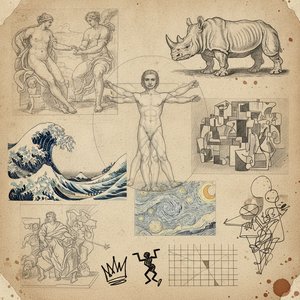
10 Iconic Drawings That Revolutionized the World of Art
Journey through history with 10 legendary drawings that redefined art. From Renaissance sketches to iconic charcoal works, explore the stories behind these timeless masterpieces. Find museum-quality reproductions and decor inspiration at ArtsDot.com. Discover all masterpieces online.



