


Картина подстраивается под ваш выбор: , .
Описание предмета коллекционирования
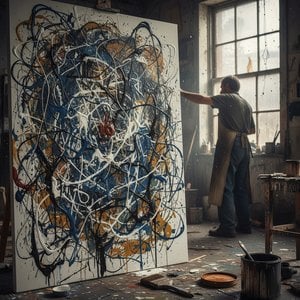
Experience the dynamic energy of Paul Jackson Pollock's 'Burning Landscape,' a captivating drip painting featuring instruments and musicians—a cornerstone of Abstract Expressionism and American art history.
 Читать далее
Биография художника
Джексон Поллок (1912-1956) – американский художник, пионер абстрактного экспрессионизма и техники "dripping". Его знаменитые полотна, такие как "Оранжевая голова" и "Blue Poles", отражают энергию, спонтанность и новаторский подход к живописи.
Масляная репродукция ручной работы
Картина маслом на холсте в выбранном вами размере и раме, написанная на заказ нашими художниками. ( Перейти к печатным копиям Перейти к цифровым изображениям)
Подробнее об этой картине
 Предпросмотр
 Поделиться
 Поделиться
 Детали произведения
 Руководство

 Скачать
 Похожие предметы
 Рентгенография
 Слайд-шоу
 Вопросы и ответы
 Статистика просмотров
Закажите свою картину в четыре простых шага
Не торопитесь. Вы можете изменить любой ответ; цена в вашей корзине будет обновляться после каждого выбора.
1 Шаг первый из четырех
Какой размер вы бы хотели выбрать?
Эти размеры сохраняют пропорции оригинальной картины. На рисунке показано, как выбранный вами вариант будет смотреться на стене над двухметровым диваном.
Или укажите свои размеры
Выберите один из наших стандартных размеров, соответствующих оригинальным пропорциям произведения искусства.

Введите необходимую ширину и высоту, чтобы репродукция подошла к вашей раме или стене. Поскольку работа выполняется вручную, при изменении пропорций художник может немного увеличить область вокруг картины или, наоборот, обрезать края — выбор за вами. Перед началом работы мы пришлем вам цифровой макет на утверждение. Изображение на этой странице не является точным результатом — увидеть реальный вид можно только на макете.
2 Шаг второй из четырех
Как его подготовить: в рулоне, на подрамнике или в раме?
Ниже указаны цены для размера, выбранного вами на первом этапе.
Выберите тип обработки краев холста
Выберите свою раму

Белый торцевой край $1

Размытый край $1

С продолжением изображения $1

P118B $10

P118H $10

P118W $10

P438Z $10

P508JH $12

P508YH $12

P805H $10

P805Z $10

P919BZ $10

P919G $10

P919XJ $10

P959ZH $10

P968JZ $12

W106C $8

W218G $10

W218JH $8

W218Y $10

W307PJ $10

W316G $10

W316PJ $8

W316Y $10

W398PJ $8

W4111J $10

W500HY $15

W500JH $15

W692G $12

W849H $8

W940BG $15

W953PJ $8

H24-GOLD $30

H24-SILVER $30

H36-GOLD $45

H36-SILVER $45
В раме
Багет: . Общий размер в раме: .
3 Третий шаг из четырех
Желаете ли вы внести какие-либо изменения в картину?
Большинство людей отвечают «нет». Но поскольку каждая картина создается вручную, наш художник может адаптировать ее специально для вас.
После оформления заказа команда ArtsDot.com свяжется с клиентом по электронной почте для получения инструкций и предоставит предварительный макет
4 Четвертый шаг из четырех
Несколько вариантов отделки
Все они являются необязательными. Выбранные ответы не влекут за собой дополнительных расходов.
Кто автор?
Доставка по всему миру () за 3–4 недели вместо стандартных 5 недель. (7 Ноябрь). Без компромиссов в качестве.
Табличка, как в музее?
Детали гравировки на бронзовой плакетке
This elegant plaque features the artist's name and the title of the artwork, finely engraved for a timeless presentation.
It is made from bronze with a refined, elegant finish. The text is precisely laser-engraved for a sharp and permanent result. Measuring 9x2 cm, the plaque is compact yet easy to read. It's built to be durable and scratch-resistant, offering a professional, museum-quality look. Mounting is simple thanks to the included adhesive backing.
Детали прозрачной акриловой таблички
The plaque includes essential engraved details such as the artist's name, the title of the artwork, the date it was created, the type of media used-like oil on canvas or watercolor-a brief description of the piece, and a QR code that links to the complete artwork information.
It is crafted from clear acrylic, offering a sleek, modern appearance. The text is UV-engraved in black to ensure strong visual contrast. With a size of 10x15 cm, it ensures optimal readability. It comes equipped with two metal hooks for secure wall mounting. The plaque is designed to be weather-resistant, making it suitable for various environments, and it includes interactive features that work seamlessly with smartphone scanning.
Информация о чёрной акриловой табличке
This elegant plaque includes engraved information such as the artist's name, the title of the artwork, the date it was created, the type of media used (like oil on canvas or watercolor), a short description of the artwork, and a QR code for quick access to more information.
The plaque itself is made from refined black acrylic with a premium finish. The text is laser-engraved in white for high contrast and readability. Its size is 10x15 cm, designed to be easy to read. It comes with two metal hooks for professional mounting. The design is sleek and fits any interior style. It is also weather-resistant and durable, with built-in digital integration for mobile compatibility.
Защитный лак?
Когда вам нужна доставка?
✓ Проверить и заказать
Ваша картина в соответствии с вашим заказом

Burning Landscape
Техника репродукции
Размер репродукции
-

Выдающийся мастер высокого класса
Более высокая детализация, изысканность и дополнительное время на создание работы
-

Оформление репродукции
-
-
Для произведений искусства или репродукций, размер которых превышает 105 см (приблизительно 41 дюйм) по любой из сторон, рама будет доставлена в разобранном виде (в виде комплекта). Этот метод обеспечивает безопасную доставку и предотвращает повреждения при транспортировке.
Требуется профессиональная сборка — это не продукт для самостоятельной сборки (DIY).
Комплект должен быть собран, а холст натянут опытным мастером по багетным рамам с использованием клеевого ПВА (не входит в комплект), струбцин для натяжки холста и зажимов, чтобы удерживать подрамник ровным до полного высыхания клея. Неправильная сборка или неравномерное натяжение холста могут привести к необратимому повреждению произведения искусства и не являются гарантийным случаем.
 Для произведений искусства или репродукций, размер которых превышает 105 см (приблизительно 41 дюйм) по любой из сторон, рама будет доставлена в разобранном виде (в виде комплекта). Этот метод обеспечивает безопасную доставку и предотвращает повреждения при транспортировке.
В комплект входят все бруски из массива дерева, точно вырезанные по размеру.
Собирается с помощью предоставляемых винтов, а также столярного клея для угловых соединений, который не входит в комплект и должен быть приобретен вашим мастером.
Требуются профессиональные инструменты, не входящие в комплект: щипцы для натяжки холста (натяжитель) и зажимы, чтобы удерживать рейки ровно во время высыхания клея.
Важно:
Для соединения углов требуется клей для дерева, перекладины необходимо зафиксировать струбцинами до полного высыхания клея, а для натяжки холста на собранную раму требуются щипцы для натяжки холста. Ни один из этих инструментов не входит в комплект. Пожалуйста, убедитесь в наличии опытного мастера по багетным работам перед заказом рамы такого размера.

Этикетка
-
-

Защитный лак
Глянцевый лак (насыщает цвета, защищает от воздействия света и влаги)
-

Персонализация картины
Примеры возможных изменений: замена лица на фото клиента; добавление домашнего питомца (например, замена кошки на собаку); добавление скрытого сообщения на фоне; изменение пейзажа или элементов фона.
-

Экспресс-доставка
Доставка по всему миру () за 3–4 недели вместо стандартных 5 недель. (7 Ноябрь). Без компромиссов в качестве.
-
Экспресс-доставка
Доставка по всему миру () в течение 5 недель. (14 Ноябрь).
Включено в стоимость
Итоговая стоимость
$ 263
Вариант со стеклом доступен только для размеров менее 110 см
Включено в каждый заказ
- Бесплатная экспресс-доставка по всему миру
- Высококачественный льняной холст
- Полное страхование при доставке
- Гарантия возмещения таможенных пошлин
- Гарантия точного цветового соответствия
- 100-дневная гарантия возврата (только при обнаружении дефектов)
- Гарантия возврата 100% средств
- Скидка при оптовом заказе


The Resonance of Sound: An Encounter with Musical Energy
To stand before this depiction is to be enveloped by a vibrant, almost palpable wave of sound. The composition centers around an array of musical instruments—a gleaming guitar taking precedence, flanked by the elegant curve of a violin and the assertive flare of a trumpet. These are not mere objects arranged for display; they are captured moments of potential energy, frozen mid-performance. The artist has masterfully orchestrated these elements, scattering them across the canvas as if caught in the joyful chaos of a bustling street festival or an intimate, electrifying gathering. One can almost hear the interplay between the plucked strings, the soaring notes of the brass, and the rich tones emanating from the wood.
A Symphony of Figures and Form
Beyond the gleaming hardware of the instruments, the painting pulses with life through its human element. Several figures populate the scene, their presence suggesting a community united by rhythm and melody. Whether they are musicians deeply engrossed in their craft or an audience captivated by the spectacle, each person contributes to the overall narrative tapestry. The artist’s skill lies in rendering this dynamic interaction—the proximity of some figures to the central guitar suggests intimacy and focus, while others recede into the background, adding depth and scope to the lively tableau. It is a celebration not just of music, but of human connection forged through shared artistic experience.
Technique and Emotional Depth
The technique employed here speaks to a masterful handling of texture and light. The way the artist has rendered the polished wood of the instruments contrasts beautifully with the implied movement in the crowd and the suggestion of an open, perhaps even burning, landscape hinted at by the title. This juxtaposition—the permanence of crafted objects against the ephemeral nature of sound and emotion—lends the piece a profound emotional resonance. It is energetic without being frantic; it is dramatic yet deeply soulful. For collectors and designers alike, this work offers an immediate infusion of warmth and cultured vibrancy into any space.
Symbolism of Artistry and Spirit
The collection of instruments itself carries rich symbolism. Music has always been a universal language, capable of articulating joys too grand for words and sorrows too deep for speech. Here, the confluence of various forms—the plucked string, the bowed resonance, the blown note—suggests the multifaceted nature of human experience. The title, Burning Landscape, adds an intriguing layer; perhaps the passion of the music itself is what ignites the scene, transforming a mere gathering into something incandescent and unforgettable. It speaks to the enduring, vital spirit found at the heart of creative endeavor.
Bringing the Concert Home
Reproducing this artwork allows one to curate an atmosphere of perpetual celebration within the sanctuary of their own home or studio. Its dynamic composition ensures that it functions beautifully as a focal point, drawing the eye into its rich narrative depth. Whether paired with deep jewel tones or kept against a more neutral backdrop, the inherent energy captured by Paul Jackson Pollock’s vision promises to elevate any interior design scheme, transforming a room from merely decorated to truly inspired.
Вопросы и ответы
Является ли «Burning Landscape», Джексон Поллок портретной, пейзажной или квадратной композицией?
Формат произведения «Burning Landscape» — Portrait. Это поможет вам при планировании размещения репродукции в интерьере.
Насколько насыщенны и выразительны цвета в работе «Burning Landscape», Джексон Поллок?
Цвета произведения «Burning Landscape», Джексон Поллок отличаются Clear Color Presence насыщенностью и Vivid интенсивностью.
К какому художественному направлению относится «Burning Landscape», Джексон Поллок?
«Burning Landscape», Джексон Поллок относится к направлению Abstract Expressionism. Это направление определяет стилистический контекст произведения.
Похожие произведения


Джексон Поллок
1912 - 1956, Соединенные Штаты Америки
Биография художника
Early Life and the Seeds of Innovation
Paul Jackson Pollock, born in Cody, Wyoming, in 1912, was a restless spirit from the very beginning. His early life was marked by constant movement; his father, LeRoy Pollock, pursued work as a land surveyor across the vast landscapes of the American West, leading the family on a nomadic journey through Arizona and California. This itinerant existence instilled in young Pollock a deep connection to the natural world – he developed an appreciation for Native American art during these surveying trips, absorbing their visual language and spiritual intensity. Though he never consciously imitated Indigenous styles, these early experiences undoubtedly left an indelible mark on his artistic sensibility, shaping his later exploration of raw energy and primal expression.
Pollock’s formal artistic training commenced at the Manual Arts High School in Los Angeles, followed by studies at the Art Students League of New York under the tutelage of Thomas Hart Benton. Benton, a prominent figure in the Regionalist movement, emphasized rhythmic composition and narrative themes rooted in American life. Initially, Pollock absorbed Benton's lessons diligently, learning to create works that depicted scenes of rural America with a sense of dynamism and social commentary. However, his inherent inclination leaned toward more abstract explorations – he was drawn to the expressive potential of color and form, seeking ways to convey emotions and ideas beyond representational accuracy.
Furthermore, Pollock was profoundly influenced by Mexican muralists like José Clemente Orozco, whose monumental works depicted social struggles and historical events with a powerful emotional intensity. The scale, dynamism, and symbolic language of these murals resonated deeply with Pollock, inspiring him to seek ways to create art that could capture the complexities of human experience on a grander scale.
The Birth of Action Painting and a Revolutionary Technique
The 1930s witnessed Pollock’s experimentation with various techniques, driven by a desire to move beyond traditional brushwork. He began pouring paint directly onto canvases, exploring its fluidity and unpredictable nature – this was not simply applying color; it was an attempt to capture the very essence of movement and spontaneity. However, it was around 1947 that his artistic trajectory underwent a radical transformation. Abandoning the easel altogether, Pollock laid canvases directly on the floor, initiating what would become known as his “drip technique.” He then proceeded to drip, splash, and fling paint onto the canvas from above, orchestrating a dynamic dance between artist, medium, and surface – this wasn’t merely about applying paint; it was about embodying the act of creation itself.
This innovative approach fundamentally altered the way painting was conceived. Pollock's canvases became arenas for physical expression, capturing the immediacy of his gestures and emotions. The resulting paintings are characterized by their “all-over” composition – a lack of central focus that invites the viewer to explore the entire surface as a unified field of energy. Intricate networks of lines and colors intertwine, creating a visual complexity that is both captivating and challenging. He employed unconventional tools—sticks, knives, even syringes—to manipulate the paint in unpredictable ways, further emphasizing the spontaneous nature of his process.
This revolutionary technique positioned Pollock as a central figure in the burgeoning Abstract Expressionist movement, which emerged in post-World War II New York City. Abstract Expressionism prioritized spontaneous gesture, large scale, and non-representational imagery – reflecting a broader cultural shift away from traditional artistic conventions. His marriage to fellow artist Lee Krasner was also pivotal; she provided unwavering emotional support and actively encouraged his artistic development, recognizing the groundbreaking nature of his work.
Iconic Works and Lasting Legacy
Pollock’s most celebrated works—such as Number 1, 1950 (Lavender Mist), One: Number 31, 1950, Blue Poles: Number 11, 1952, and *Convergence*—are testaments to his revolutionary technique. These paintings are not simply images; they are records of a performance, imbued with the artist’s physical presence and emotional intensity. The dynamic energy that emanates from these canvases is palpable, drawing viewers into a world of pure abstraction.
The significance of Pollock's work extends beyond mere aesthetics; it represents an exploration of process over product. He sought to capture the immediacy of his actions and emotions on canvas, rejecting traditional notions of composition and representation. He delved into Jungian psychology, exploring archetypes and the subconscious in his art, seeking to tap into universal symbols and primal energies.
Pollock’s impact on the history of art is immeasurable. He fundamentally altered the way artists approached painting, breaking free from easel-based methods and embracing a more performative approach. His work helped solidify New York City's position as a global center for modern art, shifting the focus away from European dominance. His influence can be seen in the work of countless artists who followed, including those associated with Color Field painting and later forms of abstract expressionism.
A Complex Figure and Enduring Influence
Despite his groundbreaking achievements, Pollock’s life was marked by personal struggles. He battled alcoholism for much of his adult life, a condition that exacerbated his volatile personality and contributed to his untimely death in 1956 at the age of 44. However, it is important to recognize Pollock not just as an artist but also as a complex individual grappling with profound emotional challenges.
His legacy continues to evolve and inspire artists today. His work remains a subject of intense debate and interpretation, prompting viewers to consider the relationship between art, emotion, and experience. The drip technique he pioneered is still practiced by many contemporary painters, demonstrating the enduring relevance of his innovations. Jackson Pollock’s paintings are not merely decorative objects; they are windows into the artist's psyche, offering a glimpse into the depths of human consciousness.


Похожие статьи

Топ-10 шедевров абстрактного экспрессионизма: искусство для вашего интерьера от ArtsDot.com
Погрузитесь в мир абстрактного экспрессионизма! Откройте для себя 10 шедевров Поллока, Ротко и других гениев. История искусства, техники живописи и вдохновение для вашего интерьера от ArtsDot.com. Explore the full collection online!
Paul Jackson Pollock: A Radical Departure – Exploring Abstract Expressionism's Pioneering Figure and His Enduring Legacy
Explore the revolutionary art of Jackson Pollock & Abstract Expressionism. Discover his iconic drip paintings, lasting impact, and considerations for collecting this pivotal American artist. Expert insights at ArtsDot.

Beyond Representation: Exploring the Emotional Landscape of Abstract Expressionism
Explore the profound emotional world of Abstract Expressionism with ArtsDot. Discover key artists like Pollock & Rothko, learn about collecting, and find museum-quality reproductions to inspire your space.