

 Предпросмотр
 Поделиться
 Поделиться
 Детали произведения
 Руководство

 Скачать
 Похожие предметы
 Рентгенография
 Слайд-шоу
 Вопросы и ответы
 Статистика просмотров
Path to Kailas


 Читать далее
Жикле и арт-принты
Печать (жикле) или холст музейного качества с быстрыми сроками изготовления и широким выбором вариантов отделки. ( Купить картину ручной работы Перейти к цифровым изображениям)




P118B $10

P118H $10

P118W $10

P438Z $10

P508JH $12

P508YH $12

P805H $10

P805Z $10

P919BZ $10

P919G $10

P919XJ $10

P959ZH $10

P968JZ $12

W106C $8

W218G $10

W218JH $8

W218Y $10

W307PJ $10

W316G $10

W316PJ $8

W316Y $10

W398PJ $8

W4111J $10

W500HY $15

W500JH $15

W692G $12

W849H $8

W940BG $15

W953PJ $8




Выберите один из наших стандартных размеров, соответствующих оригинальным пропорциям произведения искусства.

Введите необходимую ширину и высоту, чтобы репродукция подошла к вашей раме или стене. При печати изображение можно только уменьшить, но нельзя увеличить больше оригинала, поэтому при выборе другого формата часть изображения может быть обрезана. Перед печатью мы отправим вам цифровой макет на утверждение. Изображение на этой странице не отображает реальную обрезку — ее можно увидеть только на макете.
Доставка по всему миру () за 2 недели вместо стандартных 4–5 недель. (5 Ноябрь)

Бесплатная экспресс-доставка по всему миру

Высококачественный льняной холст

Полное страхование при доставке

Гарантия возмещения таможенных пошлин

Гарантия точного цветового соответствия

100-дневная гарантия возврата (только при обнаружении дефектов)

Гарантия возврата 100% средств

Скидка при оптовом заказе
 Вариант со стеклом доступен только для размеров менее 110 см

Path to Kailas
Жикле и арт-принты
Размер репродукции
-


Итоговая стоимость
$ 63
A Journey Through the Sublime: The Majesty of Path to Kailas
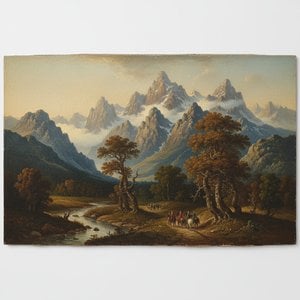
In the vast, silent expanse of Nicholas Roerich’s 1933 masterpiece, Path to Kailas, the viewer is not merely an observer but a pilgrim. This breathtaking composition captures the ethereal grandeur of the Himalayas, where snow-captured peaks pierce the heavens, creating a sense of infinite depth and spiritual weight. The painting presents a landscape that feels both ancient and eternal, characterized by a mountain range that stretches across the horizon like a frozen tidal wave of stone and ice. Roerich, a master of capturing the mystical essence of the natural world, uses the rugged terrain to evoke a profound sense of awe, inviting anyone who gazes upon it to contemplate the sublime power of the earth.
The brilliance of this work lies in its delicate balance between the monumental and the intimate. While the background is dominated by the overwhelming scale of the mountains, Roerich grounds the composition with a poignant human element. In the foreground, two small figures stand upon a verdant hillside, their presence providing a vital sense of scale and connection. These travelers, dwarfed by the surrounding giants, represent the human spirit’s eternal quest for meaning and discovery. Whether they are pausing to admire the view or moving toward a shared destiny, their quiet companionship adds a layer of warmth and narrative tenderness to an otherwise cold and formidable landscape.
Technique, Symbolism, and the Roerich Legacy
Roerich’s technique in Path to Kailas is a testament to his unique ability to blend Symbolism with a profound respect for geological reality. His use of color and light creates a luminous atmosphere, where the interplay of shadow and brilliance on the snow-capped summits suggests a world touched by the divine. The artist employs a harmonious palette that guides the eye through the layers of the landscape, from the textured foreground to the hazy, ethereal distance. This mastery of atmospheric perspective ensures that the painting possesses a rhythmic, almost musical quality, much like the spiritual chants Roerich so deeply admired.
Beyond its visual splendor, the painting serves as a profound symbolic vessel. For Roerich, the mountains were not just geological formations but sacred sites of spiritual enlightenment. The "Path" mentioned in the title is both literal and metaphorical—a journey through the physical world toward a higher state of consciousness. This theme of pilgrimage makes the artwork an exceptional choice for collectors and interior designers seeking to infuse a space with tranquility, strength, and intellectual depth. A high-quality reproduction of this piece brings more than just decoration into a room; it introduces a window into the infinite, offering a permanent sense of peace and a reminder of the enduring beauty found in the most remote corners of our world.
Вопросы и ответы
Кто является автором и в каком стиле выполнено произведение «Path to Kailas»?
«Path to Kailas» был создан Николай Константинович Роерих в стиле Symbolism. Автор и направление определяют художественную традицию этого произведения.
Какому художнику приписывают работу «Path to Kailas»?
Авторство работы «Path to Kailas» приписывается Николай Константинович Роерих.
Как мне скачать изображение «Path to Kailas», Николай Константинович Роерих?
Для произведения «Path to Kailas» доступна загрузка: на странице Скачать цифровое изображение вы можете скачивание цифрового изображения в высоком разрешении.
Похожие произведения


Биография художника
A Life Immersed in Art and Spirit
Nicholas Roerich, born October 9, 1874, in the vibrant cultural heart of Saint Petersburg, Russia, was a figure whose life transcended the boundaries of artistic expression. He wasn’t merely a painter; he was an archaeologist, a writer, a philosopher, and a tireless advocate for peace and cultural preservation. His upbringing, steeped in both intellectual rigor – his father was a notary public – and artistic appreciation thanks to his mother, laid the foundation for a remarkably multifaceted career. Roerich simultaneously pursued studies in law and art at St. Petersburg University and the Imperial Academy of Arts beginning in 1893, demonstrating an early commitment to a broad understanding of the world. This dual path wasn’t contradictory for him; rather, it reflected a belief that artistic vision needed grounding in historical context and intellectual discipline. He received his artist designation in 1897 and completed his law degree the following year, setting the stage for a life dedicated to both creative exploration and reasoned action.The Allure of Symbolism and Theatrical Innovation
Roerich’s artistic development was profoundly shaped by the currents of Russian Symbolism, a movement that sought to evoke emotional and spiritual depths through evocative imagery and suggestive forms. He quickly became involved with Sergei Diaghilev's influential “World of Art” society, eventually assuming its presidency from 1910 to 1916. This association proved pivotal, exposing him to a network of innovative artists, composers, and thinkers who were redefining the landscape of Russian art. His early work revealed a fascination with archaeology and stage design, leading to groundbreaking collaborations with Diaghilev’s Ballets Russes. Roerich's designs for productions like Alexander Borodin's *Prince Igor* (1909) and, most famously, Igor Stravinsky’s revolutionary *The Rite of Spring* (1913), were not simply backdrops; they were integral components of the theatrical experience. He blended meticulous historical research with a bold imaginative vision, creating visually stunning environments that amplified the emotional power of the music and choreography. These designs weren't merely decorative; they were attempts to evoke primordial forces and ancient rituals, reflecting the Symbolist interest in myth and spirituality. His work was also influenced by apocrypha and medieval sectarian writings like the Dove Book, adding layers of esoteric meaning to his artistic creations.A Journey Towards Mysticism and Himalayan Visions
As Roerich’s career progressed, his paintings underwent a significant transformation, increasingly embracing mystical and spiritual themes. This shift was fueled by his growing interest in Theosophy and Eastern religions, philosophies that emphasized the interconnectedness of all things and the pursuit of inner wisdom. His *Architectural Studies* series (1904–1905) showcased not only his architectural skill but also a deep commitment to preserving cultural heritage, foreshadowing his later advocacy for protecting art during times of conflict. Recurring motifs began to emerge in his work: majestic landscapes, ancient cities shrouded in mystery, and figures imbued with spiritual significance like St. Panteleimon and Kuan Yin. He embarked on extensive travels throughout Central Asia, conducting archaeological research and documenting ancient cultures, experiences that deeply informed his artistic vision and reinforced his belief in the importance of cultural understanding. These journeys were not merely expeditions; they were pilgrimages into the heart of human history and spiritual tradition.Key Works & Continuing Relevance
- Saint Nicholas: A detailed monochrome mural showcasing medieval art and heraldic symbolism, reflecting a deep respect for Russian iconography.
- City: Evocative depictions of ancient urban landscapes, capturing the essence of vanished civilizations and hinting at hidden narratives.
- Lake of the Nagas: A tempera painting blending symbolism and nature, exemplifying his unique artistic vision and exploring themes of transformation and spiritual awakening.
- The Protecting Veil of the Holy Mother of God: A monumental mosaic commissioned for a Russian church, demonstrating his ability to translate complex religious concepts into powerful visual forms.
The Roerich Pact & Lasting Impact
Beyond his artistic achievements, Nicholas Roerich was a passionate advocate for international cultural cooperation. Recognizing the devastating impact of war on cultural treasures, he spearheaded the creation of the Roerich Pact in 1935 – an unprecedented agreement among nations aimed at protecting art and architecture from destruction during armed conflicts. This initiative, driven by his unwavering belief in the value of human heritage, earned him multiple nominations for the Nobel Peace Prize, a testament to his humanitarianism and dedication to fostering global understanding. His work continues to inspire artists, scholars, and activists worldwide, reminding us of the profound connection between art, spirituality, and the preservation of our shared cultural legacy. His paintings remain powerful symbols of hope and a call to protect the beauty and wisdom of human civilization for generations to come.
Николай Константинович Роерих
1874 - 1947 , Россия
Об авторе
- Artistic Movement Or Style: Символизм, духовное искусство
- Artists Or Movements Influenced By This Artist: ['Русский символизм']
- Artists Who Influenced This Artist: ['Сергей Дягилев']
- Date Of Birth: 9 октября 1874 г.
- Date Of Death: 13 декабря 1947 г.
- Full Name: Николай Константинович Роерих
- Nationality: Русский
- Notable Artworks:
- «Святой Николай»
- «Город»
- «Озеро Нагасов»
- Place Of Birth: Санкт-Петербург, Россия
Похожие статьи

Романтический пейзаж: 10 шедевров, изменивших искусство | ArtsDot.com
Погрузитесь в мир романтического пейзажа! 10 шедевров Фридриха, Тёрнера и других гениев. Узнайте историю создания культовых картин и вдохновитесь для декора интерьера. Репродукции высокого качества на ArtsDot.com.

Evocations of Place: A Historical Journey Through Landscape Art
Explore the rich history of landscape art with ArtsDot. Discover renowned artists, movements like Impressionism & Romanticism, and expert guidance for collecting timeless pieces. Find your perfect serene escape today!

Топ-25 шедевров Кацусики Хокусая: Искусство Японии для вашего интерьера
Погрузитесь в мир гения Кацусики Хокусая! 25 легендарных гравюр укиё-э, включая "Великую волну". История искусства Японии и вдохновение для вашего интерьера. Репродукции высокого качества на ArtsDot.com.

Джон Констебль: 25 шедевров английского пейзажа для вашего интерьера
Погрузитесь в мир английского пейзажа с Джоном Констеблом! 25 шедевров романтизма, история создания картин и вдохновение для вашего интерьера. Репродукции высокого качества на ArtsDot.com – искусство для ценителей.
Majestic Peaks on Canvas: A Historical & Artistic Exploration of Mountains in Fine Art
Explore the history of mountain painting! Discover Romantic masterpieces & key artists like Dahl & Calame. Learn about the Sublime & Picturesque aesthetics and find your perfect artwork at ArtsDot.


