

 Предпросмотр
 Поделиться
 Поделиться
 Детали произведения
 Руководство

 Скачать
 Похожие предметы
 Рентгенография
 Слайд-шоу
 Вопросы и ответы
 Статистика просмотров
Untitled (102)

 Читать далее
Произведение искусства, представленное на этой странице, защищено законом об авторском праве, что исключает возможность законного создания или продажи его точной репродукции. Данная защита обеспечивается международными соглашениями, такими как Бернская конвенция и национальным законодательством, включая положения, изложенные в Закон США об авторском праве — Раздел 17.
Этот метод полностью соответствует нормам авторского права, так как он не предполагает копирования или дублирования защищенного произведения. Напротив, это творческая реинтерпретация — создание новой картины, которая вдохновлена оригиналом, но не является его точной копией.
Жикле и арт-принты
Печать (жикле) или холст музейного качества с быстрыми сроками изготовления и широким выбором вариантов отделки. ( Купить картину ручной работы Перейти к цифровым изображениям)




P118B $10

P118H $10

P118W $10

P438Z $10

P508JH $12

P508YH $12

P805H $10

P805Z $10

P919BZ $10

P919G $10

P919XJ $10

P959ZH $10

P968JZ $12

W106C $8

W218G $10

W218JH $8

W218Y $10

W307PJ $10

W316G $10

W316PJ $8

W316Y $10

W398PJ $8

W4111J $10

W500HY $15

W500JH $15

W692G $12

W849H $8

W940BG $15

W953PJ $8




Выберите один из наших стандартных размеров, соответствующих оригинальным пропорциям произведения искусства.

Введите необходимую ширину и высоту, чтобы репродукция подошла к вашей раме или стене. При печати изображение можно только уменьшить, но нельзя увеличить больше оригинала, поэтому при выборе другого формата часть изображения может быть обрезана. Перед печатью мы отправим вам цифровой макет на утверждение. Изображение на этой странице не отображает реальную обрезку — ее можно увидеть только на макете.
Доставка по всему миру () за 2 недели вместо стандартных 4–5 недель. (8 Ноябрь)

Бесплатная экспресс-доставка по всему миру

Высококачественный льняной холст

Полное страхование при доставке

Гарантия возмещения таможенных пошлин

Гарантия точного цветового соответствия

100-дневная гарантия возврата (только при обнаружении дефектов)

Гарантия возврата 100% средств

Скидка при оптовом заказе
 Вариант со стеклом доступен только для размеров менее 110 см

Untitled (102)
Жикле и арт-принты
Размер репродукции
-


Итоговая стоимость
$ 63
Похожие произведения


Биография художника
A Life Woven from Fragments
Domenico “Mimmo” Rotella, born in Catanzaro, Italy, on October 7th, 1918, wasn’t simply an artist; he was a chronicler of the urban pulse. His life unfolded as a deliberate dismantling – not just of posters plastered across Roman walls, but also of conventional artistic notions. From his early years immersed in the vibrant, politically charged art scene of post-war Rome, Rotella developed a singular approach: the ‘décollage,’ a technique that transformed fleeting advertisements into enduring works of art. This wasn’t mere collage; it was an interrogation of consumer culture, a visual archaeology of the city's ephemeral narratives.
His initial artistic explorations leaned towards figurative painting, influenced by movements like Cubism and Futurism. However, a pivotal moment arrived in 1953 – what he termed “Zen illumination.” Observing the relentless cycle of posters being torn down and replaced, Rotella recognized a potent metaphor: the transient nature of images and their constant recontextualization within the urban landscape. This insight led him to abandon traditional painting, embracing instead the act of tearing and pasting, transforming discarded advertisements into layered, complex compositions.
The Language of the Street
Rotella’s ‘décollages’ weren't random acts of destruction. Each tear, each overlapping image, carried a deliberate weight. He meticulously selected posters – film stills, fashion advertisements, political slogans – capturing moments of cultural significance and projecting them onto canvas with an almost obsessive precision. The resulting works are not simply reproductions; they are reinterpretations, imbued with the artist’s own sensibility and a profound understanding of the city's visual language.
Influenced by Dadaism and Surrealism, Rotella’s work moved beyond mere representation. He sought to capture the *feeling* of the street – its frenetic energy, its constant flux, its inherent contradictions. The fragmented images, often juxtaposed with unexpected elements, created a sense of disorientation and intrigue, inviting viewers to actively engage with the artwork and decipher its hidden meanings.
From Rome to Paris: A New Realism
In 1961, Rotella’s work gained international recognition when he was invited by critic Pierre Restany to join the Nouveau Réalisme movement in Paris. This marked a significant shift in his artistic trajectory, pushing him towards greater experimentation and collaboration. The ‘Mec-Art’ process, developed during this period, involved projecting negative images onto emulsion-coated canvases – a technique that further emphasized the materiality of the artwork and its relationship to the urban environment.
Rotella's engagement with Nouveau Réalisme extended beyond purely aesthetic considerations. He was deeply interested in exploring the intersection between art, media, and society. His work often addressed themes of consumerism, mass culture, and political propaganda, reflecting the turbulent social and cultural landscape of post-war Europe.
Legacy and Influence
Mimmo Rotella’s contribution to 20th-century art is undeniable. He redefined the boundaries of collage and assemblage, transforming discarded materials into powerful works of art that continue to resonate today. His ‘décollages’ offer a unique perspective on urban life, revealing the hidden narratives embedded within the visual culture of the city.
Beyond his technical innovations, Rotella's legacy lies in his willingness to challenge conventional artistic practices and embrace the unexpected. He demonstrated that beauty could be found in decay, that meaning could emerge from chaos, and that even the most mundane objects – a torn poster – could hold profound significance.

Mimmo Rotella
1918 - 2006
Об авторе
- Full Name: Domenico "Mimmo" Rotella
- Nationality: Italian
- Date Of Birth: 1918
- Date Of Death: 2006
- Place Of Birth: Catanzaro, Italy
- Notable Artworks:
- Cinecittà series
- Artypos series
- Plastiforme
- Artistic Movement Or Style:
- Décollage
- Nouveau Réalisme
- Artists Who Influenced This Artist:
- Cubism
- Futurism
- Kandinsky
- Mondrian
- Artists Or Movements Influenced By This Artist:
- Yves Klein
- Pierre Restany
Похожие статьи

The Enduring Legacy of Fine Art Prints: Technique, History & Aesthetic Impact
Explore the rich history & techniques of fine art prints. Discover investment potential, assess authenticity, and learn how to preserve your collection with expert guidance. Trusted insights for discerning collectors.

Giclée Prints: Archival Quality & Aesthetic Nuances for the Discerning Collector
Explore the world of giclée prints with ArtsDot. Learn about archival quality, aesthetic nuances & investment potential. Expert guidance for discerning art collectors seeking museum-quality reproductions and lasting value.

Топ-10 знаменитых картин в черных тонах: шедевры искусства для вашего интерьера
Погрузитесь в мир темных шедевров! Топ-10 знаменитых картин в черных тонах от Гойи, Рембрандта и Мунка. История искусства, техники живописи и вдохновение для вашего интерьера. Купите репродукции высокого качества на ArtsDot.com
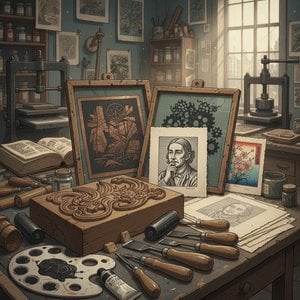
The Enduring Legacy of Printmaking: Techniques, Themes & Artistic Innovation Across Centuries
Explore the rich history of printmaking with ArtsDot. Discover techniques from intaglio to lithography, learn about collecting valuable prints & find museum-quality reproductions. Expert insights for art enthusiasts and collectors.

Echoes of Time: Exploring the Enduring Appeal & Historical Context of Vintage Art Prints
Explore the captivating world of vintage art prints! Discover their history, collecting tips & enduring appeal. Expert insights on chromolithography and building a legacy collection with ArtsDot.