

 Примерить в интерьере
 Отправить
 Поделиться
 Подробнее
 Руководство

 Скачать
 Похожие объекты
 Рентгенография
 Слайд-шоу
 Статистика
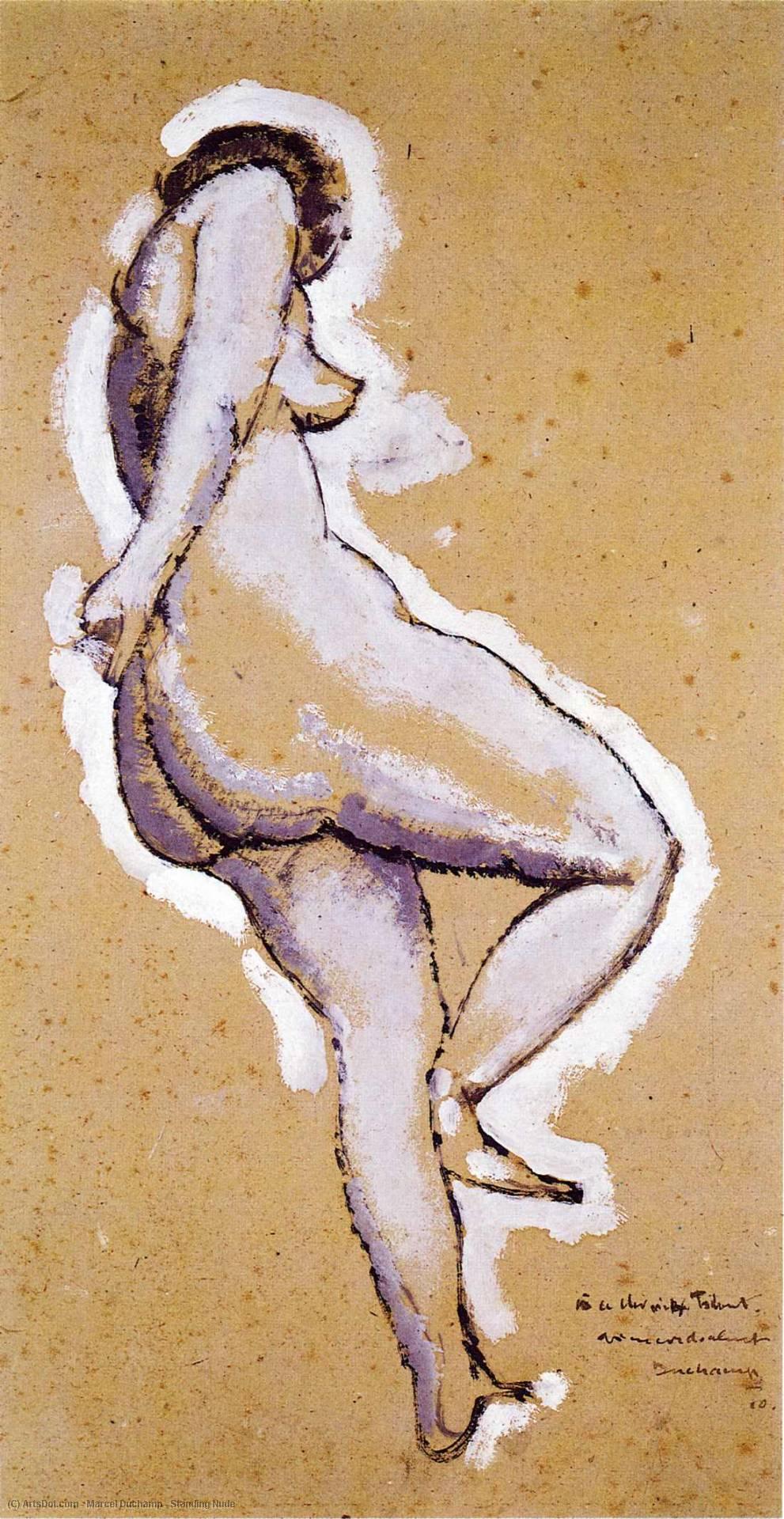
Standing Nude


 Развернуть текст
Произведение искусства, представленное на этой странице, защищено законом об авторском праве, что исключает возможность законного создания или продажи его точной репродукции. Данная защита обеспечивается международными соглашениями, такими как Бернская конвенция и национальным законодательством, включая положения, изложенные в Закон США об авторском праве — Раздел 17.
В качестве достойной и законной альтернативы мы предлагаем авторские картины ручной работы, вдохновленные оригиналом. Наши опытные профессиональные художники тщательно изучают стиль, настроение и художественную суть оригинала, чтобы создать новое, уникальное произведение, которое вызывает те же чувства, оставаясь при этом самостоятельным оригинальным творением.
Этот метод полностью соответствует нормам авторского права, так как он не предполагает копирования или дублирования защищенного произведения. Напротив, это творческая реинтерпретация — создание новой картины, которая вдохновлена оригиналом, но не является его точной копией.
Масляная репродукция ручной работы
Картина маслом на холсте в выбранном вами размере и раме, написанная на заказ нашими художниками. ( Переключиться на печать Перейти к цифровым изображениям)




P118B $10

P118H $10

P118W $10

P438Z $10

P508JH $12

P508YH $12

P805H $10

P805Z $10

P919BZ $10

P919G $10

P919XJ $10

P959ZH $10

P968JZ $12

W106C $8

W218G $10

W218JH $8

W218Y $10

W307PJ $10

W316G $10

W316PJ $8

W316Y $10

W398PJ $8

W4111J $10

W500HY $15

W500JH $15

W692G $12

W849H $8

W940BG $15

W953PJ $8




Выберите один из наших стандартных размеров, соответствующих оригинальным пропорциям произведения искусства.

Введите необходимую ширину и высоту, чтобы репродукция подошла к вашей раме или стене. Поскольку работа выполняется вручную, при изменении пропорций художник может немного увеличить область вокруг картины или, наоборот, обрезать края — выбор за вами. Перед началом работы мы пришлем вам цифровой макет на утверждение. Изображение на этой странице не является точным результатом — увидеть реальный вид можно только на макете.
После оформления заказа команда ArtsDot.com свяжется с клиентом по электронной почте для уточнения деталей и предоставит предварительный макет
Доставка по всему миру () за 3–4 недели вместо стандартных 5 недель. (24 Октябрь). Без компромиссов в качестве.

Бесплатная экспресс-доставка по всему миру

Высококачественный льняной холст

Полное страхование при транспортировке

Гарантия возврата таможенных пошлин

Гарантия точного цветового соответствия

100-дневный период возврата (только при обнаружении дефектов)

Гарантия возврата 100% средств

Скидка при заказе нескольких работ
 Вариант со стеклом доступен только для размеров менее 110 см

Standing Nude
Материал репродукции
Размер репродукции
-


Итоговая стоимость
$ 263
Marcel Duchamp’s “Standing Nude”: A Radical Departure from Tradition
- Subject Matter & Composition:
- Style & Technique:
- Historical Context & Dada Movement:
- Symbolism & Conceptual Concerns:
- Emotional Impact & Legacy:
Style & Technique: Challenging Artistic Boundaries
Duchamp’s approach departed dramatically from Impressionism and Post-Impressionism, movements that prioritized capturing fleeting sensations and subjective experience. Instead, he employed a technique rooted in Cubist principles—fragmentation of form and multiple perspectives—though subtly applied to achieve an effect far more unsettling than visually arresting. The muted tan background serves as a neutral counterpoint to the nude figure, minimizing distractions and focusing attention on the central subject. This deliberate restraint underscores Duchamp’s belief that artistic value resided not in skillful execution but in conceptual provocation. He famously declared “Ready-made” objects—such as his urinal—as artworks, arguing that the artist's role was to select and present an item already existing within the realm of everyday life.Historical Context & Dada Movement
“Standing Nude” emerged during the turbulent years of the Dada movement, a reaction against the horrors of World War I and the perceived decadence of bourgeois culture. Dada artists rejected logic and reason, embracing absurdity and chance as artistic tools—a deliberate antithesis to the rational optimism championed by earlier generations. Duchamp’s work embodies this spirit of rebellion, questioning accepted notions of beauty and originality. The Dada movement sought to dismantle traditional hierarchies within the art world, asserting that any object could be considered art if imbued with sufficient conceptual significance.Symbolism & Conceptual Concerns
Beyond its formal stylistic choices, “Standing Nude” carries significant symbolic weight. The nude figure itself represents vulnerability and exposure—a deliberate confrontation of idealized representations of femininity prevalent in the period. However, Duchamp’s primary concern wasn't with conveying emotion or narrative; rather, he aimed to destabilize viewers’ perceptions of art and its ability to communicate meaning. By presenting a commonplace object transformed into an artwork through conceptual intervention, Duchamp questioned whether artistic value lay solely in aesthetic pleasure or whether it could derive from intellectual engagement.Emotional Impact & Legacy
“Standing Nude” continues to fascinate viewers decades after its creation. Its understated elegance combined with its subversive intent generates a complex emotional response—one of unease, contemplation, and ultimately, admiration for Duchamp’s audacious vision. It stands as a cornerstone of Conceptual Art, influencing countless artists who followed and establishing a precedent for challenging artistic conventions through intellectual exploration rather than visual representation. The artwork serves as a reminder that art can provoke profound questions about our understanding of beauty, value, and the role of creativity in shaping our worldview.Вопросы и ответы
Доступна ли загрузка изображения «Standing Nude» в высоком разрешении?
Цифровое изображение работы «Standing Nude», Марсель Дюшан можно приобрести на странице заказа Цифровое изображение: скачивание цифрового изображения в высоком разрешении.
Где я могу найти путеводитель по «Standing Nude»?
Для произведения «Standing Nude», Марсель Дюшан доступна страница Справка для студентов: печатный информационный лист о произведении искусства, предназначенный для студентов и использования в учебном процессе.
Проявляет ли «Standing Nude» выраженный светотеневой контраст?
В работе «Standing Nude», Марсель Дюшан наблюдается Gentle контраст между светлыми и темными участками.
Похожие произведения


Биография художника
Marcel Duchamp: A Revolutionary Spirit
Marcel Duchamp, born Henri-Robert-Marcel Duchamp in 1887 in Blainville-Crevon, Normandy, was more than an artist; he was a philosophical provocateur who fundamentally altered the course of modern art. His early life, though seemingly conventional – nurtured within a family that appreciated artistic expression with both brothers pursuing successful careers as artists – hinted at the iconoclasm to come. Duchamp initially pursued formal training, mastering traditional techniques and experimenting with post-impressionist styles. However, this academic foundation served not as an end in itself, but as a springboard for questioning the very nature of art, its purpose, and its definition. He wasn’t content merely to depict the world; he sought to challenge how we perceive it, and what constitutes artistic value. This restless intellectual curiosity would become the defining characteristic of his prolific career.Early Artistic Explorations: Cubism and Impressionism
Duchamp's initial foray into art began with a fascination for Cubism, spearheaded by Pablo Picasso and Georges Braque. Influenced by Cézanne’s exploration of geometric forms and spatial relationships, Duchamp produced works like *Portrait of Chess Players* (1911), demonstrating an early grasp of fragmented perspectives and multiple viewpoints – a decisive departure from the single-point perspective dominant in traditional painting. Yet, he swiftly recognized that simply rearranging visual elements wasn't sufficient to address the deeper philosophical concerns animating him. He diligently honed his skills in watercolor and gouache, mastering techniques that allowed for nuanced tonal gradations and subtle textural variations. These formative experiences instilled a disciplined approach to artistic practice, informing his later conceptual explorations.The Dadaist Rebellion: Challenging Artistic Conventions
The horrors of World War I profoundly impacted Duchamp’s worldview, fueling a vehement rejection of the prevailing cultural values and intellectual complacency of the time. This disillusionment propelled him into the embrace of Dadaism – a movement born from nihilistic protest against rationality, logic, and bourgeois morality. Dada artists deliberately undermined established artistic conventions, embracing absurdity and chance as expressive tools. Duchamp’s Dadaist output included collages and assemblages that juxtaposed disparate materials in jarring combinations, disrupting conventional notions of visual harmony. He famously declared “Dada is not a painting,” encapsulating the movement's rejection of aesthetic judgment and its insistence on questioning artistic dogma. The Dadaists sought to dismantle the hierarchy between art and everyday life, arguing that true creativity resided in challenging accepted norms.The Birth of Conceptual Art: ‘Ready-Made’ Sculpture
Duchamp’s most enduring contribution to art history arrived with his groundbreaking concept of “ready-made” sculpture – a radical departure from traditional sculptural practice. Rejecting the notion that artistic skill was paramount, Duchamp questioned whether an object could be considered art simply by virtue of its selection and presentation as such. In 1917, he submitted *Fountain*, a porcelain urinal signed "R. Mutt," to Marcel Broodthaers’s exhibition in Cologne – a deliberate provocation designed to expose the arbitrariness of aesthetic judgment and dismantle the distinction between artist and craftsman. This audacious act ignited considerable controversy, sparking debates about authorship, originality, and the very definition of art itself. *Fountain* became emblematic of Conceptual Art, establishing Duchamp as its progenitor and cementing his legacy as one of the most influential figures in 20th-century art.Legacy and Enduring Influence
Marcel Duchamp’s impact on subsequent generations of artists is undeniable. He fundamentally reshaped our understanding of artistic expression, prioritizing conceptual ideas over visual aesthetics—a paradigm shift that continues to resonate within contemporary art practice. His unwavering commitment to questioning assumptions and challenging conventions serves as an inspiration for artists striving to push boundaries and redefine the role of art in society. Notable works include *L.H.O.O.Q.* (1919), a satirical reworking of Leonardo da Vinci’s Mona Lisa, and *The Large Glass* (1915–1923), an ambitious multi-faceted installation that explores themes of illusion, perception, and the subconscious—a testament to his intellectual rigor and enduring influence. Duchamp's legacy extends beyond specific artworks; it resides in his unwavering belief that art should provoke thought and inspire dialogue—a conviction that continues to shape artistic discourse today.
Марсель Дюшан
1887 - 1968 , Франция
Краткая справка
- Artistic Movement Or Style:
- Кубизм
- Дадаизм
- Концептуальное искусство
- Artists Or Movements Influenced By This Artist: ['Минимализм']
- Date Of Birth: 28 июля 1887 г.
- Date Of Death: 2 октября 1968 г.
- Full Name: Marcel Duchamp
- Nationality: Французский
- Notable Artworks:
- Фонтан
- Л.Х.О.О.К.
- Большое стекло
- Place Of Birth: Блейнвиль-сур-Мер, Франция
Похожие статьи

Deconstructing Reality: Cubism's Evolution, Impact & Enduring Legacy
Explore the revolutionary world of Cubism with expert insights from ArtsDot. Discover Picasso & Braque's groundbreaking techniques, its philosophical roots, and lasting impact on modern art. Expert appraisal & custom reproductions available.

Jean Dominique Antony Metzinger: Pioneering Cubism & the Evolution of Abstract Form
Explore the life & work of Jean Metzinger, a pivotal Cubist painter and theorist. Discover his innovations in proto-Cubism, 'Du Cubisme,' and Crystal Cubism – a journey through modern art's evolution.

Deconstructing Reality: Cubism's Revolutionary Impact on 20th-Century Art
Explore the revolutionary world of Cubism with ArtsDot. Discover Picasso & Braque's groundbreaking techniques, its philosophical roots, and lasting impact on modern art. Expert insights for collectors.
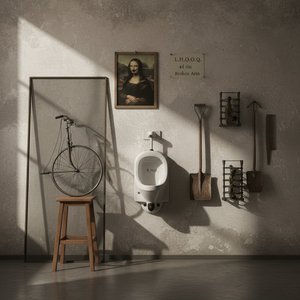
Marcel Duchamp: Challenging Conventions & Redefining Art in the 20th Century
Explore the revolutionary art of Marcel Duchamp! Discover how his Dadaist readymades challenged artistic conventions & redefined modern art. A deep dive into 'Fountain', conceptual shifts, and his lasting impact.

The Enduring Allure of the Nude: A Historical & Artistic Exploration of the Human Form
Explore the captivating history of nude art! Discover iconic paintings & artists from classical to modern eras. Uncover symbolism, techniques & find museum-quality reproductions at ArtsDot.


