

 Предпросмотр
 Поделиться
 Поделиться
 Детали произведения
 Руководство

 Скачать
 Похожие предметы
 Рентгенография
 Слайд-шоу
 Вопросы и ответы
 Статистика просмотров
Me, She


 Читать далее
Произведение искусства, представленное на этой странице, защищено законом об авторском праве, что исключает возможность законного создания или продажи его точной репродукции. Данная защита обеспечивается международными соглашениями, такими как Бернская конвенция и национальным законодательством, включая положения, изложенные в Закон США об авторском праве — Раздел 17.
Этот метод полностью соответствует нормам авторского права, так как он не предполагает копирования или дублирования защищенного произведения. Напротив, это творческая реинтерпретация — создание новой картины, которая вдохновлена оригиналом, но не является его точной копией.
Жикле и арт-принты
Печать (жикле) или холст музейного качества с быстрыми сроками изготовления и широким выбором вариантов отделки. ( Купить картину ручной работы Перейти к цифровым изображениям)




































Выберите один из наших стандартных размеров, соответствующих оригинальным пропорциям произведения искусства.

Введите необходимую ширину и высоту, чтобы репродукция подошла к вашей раме или стене. При печати изображение можно только уменьшить, но нельзя увеличить больше оригинала, поэтому при выборе другого формата часть изображения может быть обрезана. Перед печатью мы отправим вам цифровой макет на утверждение. Изображение на этой странице не отображает реальную обрезку — ее можно увидеть только на макете.
Доставка по всему миру () за 2 недели вместо стандартных 4–5 недель. (10 Ноябрь)

Бесплатная экспресс-доставка по всему миру

Высококачественный льняной холст

Полное страхование при доставке

Гарантия возмещения таможенных пошлин

Гарантия точного цветового соответствия

100-дневная гарантия возврата (только при обнаружении дефектов)

Гарантия возврата 100% средств

Скидка при оптовом заказе
 Вариант со стеклом доступен только для размеров менее 110 см

Me, She
Жикле и арт-принты
Размер репродукции
-


Итоговая стоимость
$ 63
A Surreal Encounter: Exploring Man Ray's "Me, She"
Man Ray’s “Me, She,” created in 1934, is a captivating example of surrealist photography that continues to intrigue and inspire. This black and white rayograph presents an unexpected juxtaposition of objects, defying logical arrangement and inviting viewers into the realm of dreams and subconscious exploration. The artwork's power lies not just in its visual composition but also in its ability to evoke a sense of mystery and symbolic resonance, characteristic of the surrealist movement that sought to liberate art from rational constraints.Technique & Composition: The Art of the Rayograph
The photograph’s unique aesthetic stems from Man Ray's innovative use of the rayograph technique – also known as a photogram. Unlike traditional photography, which relies on a lens, the rayograph involves placing objects directly onto photosensitive paper and exposing it to light. This process eliminates the camera entirely, allowing for direct manipulation of photographic materials and resulting in ethereal, often abstract compositions. In "Me, She," this technique is brilliantly employed. A small sculpted figure of a woman appears suspended in mid-air, seemingly supported by a hand emerging from the bottom of the frame. Scattered around her are playing cards, their geometric shapes contrasting with the organic form of the sculpture. The grainy texture of the photographic paper and the soft shadows further enhance the image's dreamlike quality, flattening perspective and creating a graphic aesthetic that is both striking and unsettling.Symbolism & Interpretation: Chance, Relationships, and the Subconscious
The symbolism within "Me, She" remains open to interpretation, a hallmark of surrealist art. The sculpted female figure could represent various concepts – femininity, vulnerability, or perhaps even an idealized representation of the subconscious mind. The playing cards introduce elements of chance, fate, and gamesmanship, suggesting themes of relationships and unpredictable life events. Their scattered arrangement further disrupts any sense of order, reinforcing the surreal nature of the scene. Man Ray was deeply interested in exploring the unconscious, and this work can be seen as a visual manifestation of those explorations – a glimpse into the illogical yet compelling world of dreams and hidden desires. The absence of a clear narrative encourages viewers to project their own interpretations onto the image, making it a profoundly personal experience.Historical Context & Man Ray's Legacy
Created in 1934, "Me, She" reflects the broader artistic climate of the interwar period. The surrealist movement, born out of Dadaism’s rejection of logic and reason following World War I, sought to challenge conventional notions of art and reality. Man Ray was a pivotal figure within this movement, alongside artists like Salvador Dalí and René Magritte. His experimental photographic techniques and his ability to create evocative imagery cemented his place as a pioneer of surrealist photography. "Me, She" exemplifies his signature style – unexpected juxtapositions, dreamlike imagery, and a playful disregard for traditional artistic boundaries. It stands as a testament to Man Ray’s enduring influence on the art world and continues to inspire contemporary artists and photographers today.Вопросы и ответы
Можно ли с помощью дополненной реальности увидеть «Me, She», Ман Рей в своем интерьере?
Страница Просмотр в AR для работы «Me, She», Ман Рей использует дополненную реальность, чтобы показать произведение в вашем интерьере на совместимом устройстве.
Какой формат у произведения «Me, She»?
Формат произведения «Me, She» — Portrait. Это поможет вам при планировании размещения репродукции в интерьере.
Сколько человек просматривают «Me, She»?
Страница Статистика просмотров для работы «Me, She», Ман Рей содержит публичную статистику посещений: ежемесячное количество просмотров данного произведения, сравнение с наиболее популярными работами автора, а также географию посетителей.


Биография художника
A Life Illuminated by Shadows
Emmanuel Radnitzky, a name forever intertwined with the enigmatic “Man Ray,” was born in Philadelphia in 1890 into a family of Russian Jewish immigrants. His early life, steeped in the vibrant energy of New York City, proved to be a crucible for his artistic development—a melting pot of European avant-garde influences and the raw, burgeoning spirit of American modernity. From a young age, Ray demonstrated an innate fascination with visual arts, nurtured by his family’s connection to the world of craftsmanship and design. He initially pursued architecture and engineering, but it was art that truly captured his soul, leading him to immerse himself in the galleries and studios of New York's burgeoning artistic scene. This exposure ignited a lifelong passion for experimentation and a relentless desire to break free from conventional boundaries—a characteristic that would define his entire career.Dada, Surrealism, and the Alchemy of Light
Man Ray’s artistic trajectory took an extraordinary turn with his encounter in 1915 with Marcel Duchamp. This meeting sparked a shared rebellion against established norms, propelling them both into the heart of the Dada movement—a visceral response to the devastation of World War I and a profound disillusionment with traditional art forms. Dada wasn’t merely an artistic style; it was a philosophy, a protest, a rejection of logic and reason in favor of chance, absurdity, and the irrational. Ray quickly embraced this spirit, participating actively in the movement's radical experiments—from creating “ready-mades” – ordinary manufactured objects elevated to the status of art – to challenging conventional notions of beauty and value. This rebellious energy fueled his exploration of photography, a medium he would ultimately master with unparalleled innovation. It was during this period that Ray began to develop his signature technique: rayographs—cameraless photographs created by placing objects directly onto light-sensitive paper and exposing them to light. These weren’t mere reproductions; they were entirely new forms of image-making, capturing the essence of their subjects through a process of direct inscription rather than traditional representation. The resulting images possessed an ethereal quality, imbued with a sense of mystery and otherworldliness—a testament to Ray's ability to transform the mundane into the extraordinary.The Surrealist Embrace
Following the collapse of Dada in Paris, Man Ray found himself drawn into the orbit of the Surrealists, led by André Breton. While he never fully identified with any single artistic movement, Ray’s work resonated deeply with the Surrealists' exploration of the unconscious mind, dreams, and the irrational. He embraced their fascination with chance, symbolism, and the juxtaposition of unexpected elements—techniques that informed his photographic portraits, often unsettling yet undeniably captivating. His collaborations with other Surrealist artists, such as Salvador Dalí, further solidified his position within the movement, resulting in a body of work characterized by dreamlike imagery and a rejection of conventional narrative structures. Ray’s approach to photography during this period was profoundly influenced by his interest in psychology and the subconscious—he sought not merely to depict reality but to evoke emotional responses and explore hidden depths of human experience.Beyond Stillness: Film and a Lasting Legacy
Man Ray's artistic curiosity extended beyond still images into the realm of filmmaking. He experimented with innovative techniques, creating short films like *Le Retour à la Raison* (1923) and *L’Étoile de Mer* (1928), which defied conventional cinematic storytelling. These weren’t narratives in the traditional sense; they were visual poems— explorations of form, rhythm, and the subconscious. Ray employed techniques such as stop-motion animation and superimposition to create disorienting and dreamlike effects, pushing the boundaries of what film could achieve. While his film work remained relatively small in volume, it was profoundly influential on subsequent generations of avant-garde filmmakers—demonstrating Ray’s pioneering spirit and his willingness to challenge established cinematic conventions.A Continuing Influence
Man Ray's impact extends far beyond his own lifetime, continuing to resonate with artists and audiences today. His techniques, particularly rayography and solarization, continue to be explored by contemporary photographers. His contributions solidified the Surrealist movement’s visual language and inspired countless artists across disciplines. His pioneering work in film laid the groundwork for future generations of avant-garde filmmakers. Furthermore, his innovative approach to portraiture influenced the development of modern fashion photography. Man Ray remains a pivotal figure in 20th-century art—a true innovator whose work continues to challenge, provoke, and delight. His legacy lies not only in his technical innovations but also in his unwavering commitment to artistic freedom and his relentless pursuit of the impossible—a testament to the enduring power of vision and creativity.
Ман Рей
1890 - 1976 , США
Об авторе
- Artistic Movement Or Style: Дада, Сюрреализм
- Artists Or Movements Influenced By This Artist: ['Сюрреализм']
- Artists Who Influenced This Artist: ['Marcel Duchamp']
- Date Of Birth: 27 августа 1890
- Date Of Death: 18 ноября 1976
- Full Name: Emmanuel Radnitzky
- Nationality: Американский
- Notable Artworks:
- Rayographs
- Le Retour à la Raison
- L'Étoile de Mer
- Place Of Birth: Филадельфия, США
Похожие статьи

Топ-10 знаменитых картин в черных тонах: шедевры искусства для вашего интерьера
Погрузитесь в мир темных шедевров! Топ-10 знаменитых картин в черных тонах от Гойи, Рембрандта и Мунка. История искусства, техники живописи и вдохновение для вашего интерьера. Купите репродукции высокого качества на ArtsDot.com

Monochrome Visions: Exploring the Aesthetic & Historical Significance of Black & White Photography
Explore the rich history & artistic power of black and white photography. From early techniques to iconic masters like Ansel Adams, discover why monochrome continues to captivate art lovers today. Expert insights for collectors.

Beyond the Lens: Photography's Enduring Influence on Modern & Contemporary Art
Explore photography's pivotal role in shaping modern & contemporary art. Discover key movements, influential artists like Stieglitz, and expert collecting advice from ArtsDot.

Pictorialism: A Search for Artistic Photography's Soul – Aesthetics, Techniques & Legacy
Explore the captivating world of Pictorialism – a pivotal movement that transformed photography into fine art. Discover key artists like Stieglitz & Käsebier, techniques, and collecting tips from experts.
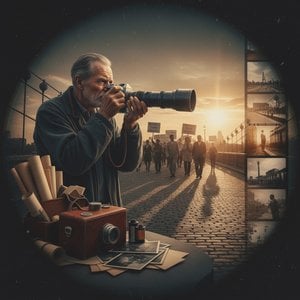
Witnessing History Through Lens & Light: Documentary Photography's Enduring Legacy
Explore the powerful history of documentary photography – from its origins to contemporary masters like Gordon Parks & W. Eugene Smith. Discover how this art form shapes our understanding of society and witness pivotal moments in time.
