


 Предпросмотр
 Поделиться
 Поделиться
 Детали произведения

 Скачать
 Похожие работы
 Рентгенография
 Слайд-шоу
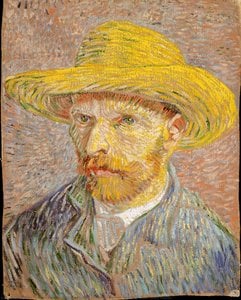
Self Portrait with Straw Hat


 Читать далее
Жикле / Арт-принт
Печать (жикле) или холст музейного качества с быстрыми сроками изготовления и широким выбором вариантов отделки. ( Перейти к заказу ручной росписи Переключиться на изображение)




P118B $10

P118H $10

P118W $10

P438Z $10

P508JH $12

P508YH $12

P805H $10

P805Z $10

P919BZ $10

P919G $10

P919XJ $10

P959ZH $10

P968JZ $12

W106C $8

W218G $10

W218JH $8

W218Y $10

W307PJ $10

W316G $10

W316PJ $8

W316Y $10

W398PJ $8

W4111J $10

W500HY $15

W500JH $15

W692G $12

W849H $8

W940BG $15

W953PJ $8




Выберите один из наших стандартных размеров, соответствующих оригинальным пропорциям произведения искусства.

Вы можете указать свои собственные размеры, чтобы репродукция идеально подошла под конкретную раму или пространство. Если выбранный вами размер не будет соответствовать пропорциям оригинала, мы либо обрежем произведение, либо дополним изображение зеркальным отражением краев или однотонной заливкой. Перед началом производства вам будет отправлен цифровой макет для утверждения.
Пожалуйста, обратите внимание, что предварительный просмотр на экране не отображает фактическую обрезку или расширение изображения. Только макет точно покажет финальную композицию.
Несмотря на возможность заказа индивидуальных размеров, мы рекомендуем выбирать размер из предопределенного списка, чтобы сохранить оригинальные пропорции.
Доставка по всему миру () за 2 недели вместо стандартных 4/5 недель. (9 Август)

Бесплатная экспресс-доставка по всему миру

Высококачественный льняной холст

Полное страхование доставки

Гарантия возмещения таможенных пошлин

Гарантия точного соответствия цветов

Политика возврата в течение 60 дней (только при наличии дефектов)

Гарантия возврата 100% средств

Предложение оптовых скидок
 Вариант со стеклом доступен только для размеров менее 110 см

Self Portrait with Straw Hat
Жикле / Арт-принт
Размер репродукции
-


Итоговая стоимость
$ 62
Описание предмета коллекционирования
A Moment Frozen in Light: The Soul of Lovis Corinth
In the quiet intimacy of Self Portrait with Straw Hat, we encounter more than just a likeness; we enter the contemplative mind of one of Germany’s most vital artistic forces. Painted in 1923, toward the twilight of his life, this masterpiece captures Lovis Corinth not as a distant icon, but as a man deeply connected to the sensory world around him. The artist presents himself with a rugged, weathered dignity, his beard and mustache rendered with a tactile realism that invites the viewer to feel the texture of time itself. Clad in a simple straw hat, he stands against a backdrop where the boundaries between humanity and nature begin to blur, creating a scene that is as much about atmosphere as it is about identity.
The composition breathes with a remarkable sense of depth and movement. Behind the central figure, a shimmering body of water—perhaps a serene lake or the vast expanse of an ocean—stretches toward the horizon, reflecting the soft, diffused light of a late afternoon. Scattered figures populate this distant landscape, their presence adding a layer of social vitality to the painting. These small, impressionistic strokes of life suggest a world in motion, yet they remain secondary to the profound stillness radiating from Corinth’s gaze. This juxtaposition between the transient movement of the crowd and the enduring presence of the artist creates a captivating tension that holds the viewer's attention indefinitely.
The Mastery of Impressionistic Expressionism
Technically, this work serves as a breathtaking bridge between the shimmering light of Impressionism and the raw, emotional weight of Expressionism. Corinth’s brushwork is nothing short of virtuosary; he employs a vigorous, almost sculptural application of paint that gives the subject a three-dimensional vitality. One can trace the artist's hand in the way the light catches the weave of the straw hat and the subtle highlights on his facial features. There is a palpable energy in every stroke, a rhythmic quality that suggests the pulse of life itself. This technique does not merely describe a scene; it interprets the emotional temperature of the moment, making the air feel heavy with memory and light.
For the discerning collector or interior designer, this painting offers an unparalleled opportunity to introduce a sense of historical gravity and sophisticated texture into a space. The earthy tones of the portrait, balanced by the cool, reflective blues and silvers of the water, provide a versatile palette that complements both classical and contemporary decor. To hang a high-quality reproduction of this work is to invite a conversation about the human condition—a piece that acts as an anchor of profound character within any room. It is a celebration of the artist's enduring legacy, offering a window into a period of art history where the boundaries of perception were being brilliantly redefined.
Похожие произведения


Биография художника
A Life Forged in Paint: The World of Lovis Corinth
Lovis Corinth, born Franz Heinrich Louis on July 21, 1858, in the Prussian province of East Prussia, was a figure who embodied the dramatic shift occurring between the 19th and early 20th centuries within the art world. His life wasn’t one defined by immediate acclaim but rather a gradual evolution—a testament to relentless study, diverse influences, and ultimately, profound personal tragedy. Corinth's origins were deeply rooted in the rural landscapes of his birthplace, Tapiau, where his father worked as a tanner. This early exposure to the physicality of labor and the raw beauty of nature subtly permeated his later work, even amidst more sophisticated stylistic explorations. Initially, he pursued studies at the Academy of Königsberg in 1876, but quickly realized that traditional academic training alone wouldn’t satisfy his artistic ambitions—a yearning for something beyond mere imitation. A period of travel followed, taking him to Munich, Antwerp, and finally Paris – each city acting as a crucial stepping stone in his artistic development. In Munich, he absorbed the meticulous realism championed by Ludwig von Löfftz, honing his observational skills and mastering technique with remarkable precision. Antwerp introduced him to the dramatic intensity of Baroque art through the works of Rubens, while Paris exposed him to the burgeoning Impressionist movement – though initially, his response was one of cautious observation rather than immediate embrace.From Naturalism to a Synthesis of Styles
Corinth’s artistic development wasn't marked by sudden revolutions but by a gradual assimilation and synthesis of diverse influences. His early work leaned heavily towards naturalism, reflecting the prevailing academic standards of the time. Paintings like “In the Slaughterhouse” (1878), with its unflinching depiction of animal carcasses, demonstrate this commitment to realistic representation—a willingness to confront uncomfortable truths. Yet, even here, a nascent emotional intensity begins to surface; the subject matter itself – gruesome and visceral – hints at a deeper engagement beyond mere observation. This wasn’t simply about depicting reality; it was about conveying a feeling, an experience. His time spent studying the works of Courbet and the Barbizon school, through the interpretations offered by Munich artists like Wilhelm Leibl and Wilhelm Trübner, further shaped his approach. These influences instilled in him a desire to capture not just appearances but also the essence of the subject—the soul if you will. However, it was his exposure to Impressionism – initially viewed with skepticism – that ultimately proved transformative. He didn’t simply adopt the broken color and fleeting light effects of Monet or Renoir; instead, he integrated these elements into his own unique vision, creating a style that blended impressionistic vibrancy with a distinctly German sensibility—a synthesis that would define his artistic legacy.The Influence of Rubens and Parisian Modernity
Corinth’s fascination with the Baroque master Rubens was particularly significant. Antwerp became a crucial destination during his travels, where he immersed himself in the dramatic compositions, dynamic figures, and rich color palettes of Rubens' paintings. This influence is evident in Corinth’s later work, particularly in his portraits and landscapes—a sense of movement, energy, and theatricality that echoes Rubens’ style. Simultaneously, Paris offered a different kind of artistic stimulation. He studied under William-Adolphe Bouguereau and Tony Robert-Fleury at the Académie Julian, absorbing the latest trends in Parisian art. However, it was the Impressionists who truly captivated him—not just their techniques but also their spirit of experimentation and their willingness to challenge traditional conventions. Corinth’s initial response wasn't one of immediate acceptance; he approached Impressionism with a critical eye, carefully observing its strengths and weaknesses before incorporating its principles into his own work. This cautious approach allowed him to develop a unique style that was both rooted in the past and oriented towards the future.A Berlin Secession Pioneer
In 1888, Corinth settled permanently in Berlin, a city rapidly becoming a center for avant-garde art. He joined the influential Berlin Secession group in 1902, initially as a member but later assuming the role of president after Max Liebermann’s departure in 1915. The Secession was a bold move—a rejection of the conservative artistic establishment and an embrace of modernism. Corinth's leadership helped to shape the group’s aesthetic direction, promoting experimentation and encouraging artists to push the boundaries of traditional art forms. His involvement with the Berlin Secession reflected his own evolving artistic philosophy—a commitment to innovation, a willingness to challenge conventions, and a desire to create art that was both aesthetically pleasing and intellectually stimulating. During this period, he also established an art school for women, demonstrating his belief in the importance of education and opportunity for all artists.Tragedy, Resilience, and Enduring Legacy
A pivotal moment in Corinth’s life—and arguably in his artistic development—was a stroke he suffered in December 1911. The paralysis it caused on his left side threatened to end his career altogether. However, with unwavering determination and the support of his wife, Charlotte Berend-Corinth, he relearned to paint, adapting to his physical limitations and developing an even more expressive style. This period marked a turning point in his work—as his paintings became increasingly bold, gestural, and emotionally charged. The experience of confronting mortality and physical vulnerability infused his art with a new sense of urgency and authenticity. He embraced a looser brushstroke and intensified color palette, anticipating many of the stylistic innovations that would define Expressionism. Corinth’s legacy extends beyond his remarkable body of work; he was also a respected teacher and writer on art, publishing essays such as “On Learning to Paint” in 1908, offering insights into his artistic philosophy and technical approach. He served as president of the Berlin Secession until his death in 1925, championing progressive artistic ideas and fostering a vibrant creative community. Lovis Corinth’s art remains a testament to the power of resilience, the beauty of observation, and the enduring spirit of an artist who bridged two eras and left an indelible mark on the history of German art.
Корнит Ловис
1858 - 1925 , Нидерланды
Основные сведения
- Artistic Movement Or Style: Импрессионизм и экспрессионизм
- Artists Or Movements Influenced By This Artist: ['Экспрессионизм']
- Artists Who Influenced This Artist:
- Корбет
- Рембрандт
- Date Of Birth: 21 июля 1858
- Date Of Death: 17 июля 1925
- Full Name: Франц Генрих Людвиг Корнт
- Nationality: Немецкий
- Notable Artworks:
- Убой на скотобоенке
- Автопортрет
- Женщина в шляпе
- Place Of Birth: Тяуваде, Нидерланды
Похожие статьи

Lovis Corinth: Bridging Impressionism & Expressionism – A Study of Artistic Evolution
Explore the fascinating artistic journey of Lovis Corinth, a pivotal figure bridging Impressionism & Expressionism. Discover his evolution, key works, and lasting impact on modern art with ArtsDot.

Reflecting the Self: A History of Portraiture & Psychological Insight
Explore the fascinating history of self-portraiture from Renaissance masters like Dürer & Rembrandt to modern interpretations. Discover the psychological insights and artistic techniques behind these iconic works. Expert analysis for art enthusiasts.

The Echo of Self: Reflectivity as a Core Theme in Art History & Contemporary Practice
Explore the rich history of self-representation in art, from Renaissance masters to modern innovators. Discover how artists use portraiture to reveal identity, emotion & the depths of the human psyche. Expert insights for collectors.
Топ-10 шедевров импрессионизма: пейзажи, изменившие искусство | ArtsDot
Погрузитесь в мир импрессионизма! Откройте 10 шедевров Моне, Ренуара и других великих художников. Узнайте историю создания культовых пейзажей и вдохновитесь для декора вашего дома. Репродукции картин высокого качества на ArtsDot.com.

Impressionistic Realism's Finest: 10 Masterpieces for Your Home | ArtsDot
Journey through Impressionistic Realism with 10 iconic masterpieces by Monet, Renoir & Van Gogh. Explore art history, techniques & find museum-quality reproductions for your home at ArtsDot.com. Discover all masterpieces online!



