


 Предпросмотр
 Поделиться
 Поделиться
 Детали произведения
 Руководство

 Скачать
 Похожие работы
 Рентгенография
 Слайд-шоу
 Статистика
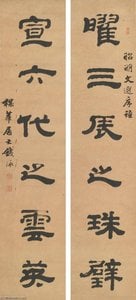
CALLIGRAPHY IN RUNNING SCRIPT
 Traditional Chinese Art
 173.0 x 41.0 cm
 Читать далее
Масляная репродукция ручной работы
Картина маслом на холсте в выбранном вами размере и раме, написанная на заказ нашими художниками. ( Перейти к печати Перейти к цифровым изображениям)




































Выберите один из наших стандартных размеров, соответствующих оригинальным пропорциям произведения искусства.

Вы можете указать собственные размеры, чтобы картина идеально вписалась в выбранную раму или пространство. Если выбранный вами размер не соответствует пропорциям оригинала, мы либо обрежем полотно, либо расширим его за счет дополнительных элементов, написанных вручную. Цифровой макет будет отправлен вам на утверждение перед началом производства.
Обратите внимание, что предварительный просмотр на экране не отражает фактическую обрезку или расширение. Только макет точно покажет окончательную композицию.
Хотя доступны индивидуальные размеры, мы рекомендуем выбирать вариант из предопределенного списка, чтобы сохранить исходные пропорции.
После оформления заказа команда ArtsDot.com свяжется с клиентом по электронной почте для уточнения деталей и предоставит предварительный макет
Доставка по всему миру () за 3–4 недели вместо стандартных 5 недель. (23 Сентябрь). Без компромиссов в качестве.

Бесплатная экспресс-доставка по всему миру

Высококачественный льняной холст

Полное страхование доставки

Гарантия возмещения таможенных пошлин

Гарантия точного соответствия цветов

100-дневная политика возврата (только при обнаружении дефектов)

Гарантия возврата 100% средств

Предложение оптовых скидок
 Вариант со стеклом доступен только для размеров менее 110 см

CALLIGRAPHY IN RUNNING SCRIPT
Техника репродукции
Размер репродукции
-


Итоговая стоимость
$ 263
Похожие произведения




Биография художника
The Calligraphic Soul of a Reformer
In the turbulent twilight of the Qing Dynasty, few figures loomed as large or as complexly as Kang Youwei. To view his calligraphy is to witness more than mere ink on paper; it is to encounter the rhythmic pulse of a man caught between the ancient weight of Confucian tradition and the surging tides of Western modernity. Born in 1858 in the village of Su, within Guangdong province, Kang was a scholar whose intellect was forged in the rigorous fires of classical study but tempered by a visionary's desire to reshape a nation. His life was a profound struggle to reconcile the eternal ethics of the past with the urgent political necessities of a changing world, a tension that found its most graceful expression in the fluid, decisive strokes of his brushwork.
The intellectual foundation of Kang’s artistry was deeply rooted in the Confucian classics, yet he possessed an uncommon ability to reinterpret these ancient texts through a lens of progress. While many of his contemporaries clung to a reactionary preservation of tradition, Kang sought a way to revitalize the very essence of Chinese identity. This philosophical duality—the reverence for heritage and the hunger for reform—is palpable in his artistic output. His work often reflects a sense of intellectual rigor paired with an artistic sensitivity, where the structural discipline of formal scripts meets the spontaneous energy of more liberated styles. In his hands, calligraphy became a medium through which the stability of the old world and the dynamism of the new could coexist.
A Legacy Written in Ink and Action
The historical significance of Kang Youwei cannot be decoupled from his political audacity. As a primary architect of the Hundred Days’ Reform in 1898, he attempted to steer the Guangxu Emperor toward a constitutional monarchy, seeking to modernize education, strengthen the military, and overhaul the bureaucracy. This period of intense creativity and political maneuvering was marked by a high-stakes drama that eventually led to his exile following the coup by Empress Dowager Cixi. Yet, even in displacement, Kang’s influence remained undiminished. He continued to advocate for a reformed China, influencing generations of thinkers, including the prominent scholar Liang Qichao, who found inspiration in Kang's revolutionary reinterpretations of classical thought.
His artistic achievements serve as a serene counterpoint to his often violent political reality. The works that survive him, such as his Calligraphy in Running Script and various poetic scrolls, offer a window into a more meditative aspect of his character. In these pieces, one can observe:
- The Mastery of Line: A meticulous command of brushwork that balances formal structure with the organic flow of ink.
- Symbolic Resonance: The use of traditional characters to convey complex political and philosophical ideologies.
- Rhythmic Balance: A sense of movement within his scrolls that mirrors the ebb and flow of historical change.
Ultimately, Kang Youwei remains a monumental figure whose legacy is etched into both the political history of China and the aesthetic heritage of East Asian calligraphy. He was a man who lived through the collapse of an empire, yet through his art, he achieved a form of immortality, capturing the spirit of an era in every stroke of black ink upon white paper.

kang youwei
1858 - 1927
Основные сведения
- Artistic Movement Or Style: Calligraphy
- Date Of Birth: 1858
- Date Of Death: 1927
- Full Name: Kang Youwei
- Nationality: Chinese
- Notable Artworks:
- Poems on Swiss Excursions
- CALLIGRAPHY IN RUNNING SCRIPT
- A Thought on Wire Fences
- Place Of Birth: Guangdong Province, China
Похожие статьи

Ephemeral Lines: Exploring Emotional Resonance in Ink Sketching Traditions
Explore the profound art of ink sketching! Discover techniques to express emotion, master line work, and cultivate artistic sensitivity. Learn from historical masters & unlock your creative potential.

Xie Zhiliu: A Legacy of Ink Wash Painting & Modern Chinese Literati Tradition
Explore the legacy of Xie Zhiliu, a master of Chinese ink wash painting & prominent figure in modern art. Discover his techniques, influences, and contributions to literati tradition. A guide for discerning collectors.

Timeless Elegance: Discovering the Soulful Beauty of Chinese Calligraphy for Sophisticated Home Interiors
Elevate your home with the serene beauty of Chinese calligraphy art. Explore our collection of hand-painted ink wash reproductions and bespoke commissions at ArtsDot.com. Discover museum-quality pieces designed to bring cultural elegance and tranquility to your modern interior.

Ephemeral Expressions: Exploring the Nuances of Ink on Paper Through History & Contemporary Art
Explore the captivating world of ink wash painting – from its ancient origins to contemporary masters. Discover techniques, symbolism & conservation insights with ArtsDot.com.

Топ-10 знаменитых картин в черных тонах: шедевры искусства для вашего интерьера
Погрузитесь в мир темных шедевров! Топ-10 знаменитых картин в черных тонах от Гойи, Рембрандта и Мунка. История искусства, техники живописи и вдохновение для вашего интерьера. Купите репродукции высокого качества на ArtsDot.com