

 Предпросмотр
 Поделиться
 Поделиться
 Детали произведения
 Руководство

 Скачать
 Похожие предметы
 Рентгенография
 Слайд-шоу
 Вопросы и ответы
 Статистика просмотров
The Siphon

- 81.0 x 65.0 cm


 Читать далее
Жикле и арт-принты
Печать (жикле) или холст музейного качества с быстрыми сроками изготовления и широким выбором вариантов отделки. ( Купить картину ручной работы Перейти к цифровым изображениям)




P118B $10

P118H $10

P118W $10

P438Z $10

P508JH $12

P508YH $12

P805H $10

P805Z $10

P919BZ $10

P919G $10

P919XJ $10

P959ZH $10

P968JZ $12

W106C $8

W218G $10

W218JH $8

W218Y $10

W307PJ $10

W316G $10

W316PJ $8

W316Y $10

W398PJ $8

W4111J $10

W500HY $15

W500JH $15

W692G $12

W849H $8

W940BG $15

W953PJ $8




Выберите один из наших стандартных размеров, соответствующих оригинальным пропорциям произведения искусства.

Введите необходимую ширину и высоту, чтобы репродукция подошла к вашей раме или стене. При печати изображение можно только уменьшить, но нельзя увеличить больше оригинала, поэтому при выборе другого формата часть изображения может быть обрезана. Перед печатью мы отправим вам цифровой макет на утверждение. Изображение на этой странице не отображает реальную обрезку — ее можно увидеть только на макете.
Доставка по всему миру () за 2 недели вместо стандартных 4–5 недель. (16 Ноябрь)

Бесплатная экспресс-доставка по всему миру

Высококачественный льняной холст

Полное страхование при доставке

Гарантия возмещения таможенных пошлин

Гарантия точного цветового соответствия

100-дневная гарантия возврата (только при обнаружении дефектов)

Гарантия возврата 100% средств

Скидка при оптовом заказе
 Вариант со стеклом доступен только для размеров менее 110 см

The Siphon
Жикле и арт-принты
Размер репродукции
-


Итоговая стоимость
$ 63
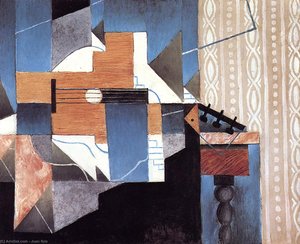
The Siphon: A Synthesis of Form and Everyday Life
Juan Gris's "The Siphon," created in 1913, stands as a pivotal work within the Synthetic Cubist movement. This oil on canvas (81 x 65 cm), currently residing at the Rose Art Museum, exemplifies Gris’s unique approach to abstraction – one that grounded itself in recognizable objects while dismantling traditional representational techniques. The painting depicts a commonplace kitchen scene—a vase, bottles, cups, and a chair—rendered through a fractured lens of geometric shapes and muted colors.
Composition and Style: Deconstructing Reality
The artwork's power lies in its deliberate fragmentation. Gris doesn’t aim to depict the objects as they appear from a single viewpoint; instead, he presents them simultaneously from multiple perspectives, breaking them down into interlocking planes and geometric forms. This technique, characteristic of Synthetic Cubism, moves beyond the Analytical Cubism that preceded it by incorporating simpler shapes and flatter areas of color. The monochromatic palette—primarily blues, grays, and whites with subtle accents of red and brown—contributes to a sense of harmony and balance despite the apparent chaos of fragmented forms. Overlapping planes create an illusion of depth within the flattened picture plane, while sharply defined lines add dynamism and visual interest.
Historical Context: The Rise of Synthetic Cubism
"The Siphon" emerged during a period of radical artistic experimentation in the early 20th century. Following the pioneering work of Pablo Picasso and Georges Braque in Analytical Cubism, Gris spearheaded the development of Synthetic Cubism. This new phase emphasized simplification, collage elements (though absent here), and a greater emphasis on color. Gris’s approach was notably more structured and mathematically precise than that of his contemporaries, reflecting his engineering background. He sought to create a rational order within abstraction, using geometric forms to construct a coherent visual language.
Symbolism and Emotional Impact: Everyday Objects, Elevated
While seemingly depicting mundane objects—a kitchen still life—"The Siphon" transcends mere representation. The fragmentation of these familiar items invites viewers to reconsider their perception of reality. The geometric abstraction evokes a sense of intellectual engagement rather than purely emotional response. There's a quiet dignity in the way Gris elevates everyday objects to the realm of high art, transforming them into complex visual puzzles. The muted color palette and carefully balanced composition create an atmosphere of contemplative stillness, inviting viewers to pause and appreciate the beauty inherent in deconstructed form.
Juan Gris: A Legacy of Geometric Precision
Juan Gris (1887-1927) was a Spanish painter who became a central figure in the Cubist movement. Born José Victoriano González-Pérez, he adopted the pseudonym Juan Gris and moved to Paris in 1906, where he encountered influential artists like Matisse, Braque, and Picasso. His unique contribution lay in his systematic approach to Cubism, emphasizing geometric precision and a more structured composition than many of his contemporaries. Other notable works by Gris include "Glass of beer and playing cards" and "Newspaper and Fruit Dish," further demonstrating his mastery of Synthetic Cubism and his ability to transform ordinary subjects into extraordinary works of art.
Вопросы и ответы
Как работа «The Siphon» соотносится с темами и стилем Хуан Грис?
В творческом наследии Хуан Грис работа «The Siphon» относится к стилю Synthetic Cubism и созвучна темам inspired by cubism & synthetic approach., key example of gris's cubist style., everyday objects, geometric abstraction..
Кто создал "The Siphon"?
Авторство работы «The Siphon» приписывается Хуан Грис.
Кто создал(а) «The Siphon» и когда?
«The Siphon» — работа Хуан Грис, созданная в 1913 году.
Похожие произведения




Биография художника
Ранние годы, семья и обучение
Хуан Грис родился 23 марта 1887 года в Мадриде, Испания, под именем Хосе Викториано Гонсалес-Перес. Он рос в большой и оживленной семье, будучи тринадцатым из четырнадцати детей. Его отец, Грегорио Гонсалес, был успешным бизнесменом, и семейная атмосфера обеспечила прочный фундамент для его становления в испанской столице.
Раннее образование Хуана Гриса приняло технический характер: он поступил в Мадридскую школу искусств и наук, где изучал инженерное дело. Этот период обучения заложил в нем чувство структурной логики, которое впоследствии проявится в его визуальных работах. И хотя его внимание было сосредоточено на механике проектирования, творческий импульс уже начал пробуждаться. В период с 1904 по 1905 год он начал систематизировать свое художественное образование, обучаясь живописи у академического мастера Хосе Морено Карбонеро. Этот короткий, но значимый этап обучения помог преодолеть разрыв между техническими знаниями и формирующимся языком визуального искусства.
К 1905 году в его жизни произошел важный поворот: он принял имя Хуан Грис. Эта перемена ознаменовала отказ от прежнего имени, Хосе Викториано Гонсалес-Перес, и указала на новый вектор его жизненного пути. Он оставил строгие рамки инженерного дела, чтобы погрузиться в более текучий, но не менее структурированный мир визуального воплощения реальности.
Парижское пробуждение и кубизм
Переезд в Париж в 1906 году навсегда изменил траекторию его жизни. К 1909 году он уже жил в знаменитом ателье Bateau-Lavoir на улице Рю-Равиньян, 13 — в месте, наполненном постоянным движением и духом сотворчества. Те годы он провел, работая карикатуристом-сатириком, однако настоящий поворот к живописи произошел около 1911 года. Оставив позади мир графической иллюстрации, он полностью сосредоточился на холсте, стремясь найти более структурированный, глубокий способ восприятия окружающих предметов.
Его присутствие на парижской арт-сцене стало официально признанным в 1912 году, когда он впервые представил свои работы на Salon des Indépendants. Это был период стремительного творческого взлета: Хуан Грис начал отходить от экспрессивной манеры фовизма в сторону фрагментированной, интеллектуальной логики кубизма. Его искусство быстро вышло за пределы Франции, найдя отклик на выставке кубистов в галерее Дальмо в Барселоне. К 1912 году он также заключил контракт с Даниэлем-Анри Канвейлером — этот шаг окончательно закрепил его статус в кругу художников, переосмысливающих саму природу живописного пространства.
Техника и художественный стиль
В том, как Хуан Грис выстраивает свое полотно, чувствуется особая математическая логика. Его инженерное прошлое незримо присутствует в том, как он работает с геометрическими фигурами и фрагментированными формами, относясь к композиции с тихой, расчетливой точностью. Он не просто разлагает объект на части; он реконструирует его через серию пересекающихся плоскостей. Во многих своих работах он уходит от хаотичной, сокрушительной абстракции, характерной для раннего кубизма, отдавая предпочтение более организованной и читаемой структуре. Эта ясность часто достигается благодаря дисциплинированной палитре из серых, черных и белых тонов, которая заставляет взгляд фокусироваться на весе и расположении каждой отдельной формы.
Его руки были по-настоящему искусны в работе с текстурами повседневной жизни. Он был виртуозом в обращении с материалами, которые большинство людей даже не заметило бы, включая газетную бумагу, обои и другие печатные или найденные объекты непосредственно в свои композиции. У него был особый метод работы с этими фрагментами: он использовал черную краску на стыках различных бумаг, чтобы скрыть швы. Эта техника позволяла ему создавать иллюзию бесшовности, благодаря которой различные слои казались единой, неразрывной поверхностью, а не набором обрывков. Он даже тщательно совмещал узоры на печатной бумаге, добиваясь того, чтобы края элементов бесследно растворялись в общем полотне произведения.
Ключевые работы и шедевры
В 1914 году на свет появились полотна Цветы и Солнцезащитная штора, в которых мастер с особым вниманием исследовал то, как свет и предметы взаимодействуют в пространстве. К июню 1915 года была завершена композиция Натюрморт у открытого окна, площадь Равиньян. В этом произведении использование пересекающихся плоскостей создает глубокое ощущение пространства, вовлекая зрителя в структурированную, безмятежную сцену. Характерное наложение форм рождает особый вид порядка, где окно и предметы внутри него воссоздаются через серию резких, выверенных геометрических углов.
Последующие годы ознаменовались переходом к более личным темам и сложным фактурам. В октябре 1916 года был написан Портрет Жосетт Грис, запечатлевший модель через призму строгой, почти монохромной эстетики. Такой подход позволяет отсечь всё лишнее, концентрируя внимание на ритме линий. Позже, в 1919 году, картина Арлекин за столом привнесла на холст иную энергию, используя фрагментированный язык кубизма для организации сцены. Ближе к концу жизни, около 1927 года, было создано произведение Гитара и нотные листы — работа, построенная на игре простых форм и тактильном ощущении бумаги.
- Натюрморт у открытого окна, площадь Равиньян (1915)
- Цветы (1914)
- Солнцезащитная штора (1914)
- Портрет Жосетт Грис (1916)
- Арлекин за столом (1919)
- Гитара и нотные листы (около 1927)
Круг общения, соперники и влияния
Хуан Грис вращался в тесных кругах парижского авангарда — в мире, пронизанном общими идеями и постоянно меняющимися перспективами. Его творчество выросло на фундаменте, заложенном Полем Сезанном, а именно — на том, как этот великий мастер исследовал скрытую структуру формы и пространства. Именно такой интеллектуальный подход позволил Грису обрести собственное лицо наряду с главными новаторами того времени. Он стал одной из трех ключевых фигур кубизма, работая в той же орбите, что и Пабло Пикассо и Жорж Брак. И хотя он ориентировался на них в поисках направления, его путь не был простым подражанием. Он принес на холст математическую точность, которая ощущалась как нечто совершенно иное по сравнению с более интуитивными экспериментами его современников.
Отношения внутри этого круга часто были полны сложности. Несмотря на глубокое влияние Пикассо, между ними ощущалось явное напряжение. Один наблюдатель заметил, что Грис был единственным человеком, которого Пикассо хотел бы видеть в своем окружении меньше — деталь, говорящая о соревновательном и напряженном характере той эпохи. Несмотря на это, Хуан Грис оставался центральной фигурой в эволюции жанра, помогая кубизму пройти путь от ранних аналитических стадий к более структурированным, синтетическим композициям, определившим облик позднего модернизма. Он не просто следовал за другими; он помогал направлять движение к более организованной и понятной логике.
Наследие и непреходящее влияние
Хуан Грис сделал гораздо больше, чем просто последовал путями, проложенными предшественниками. Опираясь на фундамент раннего кубизма, он направил движение в новые русла, уходя от хаотичной, дробной абстракции своих современников. Его полотна обладают смелым, графичным обликом, который позволяет мгновенно отличить их от работ Пикассо и Брака. В том, как он выстраивает композицию, чувствуется особая, математически выверенная ясность — качество, рожденное его увлечением инженерным делом. Он не просто расчленял объекты на части; он воссоздавал их, привнося в холст чувство порядка и структурную логику.
Его влияние отчетливо прослеживается в том, как он перевел искусство от аналитической фазы к более синтетическому подходу. Внедряя текстуры и орнаменты, он помог сформировать новый способ видения, в котором акцент сместился с иллюзии глубокого пространства на плоскостность холста. Этот метод превратил процесс живописи в точную расстановку геометрических плоскостей и цветовых акцентов. Его творчество остается эталонным примером того, как можно сочетать фрагментацию с ощущением целостного, гармоничного дизайна.
- Homage à Pablo Picasso (1912)
- Still Life before an Open Window (1915)
- Guitar with inlays (1925)
Где сегодня можно увидеть его работы
Путешествие по следам его творческого наследия требует посещения нескольких крупнейших мировых коллекций. В Мадриде Национальный музей современного искусства Реина София хранит тринадцать его полотен, позволяя проследить значительный путь его художественного становления. В этом же городе Музей Тиссена-Борнемисы бережно сохраняет две его работы. Эти испанские коллекции дают возможность увидеть, как его мадридские корни со временем трансформировались в радикальные структуры его зрелых лет.
Значительная часть его наследия осталась во Франции, отражая годы, проведенные в Париже. В Центре Помпиду находятся четыре произведения, в то время как в музее Крёллер-Мюллер в Оттерлоу представлена девять работ. В этих залах часто можно увидеть, как мастер виртуозно накладывал слои бумаги и краски для создания глубины. Именно здесь, среди этих экспонатов, сохранились его эксперименты с текстурой и цветом, где четкие грани его геометрических форм застыли во времени.
По другую сторону Атлантики, в Филадельфийском музее искусства хранятся три его произведения. Созерцание его живописи в столь разных контекстах открывает понимание того, как его подход к пространству и свету менялся в зависимости от выбранных материалов. Одни работы поражают своим масштабом, в то время как другие сосредоточены на безмолвной гармонии повседневных предметов.
- Натюрморт с цветами (1912)
- Бутылка Anís del Mono (1914)
- Гитара на фоне моря (1925)
- Портрет мадам Жосетт Грис (1916)
- Шахматная доска (1915)

Хуан Грис
1887 - 1927 , Испания
Об авторе
- Artistic Movement Or Style: Кубизм, синтетический кубизм, аналитический кубизм
- Artists Or Movements Influenced By This Artist: ['Пуризм']
- Artists Who Influenced This Artist:
- Поль Сезанн
- Пабло Пикассо
- Жорж Брак
- Date Of Birth: 1887
- Date Of Death: 1927
- Full Name: Хосе Викториано Гонсалес-Перес
- Nationality: Испанец
- Notable Artworks:
- Натюрморт с цветами
- Человек в кафе
- Скрипка и гитара
- Бутылка аниса del Mono
- Натюрморт перед открытым окном
- Place Of Birth: Мадрид, Испания
Похожие статьи
Juan Gris: Cubist Deconstruction & Synthesis – A Comprehensive Exploration
Explore the revolutionary art of Juan Gris – a master of Cubism. Discover his unique approach to deconstruction, vibrant Synthetic Cubist works, and lasting influence on modern art. Expert analysis for collectors.

Трио полотен: Эмоциональный выбор и самовыражение в искусстве репродукций
Выберите идеальную репродукцию картины для вашего интерьера! Ручная работа, кастомизация размера и стиля. Высокое качество, экспертные консультации и быстрая доставка по всему миру. Создайте свой уникальный арт-пространство!

Uncovering Where Was Juan Gris Born: The Spanish Roots of a Cubist Master
Discover the Madrid origins of Juan Gris and learn how his engineering studies in Spain helped shape the geometric precision of his Cubist works.

Deconstructing Reality: Cubism's Revolutionary Impact on 20th-Century Art
Explore the revolutionary world of Cubism with ArtsDot. Discover Picasso & Braque's groundbreaking techniques, its philosophical roots, and lasting impact on modern art. Expert insights for collectors.
Deconstructing Reality: A Comprehensive Exploration of Cubist Still Life
Explore the revolutionary world of Cubist Still Life with ArtsDot. Discover Picasso & Braque's groundbreaking techniques, its philosophical roots, and lasting impact on modern art. Expert insights for collectors.


