


 Предпросмотр
 Поделиться
 Поделиться
 Детали произведения

 Скачать
 Похожие работы
 Рентгенография
 Слайд-шоу
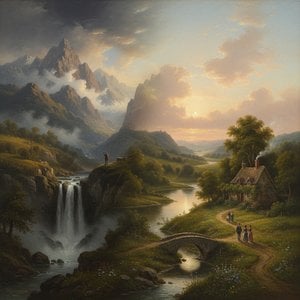
A path through a forest

 Читать далее
Масляная репродукция ручной работы
Картина маслом на холсте в выбранном вами размере и раме, написанная на заказ нашими художниками. ( Перейти к печати Переключиться на изображение)




































Выберите один из наших стандартных размеров, соответствующих оригинальным пропорциям произведения искусства.

Вы можете указать собственные размеры, чтобы картина идеально вписалась в выбранную раму или пространство. Если выбранный вами размер не соответствует пропорциям оригинала, мы либо обрежем полотно, либо расширим его за счет дополнительных элементов, написанных вручную. Цифровой макет будет отправлен вам на утверждение перед началом производства.
Обратите внимание, что предварительный просмотр на экране не отражает фактическую обрезку или расширение. Только макет точно покажет окончательную композицию.
Хотя доступны индивидуальные размеры, мы рекомендуем выбирать вариант из предопределенного списка, чтобы сохранить исходные пропорции.
После оформления заказа команда ArtsDot.com свяжется с клиентом по электронной почте для уточнения деталей и предоставит предварительный макет
Доставка по всему миру () за 3–4 недели вместо стандартных 5 недель. (10 Август). Без компромиссов в качестве.

Бесплатная экспресс-доставка по всему миру

Высококачественный льняной холст

Полное страхование доставки

Гарантия возмещения таможенных пошлин

Гарантия точного соответствия цветов

Политика возврата в течение 60 дней (только при наличии дефектов)

Гарантия возврата 100% средств

Предложение оптовых скидок
 Вариант со стеклом доступен только для размеров менее 110 см

A path through a forest
Техника репродукции
Размер репродукции
-


Итоговая стоимость
$ 263
Похожие произведения


Биография художника
The Visionary Eye of Joseph August Knip
In the grand tapestry of nineteenth-century European art, few threads are as delicately woven as those left by Joseph August Knip. Born in the Dutch town of Tilburg in 1777, Knip emerged from an artistic lineage that deeply informed his early sensibilities. As the son of the decorative painter Nicolaas Frederik Knip, his first lessons were not merely about pigment and brush, but about the very essence of ornamentation and structure. This foundational training, combined with a childhood spent amidst the shifting political tides of Napoleonic Europe, prepared him for a life of profound observation. When tragedy struck his family—the blindness of his father forcing the young Knip to become the household breadwinner at just nineteen—he did not falter; instead, he channeled his necessity into a relentless pursuit of artistic mastery, eventually becoming a mentor to his own sister, the celebrated painter Henriëtte Ronner-Knip.
Knip’s journey was one of constant movement and cultural immersion, a nomadic spirit that allowed him to capture the soul of various European landscapes. His relocation to Paris in 1801 marked a transformative era in his development. In the vibrant, intellectual atmosphere of the French capital, Knip transitioned from a talented draughtsman to a sophisticated chronicler of urban life. It was during this period that he gained prestige, even serving as a drawing master to Louis Napoléon. His Parisian works are characterized by an exquisite topographical precision, where the architectural grandeur of the city meets the intimate, fleeting moments of street life. He possessed a rare ability to document the topographical truth of a location while imbuing it with a romantic, atmospheric light that suggested the passage of time and the weight of history.
A Wanderer Through Light and Landscape
The true breadth of Knip’s genius is perhaps most visible in his travels through Italy and the Mediterranean. Between 1809 and 1812, drawn by the luminous allure of the south, Knip traversed the landscapes of Rome and Naples. In doing so, he became a notable member of the Italianisanten—a group of Northern artists captivated by the serene atmosphere and brilliant clarity of the Italian sun. His works from this period, such as his evocative depictions of Genzano and Lake Nemi, demonstrate a masterful command of watercolor over graphite. He did not merely sketch ruins or vistas; he captured the way light dances upon water and how shadows cling to ancient stone, creating panoramic landscapes that felt both monumental and deeply personal.
Technically, Knip was a virtuoso of the watercolor medium. His approach involved a sophisticated layering of washes, a technique that allowed him to achieve a sense of luminosity and depth rarely seen in topographical art. Unlike the grand, often idealized history painters of his era, Knip found beauty in the authentic. Whether he was rendering the rugged terrain of the Sabine Hills or the bustling streets of a French municipality, his focus remained on an unflinching realism. This commitment to detail, paired with an expressive handling of color, allowed him to elevate the commonplace into something transcendent. His ability to balance the precise architectural line with the soft, atmospheric blur of a distant horizon remains a hallmark of his enduring legacy.
Legacy and Historical Significance
The historical significance of Joseph August Knip lies in his role as a bridge between the meticulous traditions of Dutch topographical drawing and the emotive freedom of the Romantic movement. He stood at the intersection of documentation and art, providing future generations with a visual record of a Europe in transition. His influence extended through his family and his students, leaving an indelible mark on the landscape traditions of both the Netherlands and France.
To reflect upon Knip’s contributions is to appreciate the following:
- Technical Mastery: His pioneering use of watercolor washes to create atmospheric depth and light.
- Cultural Documentation: His role as a premier chronicler of Parisian and Italian landscapes during the early 19th century.
- Artistic Lineage: His contribution to the development of Dutch landscape painting and his mentorship within his own family of artists.
- The Romantic Spirit: His ability to blend topographical accuracy with the emotional resonance of the Romantic era.
Today, Knip’s works reside in prestigious collections such as The Metropolitan Museum of Art, serving as windows into a lost world of elegance and quiet observation. He remains a master of the subtle, reminding us that there is profound beauty to be found in the careful study of the world around us.

joseph augustus knip
1777 - 1847 , Netherlands
Основные сведения
- Artistic Movement Or Style: Romantic Landscape
- Date Of Birth: 1777
- Full Name: Joseph August Knip
- Nationality: Dutch
- Notable Artworks:
- The Shelling of ’s-Hertogenbosch by the French
- The View from the Batavian Embassy in Paris
- The Gulf of Naples with the Island of Ischia
- Place Of Birth: Tilburg, Netherlands
Похожие статьи

От замысла к холсту: использование цифровых макетов для точности и удовлетворенности клиента при создании репродукций масляной живописи
Создание репродукций масляной живописи премиум-класса с использованием цифровых технологий. Точная цветопередача, ручная работа и индивидуальный подход. Закажите идеальную копию любимой картины!

От мгновения к вечности: Преображение туристических фотографий в вневременные произведения живописи маслом
Превратите ваши фотографии в вечные произведения искусства! Закажите масляную живопись на заказ у профессиональных художников ArtsDot.com. Гарантия качества, индивидуальный подход и доставка по всему миру.

From Imagination to Canvas: Commissioning Bespoke Fantasy Art with Traditional Oil Painting Techniques
Commission breathtaking bespoke fantasy art with skilled oil painters. Explore techniques, artist selection & preservation tips. Invest in a unique masterpiece today!

Топ-10 шедевров масляной живописи, изменивших искусство навсегда | ArtsDot.com
Погрузитесь в мир великих шедевров масляной живописи! От Леонардо да Винчи до Ван Гога – узнайте истории создания самых известных картин, техники художников и их влияние на искусство. Репродукции музейного качества на ArtsDot.com. Explore the full collection online!
The Sublime and the Picturesque: Exploring Emotion & Nature in Romantic Landscape Painting
Explore the emotional power of Romantic landscape painting! Discover the sublime & picturesque aesthetics, key artists like Friedrich & Cole, and lasting influence on art history. Find your perfect piece at ArtsDot.

