

 Предпросмотр
 Поделиться
 Поделиться
 Детали произведения
 Руководство

 Скачать
 Похожие предметы
 Рентгенография
 Слайд-шоу
 Вопросы и ответы
 Статистика просмотров
A Sure Shot


 Читать далее
Жикле и арт-принты
Печать (жикле) или холст музейного качества с быстрыми сроками изготовления и широким выбором вариантов отделки. ( Купить картину ручной работы Перейти к цифровым изображениям)




P118B $10

P118H $10

P118W $10

P438Z $10

P508JH $12

P508YH $12

P805H $10

P805Z $10

P919BZ $10

P919G $10

P919XJ $10

P959ZH $10

P968JZ $12

W106C $8

W218G $10

W218JH $8

W218Y $10

W307PJ $10

W316G $10

W316PJ $8

W316Y $10

W398PJ $8

W4111J $10

W500HY $15

W500JH $15

W692G $12

W849H $8

W940BG $15

W953PJ $8




Выберите один из наших стандартных размеров, соответствующих оригинальным пропорциям произведения искусства.

Введите необходимую ширину и высоту, чтобы репродукция подошла к вашей раме или стене. При печати изображение можно только уменьшить, но нельзя увеличить больше оригинала, поэтому при выборе другого формата часть изображения может быть обрезана. Перед печатью мы отправим вам цифровой макет на утверждение. Изображение на этой странице не отображает реальную обрезку — ее можно увидеть только на макете.
Доставка по всему миру () за 2 недели вместо стандартных 4–5 недель. (15 Ноябрь)

Бесплатная экспресс-доставка по всему миру

Высококачественный льняной холст

Полное страхование при доставке

Гарантия возмещения таможенных пошлин

Гарантия точного цветового соответствия

100-дневная гарантия возврата (только при обнаружении дефектов)

Гарантия возврата 100% средств

Скидка при оптовом заказе
 Вариант со стеклом доступен только для размеров менее 110 см

A Sure Shot
Жикле и арт-принты
Размер репродукции
-


Итоговая стоимость
$ 63
Identification of A Sure Shot by John George Brown
John George Brown painted A Sure Shot in 1875. This oil on canvas captures a quiet moment of play within a shaded woodland setting. The scene focuses on two children engaged in an imitation of adult pursuits, using toy guns to navigate their imaginative landscape.
The composition centers on the interaction between the two figures. One child holds a gun while the other points toward an unseen object in the distance. They are positioned near a tree that provides shade, surrounded by potted plants and the movement of birds in the air above them.
Composition and Visual Elements of the Scene
The composition centers on a shaded grove where a large tree provides a canopy for the figures. Scattered throughout this natural setting are several potted plants, their blossoms offering splashes of color against a palette of muted greens and browns. The arrangement of these elements creates a sense of structured nature, grounding the scene in a tranquil, woodland environment.
Movement within the frame is emphasized by the presence of two birds. One bird is captured in flight above the children, while the other remains perched upon a branch of the tree. These details, combined with the loose, visible brushstrokes, contribute to a lively and playful atmosphere. The interplay of light and shadow within the grove suggests a fleeting moment of activity caught in a quiet, sheltered space.
Where to See This Artwork Today
This oil on canvas is held within the collection of the Brooklyn Museum in New York City, United States of America. The institution, also known as the Brooklyn Institute of Arts and Sciences, maintains this work as part of its permanent holdings. Visitors seeking to view the piece can find it within the museum's extensive American art departments.
Established in 1823, the Brooklyn Museum remains a significant repository for nineteenth-century works. The museum's location in Brooklyn provides a direct connection to the urban environments that influenced the artist's genre studies. The presence of this work in such a long-standing collection ensures its continued preservation and study within the context of American realism.
Вопросы и ответы
Когда было создано произведение «A Sure Shot» и к какому направлению оно относится?
«A Sure Shot», Джон Джордж Браун датируется 1875 годом и относится к направлению Victorian Genre Painting.
Какое место в истории занимает «A Sure Shot»?
«A Sure Shot», Джон Джордж Браун относится к направлению Victorian Genre Painting, характерному для эпохи 19th Century. Вместе они определяют место этого произведения в истории искусства.
К какому виду искусства относится «A Sure Shot», Джон Джордж Браун?
«A Sure Shot», Джон Джордж Браун относится к категории WallArt. Данная категория определяет тип оригинального произведения искусства.
Похожие произведения


Биография художника
A Life Etched in Childhood: The World of John George Brown
John George Brown, a name perhaps less immediately recognizable than some of his contemporaries, nevertheless occupies a significant and deeply affecting niche within the landscape of 19th-century American art. Born in Durham, England, in 1831, his journey was one of determined self-improvement and astute observation, culminating in a career that captured the poignant realities – and often idealized sentiments – surrounding childhood during a period of rapid social change. Brown’s story isn't simply about artistic talent; it’s about an immigrant’s ambition, a keen eye for detail, and a shrewd understanding of the burgeoning American art market. His early life was marked by necessity rather than privilege. Apprenticed to a glass factory at just fourteen years old, he labored to support his family, yet even amidst the demanding work, a passion for drawing persisted. This dedication led him to evening classes at the School of Design in Newcastle, and later, further study at the Trustees Academy in Edinburgh – formative experiences that laid the groundwork for his future artistic endeavors. In 1853, Brown bravely crossed the Atlantic, settling in Brooklyn, New York, a city poised to become both his home and his muse. He continued his education at the Graham Art School and the National Academy of Design, honing his skills under the guidance of instructors like Thomas Seir Cummings, preparing himself for a life dedicated to capturing the essence of American experience.From Portraiture to the Streets: Finding His Voice
Initially establishing himself as a portrait painter, Brown quickly discovered that his true calling lay elsewhere – in the vibrant, often overlooked world of everyday life. He began to focus on genre scenes, and it was through his depictions of street children that he truly found his voice. The 1860s witnessed the rise of Brown’s “street urchin” paintings, images that resonated deeply with a public fascinated by – and perhaps simultaneously troubled by – the realities of urban poverty. These weren't merely sentimental portrayals; they were carefully observed studies of character, capturing the resilience, resourcefulness, and quiet dignity of children navigating difficult circumstances. Bootblacks diligently polishing shoes, newsboys hawking papers on bustling street corners, flower sellers offering their wares – these scenes became Brown’s signature, imbued with a remarkable level of detail and empathy. His work wasn't born in isolation; it was influenced by the Barbizon school, particularly its emphasis on realism and depictions of everyday life, as well as the dramatic use of light and color championed by artists like J.M.W. Turner. However, Brown synthesized these influences into a uniquely American style, one that spoke to the specific social conditions and cultural anxieties of his adopted homeland. He sought to portray not just poverty, but also the inherent dignity and potential within those who faced it.A Master of Sentiment and Commerce
Brown was not only an artist but also a remarkably astute businessman. Recognizing the appeal of his work, he strategically copyrighted many of his most popular paintings, allowing for widespread reproduction as chromolithographs and photographic prints. This commercial success dramatically increased his fame and financial security, making him one of the wealthiest genre painters in the United States during his lifetime. However, this commercial success didn’t diminish the artistic merit of his work. Paintings like “The Net Mender” and “The First Point” exemplify his ability to capture moments of quiet beauty and emotional depth. "Claiming the Shot - A Group of Portraits after the Hunt in the Adirondacks" demonstrates a broader range, showcasing his skill in depicting group scenes with remarkable realism. His paintings offered more than just aesthetic pleasure; they provided valuable insights into 19th-century American society, particularly the lives of working children and the changing urban landscape. Often imbued with subtle moral undertones, Brown’s work reflected his belief in the importance of hard work, honesty, and resilience – values that resonated deeply with Victorian audiences.Shifting Focus: From Youth to Age
As Brown matured as an artist, so too did his subject matter evolve. In his later years, he shifted his focus from depicting the energy and vitality of childhood to portraying the quiet dignity and solitude of old age. These paintings often featured elderly individuals in rural settings, evoking a sense of nostalgia for a simpler past. While this shift might seem dramatic, it was a natural progression for an artist deeply concerned with capturing the human condition in all its complexity. He continued to be an active member of various art institutions, serving as vice-president of the National Academy of Design from 1899 to 1904, demonstrating his ongoing commitment to the artistic community. His later works, though different in subject matter, retained the meticulous attention to detail and emotional sensitivity that characterized his earlier paintings.A Lasting Legacy: Echoes of Childhood
John George Brown passed away in New York City in 1913, leaving behind a substantial body of work that continues to captivate and move audiences today. His paintings are held in prestigious collections around the world, including the National Gallery in London and the Detroit Institute of Arts, testament to his enduring artistic significance. He is remembered not only for his technical skill but also for his ability to capture the essence of a particular time and place – Victorian America – with honesty, empathy, and a touch of romanticism. *His work serves as a poignant reminder of the challenges faced by children in the 19th century, while simultaneously celebrating their resilience and spirit.* Brown’s legacy extends beyond his paintings; he represents a fascinating intersection of artistic talent, entrepreneurial acumen, and social commentary – a true chronicler of American life. **His ability to transform everyday scenes into enduring works of art ensures that his vision will continue to resonate with generations to come.**
Джон Джордж Браун
1831 - 1913 , Великобритания
Об авторе
- Artistic Movement Or Style: Жанровое живопись, Реализм
- Artists Or Movements Influenced By This Artist: ['Барбизонская школа']
- Artists Who Influenced This Artist:
- Барбизонская школа
- Дж.М.В. Тёрнер
- Date Of Birth: 11 нояб. 1831
- Date Of Death: 8 февр. 1913
- Full Name: John George Brown
- Nationality: Британско-американец
- Notable Artworks:
- The Net Mender
- The First Point
- Claiming the Shot
- Place Of Birth: Дарем, Великобритания
Похожие статьи

Sir George Clausen: Capturing Edwardian Life & British Impressionism's Nuances
Explore the luminous world of Sir George Clausen, a leading British Impressionist painter. Discover his captivating scenes of Edwardian life, rural England & poignant war art. Learn about his legacy and find high-quality reproductions at ArtsDot.

George Hayter: Portraiture, Power & Victorian Society's Canvas
Explore the life & work of George Hayter, Queen Victoria’s Principal Painter. Discover his iconic Victorian portraits, historical masterpieces, and lasting impact on British art history. Learn more at ArtsDot.

Джон Сингер Сарджент: 25 шедевров портретной живописи для вашего интерьера | ArtsDot
Погрузитесь в мир Джона Сингера Сарджента! 25 шедевров импрессионизма и реализма, раскрывающих элегантность эпохи Gilded Age. Купите репродукции картин Сарджента музейного качества для вашего интерьера на ArtsDot.com.
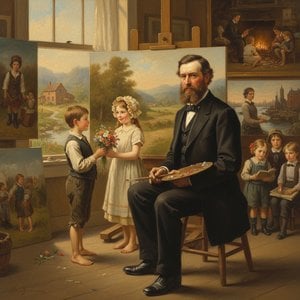
John George Brown: Capturing American Life & Sentiment in 19th-Century Genre Painting
Explore the captivating genre paintings of John George Brown, celebrated for his realistic depictions of 19th-century American life. Discover his legacy & find museum-quality reproductions at ArtsDot.

Evoking Eden: Nature's Enduring Presence in Painting Across Historical Movements
Explore the rich history of landscape painting from ancient times to modern art! Discover renowned artists like Monet & Robinson, learn about Impressionism and Tonalism, and find the perfect artwork for your home at ArtsDot.com.