


Картина подстраивается под ваш выбор: , .
Описание предмета коллекционирования
Delve into Jacques-Louis David's iconic 'Napoleon in His Study,' a masterpiece of Neoclassicism capturing Napoleon’s intellect and authority amidst scholarly pursuits. Explore symbolism & masterful technique.
 Читать далее
Биография художника
Жак-Луи Давид (1748–1825): Ведущий французский художник неоклассицизма, создатель таких шедевров как «Обет орхидей» и «Смерть Сократа». Его творчество оказало огромное влияние на европейское искусство XIX века.
Масляная репродукция ручной работы
Картина маслом на холсте в выбранном вами размере и раме, написанная на заказ нашими художниками. ( Перейти к печатным копиям Перейти к цифровым изображениям)
Подробнее об этой картине
 Предпросмотр
 Поделиться
 Поделиться
 Детали произведения
 Руководство

 Скачать
 Похожие предметы
 Рентгенография
 Слайд-шоу
 Вопросы и ответы
 Статистика просмотров
Закажите свою картину в четыре простых шага
Не торопитесь. Вы можете изменить любой ответ; цена в вашей корзине будет обновляться после каждого выбора.
1 Шаг первый из четырех
Какой размер вы бы хотели выбрать?
Эти размеры сохраняют пропорции оригинальной картины. На рисунке показано, как выбранный вами вариант будет смотреться на стене над двухметровым диваном.
Или укажите свои размеры
Выберите один из наших стандартных размеров, соответствующих оригинальным пропорциям произведения искусства.

Введите необходимую ширину и высоту, чтобы репродукция подошла к вашей раме или стене. Поскольку работа выполняется вручную, при изменении пропорций художник может немного увеличить область вокруг картины или, наоборот, обрезать края — выбор за вами. Перед началом работы мы пришлем вам цифровой макет на утверждение. Изображение на этой странице не является точным результатом — увидеть реальный вид можно только на макете.
2 Шаг второй из четырех
Как его подготовить: в рулоне, на подрамнике или в раме?
Ниже указаны цены для размера, выбранного вами на первом этапе.
Выберите тип обработки краев холста
Выберите свою раму

Белый торцевой край $1

Размытый край $1

С продолжением изображения $1

P118B $10

P118H $10

P118W $10

P438Z $10

P508JH $12

P508YH $12

P805H $10

P805Z $10

P919BZ $10

P919G $10

P919XJ $10

P959ZH $10

P968JZ $12

W106C $8

W218G $10

W218JH $8

W218Y $10

W307PJ $10

W316G $10

W316PJ $8

W316Y $10

W398PJ $8

W4111J $10

W500HY $15

W500JH $15

W692G $12

W849H $8

W940BG $15

W953PJ $8

H24-GOLD $30

H24-SILVER $30

H36-GOLD $45

H36-SILVER $45
В раме
Багет: . Общий размер в раме: .
3 Третий шаг из четырех
Желаете ли вы внести какие-либо изменения в картину?
Большинство людей отвечают «нет». Но поскольку каждая картина создается вручную, наш художник может адаптировать ее специально для вас.
После оформления заказа команда ArtsDot.com свяжется с клиентом по электронной почте для получения инструкций и предоставит предварительный макет
4 Четвертый шаг из четырех
Несколько вариантов отделки
Все они являются необязательными. Выбранные ответы не влекут за собой дополнительных расходов.
Кто автор?
Доставка по всему миру () за 3–4 недели вместо стандартных 5 недель. (4 Ноябрь). Без компромиссов в качестве.
Табличка, как в музее?
Детали гравировки на бронзовой плакетке
This elegant plaque features the artist's name and the title of the artwork, finely engraved for a timeless presentation.
It is made from bronze with a refined, elegant finish. The text is precisely laser-engraved for a sharp and permanent result. Measuring 9x2 cm, the plaque is compact yet easy to read. It's built to be durable and scratch-resistant, offering a professional, museum-quality look. Mounting is simple thanks to the included adhesive backing.
Детали прозрачной акриловой таблички
The plaque includes essential engraved details such as the artist's name, the title of the artwork, the date it was created, the type of media used-like oil on canvas or watercolor-a brief description of the piece, and a QR code that links to the complete artwork information.
It is crafted from clear acrylic, offering a sleek, modern appearance. The text is UV-engraved in black to ensure strong visual contrast. With a size of 10x15 cm, it ensures optimal readability. It comes equipped with two metal hooks for secure wall mounting. The plaque is designed to be weather-resistant, making it suitable for various environments, and it includes interactive features that work seamlessly with smartphone scanning.
Информация о чёрной акриловой табличке
This elegant plaque includes engraved information such as the artist's name, the title of the artwork, the date it was created, the type of media used (like oil on canvas or watercolor), a short description of the artwork, and a QR code for quick access to more information.
The plaque itself is made from refined black acrylic with a premium finish. The text is laser-engraved in white for high contrast and readability. Its size is 10x15 cm, designed to be easy to read. It comes with two metal hooks for professional mounting. The design is sleek and fits any interior style. It is also weather-resistant and durable, with built-in digital integration for mobile compatibility.
Защитный лак?
Когда вам нужна доставка?
✓ Проверить и заказать
Ваша картина в соответствии с вашим заказом

Napoleon in His Study
Техника репродукции
Размер репродукции
-

Выдающийся мастер высокого класса
Более высокая детализация, изысканность и дополнительное время на создание работы
-

Оформление репродукции
-
-
Для произведений искусства или репродукций, размер которых превышает 105 см (приблизительно 41 дюйм) по любой из сторон, рама будет доставлена в разобранном виде (в виде комплекта). Этот метод обеспечивает безопасную доставку и предотвращает повреждения при транспортировке.
Требуется профессиональная сборка — это не продукт для самостоятельной сборки (DIY).
Комплект должен быть собран, а холст натянут опытным мастером по багетным рамам с использованием клеевого ПВА (не входит в комплект), струбцин для натяжки холста и зажимов, чтобы удерживать подрамник ровным до полного высыхания клея. Неправильная сборка или неравномерное натяжение холста могут привести к необратимому повреждению произведения искусства и не являются гарантийным случаем.
 Для произведений искусства или репродукций, размер которых превышает 105 см (приблизительно 41 дюйм) по любой из сторон, рама будет доставлена в разобранном виде (в виде комплекта). Этот метод обеспечивает безопасную доставку и предотвращает повреждения при транспортировке.
В комплект входят все бруски из массива дерева, точно вырезанные по размеру.
Собирается с помощью предоставляемых винтов, а также столярного клея для угловых соединений, который не входит в комплект и должен быть приобретен вашим мастером.
Требуются профессиональные инструменты, не входящие в комплект: щипцы для натяжки холста (натяжитель) и зажимы, чтобы удерживать рейки ровно во время высыхания клея.
Важно:
Для соединения углов требуется клей для дерева, перекладины необходимо зафиксировать струбцинами до полного высыхания клея, а для натяжки холста на собранную раму требуются щипцы для натяжки холста. Ни один из этих инструментов не входит в комплект. Пожалуйста, убедитесь в наличии опытного мастера по багетным работам перед заказом рамы такого размера.

Этикетка
-
-

Защитный лак
Глянцевый лак (насыщает цвета, защищает от воздействия света и влаги)
-

Персонализация картины
Примеры возможных изменений: замена лица на фото клиента; добавление домашнего питомца (например, замена кошки на собаку); добавление скрытого сообщения на фоне; изменение пейзажа или элементов фона.
-

Экспресс-доставка
Доставка по всему миру () за 3–4 недели вместо стандартных 5 недель. (4 Ноябрь). Без компромиссов в качестве.
-
Экспресс-доставка
Доставка по всему миру () в течение 5 недель. (11 Ноябрь).
Включено в стоимость
Итоговая стоимость
$ 263
Вариант со стеклом доступен только для размеров менее 110 см
Включено в каждый заказ
- Бесплатная экспресс-доставка по всему миру
- Высококачественный льняной холст
- Полное страхование при доставке
- Гарантия возмещения таможенных пошлин
- Гарантия точного цветового соответствия
- 100-дневная гарантия возврата (только при обнаружении дефектов)
- Гарантия возврата 100% средств
- Скидка при оптовом заказе


Napoleon in His Study: A Portrait of Power and Reflection
Jacques Louis David’s “Napoleon in His Study,” completed in 1812, stands as a cornerstone of Neoclassicism—a movement that sought to recapture the grandeur and moral seriousness of ancient Greece and Rome. More than just an aesthetically pleasing depiction, this monumental canvas offers a profound glimpse into the mind of Napoleon Bonaparte himself, encapsulating his ambition, intellect, and the weighty responsibilities borne by the Emperor who reshaped Europe.
Artistic Context: The late 18th century witnessed a dramatic shift away from the opulent Baroque style towards Neoclassicism. Artists like David rejected Rococo’s frivolity, favoring instead clarity, restraint, and idealized forms rooted in classical ideals. David's meticulous draftsmanship—a hallmark of his oeuvre—was driven by an unwavering belief in portraying truth through beauty, mirroring the philosophical currents of Enlightenment thinkers who championed reason and virtue.
- Subject Matter: The painting portrays Napoleon Bonaparte seated at a desk adorned with two clocks, symbolizing time’s relentless march and the urgency of leadership.
- Composition: David employs a masterful pyramidal composition, grounding Napoleon's figure and directing the viewer's gaze upwards towards his commanding presence.
- Lighting & Shadow (Chiaroscuro): The dramatic use of chiaroscuro—the interplay between light and dark—creates depth and dimensionality, highlighting Napoleon’s face and uniform with remarkable realism.
Symbolism: Beyond its formal elements, “Napoleon in His Study” is laden with symbolic significance. Napoleon's posture exudes confidence and authority, reflecting his unwavering conviction in his own destiny. The book he holds represents not merely erudition but also strategic thinking—a crucial component of his military prowess. Even the seemingly insignificant vase positioned centrally may symbolize the Emperor’s patronage of culture and art, underscoring his desire to elevate France to its former glory.
Technique: David's meticulous attention to detail is evident in every brushstroke—from the subtle folds of Napoleon’s uniform to the texture of the desk surface. He achieved this level of realism through painstaking preparatory sketches and a methodical layering process, ensuring that each element contributes to the overall impression of grandeur and solemn contemplation. The painting exemplifies the Neoclassical commitment to accuracy and emotional resonance.
Legacy: “Napoleon in His Study” continues to inspire artists and scholars alike. It serves as a testament to David’s artistic genius and his ability to capture the spirit of an era—a pivotal moment in European history marked by revolution, ambition, and the enduring fascination with idealized leadership. Its influence can be seen in countless subsequent portraits and artworks that strive for similar levels of psychological insight and stylistic elegance.
Вопросы и ответы
Как можно описать настроение «Napoleon in His Study», Давид?
Общее настроение «Napoleon in His Study», Давид — Elegant. Это настроение передает общую атмосферу произведения.
Какое место занимает «Napoleon in His Study» в творчестве Давид?
В творческом наследии Давид работа «Napoleon in His Study» относится к стилю Neoclassicism и созвучна темам classical revival, authority, intellectualpursuit, timepressure, culturalreflection.
Как сочетаются контраст и гармония в работе «Napoleon in His Study»?
Цветовая композиция «Napoleon in His Study», Давид сочетает в себе Bold контраст с Strong Color Unity гармонией.
Похожие произведения


Давид
1748 - 1800, Франция
Биография художника
A Brushstroke Across Revolution: The Life and Art of Jacques-Louis David
Jacques-Louis David, born in Paris in 1748, was more than just a painter; he was a visual chronicler of an era defined by upheaval, idealism, and the relentless pursuit of new orders. His life mirrored the dramatic shifts unfolding across France – from the waning opulence of the Rococo to the austere clarity of Neoclassicism, and ultimately, through the tumultuous years of revolution and Napoleonic glory. A childhood marked by the early loss of his father and a facial impediment that initially hindered his speech seemed only to sharpen his observational skills and fuel an unwavering dedication to artistic mastery. Though initially apprenticed to François Boucher, David quickly found himself drawn to the more morally resonant work of Joseph-Marie Vien, whose emphasis on history painting and classical subjects resonated with a burgeoning sense of purpose within the young artist. His early attempts to win the prestigious Prix de Rome were fraught with frustration, yet these repeated setbacks only intensified his resolve, forging a relentless perfectionism that would characterize his entire career.The Birth of Neoclassical Drama
David’s artistic evolution wasn't merely a stylistic shift; it was a philosophical statement. He rejected the frivolous ornamentation and playful themes of the Rococo, embracing instead the clarity, order, and moral seriousness inherent in classical antiquity. This commitment was profoundly influenced by archaeological discoveries at Pompeii and Herculaneum, which unveiled a world of Roman art and architecture previously lost to time. These ruins ignited within him a passion for recreating the grandeur and heroic ideals of the ancient world. His breakthrough came with “Oath of the Horatii” (1784), a painting that transcended mere artistic skill to become an emblem of civic virtue and patriotic sacrifice. The stark composition, dramatic lighting – carefully calculated to heighten emotion – and precise draftsmanship were revolutionary, signaling a decisive break from the past. It wasn’t simply *what* he painted but *how* – a deliberate construction designed to evoke powerful emotional responses and inspire contemplation on themes of duty, honor, and self-sacrifice. The figures are rendered with an almost sculptural quality, embodying Roman ideals of strength and virtue. This work didn't just announce a new style; it foreshadowed the ideological currents that would soon sweep across France.Revolution and Remembrance: Art as Political Weapon
As the French Revolution erupted in 1789, David was not merely an observer but an active participant. A fervent supporter of the revolutionary cause and a close associate of Maximilien Robespierre, he saw art as a powerful tool for shaping public opinion and immortalizing the ideals of the new republic. His paintings during this period became potent symbols of revolutionary martyrdom and republican fervor. Perhaps his most iconic work from this era is “The Death of Marat” (1793), a hauntingly realistic depiction of the assassinated journalist, transformed into a secular saint. The pale body, the makeshift desk, the poignant letter clutched in Marat's hand – all contribute to an image of profound sorrow and sacrifice for the cause of liberty. David’s deliberate use of chiaroscuro (strong contrasts between light and dark) intensifies the drama and draws the viewer’s eye directly to the central figure. He served on the Committee of Public Safety during the Reign of Terror, even signing Robespierre’s death warrant, demonstrating his deep entanglement with the political machinations of the time – a controversial act that reflects the complexities of his commitment to revolutionary ideals.From Revolution to Empire: Serving Napoleon
The fall of Robespierre marked another turning point in David's career. With remarkable adaptability, he navigated the shifting political landscape and aligned himself with Napoleon Bonaparte, becoming the First Consul’s official court painter. This new patronage ushered in a period of grand-scale commissions designed to glorify Napoleon’s victories and achievements. “Napoleon Crossing the Alps” (1801-1805) is perhaps the most famous example – a masterful piece of propaganda that presents Napoleon as a heroic, almost mythical figure conquering both nature and adversity. The dramatic lighting, the dynamic composition, and the carefully chosen details all contribute to an image of unparalleled power and authority. “The Coronation of Napoleon” (1807), an immense canvas capturing the opulence and grandeur of the imperial ceremony, further cemented David’s position as the preeminent artist of the Napoleonic era. During this time, his palette subtly shifted, incorporating warmer Venetian colors while maintaining the precision and clarity that defined his style – a reflection of Napoleon's ambition to emulate the splendor of the Roman emperors.Exile, Legacy, and Enduring Influence
The Bourbon Restoration in 1814 brought renewed peril for David, whose association with the fallen Napoleon made him a target of persecution. He chose exile in Brussels in 1816, where he continued to paint and teach until his death on December 29, 1825. Even in exile, his influence remained profound. He trained numerous pupils, including Jean-Auguste-Dominique Ingres, who would become one of the most important neoclassical painters of the 19th century. David’s emphasis on draftsmanship, composition, and historical accuracy left an indelible mark on French art. *His legacy extends beyond mere imitation*; his expressive distortions of form and space even foreshadowed the innovations of later artists like Henri Matisse and Pablo Picasso. Jacques-Louis David was not simply a painter of his time; he *defined* it, capturing its spirit of revolution, ambition, and enduring ideals on canvas for generations to come.- Major Achievements: Established Neoclassicism as the dominant style in French painting.
- Historical Significance: Created iconic images that captured the spirit of the French Revolution and the Napoleonic era.
- Influence: Trained a generation of influential artists who carried on his legacy.


Похожие статьи

Anne-Louis Girodet: Bridging Neoclassicism & Romanticism with Emotional Truth
Explore the captivating world of Anne-Louis Girodet, a pivotal figure bridging Neoclassicism & Romanticism. Discover his masterpieces and unique artistic vision with ArtsDot.

Illuminating the Enlightenment: Artistic Expression in 18th-Century Europe
Explore the artistic brilliance of the Enlightenment era! Discover Rococo's elegance & Neoclassicism’s virtue with expert insights into 18th-century masterpieces. Learn about David, Kauffmann & more.
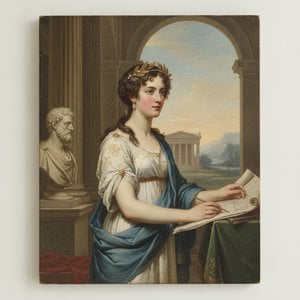
The Revival of Antiquity: Exploring Ideals of Beauty & Power in Neoclassical Portraiture
Explore the captivating world of Neoclassical portraiture! Discover the power & ideals behind masterpieces by David, Girodet & more. Expert analysis, custom reproductions & art appraisal at ArtsDot.