


 Поделиться
 Поделиться
 Детали произведения

 Скачать
 Похожие работы
 Слайд-шоу
 Stats
StatsL
 Sculpture
- Sculpture
- Arte Povera
 1984
1984- Contemporary
 183.0 x 250.0 cm
 Галерея Нового Южного Уэльса
 Читать далее
Масляная репродукция ручной работы
Картина маслом на холсте в выбранном вами размере и раме, написанная на заказ нашими художниками. ( Switch to Print Switch to Digital Image)




































Выберите один из наших стандартных размеров, соответствующих оригинальным пропорциям произведения искусства.

Вы можете указать собственные размеры, чтобы картина идеально вписалась в выбранную раму или пространство. Если выбранный вами размер не соответствует пропорциям оригинала, мы либо обрежем полотно, либо расширим его за счет дополнительных элементов, написанных вручную. Цифровой макет будет отправлен вам на утверждение перед началом производства.
Обратите внимание, что предварительный просмотр на экране не отражает фактическую обрезку или расширение. Только макет точно покажет окончательную композицию.
Хотя доступны индивидуальные размеры, мы рекомендуем выбирать вариант из предопределенного списка, чтобы сохранить исходные пропорции.
После оформления заказа команда ArtsDot.com свяжется с клиентом по электронной почте для уточнения деталей и предоставит предварительный макет
Доставка по всему миру () за 3–4 недели вместо стандартных 5 недель. (8 Сентябрь). Без компромиссов в качестве.

Бесплатная экспресс-доставка по всему миру

Высококачественный льняной холст

Полное страхование доставки

Гарантия возмещения таможенных пошлин

Гарантия точного соответствия цветов

100-дневная политика возврата (только при обнаружении дефектов)

Гарантия возврата 100% средств

Предложение оптовых скидок
 Вариант со стеклом доступен только для размеров менее 110 см

L
Техника репродукции
Размер репродукции
-


Итоговая стоимость
$ 263
Giulio Paolini’s “L”: A Fragmented Echo of Antiquity
Giulio Paolini's "L," created in 1984, isn’t merely a sculpture; it’s an invitation to contemplate the very nature of representation and the weight of history. The work immediately commands attention with its stark simplicity: two imposing marble busts of heads, rendered in a classical style reminiscent of Roman antiquity, stand on slender pedestals beneath a scattering of shattered fragments – a deliberate chaos that belies the inherent order of the figures above. This juxtaposition isn’t accidental; it speaks to a profound meditation on destruction, loss, and the illusionistic strategies employed by artists throughout history.
Paolini's artistic lineage is deeply rooted in Arte Povera, an Italian movement that championed the use of humble, readily available materials – often discarded or overlooked – to challenge traditional notions of art. However, “L” transcends simple material exploration. It’s a conceptual piece, grappling with the philosophical questions posed by artists like Piero Manzoni and Lucio Fontana, who similarly questioned the boundaries of artistic expression and the role of the viewer. The work's genesis lies in Paolini’s early dissatisfaction with what he perceived as the overly polished and idealized representations prevalent in Art Informel – a movement characterized by expressive abstraction. He sought to strip away the superfluous, focusing instead on the fundamental components of painting itself: the canvas, the frame, and the very act of creation.
The Language of Brokenness
The shattered marble fragments beneath the busts are crucial to understanding Paolini’s intent. They aren't simply remnants of a disaster; they represent a deliberate disruption of classical ideals. The broken pieces mirror the fractured nature of historical narratives, suggesting that even the most enduring monuments – in this case, the idealized Roman heads – are ultimately subject to decay and interpretation. The act of smashing the busts can be seen as an assertion of the artist’s agency, a rejection of passive observation and a forceful engagement with the past. The deliberate imperfection introduces a sense of vulnerability and immediacy that contrasts sharply with the perceived permanence of classical sculpture.
Furthermore, the mirroring effect between the two heads is deeply symbolic. They face each other directly, creating an almost unsettling intimacy. This mirrored image isn’t simply a visual repetition; it evokes themes of duality, reflection, and perhaps even a sense of longing or unresolved conflict. The slight tilt of the heads adds to this dynamic, suggesting a subtle shift in perspective – as if one head is turning to acknowledge the other, initiating a silent dialogue across time.
Illusionism and the Rules of Perspective
Paolini’s work is a masterful demonstration of illusionistic techniques. The busts themselves are cast from plaster, mimicking the appearance of marble but retaining a distinctly artificial quality. This deliberate use of imitation highlights the constructed nature of representation – reminding us that what we perceive as “real” is always mediated by artistic choices. The arrangement on the floor further reinforces this concept; the fragmented pieces create an illusion of depth and space, drawing the viewer into the scene while simultaneously undermining any sense of stability or permanence.
The piece subtly critiques the conventions of perspective established during the Renaissance, a period marked by a relentless pursuit of accurate representation. Paolini’s use of slightly skewed angles and fragmented forms challenges these rules, suggesting that art can be more effective when it embraces ambiguity and paradox. The overall effect is one of controlled chaos – a visual puzzle that invites viewers to question their assumptions about how things “should” look and to appreciate the power of artistic manipulation.
A Timeless Meditation on Art and History
"L" remains a powerfully resonant work, continuing to provoke thought and discussion decades after its creation. It’s not just a sculpture; it's an exploration of art history, representation, and the human condition. Paolini’s ability to distill complex philosophical ideas into a deceptively simple composition is a testament to his artistic vision – a vision that continues to challenge and inspire.
Похожие произведения


Биография художника
Giulio Paolini: Bridging Arte Povera and Conceptual Thought
Giulio Paolini stands as a singular figure in Italian art, embodying the spirit of Arte povera while simultaneously delving into the intricacies of conceptual art. Born in Genoa in 1940, his artistic journey began amidst formative influences – a childhood spent in Bergamo instilled a deep appreciation for visual culture and fostered an early engagement with museums and galleries. His fascination extended beyond mere observation; he actively sought knowledge through art periodicals and meticulously studied the works of masters. This intellectual curiosity propelled him toward painting after graduating from the Giambattista Bodoni State Industrial Technical School of Graphics and Photography in 1959, specializing in graphic design.- Early Explorations: Paolini’s initial artistic endeavors centered on monochrome abstractions, reflecting a desire to distill visual experience into its purest form. The discovery of modern graphics – his brother Cesare's architectural pursuits – profoundly impacted his aesthetic sensibilities, shaping his approach to representation.
- The Pioneering Gesture: His breakthrough came with “ disegno geometrico” (geometric drawing), a seminal piece executed in 1960. This ambitious undertaking involved squaring a canvas painted entirely white tempera – an act of deliberate negation intended to liberate the image from preconceived notions and establish a foundational conceptual principle.
- Conceptual Foundations: Paolini’s artistic philosophy revolved around capturing “eternal recurrence,” recognizing that each creative moment holds inherent significance and contributes to the artist's self-discovery. This perspective underpinned his subsequent explorations into the very components of painting – tools and space—marking a decisive shift toward conceptual concerns.
The Rise of Arte Povera and Photographic Realism
Paolini’s artistic trajectory gained momentum in the early 1960s as he embraced photography, expanding his investigation into the relationship between artist and artwork. This collaboration with Carla Lonzi proved pivotal, introducing him to Marisa Volpi who would soon produce influential critical analyses of his burgeoning talent. The encounter solidified Paolini's connection to Arte povera—an artistic movement characterized by its use of humble materials and rejection of traditional techniques—and cemented his commitment to exploring the boundaries of visual perception.- Early Exhibitions: His debut solo exhibition at Gian Tommaso Liverani’s La Salita gallery in Rome in 1964 showcased “leant against or hanging on the wall” panels—a deliberate provocation designed to disrupt conventional notions of display and underscore the ongoing process of artistic creation. Critics like Carla Lonzi and Marisa Volpi recognized Paolini's innovative approach, establishing him as a voice within the burgeoning Arte povera movement.
- Material Exploration: Paolini’s subsequent works consistently prioritized raw materials—wood, plaster, photography—transforming them into evocative sculptures and images. These pieces eschewed polished surfaces and elaborate ornamentation, prioritizing textural qualities and conveying emotional resonance.
Notable Achievements and Artistic Legacy
Paolini’s artistic output demonstrates a remarkable sensitivity to both formal experimentation and conceptual depth. His exploration of photographic realism—evident in “senza titolo” (1965)—challenged viewers to confront the complexities of representation, prompting reflection on how images convey meaning beyond mere visual appearance. Furthermore, his sculptural endeavors, such as “Untitled (936),” exemplify Arte povera’s commitment to confronting existential themes through understated materials and forms.- Critical Recognition: Paolini's work garnered considerable acclaim from prominent art critics and curators who championed his distinctive aesthetic vision. Lonzi and Volpi’s initial assessments established him as a key figure in the Arte povera movement, securing his place within the history of Italian contemporary art.
- Continuing Relevance: Giulio Paolini's enduring influence stems from his unwavering dedication to artistic innovation—his refusal to adhere to conventional standards and his persistent pursuit of expressive truth. His legacy continues to inspire artists today who strive to forge new paths within the realm of visual art.

Giulio Paolini
1940 -
Основные сведения
- Artistic Movement Or Style: Arte Povera & Conceptual Art
- Artists Or Movements Influenced By This Artist: ['Minimalism']
- Artists Who Influenced This Artist: ['Luciano Fabro']
- Date Of Birth: 1940
- Date Of Death: Living
- Full Name: Giulio Paolini
- Nationality: Italian
- Notable Artworks: ['L', 'senza titolo', 'Untitled (936)']
- Place Of Birth: Genoa, Italy
Похожие статьи
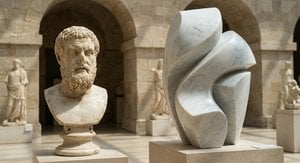
The Enduring Allure of Marble in Art History: From Classical Sculpture to Modern Abstraction
Explore the captivating history of marble sculpture from ancient Greece to modern art. Discover renowned artists like Canova & Michelangelo, carving techniques, and investment insights at ArtsDot.

10 легендарных бронзовых шедевров, изменивших искусство | ArtsDot
Погрузитесь в мир великих бронзовых шедевров! От Давида Донателло до Мыслителя Родена – узнайте историю создания, технику и значение легендарных скульптур. Вдохновение для интерьера и музейное качество репродукций на ArtsDot.com.

The Enduring Form: Sculpture Across History, Technique & Emotional Resonance
Explore the rich history of sculpture with ArtsDot. Discover key techniques, influential artists & investment potential for discerning collectors. Expert insights into valuing and collecting timeless masterpieces.

10 легендарных бронзовых скульптур, изменивших искусство навсегда | ArtsDot
Погрузитесь в мир великих бронзовых скульптур! От Давида Микеланджело до работ Родена – история искусства, техники и вдохновения. Купите репродукции шедевров для вашего интерьера на ArtsDot.com

The Enduring Form: Exploring Themes & Techniques in Sculpture Across Historical Periods
Explore the rich history of sculpture from ancient masterpieces to contemporary innovations. Discover key techniques, influential artists & investment potential for discerning art collectors.