


 Примерить в интерьере
 Отправить
 Поделиться
 Подробнее
 Руководство

 Скачать
 Похожие объекты
 Рентгенография
 Слайд-шоу
 Статистика
Double Portrait
 Acrylic On Canvas
- WallArt
- High Renaissance
 1502
1502 80.0 x 75.0 cm
 Museo Nazionale del Palazzo di Venezia
 Развернуть текст
Жикле / Арт-принты
Печать (жикле) или холст музейного качества с быстрыми сроками изготовления и широким выбором вариантов отделки. ( Заказать репродукцию ручной работы Перейти к цифровым изображениям)




P118B $10

P118H $10

P118W $10

P438Z $10

P508JH $12

P508YH $12

P805H $10

P805Z $10

P919BZ $10

P919G $10

P919XJ $10

P959ZH $10

P968JZ $12

W106C $8

W218G $10

W218JH $8

W218Y $10

W307PJ $10

W316G $10

W316PJ $8

W316Y $10

W398PJ $8

W4111J $10

W500HY $15

W500JH $15

W692G $12

W849H $8

W940BG $15

W953PJ $8




Выберите один из наших стандартных размеров, соответствующих оригинальным пропорциям произведения искусства.

Вы можете указать свои собственные размеры, чтобы репродукция идеально подошла под конкретную раму или пространство. Если выбранный вами размер не будет соответствовать пропорциям оригинала, мы либо обрежем произведение, либо дополним изображение зеркальным отражением краев или однотонной заливкой. Перед началом производства вам будет отправлен цифровой макет для утверждения.
Пожалуйста, обратите внимание, что предварительный просмотр на экране не отображает фактическую обрезку или расширение изображения. Только макет точно покажет финальную композицию.
Несмотря на возможность заказа индивидуальных размеров, мы рекомендуем выбирать размер из предопределенного списка, чтобы сохранить оригинальные пропорции.
Доставка по всему миру () за 2 недели вместо стандартных 4–5 недель. (25 Сентябрь)

Бесплатная экспресс-доставка по всему миру

Высококачественный льняной холст

Полное страхование при транспортировке

Гарантия возврата таможенных пошлин

Гарантия точного цветового соответствия

100-дневный период возврата (только при обнаружении дефектов)

Гарантия возврата 100% средств

Скидка при заказе нескольких работ
 Вариант со стеклом доступен только для размеров менее 110 см

Double Portrait
Жикле / Арт-принты
Размер репродукции
-


Итоговая стоимость
$ 62
Giorgione’s Double Portrait: A Venetian Enigma Revisited
“Double Portrait,” painted in 1502 by Giorgione, remains one of the most stubbornly elusive masterpieces of the Early Venetian Renaissance. Its quiet contemplation and subtle ambiguities continue to fascinate scholars and inspire artists alike, cementing Giorgione’s place as a pivotal figure whose influence extends far beyond his relatively brief artistic career.
The painting depicts two individuals—a man and a woman—engaged in an unspoken exchange of glances. Situated against a hazy landscape backdrop reminiscent of Umbrian hills – a stylistic choice that distinguishes it from the more rigorously perspectival works of Leonardo da Vinci and Michelangelo – the composition exudes an atmosphere of serene stillness, punctuated by carefully observed details. The man wears a dark tunic adorned with a distinctive tie, reflecting the formality prevalent in Venetian aristocratic circles during the period.
- Style: High Renaissance
- Technique: Giorgione’s masterful use of sfumato—a technique pioneered by Leonardo da Vinci—creates an ethereal haze that softens contours and blends colors seamlessly. This hazy atmosphere contributes significantly to the painting's mood, fostering a sense of mystery and inviting viewers to contemplate the subjects’ inner lives.
- Historical Context: Painted during a period of artistic experimentation in Venice, “Double Portrait” embodies the humanist ideals championed by Renaissance thinkers. It reflects an interest in capturing psychological nuance alongside aesthetic beauty—a departure from earlier portraiture traditions that prioritized idealized representations.
Symbolism and Narrative Depth
The woman’s hand delicately holds an apple – a symbol laden with multifaceted interpretations. Traditionally associated with temptation and knowledge, the apple transcends simple iconography to represent fertility, innocence, and perhaps even the duality of human experience. Its placement in the composition draws attention to the female figure and subtly underscores themes of contemplation and introspection.
Furthermore, the gaze of the two subjects is crucial to understanding the painting’s emotional impact. Their averted eyes suggest a profound connection—a silent dialogue that transcends verbal communication. This unspoken exchange invites viewers to ponder questions of intimacy, desire, and the complexities of human relationships – themes that resonate powerfully across centuries.
A Legacy of Atmospheric Impressionism
"Double Portrait" is considered by many art historians as an early precursor to Impressionist painting. Giorgione’s deliberate blurring of lines and colors—his prioritization of mood over precise realism—anticipates the aesthetic innovations championed by Monet, Renoir, and Degas. It stands as a testament to Giorgione's visionary approach to capturing the essence of human experience within a visually arresting framework.
Reproductions from ArtsDot offer exceptional quality reproductions that allow you to appreciate Giorgione’s groundbreaking technique and captivating vision. Explore stunning prints and canvases at https://www.wikiart.org/en/giorgione/double-portrait-1502.
Похожие произведения


Биография художника
Giorgione (1477/8-1510): Venetian Enigma
Giorgio Barbarelli da Castelfranco, known to the world as Giorgione, remains one of the most elusive and captivating figures in Renaissance art. Born in the small town of Castel Franco Veneto near Venice around 1477 or 1478 – the exact year is debated – his tragically short life, ending around 1510 at the age of thirty-two or thirty-three, belies an artistic impact that continues to resonate centuries later. Unlike many of his contemporaries whose lives are well documented, Giorgione’s story is shrouded in mystery, pieced together from scant historical records and the often romanticized accounts of Giorgio Vasari. What we do know suggests a man deeply immersed in the vibrant culture of Venice, a city that fostered both artistic innovation and a sensual appreciation for beauty. He likely apprenticed under Giovanni Bellini, a leading Venetian painter, absorbing the established traditions before forging his own unique path. Early commissions included portraits of prominent figures like Doge Agostino Barbarigo, demonstrating an immediate talent for capturing likeness and status. However, it was in his departure from conventional subject matter and his revolutionary approach to painting that Giorgione truly distinguished himself.Early Life and Artistic Training
Giorgio Barbarelli’s origins are relatively obscure. He was born into a family of modest means in Castel Franco Veneto, a region known for its textile industry and burgeoning artistic patronage. While precise details about his childhood remain elusive, Vasari recounts that Giorgione received an excellent education, primarily thanks to the generosity of his father who recognized his innate talent. Crucially, he began his artistic training under Giovanni Bellini, arguably Venice’s most influential painter at the time. Bellini's workshop served as a crucible for Venetian artistic sensibilities, emphasizing meticulous observation and mastering traditional techniques—particularly *sfumato*, a subtle blending of tones that creates atmospheric depth and softens outlines. This formative experience instilled in Giorgione a profound understanding of Venetian painting conventions while simultaneously nurturing his desire to transcend them.A Painter's Breakthrough: Style and Innovation
Giorgione’s artistic style marked a significant break from the Florentine emphasis on linear perspective and precise draftsmanship, which dominated the early Renaissance. He championed color, atmosphere, and an evocative moodiness that became hallmarks of the Venetian school. His technique involved softening outlines, employing subtle gradations of tone – *sfumato* – to create atmospheric effects, and prioritizing overall harmony over meticulous detail. This wasn’t merely a technical choice; it reflected a fundamentally different artistic sensibility. Giorgione sought not to replicate reality but to capture its essence, its fleeting emotions, and its poetic resonance. His paintings often feature enigmatic subjects and ambiguous narratives, inviting viewers into a world of contemplation rather than offering clear-cut stories. The Tempest, perhaps his most famous work, exemplifies this perfectly. The scene – a soldier and a nursing mother amidst a stormy landscape – has baffled art historians for centuries, its meaning remaining tantalizingly out of reach. Similarly, Pastoral Concert (Fête champêtre) presents an idyllic gathering of musicians in a pastoral setting, celebrated not for any specific narrative but for its harmonious composition and lyrical quality. These works weren’t intended to be puzzles to solve; they were meant to evoke feelings, moods, and a sense of wonder.Notable Works and Artistic Legacy
Giorgione's oeuvre is remarkably small compared to his contemporaries, yet each painting possesses an unparalleled beauty and psychological depth. Among his most celebrated masterpieces are:- The Tempest (c. 1506-1508):This monumental canvas captures the drama of a storm-swept landscape with breathtaking subtlety. The masterful use of *sfumato* creates an ethereal atmosphere, conveying both visual splendor and profound emotional resonance.
- Pastoral Concert (Fête champêtre) (c. 1509):Considered one of the earliest examples of Venetian pastoral painting, this idyllic scene celebrates harmony and beauty through luminous color palettes and carefully balanced compositions.
- Sleeping Venus (c. 1510):A sensual depiction of Aphrodite resting on a barge, *Sleeping Venus* showcases Giorgione’s unparalleled skill in capturing the delicate nuances of flesh tone and conveying an aura of serene contemplation.
- Judith (1504):This dramatic portrayal of Judith slaying Holofernes demonstrates Giorgione's ability to infuse biblical narratives with psychological complexity and emotional intensity.

Джорджоне
1477 - 1510 , Италия
Краткая справка
- Artistic Movement Or Style: Высокое Возрождение, венецианская школа
- Artists Or Movements Influenced By This Artist: ['Тициан']
- Artists Who Influenced This Artist:
- Джованни Беллини
- Мантенья
- Date Of Birth: 1477/78 или 1473/74
- Date Of Death: 1510
- Full Name: Giorgio Barbarelli da Castelfranco
- Nationality: Итальянский
- Notable Artworks:
- Закат
- Венера в пастушеской роще
- Темпэст
- Place Of Birth: Кастель Франко Венеция
Похожие статьи
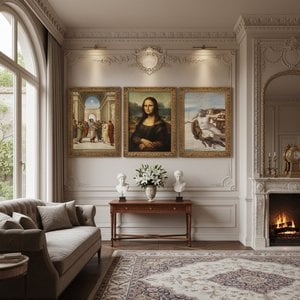
Топ-10 шедевров Высокого Возрождения: искусство для вашего дома от ArtsDot
Погрузитесь в эпоху Высокого Возрождения! Узнайте истории Леонардо да Винчи, Рафаэля и Микеланджело. Шедевры Ренессанса для вашего интерьера – репродукции картин премиум-качества на ArtsDot.com

Топ-25 шедевров Тинторетто: Венецианская драма и свет в вашем интерьере
Погрузитесь в мир драматизма и света с 25 шедеврами Тинторетто! Узнайте историю создания легендарных картин эпохи Возрождения. Репродукции высокого качества для вашего интерьера на ArtsDot.com.

Giorgione: Enigma and Innovation in Early Venetian Renaissance Painting
Explore the enigmatic world of Giorgione, a pivotal figure in the Venetian Renaissance. Discover his innovative techniques, iconic paintings like 'The Tempest', and lasting influence on art history. Learn more at ArtsDot.

The Golden Light of Innovation: Exploring the Venetian Renaissance Art Movement (1430–1580)
Explore the Golden Age of Venetian art (1430–1580). Discover Giorgione, Titian & Tintoretto's techniques, the 'colorito' revolution, and lasting influence. Expert insights for collectors & enthusiasts.

Sebastiano del Piombo: Bridging Venetian Colorism & Roman Grand Manner Portraiture
Explore the captivating art of Sebastiano del Piombo, a Renaissance master bridging Venetian colorism & Roman grandeur. Discover his iconic portraits and lasting influence on art history. Learn more at ArtsDot.


