


 Предпросмотр
 Поделиться
 Поделиться
 Детали произведения

 Скачать
 Похожие работы
 Рентгенография
 Слайд-шоу
John Tyler
 Oil On Canvas
- WallArt
- Academic Realism
 1859
1859 74.0 x 92.0 cm
 Национальная портретная галерея
 Читать далее
Масляная репродукция ручной работы
Картина маслом на холсте в выбранном вами размере и раме, написанная на заказ нашими художниками. ( Купить принт Купить изображение)




P118B $10

P118H $10

P118W $10

P438Z $10

P508JH $12

P508YH $12

P805H $10

P805Z $10

P919BZ $10

P919G $10

P919XJ $10

P959ZH $10

P968JZ $12

W106C $8

W218G $10

W218JH $8

W218Y $10

W307PJ $10

W316G $10

W316PJ $8

W316Y $10

W398PJ $8

W4111J $10

W500HY $15

W500JH $15

W692G $12

W849H $8

W940BG $15

W953PJ $8




Выберите один из наших стандартных размеров, соответствующих оригинальным пропорциям произведения искусства.

Вы можете указать собственные размеры, чтобы картина идеально вписалась в выбранную раму или пространство. Если выбранный вами размер не соответствует пропорциям оригинала, мы либо обрежем полотно, либо расширим его за счет дополнительных элементов, написанных вручную. Цифровой макет будет отправлен вам на утверждение перед началом производства.
Обратите внимание, что предварительный просмотр на экране не отражает фактическую обрезку или расширение. Только макет точно покажет окончательную композицию.
Хотя доступны индивидуальные размеры, мы рекомендуем выбирать вариант из предопределенного списка, чтобы сохранить исходные пропорции.
После оформления заказа команда ArtsDot.com свяжется с клиентом по электронной почте для уточнения деталей и предоставит предварительный макет
Доставка по всему миру () за 3–4 недели вместо стандартных 5 недель. (31 Август). Без компромиссов в качестве.

Бесплатная экспресс-доставка по всему миру

Высококачественный льняной холст

Полное страхование доставки

Гарантия возмещения таможенных пошлин

Гарантия точного соответствия цветов

Политика возврата в течение 60 дней (только при наличии дефектов)

Гарантия возврата 100% средств

Предложение оптовых скидок
 Вариант со стеклом доступен только для размеров менее 110 см

John Tyler
Техника репродукции
Размер репродукции
-


Итоговая стоимость
$ 263
A Portrait of Statesmanship: George Peter Alexander Healy’s John Tyler
George Peter Alexander Healy's 1859 portrait of John Tyler is more than just a likeness; it’s a carefully constructed tableau of American political thought and the complexities of leadership during a pivotal era. Painted against a subtly textured, dark background—a deliberate choice that draws attention to the subject—the image captures Tyler not as a flamboyant figurehead, but as a man wrestling with weighty responsibilities and the legacy of his presidency. Healy’s masterful use of light and shadow sculpts Tyler's face, emphasizing the lines etched by years of service and reflecting an underlying seriousness, while his posture – seated slightly forward, hands clasped loosely – conveys both contemplation and quiet strength.
Healy, a prolific portraitist who served as official painter to several U.S. presidents, was renowned for his ability to imbue his subjects with personality and historical significance. His style leaned heavily towards the academic tradition of the mid-19th century, characterized by meticulous detail, realistic rendering, and a classical approach to composition. This is evident in Tyler’s attire – a dark suit and tie, indicative of the formality expected of a prominent statesman – and the carefully arranged details of his surroundings, suggesting a space of quiet deliberation.
The Weight of History and the Seeds of Discord
Painted just five years after Tyler's controversial presidency concluded, the portrait resonates with the political tensions that defined the period. Tyler’s tenure was marked by significant discord – his staunch defense of states’ rights clashed dramatically with the growing momentum for national unity, culminating in the outbreak of the Civil War. The painting subtly acknowledges this historical context; the muted palette and somber mood reflect the anxieties and uncertainties surrounding the nation's future. The slight downturn of Tyler’s mouth hints at the burdens he carried as a president who navigated treacherous political waters and ultimately presided over the secession of Southern states.
Interestingly, Healy’s decision to depict Tyler in a relatively solitary setting—away from any overt symbols of power or authority—is particularly revealing. He avoids presenting Tyler as a triumphant leader, instead focusing on his internal state. This suggests that Healy was interested not just in capturing Tyler's physical appearance but also in conveying the weight of responsibility and the moral dilemmas inherent in leadership during a time of profound national division.
Symbolism and the American Ideal
Beyond the individual portrait, the painting offers glimpses into broader themes of American identity. The dark background can be interpreted as representing the challenges and uncertainties facing the nation—the shadows of slavery, the divisions between North and South, and the looming threat of war. Tyler’s posture, with his hands clasped loosely, embodies a sense of quiet resolve – a willingness to confront these difficulties with dignity and integrity. The painting subtly speaks to the American ideal of leadership: not through grand gestures or forceful pronouncements, but through thoughtful deliberation and a commitment to serving the nation.
A Window into an Era
George Peter Alexander Healy’s portrait of John Tyler is a compelling testament to the complexities of 19th-century America. It's a work that invites viewers to contemplate not only the life and career of a lesser-known president but also the broader historical forces shaping the nation at the time. Reproductions of this powerful image offer a valuable window into a turbulent era, reminding us of the challenges faced by those who sought to guide the country through its most difficult moments – and offering a poignant reflection on the enduring qualities of leadership and resilience.
Похожие произведения


Биография художника
George Peter Alexander Healy: A Chronicle of American Identity
George Peter Alexander Healy, a name that resonates deeply within the annals of 19th-century American art, was far more than simply a painter of faces. He was a meticulous observer of his time, a skilled interpreter of character, and ultimately, a vital chronicler of an era undergoing profound transformation. Born in Boston on July 15, 1813, Healy’s early life, marked by the sudden loss of his father – a merchant marine captain – instilled within him a resilience and a keen awareness of human vulnerability that would profoundly shape his artistic vision. This formative experience, coupled with an innate talent for drawing nurtured from a young age, set the stage for a career that would ultimately define his legacy as one of America’s most distinguished portraitists.European Immersion: Foundations of Realism
At the tender age of eighteen, Healy embarked on a transformative journey to Europe, a period spanning sixteen years that fundamentally altered the trajectory of his artistic development. This extended sojourn proved crucial in establishing his technical mastery and broadening his aesthetic sensibilities. He immersed himself within the vibrant art scenes of Paris and Rome, seeking guidance from masters such as Antoine-Jean Gros – renowned for his historical paintings – and Thomas Couture, a leading figure in the French Romantic movement. These formative years were characterized by intense study, diligent practice, and an unwavering commitment to absorbing the artistic traditions and intellectual currents that defined Europe at the time. Healy’s dedication was recognized with a third-class medal at the Paris Salon of 1840, a significant validation of his burgeoning talent and a testament to his growing prominence within the European art community. Crucially, he also studied under Guido Reni, whose influence on his early work is evident in the careful attention to detail and classical composition that would become hallmarks of his style.Capturing the American Soul: Portraits of Power
Upon his return to the United States in 1855, Healy swiftly established himself as a leading portraitist, quickly gaining recognition for his ability to capture not merely physical likenesses but also the very essence and character of his subjects. He possessed an extraordinary gift for discerning the subtle nuances of personality – the quiet dignity of a statesman, the shrewd intelligence of a financier, or the solemn gravitas of a president. His commissions poured in from prominent figures across the nation: John C. Calhoun, James Buchanan, Abraham Lincoln – each portrait reflecting Healy’s meticulous observation and his profound understanding of human psychology. Perhaps most notably, he was entrusted with the monumental task of creating a series of presidential portraits for the Corcoran Gallery in Washington D.C., culminating in a comprehensive visual record of American leadership from John Quincy Adams to Ulysses S. Grant. These works are not simply flattering representations; they are insightful studies of character and authority, offering compelling glimpses into the lives and minds of those who shaped the nation’s destiny. The portrait of Lincoln, in particular, stands as an enduring symbol of the 16th president – a powerful depiction of his solemnity, resolve, and unwavering commitment to preserving the Union during its darkest hour.Beyond Likeness: Historical Narratives
Healy's artistic ambition extended far beyond the realm of traditional portraiture. He sought to capture not just individual likenesses but also significant moments in American history, imbuing his canvases with narrative power and historical context. His most ambitious undertaking in this regard was *The Peacemakers* (1868), a monumental painting depicting a strategic meeting between Abraham Lincoln and his cabinet following the end of the Civil War. This work transcends mere documentation; it’s a poignant meditation on peace, reconciliation, and the immense weight of leadership during a time of profound national crisis. Healy masterfully orchestrates a complex composition, utilizing subtle gestures and expressions to convey the gravity of the situation and the hopes for a peaceful future. *The Peacemakers* remains a testament to his skill as a historical painter – a powerful visual narrative that captures the spirit of a nation grappling with its wounds and striving towards healing.A Legacy Preserved: Chicago and Remembrance
In 1892, Healy returned to Chicago, where he spent his final years surrounded by family and continuing to paint prolifically. He passed away on June 24, 1894, leaving behind a remarkably extensive body of work that continues to captivate and inspire art historians and collectors alike. His autobiography, *Reminiscences of a Portrait Painter*, published posthumously, offers invaluable insights into his life, artistic philosophy, and the world he inhabited – a richly detailed account of an era defined by rapid change and profound social transformation. George Peter Alexander Healy’s legacy rests not only on the sheer volume of his output but also on the quality and historical significance of his paintings. He was a master of realism, a keen observer of human nature, and a skilled storyteller who used his art to document the lives and times of those who shaped America. His portraits remain treasured artifacts – enduring windows into the past that invite us to contemplate the individuals who left an indelible mark on history.
Джордж Питер Александр Хили
1813 - 1894 , Соединенные Штаты Америки
Основные сведения
- Artistic Movement Or Style: Реализм
- Artists Or Movements Influenced By This Artist: ['Французский реализм']
- Artists Who Influenced This Artist:
- Антоин-Жан Гро
- Томас Кутюр
- Томас Солли
- Date Of Birth: 15 июля 1813 г.
- Date Of Death: 24 июня 1894 г.
- Full Name: George Peter Alexander Healy
- Nationality: Американский
- Notable Artworks:
- The Peacemakers
- Дж. К. Кальхун
- Дж. Бьюкенен
- Place Of Birth: Бостон, США
Похожие статьи

Жорж Брак: 25 шедевров кубизма для ценителей искусства и интерьера
Откройте для себя 25 шедевров Жоржа Брака – пионера кубизма! Узнайте историю создания культовых картин, технику и влияние французского художника на искусство XX века. Репродукции высокого качества для вашего интерьера на ArtsDot.com.

Жорж Сёра: 25 шедевров великого мастера пуантилизма | ArtsDot
Откройте для себя 25 шедевров Жоржа Сёра – пионера пуантилизма! Узнайте историю создания культовых картин, технику письма и влияние импрессионизма. Репродукции высокого качества на ArtsDot.com. Искусство для вашего интерьера.

Джон Сингер Сарджент: 25 шедевров портретной живописи для вашего интерьера | ArtsDot
Погрузитесь в мир Джона Сингера Сарджента! 25 шедевров импрессионизма и реализма, раскрывающих элегантность эпохи Gilded Age. Купите репродукции картин Сарджента музейного качества для вашего интерьера на ArtsDot.com.

Джон Констебль: 25 шедевров английского пейзажа для вашего интерьера
Погрузитесь в мир английского пейзажа с Джоном Констеблом! 25 шедевров романтизма, история создания картин и вдохновение для вашего интерьера. Репродукции высокого качества на ArtsDot.com – искусство для ценителей.
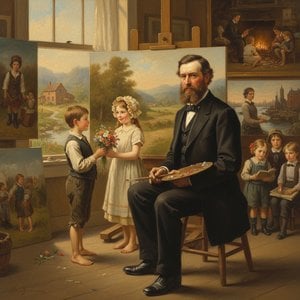
John George Brown: Capturing American Life & Sentiment in 19th-Century Genre Painting
Explore the captivating genre paintings of John George Brown, celebrated for his realistic depictions of 19th-century American life. Discover his legacy & find museum-quality reproductions at ArtsDot.

