


 Предпросмотр
 Поделиться
 Поделиться
 Детали произведения
 Руководство

 Скачать
 Похожие работы
 Рентгенография
 Слайд-шоу
 Статистика
Fire in the Ashes
 1989
1989 58.0 x 73.0 cm
 Читать далее
Жикле / Арт-принт
Печать (жикле) или холст музейного качества с быстрыми сроками изготовления и широким выбором вариантов отделки. ( Купить картину ручной работы Перейти к цифровым изображениям)




































Выберите один из наших стандартных размеров, соответствующих оригинальным пропорциям произведения искусства.

Вы можете указать свои собственные размеры, чтобы репродукция идеально подошла под конкретную раму или пространство. Если выбранный вами размер не будет соответствовать пропорциям оригинала, мы либо обрежем произведение, либо дополним изображение зеркальным отражением краев или однотонной заливкой. Перед началом производства вам будет отправлен цифровой макет для утверждения.
Пожалуйста, обратите внимание, что предварительный просмотр на экране не отображает фактическую обрезку или расширение изображения. Только макет точно покажет финальную композицию.
Несмотря на возможность заказа индивидуальных размеров, мы рекомендуем выбирать размер из предопределенного списка, чтобы сохранить оригинальные пропорции.
Доставка по всему миру () за 2 недели вместо стандартных 4/5 недель. (22 Сентябрь)

Бесплатная экспресс-доставка по всему миру

Высококачественный льняной холст

Полное страхование доставки

Гарантия возмещения таможенных пошлин

Гарантия точного соответствия цветов

100-дневная политика возврата (только при обнаружении дефектов)

Гарантия возврата 100% средств

Предложение оптовых скидок
 Вариант со стеклом доступен только для размеров менее 110 см

Fire in the Ashes
Жикле / Арт-принт
Размер репродукции
-


Итоговая стоимость
$ 62
Похожие произведения


Биография художника
A Life Forged in Transition: The Early Years and Artistic Awakening of George Legrady
George Legrady, born Légrády György in Budapest, Hungary, in 1950, embodies a life profoundly shaped by displacement and a relentless pursuit of artistic reinvention. His story begins amidst the turbulent aftermath of World War II and the Hungarian Revolution of 1956 – an event that irrevocably altered his childhood trajectory. At just six years old, Legrady, along with his family, embarked on a harrowing journey to Canada, seeking refuge from political persecution in Montreal, Quebec. This early experience of exile, of being uprooted from one’s homeland and forced to adapt to a new culture, became an enduring motif in his work – a constant awareness of identity, memory, and the complexities inherent in representation. The weight of history, carried across continents, subtly informed his artistic vision throughout his career. His family's background was deeply rooted in creativity; his father, Thomas Legrady, a musician and composer, nurtured an appreciation for artistic expression within the household, while ancestral ties to lithography – tracing back through great-grandfather Légrády Tivadar, co-founder of a Budapest publishing house – and the theater – via maternal great-grandfather Váradi Antal, a renowned playwright and director – hinted at a lineage rich in storytelling traditions. These familial influences provided an early foundation for Legrady’s multidisciplinary approach to artmaking, suggesting a natural inclination towards combining diverse creative disciplines. His formative years were spent navigating two distinct linguistic worlds—French elementary school followed by English high school—a duality that may have subtly fostered his later interest in semiotics and the inherent ambiguities of communication. Before dedicating himself fully to art, Legrady engaged in a series of demanding physical jobs – construction work, factory labor, even grueling shifts as an underground miner in northern Manitoba – experiences that instilled within him a deep understanding of materiality and the value of manual labor, providing a stark contrast to the conceptual realms he would later explore. Simultaneously, his passion for music continued to flourish; he became a keyboardist in various Montreal bands, honing his collaborative spirit and developing a keen sense of rhythm.From Documentary Roots to Digital Frontiers: The Evolution of an Artistic Vision
Legrady’s formal artistic education began with studies in English Literature at Loyola College in Montreal, where he encountered photography as a compelling art form through the guidance of Charles Gagnon and John Max. This initial spark ignited a desire to understand how images were created and perceived, leading him to experiment with photographic techniques. He soon realized that traditional photography, while powerful, often presented a limited and potentially misleading view of reality. This realization prompted a critical examination of the medium’s inherent biases and limitations – a quest for greater transparency and authenticity in his artistic practice. His early work was deeply rooted in social documentation, most notably his 1973 photo documentary of four James Bay Cree communities. This project wasn't merely an aesthetic exercise; it was a deliberate act of engagement with marginalized Indigenous populations, offering a visual record of their lives and challenging prevailing stereotypes. The project’s significance extended beyond its photographic content—it represented Legrady’s commitment to using art as a tool for social commentary and amplifying the voices often unheard within Canadian society. However, this initial focus on direct observation soon evolved into a more conceptual approach. He began questioning the very nature of representation – how images are constructed, how they shape our understanding of the world, and how they relate to reality itself. This intellectual curiosity led him towards the burgeoning field of digital media in the early 1980s, where he discovered new tools and possibilities for deconstructing and reimagining the photographic image. His time at the University of California, San Diego, under the tutelage of Harold Cohen – a pioneer in computer art – proved transformative, opening his eyes to the potential of algorithmic processes and computer-generated imagery. This marked a pivotal shift in his artistic trajectory, moving him away from simply capturing reality towards analyzing its representation—a semiotic investigation into the very foundations of the photographic medium.Interactivity, Data, and the Poetics of Information
Legrady’s work increasingly embraced interactivity and data visualization as central components of his artistic practice. He moved beyond static images, creating experiences that invited audience participation and challenged conventional notions of authorship. The 1985 photo documentary on billboards in four major Chinese cities wasn't simply a visual record; it was a critical analysis of the visual language used to shape public perception – revealing how meaning is constructed through image and text within urban environments. This interest in systems of communication evolved into large-scale interactive installations that explored historical narratives, collective memory, and the flow of information. Anecdoted Archive from the Cold War (1993), a landmark project commissioned by the National Gallery of Canada, allowed users to navigate a complex network of information related to the Cold War era, prompting reflection on the construction of history and the power of narrative. Slippery Traces (1995), published by the ZKM Museum in Karlsruhe, further developed these themes, delving into the ephemeral nature of digital information and its impact on our perception of reality. In the early 1990s, Legrady began to experiment with computers and computer-generated imagery, driven by a desire to introduce works that would challenge the boundaries between what is believable and what is simulated – a concept central to his artistic vision. His work became increasingly concerned with exploring the relationship between image, culture, and technology. He created interactive installations that responded to user input, transforming data into dynamic visual experiences.Recognition and Legacy: A Pioneer of Digital Art
Throughout his career, George Legrady has received numerous accolades recognizing his innovative contributions to the field of digital art. From Canada Council Arts Grants spanning decades (1979-2014) to prestigious fellowships from the National Endowment for the Arts (1996) and Creative Capital Foundation (2002), his work has consistently garnered critical acclaim. The University of Southern California Innovative Teaching Award (1987) acknowledged his dedication to pedagogical experimentation, while the Langlois Foundation Grant (2000) supported his continued exploration of digital media. In 2016, Concordia University bestowed upon him an Honorary Doctorate of Fine Arts, cementing his status as a leading figure in contemporary art. Legrady’s significance lies not only in his artistic output but also in his pioneering spirit – his willingness to embrace new technologies and challenge conventional boundaries. He has consistently pushed the limits of what art can be, blurring the lines between photography, data visualization, interactivity, and social commentary. His work serves as a powerful reminder that technology is not merely a tool but a medium for exploring fundamental questions about human perception, memory, and our relationship to the world around us. He continues to inspire artists and scholars alike, shaping the future of digital art with his visionary approach and unwavering commitment to innovation.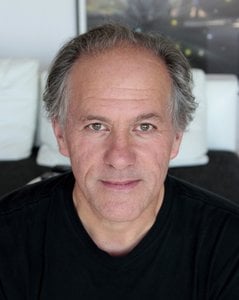
Георг Легради
1950 - , Россия
Основные сведения
- Artistic Movement Or Style: Цифровое искусство
- Artists Who Influenced This Artist:
- Charles Gagnon
- John Max
- Harold Cohen
- Date Of Birth: 1950
- Full Name: George Legrady (Légrády György)
- Nationality: Венгерский/Канадский
- Notable Artworks:
- Anecdoted Archive
- Pockets Full of Memories
- Making Visible
- Place Of Birth: Будапешт, Венгрия