Предпросмотр
 Поделиться
 Поделиться
 Детали произведения

 Скачать
 Похожие работы
 Рентгенография
 Слайд-шоу
Attack

 Читать далее
Жикле / Арт-принт
Печать (жикле) или холст музейного качества с быстрыми сроками изготовления и широким выбором вариантов отделки. ( Купить картину ручной работы Купить изображение)




































Выберите один из наших стандартных размеров, соответствующих оригинальным пропорциям произведения искусства.

Вы можете указать свои собственные размеры, чтобы репродукция идеально подошла под конкретную раму или пространство. Если выбранный вами размер не будет соответствовать пропорциям оригинала, мы либо обрежем произведение, либо дополним изображение зеркальным отражением краев или однотонной заливкой. Перед началом производства вам будет отправлен цифровой макет для утверждения.
Пожалуйста, обратите внимание, что предварительный просмотр на экране не отображает фактическую обрезку или расширение изображения. Только макет точно покажет финальную композицию.
Несмотря на возможность заказа индивидуальных размеров, мы рекомендуем выбирать размер из предопределенного списка, чтобы сохранить оригинальные пропорции.
Доставка по всему миру () за 2 недели вместо стандартных 4/5 недель. (19 Август)

Бесплатная экспресс-доставка по всему миру

Высококачественный льняной холст

Полное страхование доставки

Гарантия возмещения таможенных пошлин

Гарантия точного соответствия цветов

Политика возврата в течение 60 дней (только при наличии дефектов)

Гарантия возврата 100% средств

Предложение оптовых скидок
 Вариант со стеклом доступен только для размеров менее 110 см

Attack
Жикле / Арт-принт
Размер репродукции
-


Итоговая стоимость
$ 62
Описание предмета коллекционирования
Attack by George Grosz: A Monochromatic Vision of Urban Conflict
George Grosz's "Attack" is a striking charcoal drawing that plunges the viewer into a chaotic and unsettling nighttime scene within an urban environment. Created during the tumultuous period of the Weimar Republic, this artwork exemplifies the New Objectivity movement’s unflinching portrayal of societal decay and moral corruption in post-World War I Germany.
Subject Matter and Composition
The drawing depicts a dramatic struggle unfolding on a street below a building with a prominent balcony. The composition is dynamic, guiding the eye from the architectural structure to the figures engaged in conflict and culminating in a dog fleeing the scene. This sequence creates a narrative of escalating tension and potential violence. The elevated perspective offers a detached yet intimate view of the events, allowing for observation of the broader context while focusing on the immediate drama.
Style and Technique
Grosz employs a monochromatic palette of charcoal on paper, utilizing hatching and cross-hatching techniques to build tonal values and create texture. The lines are predominantly thick and gestural, contributing to a sense of urgency and raw emotion. While rooted in realism, the artwork transcends mere representation through expressive shading and distorted perspectives. Geometric shapes – the building blocks of the architecture, the figures involved in the struggle, and the street itself – are softened by the charcoal’s atmospheric quality. The dramatic lighting, with stark contrasts between light and shadow, emphasizes key elements and amplifies the overall sense of unease.
Historical Context and Symbolism
"Attack" is deeply embedded within the historical context of the Weimar Republic (1919-1933), a period marked by political instability, economic hardship, and social fragmentation. Grosz's work often served as a scathing critique of German society, exposing its hypocrisy and moral bankruptcy. The fleeing dog can be interpreted as a symbol of fear or escape, reflecting the anxieties prevalent during this era. The moonlit sky adds a layer of symbolic depth, potentially representing an ominous presence or a sense of foreboding. Grosz's affiliation with Dadaism and New Objectivity further underscores his commitment to challenging conventional artistic norms and confronting uncomfortable truths.
Emotional Impact and Artistic Legacy
The emotional impact of "Attack" is palpable – the artwork evokes feelings of tension, vulnerability, and impending danger. The chaotic composition and stark monochromatic palette contribute to a sense of unease and disorientation. Grosz's masterful use of charcoal creates a visceral experience for the viewer, drawing them into the heart of the depicted conflict. As a seminal work within the New Objectivity movement, "Attack" remains a powerful testament to Grosz’s artistic vision and his unflinching portrayal of societal ills.
Похожие произведения


Биография художника
A Satirist of Shattered Worlds: The Life and Art of George Grosz
George Grosz, born Georg Ehrenfried Groß in Berlin in 1893, was a visual chronicler of societal decay and political upheaval. His art wasn’t merely *of* its time—the tumultuous Weimar Republic and the rise of fascism—it was a visceral reaction to it, a furious indictment rendered in jagged lines and grotesque caricatures. Grosz didn't simply depict Berlin; he dissected it, exposing its moral rot with unflinching honesty. The early years of his life were marked by instability following his father’s death, an event that propelled his mother into managing an officers’ mess, placing the young Georg amidst a world of Prussian militarism and rigid social hierarchies—a world he would later relentlessly satirize. His formal artistic training began with meticulous copies of traditional Dutch masters like Eduard von Grützner, honing technical skill before he abandoned academic conventions for a far more provocative path. This early discipline, however, provided the foundation upon which his uniquely expressive style would be built.Dada and New Objectivity: A Revolutionary Voice
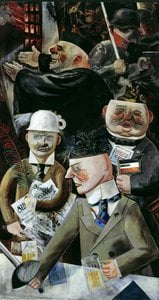
Grosz’s artistic development was inextricably linked to the avant-garde movements that flourished in post-World War I Germany. He became a central figure in Berlin Dada, embracing its nihilistic spirit and anti-establishment fervor. Unlike some of his Dadaist contemporaries who reveled in pure absurdity, Grosz channeled Dada's rebellious energy into pointed social commentary. His work during this period—pieces like *The Pit* (1921) and *The Pillars of Society* (1926)—are searing indictments of the German bourgeoisie, the military elite, and the corrupt political system that led the nation to disaster. He wasn’t interested in aesthetic beauty; he sought to shock, provoke, and expose hypocrisy. This commitment to social critique evolved into his participation in *Neue Sachlichkeit* (New Objectivity), a movement characterized by its realistic yet unsentimental depiction of contemporary life. While sharing New Objectivity's focus on realism, Grosz infused it with a uniquely biting satire that distinguished him from other artists associated with the group. His paintings and drawings weren’t simply representations of reality; they were distorted reflections of a society teetering on the brink of collapse. The use of sharp angles, exaggerated features, and unsettling compositions created a sense of unease and moral condemnation.The Seeds of Discontent: Early Influences and Artistic Style
Grosz's early life profoundly shaped his artistic vision. His father’s death instilled in him a deep skepticism towards authority and a fascination with the darker aspects of human nature. The officers’ mess, a microcosm of Prussian society, exposed him to the rigid hierarchies and moral decay he would later depict in his art. This experience fueled his desire to challenge established norms and expose hypocrisy. His initial training in traditional Dutch masters provided him with technical proficiency, but he quickly abandoned academic conventions, embracing distortion and exaggeration as tools for social critique. His style is instantly recognizable—a blend of caricature, expressionism, and a deliberately jarring aesthetic. He employed bold colors, dynamic lines, and unsettling imagery to convey his message of disillusionment and condemnation.Exile and Transformation: A New World, A Shifting Style
The ascent of Nazism forced Grosz into exile in 1933. He found refuge in the United States, becoming a naturalized citizen in 1938. This relocation marked a significant turning point in his artistic career. Removed from the immediate context that fueled his most potent work, and confronted with a different set of social and political realities, Grosz’s style began to shift. The overtly aggressive caricatures gave way to more subdued landscapes and portraits, often tinged with a sense of melancholy and disillusionment. While he continued to exhibit and teach at the Art Students League in New York, his work lacked the raw urgency of his Berlin period. He struggled to find his footing in a new environment, grappling with feelings of alienation and artistic uncertainty. The apocalyptic visions that emerged during this time—paintings depicting desolate landscapes and fragmented figures—reflected not only the horrors unfolding in Europe but also his own internal turmoil.Legacy and Enduring Relevance
George Grosz returned to Berlin in 1959, shortly before his death, a poignant return to the city that had both inspired and haunted him. His legacy extends far beyond the historical context of Weimar Germany. He remains a powerful example of an artist who dared to confront uncomfortable truths and challenge societal norms. *His art serves as a cautionary tale about the dangers of political extremism, social injustice, and unchecked power.* Grosz’s influence can be seen in the work of countless artists who followed, those drawn to his commitment to social engagement and his willingness to use art as a weapon against injustice.- Satirical Power: Grosz’s masterful use of caricature continues to inspire artists and commentators today.
- Social Commentary: His unflinching critique of societal ills remains remarkably relevant in a world still grappling with inequality, corruption, and political polarization.
- Historical Witness: His art provides invaluable insight into the social and political climate of interwar Germany, offering a visceral understanding of the forces that led to World War II.

Герхард Гросш
1893 - 1959 , Германия
Основные сведения
- Artistic Movement Or Style: Дада, Новая объективность
- Date Of Birth: 26 июля 1893 г.
- Date Of Death: 6 июля 1959 г.
- Full Name: George Grosz
- Nationality: Немецкий
- Notable Artworks:
- The Pit
- Pillars Society
- Place Of Birth: Берлин, Германия
Похожие статьи

Жорж Брак: 25 шедевров кубизма для ценителей искусства и интерьера
Откройте для себя 25 шедевров Жоржа Брака – пионера кубизма! Узнайте историю создания культовых картин, технику и влияние французского художника на искусство XX века. Репродукции высокого качества для вашего интерьера на ArtsDot.com.

Жорж Сёра: 25 шедевров великого мастера пуантилизма | ArtsDot
Откройте для себя 25 шедевров Жоржа Сёра – пионера пуантилизма! Узнайте историю создания культовых картин, технику письма и влияние импрессионизма. Репродукции высокого качества на ArtsDot.com. Искусство для вашего интерьера.

Concrete Visions: Exploring Representations of Urban Life in Modern & Contemporary Art
Explore the evolution of cityscape painting from Realism to contemporary art. Discover key artists & invest in timeless urban visions with ArtsDot's expert guidance and museum-quality reproductions.

Concrete Visions: Exploring the Urban Landscape in Painting – From Realism to Contemporary Art
Explore the evolution of cityscape painting from Realism to contemporary art with ArtsDot. Discover key artists & invest in timeless urban visions. Expert guidance, museum-quality reproductions.

The Nuances of Graphite: Exploring Emotional Depth & Technical Mastery in Pencil Drawing
Explore the captivating world of graphite drawing! Discover its rich history, master essential techniques like chiaroscuro, and learn how artists evoke emotion through this timeless medium. Expert insights for art enthusiasts.