


 Примерить в интерьере
 Отправить
 Поделиться
 Подробнее
 Руководство

 Скачать
 Похожие объекты
 Рентгенография
 Слайд-шоу
 Статистика
Mahoning
 Oil On Canvas
- WallArt
- Abstract Expressionism
 1956
1956- Modern
 203.0 x 254.0 cm
 Музей Уитни американского искусства
 Развернуть текст
Произведение искусства, представленное на этой странице, защищено законом об авторском праве, что исключает возможность законного создания или продажи его точной репродукции. Данная защита обеспечивается международными соглашениями, такими как Бернская конвенция и национальным законодательством, включая положения, изложенные в Закон США об авторском праве — Раздел 17.
Этот метод полностью соответствует нормам авторского права, так как он не предполагает копирования или дублирования защищенного произведения. Напротив, это творческая реинтерпретация — создание новой картины, которая вдохновлена оригиналом, но не является его точной копией.
Жикле / Арт-принты
Печать (жикле) или холст музейного качества с быстрыми сроками изготовления и широким выбором вариантов отделки. ( Заказать репродукцию ручной работы Перейти к цифровым изображениям)




P118B $10

P118H $10

P118W $10

P438Z $10

P508JH $12

P508YH $12

P805H $10

P805Z $10

P919BZ $10

P919G $10

P919XJ $10

P959ZH $10

P968JZ $12

W106C $8

W218G $10

W218JH $8

W218Y $10

W307PJ $10

W316G $10

W316PJ $8

W316Y $10

W398PJ $8

W4111J $10

W500HY $15

W500JH $15

W692G $12

W849H $8

W940BG $15

W953PJ $8




Выберите один из наших стандартных размеров, соответствующих оригинальным пропорциям произведения искусства.

Введите необходимую ширину и высоту, чтобы репродукция подошла к вашей раме или стене. При печати изображение можно только уменьшить, но нельзя увеличить больше оригинала, поэтому при выборе другого формата часть изображения может быть обрезана. Перед печатью мы отправим вам цифровой макет на утверждение. Изображение на этой странице не отображает реальную обрезку — ее можно увидеть только на макете.
Доставка по всему миру () за 2 недели вместо стандартных 4–5 недель. (19 Октябрь)

Бесплатная экспресс-доставка по всему миру

Высококачественный льняной холст

Полное страхование при транспортировке

Гарантия возврата таможенных пошлин

Гарантия точного цветового соответствия

100-дневный период возврата (только при обнаружении дефектов)

Гарантия возврата 100% средств

Скидка при заказе нескольких работ
 Вариант со стеклом доступен только для размеров менее 110 см

Mahoning
Жикле / Арт-принты
Размер репродукции
-


Итоговая стоимость
$ 62
The Architecture of Chaos: Rediscovering Franz Kline’s Mahoning
In the pantheon of Abstract Expressionism, few works command the room with such visceral authority as Franz Kline’s “Mahoning,” completed in 1956. To stand before this monumental canvas is to witness a profound dialogue between presence and absence, a struggle captured in the rhythmic collision of black enamel and stark white space. This is not merely a painting; it is an event. As a cornerstone of the New York School, “Mahoning” embodies the very essence of Action Painting, where the artist’s physical gesture becomes the primary subject. The work eschews traditional representation to instead offer a raw, kinetic energy that vibrates with the pulse of mid-century urban life.
The brilliance of Kline’s technique lies in his ability to orchestrate what might initially appear as spontaneous disorder. While many associate the era with the unpredictable drips of Jackson Pollock, Kline’s approach was far more structural and deliberate. He often utilized a projector to enlarge sketches onto massive canvases, allowing him to manipulate the scale of his strokes with architectural precision. In “Mahonoming,” the heavy, black muscularity of the brushwork is balanced by the luminous white voids that press back against the dark forms. Through the meticulous layering of oil and enamel, Kline created a textured, tactile surface that invites the eye to wander through its thick impasto, discovering how light catches the ridges of his energetic, sweeping movements.
A Symphony of Contrast and Memory
Beyond its formalist triumphs, “Mahoning” is deeply rooted in the artist's personal geography and the turbulent zeitgeist of the 1950s. The title itself serves as a poignant tether to Kline’s origins in Pennsylvania, evoking the industrial landscapes and river valleys of his youth. This connection between the monumental scale of the painting and the ruggedness of his namesake suggests a bridge between personal memory and universal abstraction. During the height of the Cold War, as the world grappled with technological shifts and societal anxieties, Kline’s work offered an alternative language—one rooted in primal instinct rather than the sterile rationality of the age.
For the discerning collector or interior designer, “Mahoning” represents a masterclass in tonal balance. Its monochromatic palette provides a sophisticated anchor for modern spaces, offering a sense of dramatic weight that can transform a minimalist room into a gallery-worthy sanctuary. The painting does not merely decorate a wall; it commands the atmosphere, injecting a sense of movement and intellectual depth. Whether viewed as a study of structural tension or an emotional release of energy, this masterpiece remains an enduring symbol of the human struggle to find order within chaos, making it an incomparable centerpiece for any curated collection.
Вопросы и ответы
К какому периоду творчества Франц Клайн относится произведение «Mahoning»?
«Mahoning» относится к Mature Period в творчестве Франц Клайн. Данная классификация позволяет проследить развитие мастера.
Каковы права на воспроизведение произведения «Mahoning» в Музей Уитни американского искусства?
Произведение «Mahoning», Франц Клайн, хранящееся в Музей Уитни американского искусства, находится в все еще защищено авторским правом. Этот статус определяет возможность создания репродукций данного изображения.
Рекомендуется ли «Mahoning», Франц Клайн в качестве подарка и кому?
Рекомендация по выбору подарка для «Mahoning», Франц Клайн сочетает в себе Corporate Gift и Accent.
Похожие произведения


![Abstract Composition [triptych] — Vaclav Vytlacil, Abstract Expressionism](/media/artworks/images-thumb/08/3c/083c0675045645fd42d4e6c6d63f1ced.jpg)
Биография художника
Franz Kline (1910-1962): Pioneer of Abstract Expressionism
Franz Kline, a pivotal figure in the Abstract Expressionist movement, remains an artist whose work resonates with raw power and emotional depth. Born in Wilkes-Barre, Pennsylvania, in 1910, his life was marked by early hardship – the suicide of his father when he was just seven years old cast a long shadow, influencing a sensibility that would later find expression in the stark contrasts defining his art. This formative experience led to a nomadic youth and eventual enrollment at Girard College, Philadelphia, a free boarding school for boys who had lost their fathers. It was here, amidst structured discipline, that Kline’s artistic inclinations began to surface, nurtured by traditional training in illustration and drafting. He continued his studies at Boston University and later honed his skills at the Heatherley School of Fine Art in London, immersing himself in the works of the Old Masters – Rembrandt, Velázquez, El Greco, Goya, Dürer – and absorbing the nuances of Japanese prints. These early influences, though seemingly distant from his eventual abstract style, laid a foundation for his understanding of composition, light, and the expressive potential of line.Early Influences & Artistic Training
Kline’s artistic journey wasn't immediate or linear. His formative years instilled in him a profound appreciation for resilience and introspection—qualities that would permeate his subsequent creative endeavors. The disciplined environment of Girard College fostered his burgeoning talent, providing access to foundational training in drawing and drafting techniques. Recognizing the importance of mastering traditional skills alongside experimentation, he pursued further studies at Boston University, deepening his knowledge of artistic history and expanding his visual vocabulary. Simultaneously, he sought inspiration from European masters—particularly Rembrandt’s masterful use of chiaroscuro and Velázquez's meticulous observation of human anatomy—and absorbed the subtle beauty of Japanese prints, where careful line work conveyed complex emotions and narratives. These encounters shaped his aesthetic sensibilities and instilled a belief in the power of deliberate craftsmanship.From Representation to Simplification: The Murals of Greenwich Village
Throughout the 1930s and early 40s, Kline explored figurative painting, capturing landscapes, cityscapes, portraits, and even monumental murals. His “Hot Jazz” mural series for a Greenwich Village tavern represents a crucial step toward abstraction—a deliberate simplification of form that foreshadowed his signature style. The commission itself was significant; it demanded an artist to distill complex ideas into visual symbols, prompting Kline to consider how to convey emotion without resorting to detailed depiction. This project solidified his conviction that powerful imagery could communicate profound truths through minimal means. He experimented with bold brushstrokes and expressive textures, pushing the boundaries of conventional artistic conventions.The Encounter with Willem de Kooning & The Birth of Gestural Abstraction
A pivotal moment arrived in 1948 when Kline connected with Willem de Kooning—a fellow Abstract Expressionist who championed a radically different approach to artmaking. De Kooning’s suggestion to project Kline’s sketches onto a wall using a Bell-Opticon projector proved transformative. This technique dramatically enlarged the image, reducing it to its essential strokes and fundamentally altering Kline's perception of artistic process. It was as if he were witnessing his own work unfolding on a grand scale—a revelation that propelled him toward gestural abstraction. He abandoned representationalism not as a rejection of form but as an aspiration to capture pure emotion through spontaneous movement and decisive lines. This method, characterized by energetic brushstrokes applied with house-painting brushes on large canvases, prioritized feeling over intellectual calculation.The Language of Black & White: Kline's Distinctive Style
Kline’s mature style is instantly recognizable for its monochromatic palette—primarily black on white. This wasn’t merely a stylistic preference; it was a deliberate choice rooted in philosophical considerations about the nature of art and perception. He believed that eliminating color allowed him to focus solely on the interplay of positive and negative space, creating a visual tension that drew the viewer into the heart of the composition. His brushstrokes were fluid, dynamic, and often applied with house-painting brushes on large canvases—a technique he championed as embodying the essence of artistic expression. He frequently titled his paintings after places from his childhood or industrial landscapes – “Lehighton,” “Mahoning” – offering subtle anchors to his personal history without dictating the interpretation of the abstract forms. These titles served as echoes rather than explanations, inviting viewers to engage with the work on their own terms. His unwavering commitment to this minimalist aesthetic cemented his legacy as one of the most influential artists of the 20th century. Kline’s paintings continue to captivate audiences with their raw energy, emotional intensity, and profound exploration of form and space—a testament to a life forged in contrast and expressed through the bold language of black and white.
Франц Клайн
1910 - 1962 , Соединенные Штаты Америки
Краткая справка
- Artistic Movement Or Style: Абстрактный экспрессионизм
- Artists Or Movements Influenced By This Artist:
- Минимализм
- Ричард Серра
- Artists Who Influenced This Artist:
- Рембрандт
- Веласкес
- Эль Греко
- Де Конинг
- Date Of Birth: Май 23, 1910
- Full Name: Franz Kline
- Nationality: Американский
- Notable Artworks:
- Лехейттон
- Палладио
- Китцер
- Place Of Birth: Вильямсбург, США
Похожие статьи

Топ-10 шедевров абстрактного экспрессионизма: искусство для вашего интерьера от ArtsDot.com
Погрузитесь в мир абстрактного экспрессионизма! Откройте для себя 10 шедевров Поллока, Ротко и других гениев. История искусства, техники живописи и вдохновение для вашего интерьера от ArtsDot.com. Explore the full collection online!
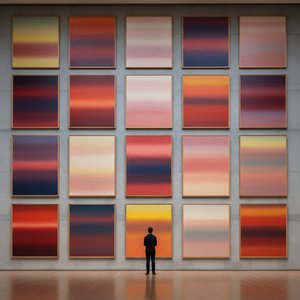
Марк Ротко: 25 шедевров абстрактного экспрессионизма для вашего интерьера | ArtsDot
Погрузитесь в мир Марка Ротко! 25 шедевров абстрактного экспрессионизма, полных эмоций и цвета. Узнайте историю создания культовых картин и найдите идеальную репродукцию для вашего интерьера на ArtsDot.com.

Белые шедевры: 10 знаменитых картин, покоривших мир (репродукции, декор)
Откройте для себя 10 знаменитых картин, где белый цвет – главный герой! Моне, Дега и другие мастера. История искусства, техники живописи и вдохновение для вашего интерьера. Репродукции высокого качества на ArtsDot.com

Топ-25 шедевров Василия Кандинского: Абстрактное искусство для вашего интерьера
Погрузитесь в мир абстрактного искусства с Василием Кандинским! 25 шедевров экспрессионизма, баухауса и русского авангарда. Репродукции картин Кандинского для вдохновения и декора вашего интерьера. Откройте всю коллекцию на ArtsDot.com

Топ-10 знаменитых картин в черных тонах: шедевры искусства для вашего интерьера
Погрузитесь в мир темных шедевров! Топ-10 знаменитых картин в черных тонах от Гойи, Рембрандта и Мунка. История искусства, техники живописи и вдохновение для вашего интерьера. Купите репродукции высокого качества на ArtsDot.com
