

 Предпросмотр
 Поделиться
 Поделиться
 Детали произведения
 Руководство

 Скачать
 Похожие предметы
 Рентгенография
 Слайд-шоу
 Вопросы и ответы
 Статистика просмотров
Harran II


 Читать далее
Произведение искусства, представленное на этой странице, защищено законом об авторском праве, что исключает возможность законного создания или продажи его точной репродукции. Данная защита обеспечивается международными соглашениями, такими как Бернская конвенция и национальным законодательством, включая положения, изложенные в Закон США об авторском праве — Раздел 17.
Этот метод полностью соответствует нормам авторского права, так как он не предполагает копирования или дублирования защищенного произведения. Напротив, это творческая реинтерпретация — создание новой картины, которая вдохновлена оригиналом, но не является его точной копией.
Жикле и арт-принты
Печать (жикле) или холст музейного качества с быстрыми сроками изготовления и широким выбором вариантов отделки. ( Купить картину ручной работы Перейти к цифровым изображениям)




P118B $10

P118H $10

P118W $10

P438Z $10

P508JH $12

P508YH $12

P805H $10

P805Z $10

P919BZ $10

P919G $10

P919XJ $10

P959ZH $10

P968JZ $12

W106C $8

W218G $10

W218JH $8

W218Y $10

W307PJ $10

W316G $10

W316PJ $8

W316Y $10

W398PJ $8

W4111J $10

W500HY $15

W500JH $15

W692G $12

W849H $8

W940BG $15

W953PJ $8




Выберите один из наших стандартных размеров, соответствующих оригинальным пропорциям произведения искусства.

Введите необходимую ширину и высоту, чтобы репродукция подошла к вашей раме или стене. При печати изображение можно только уменьшить, но нельзя увеличить больше оригинала, поэтому при выборе другого формата часть изображения может быть обрезана. Перед печатью мы отправим вам цифровой макет на утверждение. Изображение на этой странице не отображает реальную обрезку — ее можно увидеть только на макете.
Доставка по всему миру () за 2 недели вместо стандартных 4–5 недель. (19 Ноябрь)

Бесплатная экспресс-доставка по всему миру

Высококачественный льняной холст

Полное страхование при доставке

Гарантия возмещения таможенных пошлин

Гарантия точного цветового соответствия

100-дневная гарантия возврата (только при обнаружении дефектов)

Гарантия возврата 100% средств

Скидка при оптовом заказе
 Вариант со стеклом доступен только для размеров менее 110 см

Harran II
Жикле и арт-принты
Размер репродукции
-


Итоговая стоимость
$ 63
The Geometry of Vision: Exploring Frank Stella's Abstract Brilliance
To stand before a work like Harran II is not merely to observe paint on canvas; it is to engage in an optical dialogue with the artist’s intellect. This piece, dating from 1967, captures a pivotal moment in modern art—a decisive pivot away from gestural excess toward rigorous, almost architectural clarity. Frank Stella, whose career was defined by his refusal to accept established boundaries, presents here a vision built entirely upon the foundational elements of color and form. The overall impression is one of controlled energy; a vibrant, pulsating grid where every concentric band seems to hum with contained visual vibration.
A Masterclass in Op Art and Color Theory
The composition itself is breathtakingly systematic. It unfolds as a perfect quadrant division, a symmetrical arrangement that lends the piece an inherent sense of order, almost like a scientific diagram rendered in jewel tones. The palette—a sophisticated interplay of greens, oranges, browns, blues, and purples—is deployed with remarkable precision. Stella eschews narrative entirely; there is no subject to decipher save for the pure relationship between adjacent hues. This dedication to non-representational form places Harran II firmly within the lineage of Op Art, yet it carries a distinctly American punch, one that refuses to be purely academic. The technique speaks of meticulous application—flat planes of color meeting with razor-sharp definition, suggesting either the disciplined hand of an expert painter or the clean lines of modern printing processes.
Historical Resonance and Artistic Intent
Contextually, this work emerges from a period when Abstract Expressionism’s emotional outpouring began to feel exhausted. Stella, influenced by masters who valued structure over spontaneous outburst, steered painting toward a more intellectual engagement. Harran II embodies that shift. It is an assertion of pictorial autonomy—the canvas becomes a self-contained universe governed only by its own internal logic. The repetition inherent in the concentric circles suggests themes of cyclical nature, pattern recognition, and perhaps even the very mechanics of perception itself. For the contemporary collector or designer, this translates into a piece that anchors a space with sophisticated, thoughtful dynamism.
Emotional Impact and Decorative Potential
What makes this artwork so compelling for interior design is its ability to act as a visual catalyst. It does not whisper; it resonates. The crisp edges and vibrant color shifts provide an immediate focal point, injecting a controlled burst of energy into any room. While the subject matter remains purely abstract, the emotional impact is anything but coolly academic. Instead, one feels a sense of harmonious complexity—the feeling of solving a beautiful, intricate puzzle. Owning a reproduction of Harran II is acquiring not just decoration, but a conversation piece that speaks volumes about an appreciation for modernist rigor and the sublime power of pure visual structure.
Вопросы и ответы
Можно ли посмотреть «Harran II» в режиме полноэкранного слайд-шоу?
Доступна презентация: страница Слайд-шоу работы «Harran II», Фрэнк Стелла.
Какие цвета преобладают в работе «Harran II», Фрэнк Стелла?
Колористика произведения «Harran II», Фрэнк Стелла: палитра в стиле Neutrals, где преобладает Espresso (#3b4348).
Где я могу найти произведения искусства, похожие на «Harran II», Фрэнк Стелла?
Работы, похожие на «Harran II», Фрэнк Стелла, собраны на странице Похожие работы этого произведения.
Похожие произведения


Биография художника
Жизнь, посвященная самой сути живописи
Фрэнк Стелла, ушедший из жизни 4 мая 2024 года в возрасте 87 лет, был титаном американского искусства — неустанным новатором, чья карьера охватила семь десятилетий и бросила вызов традиционным представлениям о живописи, скульптуре и архитектурном дизайне. Рожденный в 1936 году в Малдене, штат Массачусетс, в семье итальянских иммигрантов в первом поколении, Стелла начал свой путь к визуальному миру через пейзажи матери. Его становление продолжилось в академии Филлипс в Андовере, где он соприкоснулся со строгими теориями цвета Йозефа Альберса и экспрессивной мощью Ганса Хоффмана. Эти влияния, дополненные изучением истории в Принстонском университете и частыми визитами в галереи Нью-Йорка, заложили фундамент для радикального разрыва с господствовавшим тогда абстрактным экспрессионизмом. Стеллу не интересовали эмоциональные потрясения или субъективные жесты, характерные для Поллока или Клайна; он стремился к чему-то более чистому и объективному — к дистилляции живописи до ее самых фундаментальных элементов.Отказ от иллюзии: восхождение минимализма
Появление Стеллы на арт-сцене в конце 1950-х годов было поистине революционным. Его знаменитая декларация о том, что «картина должна быть плоской поверхностью с краской на ней — и ничего больше», стала манифестом зарождающегося движения минимализма. Эта философия наиболее ярко воплотилась в его «Черных картинах» (1958–1960) — серии полотен, определяемых точно выверенными симметричными черными полосами, разделенными участками необработанного холста. Такие работы, как Die Fahne Hoch! (1959) — название намеренно провокационное, отсылающее к нацистскому гимну, — не задумывались как выражение политических взглядов, а служили исследованием формы и поверхности, заставляя зрителя воспринимать картину как самостоятельный объект. Намеренная холодность и отказ от эмоционального содержания шокировали современников, знаменуя решительный разрыв с акцентом абстрактного экспрессионизма на субъективном опыте. Он не стремился изобразить что-то *о* мире; он представлял мир — или, вернее, саму живопись — таким, какой она есть. Этот фокус на материальности и геометрической точности перерос в его «фигурные холсты» 1960-х годов, где Стелла отказался от традиционного прямоугольного формата в пользу сложных многоугольников, часто созданных с использованием алюминия и медной краски. Это были не просто картины, а скульптурные объекты, стирающие границы между двумя и тремя измерениями и усиливающие физическое присутствие произведения искусства.Расширение границ: от серии «Трансгулятор» к максимализму
1970-е годы стали периодом значительных экспериментов для Стеллы. В серии «Protractor Series» (1971) он представил sweeping-арки и яркие цвета, вписанные в квадратные рамки, создавая динамичные композиции, вдохновленные круглыми городами Ближнего Востока. Одновременно с этим Стелла с энтузиазмом осваивал печатную графику, овладевая литографией, шелкографией и офортом для создания абстрактных оттисков, вторящих геометрическому языку его живописи. Его творческая деятельность выходила далеко за пределы изобразительного искусства: в 1967 году он работал над декорациями и костюмами к танцевальной постановке Мерса Каннингема Scramble, демонстрируя готовность к междисциплинарному сотрудничеству. Ретроспектива в Музее современного искусства (MoMA) в 1970 году — невероятное достижение для столь молодого художника — закрепила за ним статус ведущей фигуры в современном искусстве. Однако Стелла не желал почивать на лаврах. Он начал внедрять рельефность в свои работы, постепенно эволюционируя к тому, что можно назвать «максималистской» живописью со скульптурными качествами, используя элементы коллажа и алюминиевые опоры.Наследие новаторства
В поздний период творчества Стеллы произошел драматический сдвиг в стиле. Суровая геометрия его ранних работ уступила место экспрессивным композициям, характеризующимся изогнутыми формами, смелыми цветами и кажущимися спонтанными мазками — движение к более барочной эстетике, которое удивило многих, но продемонстрировало его непоколебимую преданность художественному поиску. Его участие в проекте BMW Art Car в 1976 году показало способность адаптировать свой самобытный графический стиль к нетрадиционному холсту — гоночному автомобилю 3.0 CSL. На протяжении всей жизни Стелла удостаивался многочисленных наград, включая Национальную медаль искусств в 2009 году и Почетную награду за вклад в современную скульптуру от Международного центра скульптуры в 2011 году. Влияние Фрэнка Стеллы на историю искусства неоспоримо. Он не просто создавал картины; он переосмыслил то, чем картина может быть. Его неустанное стремление к формальной ясности, отказ от иллюзионизма и готовность раздвигать границы проложили путь для последующих поколений художников, закрепив его место как одной из самых важных и влиятельных фигур XX и XXI веков. Он оставляет после себя не только огромное творческое наследие, но и пример интеллектуальной строгости и художественной смелости, которая будет продолжать вдохновлять долгие годы.
Фрэнк Стелла
1936 - 2024 , США
Об авторе
- Artistic Movement Or Style:
- Minimalism
- Post-Painterly Abstraction
- Artists Who Influenced This Artist:
- Josef Albers
- Hans Hofmann
- Jackson Pollock
- Franz Kline
- Date Of Birth: May 12, 1936
- Date Of Death: May 4, 2024
- Full Name: Frank Philip Stella
- Nationality: American
- Notable Artworks:
- Die Fahne Hoch!
- Louisiana Lottery Co.
- Wolfeboro IV
- Place Of Birth: Malden, USA
Похожие статьи
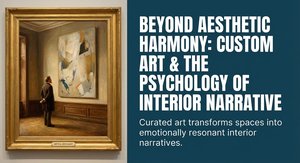
Индивидуальный подход к оформлению интерьера: психология цвета и создание эмоционального пространства с помощью персонализированного искусства
Создайте эмоциональное пространство своей мечты! Узнайте о влиянии психологии цвета и искусства на интерьер. Персонализированный подход, экспертные консультации и уникальные произведения для вашего дома.

Геометрическая абстракция: 10 шедевров, изменивших искусство | ArtsDot.com
Погрузитесь в мир геометрической абстракции! От Кандинского до Малевича – 10 шедевров, изменивших искусство. Узнайте историю создания и значение культовых картин. Репродукции музейного качества на ArtsDot.com. Вдохновение для вашего интерьера!
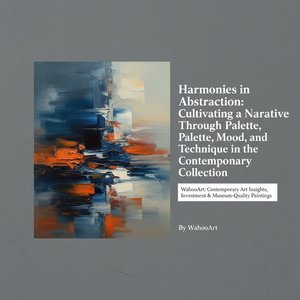
Гармония абстракции: формирование повествования через палитру, настроение и технику в современной коллекции
Исследуйте мир абстрактной живописи! Узнайте историю цветового поля, влияние Ротко и современных мастеров. Советы по выбору и коллекционированию искусства от экспертов ArtsDot.
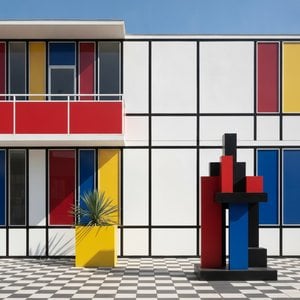
De Stijl Explained: The Bold Art Movement That Redefined Modern Design and Universal Harmony
Discover the profound beauty of De Stijl. Explore how masters like Piet Mondrian used geometric abstraction and primary colors to seek universal harmony. Perfect for art enthusiasts looking to bring bold, modern sophistication into their home decor through timeless abstract mastery.

Clyfford Still's Abstract Expressionism: A Study of Color, Form & the Existential Landscape
Explore the profound world of Clyfford Still's Abstract Expressionism with ArtsDot. Discover his unique style, existential themes & investment potential. Expert analysis for discerning collectors.
