


Картина подстраивается под ваш выбор: , .
Описание предмета коллекционирования
Experience the raw emotion of Emil Nolde's 'Dancer and Reclining Man.' This Expressionist masterpiece bursts with bold colors & dynamic forms, capturing a moment of performance and contemplation.
 Читать далее
Биография художника
"meta_description": "Эмиль Нольде – немецкий экспрессионист, известный яркими красками, эмоциональными религиозными картинами и искаженными формами. Его работы стали ключевыми в развитии искусства начала 20 века."
Масляная репродукция ручной работы
Картина маслом на холсте в выбранном вами размере и раме, написанная на заказ нашими художниками. ( Перейти к печатным копиям Перейти к цифровым изображениям)
Подробнее об этой картине
 Предпросмотр
 Поделиться
 Поделиться
 Детали произведения
 Руководство

 Скачать
 Похожие предметы
 Рентгенография
 Слайд-шоу
 Вопросы и ответы
 Статистика просмотров
Закажите свою картину в четыре простых шага
Не торопитесь. Вы можете изменить любой ответ; цена в вашей корзине будет обновляться после каждого выбора.
1 Шаг первый из четырех
Какой размер вы бы хотели выбрать?
Эти размеры сохраняют пропорции оригинальной картины. На рисунке показано, как выбранный вами вариант будет смотреться на стене над двухметровым диваном.
Или укажите свои размеры
Выберите один из наших стандартных размеров, соответствующих оригинальным пропорциям произведения искусства.

Введите необходимую ширину и высоту, чтобы репродукция подошла к вашей раме или стене. Поскольку работа выполняется вручную, при изменении пропорций художник может немного увеличить область вокруг картины или, наоборот, обрезать края — выбор за вами. Перед началом работы мы пришлем вам цифровой макет на утверждение. Изображение на этой странице не является точным результатом — увидеть реальный вид можно только на макете.
2 Шаг второй из четырех
Как его подготовить: в рулоне, на подрамнике или в раме?
Ниже указаны цены для размера, выбранного вами на первом этапе.
Выберите тип обработки краев холста
Выберите свою раму

Белый торцевой край $1

Размытый край $1

С продолжением изображения $1

P118B $10

P118H $10

P118W $10

P438Z $10

P508JH $12

P508YH $12

P805H $10

P805Z $10

P919BZ $10

P919G $10

P919XJ $10

P959ZH $10

P968JZ $12

W106C $8

W218G $10

W218JH $8

W218Y $10

W307PJ $10

W316G $10

W316PJ $8

W316Y $10

W398PJ $8

W4111J $10

W500HY $15

W500JH $15

W692G $12

W849H $8

W940BG $15

W953PJ $8

H24-GOLD $30

H24-SILVER $30

H36-GOLD $45

H36-SILVER $45
В раме
Багет: . Общий размер в раме: .
3 Третий шаг из четырех
Желаете ли вы внести какие-либо изменения в картину?
Большинство людей отвечают «нет». Но поскольку каждая картина создается вручную, наш художник может адаптировать ее специально для вас.
После оформления заказа команда ArtsDot.com свяжется с клиентом по электронной почте для получения инструкций и предоставит предварительный макет
4 Четвертый шаг из четырех
Несколько вариантов отделки
Все они являются необязательными. Выбранные ответы не влекут за собой дополнительных расходов.
Кто автор?
Доставка по всему миру () за 3–4 недели вместо стандартных 5 недель. (7 Ноябрь). Без компромиссов в качестве.
Табличка, как в музее?
Детали гравировки на бронзовой плакетке
This elegant plaque features the artist's name and the title of the artwork, finely engraved for a timeless presentation.
It is made from bronze with a refined, elegant finish. The text is precisely laser-engraved for a sharp and permanent result. Measuring 9x2 cm, the plaque is compact yet easy to read. It's built to be durable and scratch-resistant, offering a professional, museum-quality look. Mounting is simple thanks to the included adhesive backing.
Детали прозрачной акриловой таблички
The plaque includes essential engraved details such as the artist's name, the title of the artwork, the date it was created, the type of media used-like oil on canvas or watercolor-a brief description of the piece, and a QR code that links to the complete artwork information.
It is crafted from clear acrylic, offering a sleek, modern appearance. The text is UV-engraved in black to ensure strong visual contrast. With a size of 10x15 cm, it ensures optimal readability. It comes equipped with two metal hooks for secure wall mounting. The plaque is designed to be weather-resistant, making it suitable for various environments, and it includes interactive features that work seamlessly with smartphone scanning.
Информация о чёрной акриловой табличке
This elegant plaque includes engraved information such as the artist's name, the title of the artwork, the date it was created, the type of media used (like oil on canvas or watercolor), a short description of the artwork, and a QR code for quick access to more information.
The plaque itself is made from refined black acrylic with a premium finish. The text is laser-engraved in white for high contrast and readability. Its size is 10x15 cm, designed to be easy to read. It comes with two metal hooks for professional mounting. The design is sleek and fits any interior style. It is also weather-resistant and durable, with built-in digital integration for mobile compatibility.
Защитный лак?
Когда вам нужна доставка?
✓ Проверить и заказать
Ваша картина в соответствии с вашим заказом

Dancer and Reclining Man
Техника репродукции
Размер репродукции
-

Выдающийся мастер высокого класса
Более высокая детализация, изысканность и дополнительное время на создание работы
-

Оформление репродукции
-
-
Для произведений искусства или репродукций, размер которых превышает 105 см (приблизительно 41 дюйм) по любой из сторон, рама будет доставлена в разобранном виде (в виде комплекта). Этот метод обеспечивает безопасную доставку и предотвращает повреждения при транспортировке.
Требуется профессиональная сборка — это не продукт для самостоятельной сборки (DIY).
Комплект должен быть собран, а холст натянут опытным мастером по багетным рамам с использованием клеевого ПВА (не входит в комплект), струбцин для натяжки холста и зажимов, чтобы удерживать подрамник ровным до полного высыхания клея. Неправильная сборка или неравномерное натяжение холста могут привести к необратимому повреждению произведения искусства и не являются гарантийным случаем.
 Для произведений искусства или репродукций, размер которых превышает 105 см (приблизительно 41 дюйм) по любой из сторон, рама будет доставлена в разобранном виде (в виде комплекта). Этот метод обеспечивает безопасную доставку и предотвращает повреждения при транспортировке.
В комплект входят все бруски из массива дерева, точно вырезанные по размеру.
Собирается с помощью предоставляемых винтов, а также столярного клея для угловых соединений, который не входит в комплект и должен быть приобретен вашим мастером.
Требуются профессиональные инструменты, не входящие в комплект: щипцы для натяжки холста (натяжитель) и зажимы, чтобы удерживать рейки ровно во время высыхания клея.
Важно:
Для соединения углов требуется клей для дерева, перекладины необходимо зафиксировать струбцинами до полного высыхания клея, а для натяжки холста на собранную раму требуются щипцы для натяжки холста. Ни один из этих инструментов не входит в комплект. Пожалуйста, убедитесь в наличии опытного мастера по багетным работам перед заказом рамы такого размера.

Этикетка
-
-

Защитный лак
Глянцевый лак (насыщает цвета, защищает от воздействия света и влаги)
-

Персонализация картины
Примеры возможных изменений: замена лица на фото клиента; добавление домашнего питомца (например, замена кошки на собаку); добавление скрытого сообщения на фоне; изменение пейзажа или элементов фона.
-

Экспресс-доставка
Доставка по всему миру () за 3–4 недели вместо стандартных 5 недель. (7 Ноябрь). Без компромиссов в качестве.
-
Экспресс-доставка
Доставка по всему миру () в течение 5 недель. (14 Ноябрь).
Включено в стоимость
Итоговая стоимость
$ 288
Вариант со стеклом доступен только для размеров менее 110 см
Включено в каждый заказ
- Бесплатная экспресс-доставка по всему миру
- Высококачественный льняной холст
- Полное страхование при доставке
- Гарантия возмещения таможенных пошлин
- Гарантия точного цветового соответствия
- 100-дневная гарантия возврата (только при обнаружении дефектов)
- Гарантия возврата 100% средств
- Скидка при оптовом заказе


Dancer and Reclining Man by Emil Nolde: An Expressionist Exploration of Form and Emotion
- Artist: Emil Nolde (Hans Emil Hansen)
- Birth Year: 1867
- Death Year: 1956
- Origin: Germany
A Glimpse into Nolde's Expressionist Vision
“Dancer and Reclining Man,” created by Emil Nolde around 1938-1945, is a striking example of his mature Expressionist style. This artwork isn’t merely a depiction of two figures; it's an exploration of human emotion and psychological depth conveyed through bold colors, simplified forms, and dynamic brushwork. Nolde, a key figure in the German Expressionist movement and initially associated with Die Brücke, sought to express inner feelings rather than represent external reality faithfully. This piece exemplifies that pursuit.
Composition, Color, and Technique: A Symphony of Emotion
The composition is deliberately simple yet powerful. The dancer dominates the scene, positioned centrally and slightly elevated above a reclining man. This arrangement creates a sense of immediacy and draws the viewer's eye directly to the interaction between these two figures. Nolde employs a vibrant color palette dominated by yellows, purples, blues, and greens. Yellow is used extensively on both figures, creating a striking contrast against the cooler tones of the background. The loose application of paint, likely using watercolor or gouache, contributes to the artwork’s raw energy. Lines are not precisely defined; instead, they are suggested through brushstrokes and color transitions, blurring the outlines of the figures and enhancing their expressive quality. Angular lines further amplify the sense of movement and dynamism within the composition.
Symbolism and Historical Context: A Reflection of Inner Turmoil
Created during a turbulent period in German history – the years leading up to and including World War II – “Dancer and Reclining Man” carries an undercurrent of emotional intensity. While the exact meaning remains open to interpretation, the distorted forms and bold colors suggest underlying tensions or anxieties. The dancer’s energetic pose contrasts with the reclining man's relaxed state, potentially symbolizing a duality between action and contemplation, performance and repose. Nolde himself faced persecution by the Nazi regime, who deemed his work "degenerate art," and banned him from painting. Despite this adversity, he continued to create, often in secret, producing works like this one that resonate with profound emotional depth.
The Enduring Legacy of Nolde's Expressionism
“Dancer and Reclining Man” is a testament to Emil Nolde’s unique artistic vision. It encapsulates the core tenets of Expressionism – prioritizing subjective experience and emotional expression over realistic representation. This artwork, with its bold colors, simplified forms, and raw energy, continues to captivate viewers and serves as a powerful reminder of the artist's ability to convey complex emotions through visual language. Owning a hand-painted reproduction allows you to bring this evocative piece into your home or office, experiencing firsthand the emotional power of Nolde’s Expressionist masterpiece.
Вопросы и ответы
Какой формат у произведения «Dancer and Reclining Man»?
«Dancer and Reclining Man», Эмиль Нолде — это композиция в формате Portrait. Перед выбором размера печати стоит проверить пропорции.
К какому периоду творчества Эмиль Нолде относится произведение «Dancer and Reclining Man»?
«Dancer and Reclining Man» относится к Mature Period в творчестве Эмиль Нолде. Данная классификация позволяет проследить развитие мастера.
Что изображено на картине «Dancer and Reclining Man»?
Сюжеты произведения «Dancer and Reclining Man» — это dancer, reclining man, expressionism, figures, emotion, color, dynamic, performance.
Похожие произведения


Эмиль Нолде
1867 - 1956, Германия
Биография художника
Early Life and Artistic Beginnings
Emil Nolde, a name synonymous with vibrant expressionism, was born Hans Emil Hansen on August 7th, 1867, in the small village of Nolde, nestled within the Schleswig-Holstein region of Germany. His origins were deeply rooted in rural life – his family’s livelihood intertwined with the rhythms of farming and a strong connection to their local community. Despite this grounding, young Hans harbored an intense yearning for something beyond the familiar, a desire that would ultimately lead him down the path of art. Initially, his parents, mindful of traditional expectations, envisioned a more practical future for him – perhaps as a woodcarver or furniture maker. However, from a remarkably early age, Hans demonstrated an undeniable passion for artistic creation, meticulously sketching and crafting small wooden figures in his spare time. This nascent talent, coupled with an unwavering determination, eventually compelled him to pursue formal art training, defying the expectations of his family and embarking on a journey that would transform his life and leave an indelible mark on the world of art.Artistic Development and Influences
Nolde’s artistic development wasn't a straightforward ascent; it was a dynamic process shaped by constant exploration and a willingness to absorb influences from diverse sources. He began his formal training at the Kunstgewerbeschule in Karlsruhe, where he honed his technical skills but quickly found himself yearning for something more—a way to express the raw emotions simmering within him. Paris became a pivotal destination during this period, exposing him to the revolutionary ideas of Vincent van Gogh and Paul Gauguin. Van Gogh’s intense color palettes and emotionally charged brushstrokes ignited a spark in Nolde, while Gauguin's exploration of primitive cultures and symbolic imagery offered a pathway towards a more personal and expressive style. Crucially, Nolde wasn’t merely imitating these masters; he was actively distilling their techniques into his own unique vocabulary, incorporating elements of folk art—particularly the powerful symbolism of masks and carvings—into his work. These early influences laid the foundation for his distinctive approach, characterized by bold colors, distorted forms, and a profound engagement with primal emotions.Die Brücke and Expressionist Breakthrough
In 1905, Nolde’s artistic trajectory took a dramatic turn when he co-founded *Die Brücke* (The Bridge), a groundbreaking group of German Expressionist artists based in Dresden. This collective represented a radical departure from the established academic traditions of the time, seeking to capture the anxieties and passions of modern life through intensely subjective and emotionally charged art. *Die Brücke* was not simply an artistic circle; it was a philosophical movement, driven by a desire to break free from convention and express inner realities. Nolde’s contribution to *Die Brücke* was particularly significant—his masterful use of color and his willingness to distort forms pushed the boundaries of representation, creating works that were both unsettling and profoundly moving. However, despite his integral role within the group, Nolde maintained a degree of independence, often diverging in subject matter and stylistic approach. He wasn’t seeking conformity; he was forging his own path, guided by his unique vision.Key Themes and Artistic Style
Nolde's artistic output is defined by recurring motifs that reflect his deeply held beliefs and emotional landscape. Religious scenes—often imbued with a sense of drama and psychological intensity—feature prominently in his oeuvre, alongside evocative landscapes and seascapes that capture the raw beauty and power of nature. Perhaps most compellingly, Nolde was fascinated by masks – both as physical objects and potent symbols representing primal emotions, hidden identities, and the duality of human experience. His paintings are not merely depictions; they are explorations of the subconscious, rendered in a vibrant palette of colors—bold reds, yellows, and blues—and characterized by thick, impasto brushstrokes that convey texture and movement. This distinctive style, combined with his profound emotional depth, cemented Nolde’s place as one of the most important figures in German Expressionism.Notable Works and Historical Significance
Throughout his prolific career, Nolde created a vast body of work—over 1,500 paintings, watercolors, prints, and drawings. Some of his most celebrated pieces include *Masks* (1906-1907), a series exploring the symbolism of masks and their connection to human identity; *The Mocking of Christ* (1909), a powerfully emotive depiction of religious suffering; *Autumn Sea* (1908), capturing the dramatic beauty of the North German coast; and *Flower Garden (Girl and Washing)* (1907), a vibrant tableau of rural life. Despite facing censorship and persecution during the rise of Nazism—his work was deemed “degenerate” and confiscated—Nolde continued to paint, producing a remarkable body of secret watercolors in the years leading up to World War II. His legacy endures as a testament to the power of art to express profound emotions and challenge conventional norms, solidifying his position as a pivotal figure in 20th-century art history.
Похожие статьи

Топ-10 шедевров экспрессионизма: искусство, изменившее мир | ArtsDot
Погрузитесь в мир экспрессионизма! Откройте топ-10 шедевров Мунка, Кирхнера и других гениев XX века. Узнайте истории создания культовых картин и вдохновитесь для оформления интерьера с ArtsDot.com – музейное качество репродукций.
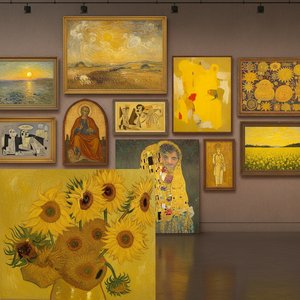
Топ-10 шедевров живописи в доминирующих оттенках хромового жёлтого | ArtsDot
Погрузитесь в мир хромового жёлтого! 10 знаменитых картин Ван Гога, Моне и других мастеров. История искусства, техника живописи и вдохновение для декора интерьера. Репродукции музейного качества на ArtsDot.com

10 Шедевров Немецкого Экспрессионизма: Искусство Эмоций и Вдохновения | ArtsDot
Погрузитесь в мир немецкого экспрессионизма! Узнайте истории создания шедевров Мунка, Кирхнера, Кандинского и других великих художников. Репродукции картин высокого качества для вашего интерьера на ArtsDot.com. Откройте всю коллекцию онлайн!