

 Предпросмотр
 Поделиться
 Поделиться
 Детали произведения
 Руководство

 Скачать
 Похожие предметы
 Рентгенография
 Слайд-шоу
 Вопросы и ответы
 Статистика просмотров
The Resurrection 1


 Читать далее
Жикле и арт-принты
Печать (жикле) или холст музейного качества с быстрыми сроками изготовления и широким выбором вариантов отделки. ( Купить картину ручной работы Перейти к цифровым изображениям)




P118B $10

P118H $10

P118W $10

P438Z $10

P508JH $12

P508YH $12

P805H $10

P805Z $10

P919BZ $10

P919G $10

P919XJ $10

P959ZH $10

P968JZ $12

W106C $8

W218G $10

W218JH $8

W218Y $10

W307PJ $10

W316G $10

W316PJ $8

W316Y $10

W398PJ $8

W4111J $10

W500HY $15

W500JH $15

W692G $12

W849H $8

W940BG $15

W953PJ $8




Выберите один из наших стандартных размеров, соответствующих оригинальным пропорциям произведения искусства.

Введите необходимую ширину и высоту, чтобы репродукция подошла к вашей раме или стене. При печати изображение можно только уменьшить, но нельзя увеличить больше оригинала, поэтому при выборе другого формата часть изображения может быть обрезана. Перед печатью мы отправим вам цифровой макет на утверждение. Изображение на этой странице не отображает реальную обрезку — ее можно увидеть только на макете.
Доставка по всему миру () за 2 недели вместо стандартных 4–5 недель. (5 Ноябрь)

Бесплатная экспресс-доставка по всему миру

Высококачественный льняной холст

Полное страхование при доставке

Гарантия возмещения таможенных пошлин

Гарантия точного цветового соответствия

100-дневная гарантия возврата (только при обнаружении дефектов)

Гарантия возврата 100% средств

Скидка при оптовом заказе
 Вариант со стеклом доступен только для размеров менее 110 см

The Resurrection 1
Жикле и арт-принты
Размер репродукции
-


Итоговая стоимость
$ 63
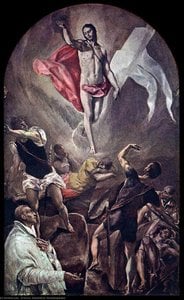
A Vision of Ascent: Exploring El Greco’s *The Resurrection*
This dramatic depiction of Christ's Ascension is a quintessential example of El Greco’s unique and powerfully emotive style. Painted during his prolific period in Toledo, Spain, this artwork transcends mere representation, offering instead a deeply spiritual experience for the viewer. The composition isn’t simply *about* the Resurrection; it *embodies* its awe-inspiring energy and profound theological significance.Stylistic Mastery: Mannerism & Beyond
El Greco – born Doménikos Theotokópoulos in Crete – was a master of Mannerism, a style characterized by elongated figures, distorted perspectives, and intense emotionality. While influenced by his earlier training in the Byzantine icon tradition and his exposure to Venetian Renaissance masters like Titian and Tintoretto, El Greco forged a distinctly personal artistic language. Notice how he departs from strict realism; forms are stretched and contorted, not for inaccuracy, but to amplify the spiritual drama. The flattened perspective further intensifies this effect, drawing the eye upwards towards the ascending Christ. This isn’t about recreating reality, it's about conveying an *experience* of the divine.Technique & Materials: Impasto and Illumination
The painting is executed with a masterful use of impasto – thick layers of oil paint applied to the canvas. This technique creates a rich, tactile surface that catches the light, adding to the work’s dramatic impact. The brushstrokes are visible, lending a sense of energy and immediacy. The artist expertly manipulates light and shadow—a hallmark of Baroque influence—to focus attention on Christ, who is bathed in an ethereal glow. This contrast heightens the emotional intensity and emphasizes his divine nature.Symbolism & Iconography
At its core, *The Resurrection* depicts a pivotal moment in Christian theology: Christ’s triumphant return to heaven after his death and resurrection. The swirling clouds aren't merely atmospheric; they symbolize the celestial realm and the power of God. The figures below – rendered with varying degrees of detail – represent humanity witnessing this miraculous event. Their expressions range from grief and sorrow to awe and reverence, reflecting the complex emotions evoked by Christ’s ascension. The vibrant reds and whites dominating the central figure are symbolic colors representing divinity, purity, and sacrifice.Historical Context & Artistic Legacy
El Greco's work was initially met with mixed reactions during his lifetime. His unconventional style didn’t always align with prevailing artistic tastes. However, his influence grew in the 20th century, particularly among Expressionist and Cubist artists who admired his bold distortions and emotional intensity. Today, El Greco is celebrated as one of the most original and influential painters in Western art history. His paintings can be found in prominent museums worldwide, including the Museo de El Greco in Toledo – a city that became synonymous with his artistic vision.Emotional Resonance & Interior Design
*The Resurrection* is more than just a beautiful painting; it’s an emotionally charged experience. The artwork evokes feelings of reverence, hope, and spiritual transformation. Its dramatic composition and rich color palette make it a striking focal point for any interior space. A high-quality reproduction would be particularly impactful in a contemplative setting – a library, study, or meditation room – adding depth, character, and a sense of timeless beauty to the environment. The painting’s verticality also lends itself well to spaces with higher ceilings, drawing the eye upwards and creating a feeling of grandeur.Вопросы и ответы
Какой размер и ориентация рекомендуются для печати работы «The Resurrection 1», Эль Греко?
Для «The Resurrection 1» рекомендуется использовать размер Large и Tall ориентацию.
Насколько насыщенны и выразительны цвета в работе «The Resurrection 1», Эль Греко?
Насыщенность цвета в работе «The Resurrection 1» составляет Muted, а интенсивность — Monochromatic.
Какое национальное происхождение лежит в основе Baroque произведения «The Resurrection 1»?
«The Resurrection 1» был создан Эль Греко, уроженцем Греция, в рамках направления Baroque. Происхождение художника связывает это произведение с Baroque в том виде, в котором его развивали мастера из Греция.
Похожие произведения




Биография художника
Doménikos Theotokópoulos, Known As El Greco – A Pioneer Of Expressionism And Cubism
Doménikos Theotokópoulos, universally recognized as El Greco – “the Greek” – stands apart in the annals of Western art history. Born in Crete, Greece, around 1541, his artistic journey traversed Venice and Rome before finding its definitive expression in the spiritual crucible of Toledo, Spain. He wasn’t merely a product of these locations; he synthesized their diverse influences into an unparalleled style that foreshadowed the emotional fervor of Expressionism and the fragmented forms of Cubism centuries ahead of time. His formative years within the Byzantine tradition instilled in him meticulous attention to detail and a profound understanding of religious iconography – principles that would permeate his entire oeuvre.Early Training And Venetian Influence
El Greco’s artistic education began in Crete, where he absorbed the stylistic conventions of Byzantium—characterized by serene compositions, stylized figures, and luminous colors. However, his relocation to Venice around 1567 irrevocably altered his trajectory. Immersed in the bustling artistic milieu of the Serenissima Republic, he encountered titans of Venetian painting – Titian, Tintoretto, Veronese – absorbing their mastery of color palettes, compositional strategies, and dramatic lighting techniques. He deliberately loosened his brushwork, embracing the sensual qualities of oil paint and experimenting with dynamic poses that departed from traditional Byzantine conventions. This Venetian influence is palpable in early masterpieces like *St. Sebastian* (1600), where anatomical accuracy harmoniously blends with theatrical illumination—a testament to El Greco’s ability to synthesize disparate artistic traditions.Roman Exposure And Mannerist Style
A subsequent pilgrimage to Rome exposed him to Mannerism, a stylistic movement that prioritized elongated figures, distorted perspectives, and sophisticated compositional arrangements. While he demonstrated considerable talent within the Roman art world – attracting commissions from prominent patrons – El Greco struggled to gain widespread acclaim amidst the competitive landscape of Florentine artistic circles. Despite facing challenges in establishing himself as a celebrated artist during his formative years, his unwavering dedication to experimentation and innovation would ultimately propel him toward his singular artistic vision.Toledo And Spiritual Expression
El Greco’s final artistic home was Toledo, Spain—a city steeped in religious fervor during the Counter-Reformation. This environment fostered both patronage and an atmosphere conducive to exploring themes of spirituality and transcendence. It was here that he achieved his most profound artistic breakthroughs, producing works imbued with a palpable sense of emotional intensity and visionary grandeur. His distinctive style – characterized by elongated figures bathed in ethereal light—became synonymous with the expressive power of Mannerism and foreshadowed the stylistic innovations of Expressionism and Cubism. Consider *The Burial of the Count of Orgaz* (1586-1588), a monumental painting that exemplifies El Greco’s masterful blending of Byzantine tradition and Venetian realism. The depiction of a miraculous event—the descent of saints to bury a nobleman—captures the sublime beauty of religious devotion while simultaneously conveying an overwhelming sense of spiritual awe.Legacy And Recognition
El Greco's artistic legacy extends far beyond his lifetime, resonating powerfully with artists across subsequent eras. His pioneering use of elongated figures and dramatic lighting captivated contemporaries like Picasso and Braque, who recognized him as a precursor to modern art—particularly Cubism—admiring his unconventional perspectives and stylistic boldness. Furthermore, El Greco’s emotive style found kinship with Expressionist painters who sought to convey profound psychological states through vibrant colors and forceful brushstrokes. Today, El Greco is revered as one of the most influential figures in Western art history—a visionary painter whose oeuvre continues to inspire awe and contemplation, securing his place among the titans of artistic innovation and spiritual expression. His paintings remain enduring symbols of faith, emotion, and the boundless capacity of human imagination.
Эль Греко
1541 - 1614 , Греция
Об авторе
- Artistic Movement Or Style: Маньеризм, Барокко
- Artists Or Movements Influenced By This Artist:
- Экспрессионизм
- Кубизм
- Artists Who Influenced This Artist:
- Тициан
- Тинторетто
- Date Of Birth: 1541 г.
- Date Of Death: 1614 г.
- Full Name: Доминикс Феотокóпулос
- Nationality: Греко-Испанский
- Notable Artworks:
- Положение Графа Оргаза
- Вид Толедо
- Одевание Христа
- Place Of Birth: Крета, Греция
Похожие статьи

The Dramatic Flourish: Exploring the Baroque Movement's Enduring Legacy in Art History
Explore the dramatic world of Baroque art! Discover iconic artists like Caravaggio & Rubens, defining techniques, and its lasting impact on art history. Expert insights for collectors & enthusiasts at ArtsDot.

The Golden Age Reforged: Dramatic Realism & Religious Zeal in Spanish Baroque Art
Explore the dramatic world of Spanish Baroque art! Discover masters like Zurbarán & the powerful influence of religious zeal on painting techniques – a guide for collectors and enthusiasts.

Топ-25 шедевров Прадо: Искусство Веласкеса, Гойи и Эль Греко для вашего интерьера
Погрузитесь в мир шедевров Прадо! От Веласкеса до Гойи – история искусства Испании, барокко и знаменитые картины. Купите репродукции высокого качества для вашего интерьера на ArtsDot.com.

El Greco: Spirituality, Style & Innovation – A Renaissance Master's Legacy
Explore the captivating world of El Greco! Discover his unique style, spiritual intensity, and lasting impact on art history. Learn about this Renaissance master's life, iconic paintings & legacy.

Эль Греко: 25 шедевров гения. Купить картины онлайн | ArtsDot
Погрузитесь в мир Эль Греко! 25 величайших шедевров испанского маньеризма. Узнайте историю создания культовых картин, технику и символизм. Купите репродукции высокого качества для вашего интерьера на ArtsDot.com.


