


 Примерить в интерьере
 Отправить
 Поделиться
 Подробнее
 Руководство

 Скачать
 Похожие объекты
 Рентгенография
 Слайд-шоу
 Статистика
Spring


 Развернуть текст
Жикле / Арт-принты
Печать (жикле) или холст музейного качества с быстрыми сроками изготовления и широким выбором вариантов отделки. ( Заказать репродукцию ручной работы Перейти к цифровым изображениям)




P118B $10

P118H $10

P118W $10

P438Z $10

P508JH $12

P508YH $12

P805H $10

P805Z $10

P919BZ $10

P919G $10

P919XJ $10

P959ZH $10

P968JZ $12

W106C $8

W218G $10

W218JH $8

W218Y $10

W307PJ $10

W316G $10

W316PJ $8

W316Y $10

W398PJ $8

W4111J $10

W500HY $15

W500JH $15

W692G $12

W849H $8

W940BG $15

W953PJ $8




Выберите один из наших стандартных размеров, соответствующих оригинальным пропорциям произведения искусства.

Введите необходимую ширину и высоту, чтобы репродукция подошла к вашей раме или стене. При печати изображение можно только уменьшить, но нельзя увеличить больше оригинала, поэтому при выборе другого формата часть изображения может быть обрезана. Перед печатью мы отправим вам цифровой макет на утверждение. Изображение на этой странице не отображает реальную обрезку — ее можно увидеть только на макете.
Доставка по всему миру () за 2 недели вместо стандартных 4–5 недель. (23 Октябрь)

Бесплатная экспресс-доставка по всему миру

Высококачественный льняной холст

Полное страхование при транспортировке

Гарантия возврата таможенных пошлин

Гарантия точного цветового соответствия

100-дневный период возврата (только при обнаружении дефектов)

Гарантия возврата 100% средств

Скидка при заказе нескольких работ
 Вариант со стеклом доступен только для размеров менее 110 см

Spring
Жикле / Арт-принты
Размер репродукции
-


Итоговая стоимость
$ 62
A Vision of Spring's Gentle Embrace
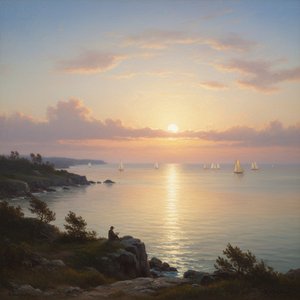
Dwight William Tryon’s Spring, painted in 1893, is more than just a depiction of a season; it is an immersion into a state of profound tranquility. The canvas breathes with the soft promise of renewal, capturing that delicate moment when the earth shakes off the slumber of winter. One gazes upon this landscape and feels an immediate sense of peace wash over the spirit. Tryon masterfully renders a serene vista—a field gently rolling towards a distant treeline under a diffused, atmospheric sky. The composition guides the eye softly across planes of muted greens, warm browns, and nascent yellows, colors that speak eloquently of life returning to the world.
Tonalism and the Art of Atmosphere
As an artist deeply rooted in the Tonalist tradition, Tryon possessed a unique gift for capturing light not as a harsh beam, but as a pervasive, enveloping atmosphere. His technique is characterized by delicate brushstrokes that build up color and mood rather than sharp outlines. The overall effect is one of soft focus, where shapes—the undulating grass, the clustered trees—are rendered with an almost dreamlike softness. While the subject matter celebrates spring's vibrancy, the execution leans into a subtle melancholy, suggesting the beautiful impermanence inherent in all natural cycles. This masterful handling of light and shadow gives the scene its depth, inviting contemplation.
Symbolism of Renewal and Passage
The inclusion of two distant figures adds a vital human element to this pastoral tableau. They are subtle, almost spectral, yet they anchor the scale and suggest a shared journey or quiet companionship within nature’s embrace. Symbolically, Spring speaks volumes about transition itself—the passage from dormancy to bloom, from shadow to light. For the modern collector, owning this piece is acquiring not merely an object of art, but a tangible embodiment of hope and rebirth. It serves as a perennial reminder that even after the deepest quiet, beauty inevitably returns.
A Timeless Presence for Any Interior
The soft, harmonious color palette—dominated by earth tones softened by yellow-gold accents—makes this painting incredibly versatile for interior design. Whether placed in a sunlit drawing room or a tranquil study, its gentle energy will complement sophisticated decor without overwhelming the space. The visible texture of the oil paint and the loose brushwork lend an immediate sense of history and artisanal quality to any setting. Reproductions allow art lovers and designers alike to bring this enduring vision of natural grace into their homes, making a statement that is both deeply personal and universally beautiful.
Вопросы и ответы
Какова дата создания и художественный стиль произведения «Spring», Д Dwight Уильям Трион?
Работа «Spring», Д Dwight Уильям Трион датирована 1893 годом и относится к направлению Tonalist.
С каким чувством ассоциируется «Spring»?
«Spring» вызывает Tranquil чувство. Эмоциональный тон описывает впечатление, которое производит произведение.
Кто создал(а) «Spring» и в каком году?
Д Dwight Уильям Трион создал(а) «Spring» в 1893 году.
Похожие произведения


Биография художника
Dwight William Tryon: The Silent Symphony of Light and Shadow
Dwight William Tryon, born in Hartford, Connecticut, on August 13th, 1849, emerged from the quiet beauty of New England as a painter deeply attuned to the subtle rhythms of nature. His early life, marked by the sudden loss of his father, instilled within him a profound appreciation for solitude and observation – qualities that would profoundly shape his artistic vision. Raised primarily on his grandparents’ farm in East Hartford, Tryon developed an intimate connection with the rural landscape, sketching its fields, forests, and waterways from a young age. These early studies weren't merely exercises in drawing; they were a nascent exploration of light, color, and atmosphere – the very elements he would master throughout his career. Without formal training initially, Tryon’s innate talent blossomed organically, fueled by self-study and a deep reverence for the natural world. He found solace and instruction within the walls of a local bookstore, poring over instructional manuals and absorbing artistic principles from printed sources, alongside frequent visits to observe the works of masters in the Wadsworth Atheneum gallery.The Parisian Awakening: Influences and Early Style
Driven by a desire for formal education and seeking to refine his skills, Tryon embarked on a transformative journey to France in 1876. This pivotal move marked a significant turning point in his artistic development, exposing him to the vibrant currents of European art and allowing him to study under esteemed masters. He enrolled at the École des Beaux-Arts in Paris, immersing himself in the techniques and philosophies of established artists. However, Tryon’s education extended far beyond the confines of the classroom; he actively sought guidance from luminaries like Jacquesson de la Chevreuse, Charles-François Daubigny, Henri Harpignies, and Jean Baptiste-Antoine Guillemet – figures who profoundly influenced his approach to color, composition, and atmospheric perspective. Initially, Tryon’s style leaned towards Luminism, a movement characterized by its emphasis on capturing the effects of light and shadow, often employing soft, diffused tones to evoke a sense of serenity and tranquility. The works of George Inness and Alexander Wyant, both prominent luminist painters, undoubtedly resonated with him during this period. Yet, as he spent time in France, Tryon became increasingly drawn to the principles of the Barbizon School – a movement that prioritized direct observation of nature and a more subdued palette, rejecting the grand scale and dramatic lighting favored by earlier Romantic artists. This shift reflected a growing desire to capture not just the appearance of a scene but also its underlying mood and emotional resonance.The Barbizon Aesthetic: Harmony and Atmospheric Depth
Tryon’s artistic evolution culminated in a distinctive style that became his hallmark – a masterful synthesis of Luminist techniques and Barbizon principles. His paintings are characterized by a remarkable ability to evoke atmosphere, creating a sense of depth and tranquility through subtle gradations of color and light. He frequently employed a carefully orchestrated composition, often featuring a grouping or broken row of trees positioned in the middle distance, acting as a visual bridge between a luminous sky above and a foreground marsh or pasture below. These scenes were rarely depicted with sharp detail; instead, Tryon favored a more impressionistic approach, capturing the fleeting effects of light and shadow on the landscape. His palette was typically restrained, dominated by muted greens, blues, browns, and grays – colors that contributed to the overall sense of harmony and serenity. Works like *Salt-Marsh, December* exemplify this style perfectly, showcasing his talent for conveying the quiet beauty of a winter landscape through delicate color harmonies and subtle atmospheric effects. The painting’s success at the Tennessee Centennial Exposition in 1897 further cemented his reputation as a leading American tonalist painter.Recognition and Legacy: A Patron's Support and Enduring Influence
Throughout his career, Tryon enjoyed increasing recognition within the art world. He was admitted to the National Academy of Design in 1873, marking a significant milestone in his artistic journey. His work gained further prominence through exhibitions at prestigious venues such as the Pennsylvania Academy of Fine Arts and the Montross Gallery. Crucially, Tryon’s career benefited significantly from the patronage of Charles Lang Freer, an influential art collector who recognized Tryon's unique talent and provided him with invaluable support. Freer acquired numerous paintings from Tryon’s oeuvre, contributing to their visibility and ensuring their preservation for future generations. In 1908, Tryon received the prestigious Carnegie Prize at the Carnegie Exhibition – a testament to his artistic merit and enduring influence. He also established a summer home in South Dartmouth, Massachusetts, where he continued to paint and refine his craft until his death on July 1st, 1925. Today, Dwight William Tryon’s paintings are held in prominent collections around the world, including the Smithsonian American Art Museum and the Freer Gallery of Art, ensuring that his legacy as a master of tonalism continues to inspire and captivate audiences. His work stands as a poignant reminder of the power of observation, the beauty of simplicity, and the enduring appeal of capturing the silent symphony of light and shadow in the natural world.Key Works
* *Salt-Marsh, December* (1879) * *Springtime* (1895) * *Newbury Haystacks in Moonlight* (c. 1880) * *The First Leaves* (1889 - Carnegie Prize Winner)
Д Dwight Уильям Трион
1849 - 1925 , США
Краткая справка
- Artistic Movement Or Style: Тонализм, Барбизонская школа
- Artists Or Movements Influenced By This Artist: ['Американский тонализм']
- Artists Who Influenced This Artist:
- Чарльз-Филипп Дабни
- Уистлер
- Гарпинье
- Date Of Birth: 13 августа 1849
- Date Of Death: 1 июля 1925
- Full Name: Dwight William Tryon
- Nationality: Американский
- Notable Artworks:
- Солончак, декабрь
- Весна
- Полевые холмы в лунном свете
- Place Of Birth: Гартифорд, США
Похожие статьи

Grant Wood & American Regionalism: Identity, Myth & the Rural Landscape
Explore the world of Grant Wood & American Regionalism with ArtsDot. Discover the symbolism behind 'American Gothic', recurring themes, and the movement's lasting impact on art history. High-quality reproductions available.

William Stanley Haseltine: Evoking Atmosphere & Light in American Tonalism
Explore the captivating landscapes of William Stanley Haseltine, a master of American Luminism & Tonalism. Discover his serene coastal scenes and Italian vistas – available as museum-quality reproductions at ArtsDot.

William Bradford: Navigating Faith, Landscape & Artistic Innovation in Early American Painting
Explore the captivating world of William Bradford, American Romanticist painter renowned for his dramatic Arctic seascapes & ship portraits. Discover his artistic evolution, influences, and lasting legacy with ArtsDot.
William Trost Richards: Luminism, Spirituality & the American Landscape Tradition
Explore the captivating landscapes of William Trost Richards, a master of Luminism associated with both the Hudson River School & American Pre-Raphaelite movements. Discover his spiritual connection to nature and lasting influence on American art.

Evocations of Place: A Historical Journey Through Landscape Art
Explore the rich history of landscape art with ArtsDot. Discover renowned artists, movements like Impressionism & Romanticism, and expert guidance for collecting timeless pieces. Find your perfect serene escape today!