


 Предпросмотр
 Поделиться
 Поделиться
 Детали произведения

 Скачать
 Похожие работы
 Рентгенография
 Слайд-шоу
Gesu E Maria Al Corso

 Читать далее
Масляная репродукция ручной работы
Картина маслом на холсте в выбранном вами размере и раме, написанная на заказ нашими художниками. ( Купить принт Купить изображение)




































Выберите один из наших стандартных размеров, соответствующих оригинальным пропорциям произведения искусства.

Вы можете указать собственные размеры, чтобы картина идеально вписалась в выбранную раму или пространство. Если выбранный вами размер не соответствует пропорциям оригинала, мы либо обрежем полотно, либо расширим его за счет дополнительных элементов, написанных вручную. Цифровой макет будет отправлен вам на утверждение перед началом производства.
Обратите внимание, что предварительный просмотр на экране не отражает фактическую обрезку или расширение. Только макет точно покажет окончательную композицию.
Хотя доступны индивидуальные размеры, мы рекомендуем выбирать вариант из предопределенного списка, чтобы сохранить исходные пропорции.
После оформления заказа команда ArtsDot.com свяжется с клиентом по электронной почте для уточнения деталей и предоставит предварительный макет
Доставка по всему миру () за 3–4 недели вместо стандартных 5 недель. (3 Сентябрь). Без компромиссов в качестве.

Бесплатная экспресс-доставка по всему миру

Высококачественный льняной холст

Полное страхование доставки

Гарантия возмещения таможенных пошлин

Гарантия точного соответствия цветов

Политика возврата в течение 60 дней (только при наличии дефектов)

Гарантия возврата 100% средств

Предложение оптовых скидок
 Вариант со стеклом доступен только для размеров менее 110 см

Gesu E Maria Al Corso
Техника репродукции
Размер репродукции
-


Итоговая стоимость
$ 263
Похожие произведения


Биография художника
A Legacy Carved in Marble: The Life of Domenico Guidi
In the heart of the Italian Baroque era, a period defined by dramatic movement and emotional intensity, the sculptor Domenico Guidi emerged as a master of classical restraint and technical precision. Born in 1625 in Carrara—a region synonymous with the world's finest marble—Guidi was destined for a life shaped by stone. His early artistic identity was deeply intertwined with his familial roots; he was the nephew of Giuliano Finelli, a sculptor whose legendary rivalry with Gian Lorenzo Bernini cast long shadows over the Roman art scene. This connection provided Guidi with an immediate immersion into the highest echelons of sculptural excellence, instilling in him a reverence for the material and a disciplined approach to form that would define his entire career.
Guidi’s journey was one of movement and adaptation, mirroring the political turbulence of 17th-century Italy. His early years took him to Naples, where he worked alongside his uncle on significant commissions, such as the statues for the Chapel of San Gennaro. However, the violent upheaval of Masaniello's revolt in 1647 forced a pivotal change in his trajectory. Fleeing to Rome, Guidi sought refuge and mentorship in the studio of Alessandro Algardi, Bernini’s most formidable contemporary. It was within this workshop that Guidi truly found his artistic voice, contributing to monumental works like the unfinished Vision of Saint Nicholas. Under Algardi’s tutelage, Guidi learned to balance the theatricality of the Baroque with a certain classical emotional detachment, a stylistic hallmark that would distinguish his later independent works.
Mastery and Monumental Vision
Following the death of Algardi in 1654, Guidi stepped into the light as an independent master, establishing a workshop that became a cornerstone of Roman sculpture. While he possessed the technical competence to rival the greatest carvers of his age, his work was characterized by a unique ability to navigate between different stylistic currents. He maintained the classical poise inherited from Algardi while occasionally embracing the more dynamic, spirited demands of the era. His prolific output spanned a breathtaking variety of formats, from intimate reliefs to massive, awe-inspiring monuments that commanded public spaces.
One of his most enduring achievements lies in his ability to secure prestigious commissions that bridged the gap between Italian tradition and international prestige. His talent earned him recognition far beyond the borders of Rome:
- The Monument to Natale Rondinini: Located in Santa Maria del Popolo, this work stands as a testament to his skill in creating dignified, commemorative sculpture.
- Royal Recognition: Guidi’s reputation reached the court of Louis XIV, resulting in the creation of the marble group La Renommée écrivant l'histoire du Roi, which was sent to the magnificent gardens of Versailles.
- The Pontifical Connection: In a remarkable nod to his skill, Bernini himself selected Guidi to carve one of the iconic angels for the Ponte Sant'Angelo, placing him in direct conversation with the era's greatest genius.
A Lasting Impression on the Baroque Landscape
The later years of Guidi’s life were marked by both professional triumph and personal drama. In 1669, he reached a pinnacle of institutional respect when he was elected director of the Academy of San Luca. Yet, his path was not without hardship; historical records recount a mysterious incident where he was stabbed by an assailant, a moment of violence that punctuated his rise to prominence. Despite such tribulations, his dedication to the craft never wavered, and he continued to produce works of profound spiritual depth, such as the marble group for the Dream of St. Joseph in the church of Santa Maria della Vittoria.
Domenico Guidi passed away in Rome in 1701, leaving behind a legacy etched into the very fabric of Italy's most sacred and public spaces. He was more than just a student of the great masters; he was a bridge between the high drama of Bernini and the refined classicism of Algardi. Through his hands, the cold marble of Carrara was transformed into breathing narratives of faith, glory, and human emotion, ensuring that his name would remain forever intertwined with the golden age of Italian sculpture.

Domenico Guidi
1625 - 1701 , Italy
Основные сведения
- Artistic Movement Or Style: Baroque
- Artists Who Influenced This Artist:
- giuliano finelli
- alessandro algardi
- Date Of Birth: Carrara, Italy (1625)
- Date Of Death: 1701
- Full Name: domenico guidi
- Nationality: Italian
- Notable Artworks:
- Monument to Natale Rondinini
- Relief over altar Capella di monte pieta
- Sculpture for Louis XIV
- Place Of Birth: Carrara
Похожие статьи
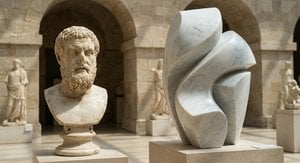
The Enduring Allure of Marble in Art History: From Classical Sculpture to Modern Abstraction
Explore the captivating history of marble sculpture from ancient Greece to modern art. Discover renowned artists like Canova & Michelangelo, carving techniques, and investment insights at ArtsDot.

10 легендарных бронзовых скульптур, изменивших искусство навсегда | ArtsDot
Погрузитесь в мир великих бронзовых скульптур! От Давида Микеланджело до работ Родена – история искусства, техники и вдохновения. Купите репродукции шедевров для вашего интерьера на ArtsDot.com

The Enduring Form: Exploring Themes & Techniques in Sculpture Across Historical Periods
Explore the rich history of sculpture from ancient masterpieces to contemporary innovations. Discover key techniques, influential artists & investment potential for discerning art collectors.

The Enduring Legacy of Marble: A Comprehensive Exploration of Technique, Symbolism & Artistic Expression
Explore the rich history of marble sculpture from antiquity to the Renaissance! Discover key techniques, influential artists & enduring themes in classical art. Expert insights for collectors and enthusiasts at ArtsDot.

The Enduring Form: Sculpture Across History, Technique & Emotional Resonance
Explore the rich history of sculpture with ArtsDot. Discover key techniques, influential artists & investment potential for discerning collectors. Expert insights into valuing and collecting timeless masterpieces.

