

- 22.0 x 16.0 cm


The picture follows your choices: , .
Описание предмета
Experience August Macke’s vibrant ‘Elisabeth at the Table,’ a captivating Fauvist portrait brimming with bold colors and expressive brushstrokes from 1909 – perfect for art lovers seeking a unique piece to cherish.
 Развернуть текст
Биография художника
Август Макке – яркий немецкий экспрессионист! Его картины полны света, радости и энергии. Влияние импрессионизма и орфизма в его уникальном стиле.
Масляная репродукция ручной работы
Картина маслом на холсте в выбранном вами размере и раме, написанная на заказ нашими художниками. ( Переключиться на печать Перейти к цифровым изображениям)
More about this painting
 Примерить в интерьере
 Отправить
 Поделиться
 Подробнее
 Руководство

 Скачать
 Похожие объекты
 Рентгенография
 Слайд-шоу
 Q&A
Q&A Статистика
Order your painting in four simple steps
Take your time. You can change any answer; the price in your order card follows each choice.
1 Step one of four
Which size would you like?
These sizes keep the proportions of the original painting. The drawing shows your choice on a wall, above a two-metre sofa.
Or give your own measurements
Выберите один из наших стандартных размеров, соответствующих оригинальным пропорциям произведения искусства.

Введите необходимую ширину и высоту, чтобы репродукция подошла к вашей раме или стене. Поскольку работа выполняется вручную, при изменении пропорций художник может немного увеличить область вокруг картины или, наоборот, обрезать края — выбор за вами. Перед началом работы мы пришлем вам цифровой макет на утверждение. Изображение на этой странице не является точным результатом — увидеть реальный вид можно только на макете.
2 Step two of four
How should it be prepared: rolled, stretched or framed?
The prices below are for the size you chose in step one.
Choose the edges of the stretched canvas
Choose your frame

White $1

Blurside $1

Extended $1

P118B $10

P118H $10

P118W $10

P438Z $10

P508JH $12

P508YH $12

P805H $10

P805Z $10

P919BZ $10

P919G $10

P919XJ $10

P959ZH $10

P968JZ $12

W106C $8

W218G $10

W218JH $8

W218Y $10

W307PJ $10

W316G $10

W316PJ $8

W316Y $10

W398PJ $8

W4111J $10

W500HY $15

W500JH $15

W692G $12

W849H $8

W940BG $15

W953PJ $8

H24-GOLD $30

H24-SILVER $30

H36-GOLD $45

H36-SILVER $45
В раме
Moulding: . Overall size with the frame: .
3 Step three of four
Would you like anything changed in the painting?
Most people answer no. Because each painting is made by hand, our artist can also adapt it for you.
After order, ArtsDot.com team will email client for instructions and provide a mockup preview
4 Step four of four
A few finishing options
All of them are optional. The answers already selected cost nothing extra.
Who paints it?
Доставка по всему миру () за 3–4 недели вместо стандартных 5 недель. (3 Ноябрь). Без компромиссов в качестве.
A nameplate, as in a museum?
Детали гравировки на бронзовой плакетке
This elegant plaque features the artist's name and the title of the artwork, finely engraved for a timeless presentation.
It is made from bronze with a refined, elegant finish. The text is precisely laser-engraved for a sharp and permanent result. Measuring 9x2 cm, the plaque is compact yet easy to read. It's built to be durable and scratch-resistant, offering a professional, museum-quality look. Mounting is simple thanks to the included adhesive backing.
Информация об акриловой табличке
The plaque includes essential engraved details such as the artist's name, the title of the artwork, the date it was created, the type of media used-like oil on canvas or watercolor-a brief description of the piece, and a QR code that links to the complete artwork information.
It is crafted from clear acrylic, offering a sleek, modern appearance. The text is UV-engraved in black to ensure strong visual contrast. With a size of 10x15 cm, it ensures optimal readability. It comes equipped with two metal hooks for secure wall mounting. The plaque is designed to be weather-resistant, making it suitable for various environments, and it includes interactive features that work seamlessly with smartphone scanning.
Информация о чёрной акриловой табличке
This elegant plaque includes engraved information such as the artist's name, the title of the artwork, the date it was created, the type of media used (like oil on canvas or watercolor), a short description of the artwork, and a QR code for quick access to more information.
The plaque itself is made from refined black acrylic with a premium finish. The text is laser-engraved in white for high contrast and readability. Its size is 10x15 cm, designed to be easy to read. It comes with two metal hooks for professional mounting. The design is sleek and fits any interior style. It is also weather-resistant and durable, with built-in digital integration for mobile compatibility.
A protective varnish?
When do you need it?
✓ Check and order
Your painting, as you ordered it

Elisabeth at the Table
Материал репродукции
Размер репродукции
-

Ведущий мастер элитного уровня
Более высокая детализация, изысканность и дополнительное время на создание работы
-

Рама для репродукции
-
-
Для произведений искусства или репродукций, размер которых превышает 105 см (приблизительно 41 дюйм) по любой из сторон, рама будет доставлена в разобранном виде (в виде комплекта). Этот метод обеспечивает безопасную доставку и предотвращает повреждения при транспортировке.
Требуется профессиональная сборка — это не продукт для самостоятельной сборки (DIY).
Комплект должен быть собран, а холст натянут опытным мастером по багетным рамам с использованием клеевого ПВА (не входит в комплект), струбцин для натяжки холста и зажимов, чтобы удерживать подрамник ровным до полного высыхания клея. Неправильная сборка или неравномерное натяжение холста могут привести к необратимому повреждению произведения искусства и не являются гарантийным случаем.
 Для произведений искусства или репродукций, размер которых превышает 105 см (приблизительно 41 дюйм) по любой из сторон, рама будет доставлена в разобранном виде (в виде комплекта). Этот метод обеспечивает безопасную доставку и предотвращает повреждения при транспортировке.
В комплект входят все бруски из массива дерева, точно вырезанные по размеру.
Собирается с помощью предоставляемых винтов, а также столярного клея для угловых соединений, который не входит в комплект и должен быть приобретен вашим мастером.
Требуются профессиональные инструменты, не входящие в комплект: щипцы для натяжки холста (натяжитель) и зажимы, чтобы удерживать рейки ровно во время высыхания клея.
Важно:
Для соединения углов требуется клей для дерева, перекладины необходимо зафиксировать струбцинами до полного высыхания клея, а для натяжки холста на собранную раму требуются щипцы для натяжки холста. Ни один из этих инструментов не входит в комплект. Пожалуйста, убедитесь в наличии опытного мастера по багетным работам перед заказом рамы такого размера.

Экспликация
-
-

Защитный лак
Глянцевый лак (насыщает цвета, защищает от воздействия света и влаги)
-

Настроить мою картину
Примеры возможных изменений: замена лица на фото клиента; добавление домашнего питомца (например, замена кошки на собаку); добавление скрытого сообщения на фоне; изменение пейзажа или элементов фона.
-

Срочно
Доставка по всему миру () за 3–4 недели вместо стандартных 5 недель. (3 Ноябрь). Без компромиссов в качестве.
-
Экспресс-доставка
Доставка по всему миру () в течение 5 недель. (10 Ноябрь).
Включено
Итоговая стоимость
$ 263
Вариант со стеклом доступен только для размеров менее 110 см
Included with every order
- Бесплатная экспресс-доставка по всему миру
- Высококачественный льняной холст
- Полное страхование при транспортировке
- Гарантия возврата таможенных пошлин
- Гарантия точного цветового соответствия
- 100-дневный период возврата (только при обнаружении дефектов)
- Гарантия возврата 100% средств
- Скидка при заказе нескольких работ


A Moment of Quietude: August Macke's "Elisabeth at the Table"
August Macke’s “Elisabeth at the Table,” painted in 1909, is more than just a depiction of two women sharing a moment; it’s a vibrant distillation of Fauvist principles and a poignant glimpse into the burgeoning artistic spirit of early 20th-century Germany. Measuring a modest 22 x 16 cm, this oil on canvas radiates an immediate warmth, drawing the viewer into a scene of intimate companionship rendered with a boldness rarely seen before its time. Macke, a key figure within the influential Der Blaue Reiter group, masterfully employs color and brushstroke to evoke not just what he saw, but how he *felt* about it – a characteristic hallmark of Expressionism.
Fauvist Color and Energetic Form
The painting’s power lies fundamentally in its embrace of Fauvism. Macke abandons traditional representational accuracy for an unrestrained use of color, employing hues that are often jarringly bright and deliberately non-naturalistic. The reds, blues, and yellows aren't meant to mimic reality; instead, they pulsate with emotional intensity, contributing to the painting’s dynamic energy. Notice how the brushstrokes themselves – loose, gestural, and applied with a palpable urgency – further amplify this effect. This technique wasn't simply about aesthetics; it was a deliberate attempt to convey subjective experience, a core tenet of the movement.
A Portrait of Modern Life
The subject matter itself—two women seated at a table laden with books, handbags, and chairs – speaks volumes about the changing social landscape of the period. This isn’t a formal portrait intended to elevate status; it's an observation of everyday life, imbued with a sense of quiet contemplation. The objects themselves are rendered with a remarkable degree of detail, suggesting a comfortable domesticity, yet they are presented within Macke’s intensely colored framework, elevating them to something almost symbolic. The woman on the left, seemingly engrossed in a book, and the other, perhaps engaged in conversation or simply enjoying the moment, create an atmosphere of relaxed intimacy.
Historical Context and Artistic Influence
"Elisabeth at the Table" was created during a period of immense artistic upheaval. Macke’s work reflects the broader trends of his time – the rejection of academic conventions in favor of subjective expression, and the exploration of new visual languages. His association with Der Blaue Reiter (The Blue Rider) further contextualizes the painting, placing it within a circle of artists who were pushing the boundaries of artistic convention. Macke’s influence extends beyond Fauvism; his emphasis on emotional intensity and dynamic brushwork foreshadowed many later developments in modern art.
Collecting this Masterpiece – A Reproduction Opportunity
ArtsDot offers a meticulously crafted hand-painted reproduction of August Macke’s “Elisabeth at the Table,” allowing you to bring this captivating artwork into your home or office. Each reproduction is created using archival materials and techniques, ensuring its longevity and fidelity to the original. This isn't merely a print; it's an investment in art history, a tangible connection to one of the most significant figures of the early 20th-century art scene. Consider this piece as more than just decoration – it’s a window into a world of vibrant color, emotional intensity, and profound artistic vision.
Вопросы и ответы
К какой эпохе относится «Elisabeth at the Table»?
«Elisabeth at the Table» относится к эпохе Modern.
Насколько выражен контраст в работе «Elisabeth at the Table», Август Макке?
Уровень контрастности произведения «Elisabeth at the Table», Август Макке составляет Gentle.
Как в произведении «Elisabeth at the Table» сбалансированы свет и тень?
Общая яркость произведения «Elisabeth at the Table» составляет deep_shadow, а его светлота — Dark.
Похожие произведения


Август Макке
1887 - 1914, Германия
Биография художника
A Life Cut Short: The Vibrant World of August Macke
August Robert Ludwig Macke, a name forever intertwined with the brief but intensely brilliant flowering of German Expressionism, lived a life tragically curtailed by the horrors of the First World War. Born in 1887 in Meschede, a small town nestled within the Westphalian countryside, his artistic journey was one of rapid evolution and profound exploration – a relentless pursuit to capture not just what he *saw*, but how he *felt* about it. Macke’s early years were marked by a quiet determination, a yearning for creative expression that propelled him from his hometown to Bonn, where he began to hone his nascent talent under the guidance of local educators. Though formally trained at the Düsseldorf Art Academy between 1904 and 1906, under the tutelage of Adolf Maennchen, it was through independent study, travel, and a deep immersion in the artistic currents of the time that his unique voice truly began to emerge. These formative years were characterized by an absorption of Impressionist and Post-Impressionist techniques – a careful study of light, color, and brushwork – laying a foundation for the bolder, more emotionally charged expressions he would later develop. He supplemented his income with stage design work, a demanding profession that sharpened his compositional skills and cultivated a keen eye for visual harmony.Influences and Artistic Development: A Synthesis of Styles
Macke’s artistic trajectory was profoundly shaped by encounters with key figures and movements of the early 20th century – a confluence of influences that ultimately forged his distinctive style. A pivotal moment arrived in Paris in 1912, where he met Robert Delaunay, a leading proponent of Orphism – a branch of Cubism focused on pure abstraction and vibrant color harmonies. This encounter proved transformative, introducing Macke to the concept of simultaneous contrast and influencing his work towards a more dynamic and non-representational approach. He began experimenting with broken planes of color and abstracted forms, seeking to convey not just what he saw, but how he *felt* about what he saw – a core tenet of Expressionism. Simultaneously, his close friendship with Franz Marc, a fellow artist and member of the influential group Der Blaue Reiter (The Blue Rider), drew him into the orbit of Wassily Kandinsky and other avant-garde thinkers. While Macke’s style remained distinct from Kandinsky's more purely abstract explorations, he embraced the group’s spirit of artistic freedom and spiritual inquiry. His paintings began to reflect a growing interest in depicting the emotional resonance of landscapes and everyday life, imbued with a sense of joy and optimism. The influence of Matisse was also significant; Macke adopted the Fauves’ bold use of color and expressive brushstrokes, injecting energy and vitality into his compositions. He wasn't simply copying these styles; he was synthesizing them, creating something entirely new – a visual language uniquely his own.The Blue Rider and Beyond: A Unique Expressionist Vision
As an integral member of Der Blaue Reiter, Macke contributed significantly to the group’s exhibitions and publications, helping to disseminate its radical ideas about art and spirituality. However, he wasn't simply a follower; he forged his own unique path within the movement. Unlike some of his colleagues who leaned towards darker, more angst-ridden themes – often reflecting the anxieties of the time – Macke consistently sought to portray beauty and harmony in the world around him. His paintings, such as Bathing Girls with Town in the Background, exemplify this approach – vibrant colors, simplified forms, and a sense of idyllic tranquility characterize his work. He masterfully blended elements of Fauvism, Cubism, and Futurism into a distinctly personal style, creating compositions that are both visually striking and emotionally resonant. Woman in a Green Jacket, painted in 1913, is another prime example – a portrait radiating warmth and vitality through its bold color palette and confident brushwork. His later works, like Türkisches Café, demonstrate his luminist approach, capturing the play of light and shadow with remarkable sensitivity. The artist’s job, he wrote, was to explore and express the human soul - our inner life - via representation of form and use of (non-naturalistic) color.Major Achievements: A Legacy of Color and Emotion
August Macke's artistic achievements are characterized by a remarkable ability to capture the essence of modern experience through vibrant color, dynamic composition, and an underlying sense of optimism. His paintings – landscapes, portraits, still lifes, and scenes of everyday life – are imbued with a palpable energy that reflects both the beauty and the anxieties of his time. He was particularly adept at depicting the natural world, transforming ordinary landscapes into evocative expressions of emotion. Bathing Girls with Town in the Background is perhaps his most famous work, a testament to his ability to capture the fleeting moments of joy and connection within the urban landscape. His portraits, such as Woman in a Green Jacket, are equally compelling, radiating warmth and vitality through their bold color palettes and confident brushwork. Macke’s influence extended beyond Germany, inspiring artists across Europe who were seeking new ways to express themselves in the wake of World War I. His work continues to be exhibited and studied today, serving as a reminder of the power of art to illuminate the human condition.A Tragic End and Lasting Legacy
The outbreak of World War I brought a sudden and devastating end to Macke’s promising career. Driven by patriotic fervor, he volunteered for military service in 1914. Tragically, he was killed in action just weeks later, on September 26th, at the front near Champagne, France, at the young age of 27. His final painting, Farewell, poignantly captures the somber mood that descended upon Europe as war engulfed the continent. Despite his untimely death, August Macke’s legacy endures. He remains a significant figure in the history of Expressionism, celebrated for his vibrant colors, dynamic compositions, and optimistic vision. His paintings offer a glimpse into a world on the cusp of change, imbued with a sense of beauty and hope amidst growing uncertainty. Exploring his works today reveals an artist who not only captured the spirit of his time but also created timeless images that continue to resonate with viewers across generations.


Похожие статьи

Giclée Prints: Archival Quality & Aesthetic Nuances for the Discerning Collector
Explore the world of giclée prints with ArtsDot. Learn about archival quality, aesthetic nuances & investment potential. Expert guidance for discerning art collectors seeking museum-quality reproductions and lasting value.

Echoes of Time: Exploring the Enduring Appeal & Historical Context of Vintage Art Prints
Explore the captivating world of vintage art prints! Discover their history, collecting tips & enduring appeal. Expert insights on chromolithography and building a legacy collection with ArtsDot.
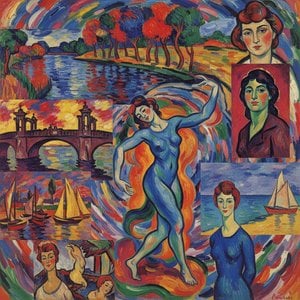
10 Шедевров Фовизма: Яркие краски и экспрессия в интерьере с ArtsDot
Погрузитесь в мир фовизма! 10 шедевров Матисса, Дерена и других мастеров экспрессионизма. Узнайте историю ярких красок и смелых форм. Репродукции картин высокого качества на ArtsDot.com – для вашего интерьера.