

 Предпросмотр
 Поделиться
 Поделиться
 Детали произведения
 Руководство

 Скачать
 Похожие предметы
 Рентгенография
 Слайд-шоу
 Вопросы и ответы
 Статистика просмотров
Untitled (972)

 Читать далее
Произведение искусства, представленное на этой странице, защищено законом об авторском праве, что исключает возможность законного создания или продажи его точной репродукции. Данная защита обеспечивается международными соглашениями, такими как Бернская конвенция и национальным законодательством, включая положения, изложенные в Закон США об авторском праве — Раздел 17.
Этот метод полностью соответствует нормам авторского права, так как он не предполагает копирования или дублирования защищенного произведения. Напротив, это творческая реинтерпретация — создание новой картины, которая вдохновлена оригиналом, но не является его точной копией.
Жикле и арт-принты
Печать (жикле) или холст музейного качества с быстрыми сроками изготовления и широким выбором вариантов отделки. ( Купить картину ручной работы Перейти к цифровым изображениям)




































Выберите один из наших стандартных размеров, соответствующих оригинальным пропорциям произведения искусства.

Введите необходимую ширину и высоту, чтобы репродукция подошла к вашей раме или стене. При печати изображение можно только уменьшить, но нельзя увеличить больше оригинала, поэтому при выборе другого формата часть изображения может быть обрезана. Перед печатью мы отправим вам цифровой макет на утверждение. Изображение на этой странице не отображает реальную обрезку — ее можно увидеть только на макете.
Доставка по всему миру () за 2 недели вместо стандартных 4–5 недель. (17 Ноябрь)

Бесплатная экспресс-доставка по всему миру

Высококачественный льняной холст

Полное страхование при доставке

Гарантия возмещения таможенных пошлин

Гарантия точного цветового соответствия

100-дневная гарантия возврата (только при обнаружении дефектов)

Гарантия возврата 100% средств

Скидка при оптовом заказе
 Вариант со стеклом доступен только для размеров менее 110 см

Untitled (972)
Жикле и арт-принты
Размер репродукции
-


Итоговая стоимость
$ 63
Похожие произведения


Биография художника
Audrey Flack: A Revolutionary Vision of Reality
Audrey Lenora Flack, born in New York City on May 30, 1931, and tragically passing away on June 28, 2024, stands as a monumental figure in the history of American art. Her life’s work represents a relentless pursuit of artistic innovation, a constant questioning of established norms, and a profound engagement with both personal experience and universal themes. From her early explorations within Abstract Expressionism to her groundbreaking development of photorealism and subsequent ventures into sculpture and “Post Pop Baroque,” Flack consistently defied expectations and redefined the boundaries of contemporary art. Her journey is one of fearless experimentation, intellectual rigor, and an unwavering commitment to communicating powerfully with viewers.Early Influences and the Transition to Figurative Art
Initially drawn to the vibrant energy and expressive freedom of Abstract Expressionism in the 1950s – profoundly influenced by the bold brushstrokes of artists like Franz Kline – Flack quickly recognized that this path, while stimulating, didn’t fully satisfy her desire for a more direct connection with the audience. She yearned for a means to bridge the gap between her internal vision and shared human experience. This yearning led her to a pivotal shift in the 1960s: the adoption of photorealism. Far from being merely a technical exercise, this choice was a deliberate act – a conscious decision to confront reality head-on with an almost unsettling level of detail and precision. Her early education at prestigious institutions like Cooper Union and Yale University – where she studied under the influential Josef Albers – provided her with a solid foundation in artistic principles, but it was her willingness to break free from traditional conventions that truly defined her career trajectory. During this period, Flack also navigated the challenges of motherhood, using photojournalistic sources as inspiration for paintings depicting significant historical events and emotional responses to them, including the tragic assassination of President John F. Kennedy and the grief surrounding the death of boxer Davey Moore.The Rise of Photorealism: Capturing History and Emotion
Flack’s emergence as a leading figure in photorealism coincided with a period of immense social and cultural upheaval. Her large-scale paintings, meticulously rendered from photographs, weren't simply reproductions; they were carefully constructed narratives brimming with symbolic weight. A particularly powerful example is *Kennedy Motorcade, November 22, 1963*, which masterfully captures both the historical event itself and the collective emotions surrounding it – a testament to Flack’s ability to imbue photographic documentation with profound emotional resonance. However, her artistic exploration didn't stop at mere representation. In the late 1970s, she embarked on a series of “vanitas” paintings – compositions steeped in symbolism referencing mortality and the fleeting nature of life. Works like *Marilyn* serve as poignant meditations on fame, beauty, and the inevitable passage of time, drawing parallels between the iconic image of Marilyn Monroe and traditional still-life motifs associated with transience. This series demonstrated a deep engagement with art history, revitalizing a genre that had largely fallen into obscurity while simultaneously imbuing it with contemporary relevance.Sculptural Explorations and the “Post Pop Baroque” Period
The 1980s marked another significant turning point in Flack’s artistic journey as she transitioned to sculpture. Rejecting the limitations of two-dimensional painting, she began creating monumental bronze figures – often inspired by classical mythology and Egyptian iconography. These sculptures weren't simply representations of female forms; they were powerful statements about feminine strength, resilience, and empowerment, challenging traditional narratives dominated by male figures. This exploration continued into the 2010s with a return to painting, which she termed her “Post Pop Baroque” period. In these works, historical references seamlessly blended with contemporary imagery, creating a dynamic interplay between past and present. She combined elements of Renaissance and Baroque art history with modern influences, resulting in paintings that were both visually stunning and intellectually stimulating – a synthesis of all her previous explorations.Legacy and Recognition
Audrey Flack’s contributions to the art world are undeniable. Her pioneering work in photorealism earned her recognition as one of the first artists whose work was purchased by the Museum of Modern Art (MoMA) for its permanent collection, solidifying her place in art history. Throughout her career, she exhibited extensively in prestigious museums worldwide, including the Metropolitan Museum of Art, the Whitney Museum of American Art, and the Guggenheim Museum. Beyond her artistic achievements, Flack was a dedicated educator, holding visiting professorships at institutions like the University of Pennsylvania and sharing her knowledge with generations of aspiring artists. Her legacy extends beyond individual artworks; she inspired countless artists to explore new possibilities in representation, symbolism, and the intersection of art and life. She received numerous accolades, including the St. Gaudens Medal from Cooper Union and an Honorary Albert Dome Professorship from Bridgeport University, cementing her status as a true visionary artist.- St. Gaudens Medal from Cooper Union
- Honorary Albert Dome Professorship from Bridgeport University
- Visiting Professor at the University of Pennsylvania
- Featured in H.W. Janson’s *History of Art*
- Doctorate from Clark University (2015)

Одри Флэк
1931 - 2024 , США
Об авторе
- Artistic Movement Or Style:
- Фотореализм
- Ванитас
- Date Of Birth: 30 мая 1931 г.
- Date Of Death: 28 июня 2024 г.
- Full Name: Audrey Lenora Flack
- Nationality: Американка
- Notable Artworks:
- «Кеннеди», ноябрь 22, 1963 г.
- Маргарет»], "Artists who influenced this artist": ["Франц Клайн", "Джозеф Альберс"], "Artists or movements influenced by this artist": ["Фотореализм", "Феминистское искусство"] }
- Place Of Birth: Нью-Йорк, США
Похожие статьи

Жорж Брак: 25 шедевров кубизма для ценителей искусства и интерьера
Откройте для себя 25 шедевров Жоржа Брака – пионера кубизма! Узнайте историю создания культовых картин, технику и влияние французского художника на искусство XX века. Репродукции высокого качества для вашего интерьера на ArtsDot.com.

Defining Art Now: Top 10 Masterpieces of '08-Contemporary & Beyond | ArtsDot
Explore 10 defining masterpieces of contemporary art – from Jeff Koons to Yayoi Kusama. Discover the stories behind iconic paintings & sculptures, and find museum-quality reproductions for your home at ArtsDot.com. Explore the full collection online!

10 Masterpieces That Defined Contemporary Art: A Curated Selection
Explore iconic contemporary art from Cindy Sherman to Niki de Saint Phalle. Discover museum-quality masterpieces on ArtsDot.com.

Arturo Souto: A Study in Abstract Expressionism & Emotional Resonance
Explore the captivating world of Arturo Souto's abstract expressionism. Discover his unique style, emotional depth, and investment potential – a guide for discerning art collectors.
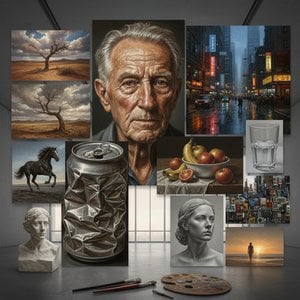
Современный реализм: 10 шедевров, изменивших искусство | ArtsDot.com
Погрузитесь в мир современного реализма! 10 шедевров, изменивших искусство. Узнайте истории художников и секреты техники. Купите репродукции картин высокого качества для вашего интерьера на ArtsDot.com.