

 Предпросмотр
 Поделиться
 Поделиться
 Детали произведения
 Руководство

 Скачать
 Похожие предметы
 Рентгенография
 Слайд-шоу
 Вопросы и ответы
 Статистика просмотров
Burnt Village


 Читать далее
Жикле и арт-принты
Печать (жикле) или холст музейного качества с быстрыми сроками изготовления и широким выбором вариантов отделки. ( Купить картину ручной работы Перейти к цифровым изображениям)




































Выберите один из наших стандартных размеров, соответствующих оригинальным пропорциям произведения искусства.

Введите необходимую ширину и высоту, чтобы репродукция подошла к вашей раме или стене. При печати изображение можно только уменьшить, но нельзя увеличить больше оригинала, поэтому при выборе другого формата часть изображения может быть обрезана. Перед печатью мы отправим вам цифровой макет на утверждение. Изображение на этой странице не отображает реальную обрезку — ее можно увидеть только на макете.
Доставка по всему миру () за 2 недели вместо стандартных 4–5 недель. (7 Ноябрь)

Бесплатная экспресс-доставка по всему миру

Высококачественный льняной холст

Полное страхование при доставке

Гарантия возмещения таможенных пошлин

Гарантия точного цветового соответствия

100-дневная гарантия возврата (только при обнаружении дефектов)

Гарантия возврата 100% средств

Скидка при оптовом заказе
 Вариант со стеклом доступен только для размеров менее 110 см

Burnt Village
Жикле и арт-принты
Размер репродукции
-


Итоговая стоимость
$ 63
Albert Edelfelt’s “Burnt Village”: A Frozen Moment of Sorrow and Resilience
Albert Edelfelt's "Burnt Village," painted in 1879, is more than just a winter landscape; it’s a poignant tableau that speaks to the enduring spirit of a people facing devastation. This oil-on-canvas masterpiece, created during a period of significant artistic exploration for Edelfelt, offers a glimpse into a pivotal moment in Finnish history – the aftermath of the Cudgel War (1596–1597), a brutal peasant uprising against Swedish rule. The painting depicts an imagined scene, meticulously rendered with a realism that borders on photographic detail, capturing the stark beauty and profound sadness of a village reduced to ashes.
The central figures – a woman in a vibrant red skirt, her gaze fixed upwards, and an older man supporting himself with what appears to be a staff – immediately draw the viewer’s attention. Their postures convey a sense of quiet dignity amidst unimaginable loss. The snow-covered ground, the imposing rock formation hinting at a shoreline, and the overcast sky contribute to a palpable atmosphere of coldness and isolation. Edelfelt's masterful use of color—the dominant cool tones of white, gray, and blue punctuated by the warm red – heightens the emotional impact, emphasizing both the bleakness of the scene and the enduring warmth of human resilience.
Realism and the Finnish Artistic Landscape
Edelfelt’s artistic journey was shaped by his time in Antwerp and Paris, where he honed his skills in history painting. However, it's within the context of Realism that “Burnt Village” truly shines. Following the influence of Jean-Léon Gérôme during his Parisian studies, Edelfelt returned to Finland with a commitment to depicting everyday life and historical events with unflinching honesty. This approach was revolutionary for its time, moving away from idealized depictions towards a more grounded and socially conscious representation of the Finnish people.
The painting’s meticulous detail – the textures of the snow, the folds in the clothing, the expressions on the faces – are hallmarks of Edelfelt's technique. He employed a layering method, building up thin glazes of paint to achieve remarkable luminosity and depth. This painstaking process is evident in every brushstroke, contributing significantly to the painting’s enduring power.
Symbolism and Historical Context
"Burnt Village" isn’t simply a depiction of a historical event; it's laden with symbolic meaning. The title itself immediately evokes images of destruction and loss, reflecting the brutal realities of the Cudgel War. The peasant family, frozen in this moment, represents not just individual suffering but also the broader struggle for freedom and self-determination that characterized Finnish history. The woman’s upward gaze suggests a yearning for hope amidst despair, while the older man's support symbolizes the importance of community and tradition in times of crisis.
Interestingly, the painting was created during a period when Finland was transitioning from Swedish rule towards greater autonomy. Edelfelt’s work, therefore, can be seen as subtly advocating for this burgeoning national identity. The Cygnaeus Gallery's acquisition of the piece further underscores its significance within Finnish cultural heritage.
A Timeless Masterpiece – Perfect for Your Space
ArtsDot offers a stunning hand-painted reproduction of Albert Edelfelt’s “Burnt Village,” allowing you to bring this powerful and evocative artwork into your home or office. Each reproduction is created by skilled artisans, meticulously replicating Edelfelt's original technique and color palette. Whether you are an art collector, an interior designer seeking a statement piece, or simply someone who appreciates the beauty of historical painting, this reproduction offers a unique opportunity to own a fragment of Finnish artistic history – a testament to resilience, sorrow, and the enduring power of the human spirit.
Вопросы и ответы
«Burnt Village», Альберт ЭдELFель — это светлая или темная работа?
Для работы «Burnt Village», Альберт ЭдELFель зафиксирован уровень яркости bright при показателе светлоты Bright Balance.
Есть ли путеводитель по «Burnt Village», Альберт ЭдELFель?
Для произведения «Burnt Village», Альберт ЭдELFель доступна страница Справочный материал: печатный информационный лист о произведении искусства, предназначенный для студентов и использования в учебном процессе.
Для каких целей рекомендуется использовать «Burnt Village», Альберт ЭдELFель?
Рекомендуемый способ использования репродукции «Burnt Village», Альберт ЭдELFель — Statement. Она также может служить для других целей.
Похожие произведения


Биография художника
Early Life and Education
Albert Gustaf Aristides Edelfelt, a luminary of Finnish art history, was born on July 21, 1854, in Porvoo, Finland—a city steeped in Swedish heritage. His parents, Carl Albert Edelfelt, a respected civil servant, and Alexandra Edelfelt (née Brandt), were prominent figures within their community, fostering an environment that nurtured his artistic inclinations from a young age. From the outset, Edelfelt possessed an innate fascination for visual arts, propelling him to pursue formal studies at the Drawing School of the Finnish Art Society in Helsinki as early as 1869. This formative experience laid the groundwork for his future endeavors and cemented his dedication to mastering the craft of painting.Artistic Journey
Edelfelt’s artistic trajectory unfolded across several distinguished institutions, each contributing significantly to his evolving skillset and broadening his artistic horizons. He commenced his studies at Antwerp Academy of Art in Belgium during 1873-74, immersing himself in the traditions of history painting—a genre favored by luminaries like Jean-Léon Gérôme—and honing his technique under masterful guidance. Subsequently, he embarked on a transformative period at École nationale des beaux-arts in Paris (1874-78), where he continued to refine his artistic vision and absorb the influences of Impressionism. Notably, he benefited from the mentorship of Gérôme once more, solidifying his position within the Parisian art scene. A brief excursion to Saint Petersburg in 1881-82 exposed him to the vibrant cultural landscape of Russia, enriching his understanding of diverse artistic styles and perspectives.Rise to Prominence and Notable Works
Edelfelt’s ascent to artistic acclaim arrived with a resounding success at the Paris Universal Exposition of 1889—a pivotal moment that catapulted him into international recognition. His captivating portrait of Louis Pasteur, executed in 1886, garnered considerable praise and secured him the prestigious Legion of Honor—a testament to his exceptional talent and unwavering dedication. Furthermore, Edelfelt’s evocative depiction of “Young Woman in Her Boudoir” captured the delicate beauty and intimacy of feminine life with remarkable precision. Perhaps his most enduring masterpiece is “Under the Birches,” a poignant landscape painting that embodies the spirit of Finnish wilderness—a scene imbued with symbolic resonance and executed with masterful brushstrokes.Legacy and Impact
As one of Finland’s foremost artists of the era, Albert Edelfelt indelibly shaped the course of realist art in his homeland. His influence extended far beyond his own lifetime, inspiring younger generations of Finnish painters—including Akseli Gallen-Kallela and Gunnar Berndtson—who achieved considerable success in Paris under his guidance. Edelfelt’s unwavering commitment to portraying life with honesty and sensitivity established him as a cornerstone of Finnish artistic identity.Museum Collections and Commemoration
Edelfelt's artworks are proudly displayed in esteemed museums across Finland, most notably the Ateneum Museum in Helsinki—where visitors can immerse themselves in the splendor of his oeuvre. To honor his enduring legacy, a commemorative €100 Albert Edelfelt coin was minted in 2004—celebrating the centenary of his birth and reaffirming his place within Finnish cultural heritage.
Альберт ЭдELFель
1854 - 1905 , Финляндия
Об авторе
- Artistic Movement Or Style: Реализм
- Artists Or Movements Influenced By This Artist: ['Аксели Галлен-Каллела']
- Artists Who Influenced This Artist:
- Жан-Леон Жерьом
- Эрик Эдельфельт сын
- Date Of Birth: Июль 21, 1854
- Date Of Death: 1905
- Full Name: Albert Gustaf Aristides Edelfelt
- Nationality: Финский
- Notable Artworks:
- Портрет Луи Пастера
- Молодая женщина в будоире
- Под березами
- Place Of Birth: Порвоо, Финляндия
Похожие статьи

The Evocative Embrace of Reality: Exploring Romantic Realism in 19th-Century Painting
Explore the captivating world of Romantic Realism! Discover key artists like Courbet & Millet, masterpieces, and the social context behind this influential art movement. Expert insights for collectors at ArtsDot.

Romantic Realism's Finest: 10 Masterpieces for Your Home | ArtsDot
Explore 10 defining masterpieces of Romantic Realism! Discover Courbet, Millet & Daumier's powerful paintings—capturing emotion and social realities. Find museum-quality reproductions for your home at ArtsDot.com.
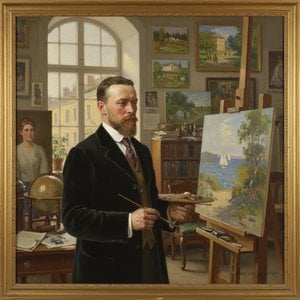
Albert Edelfelt: A Pioneer of Finnish Realism & International Impressionist Circles
Explore the life & work of Albert Edelfelt, a pioneering Finnish Realist painter who bridged Impressionism & national identity. Discover his masterpieces and lasting influence on art history.

Echoes of Society: Exploring Social Realism's Enduring Legacy in Art
Explore the powerful world of Social Realism art! Discover key artists, masterpieces & its profound social commentary. Expert insights into this influential movement's history and enduring legacy.

The Poetic Truth of Observation: Exploring 19th-Century Realism in Painting
Explore the captivating world of 19th-century Realism! Discover key artists like Courbet & Millet, masterpieces, and the powerful social commentary behind this influential art movement. Expert insights at ArtsDot.
