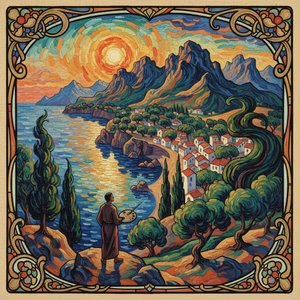
Santiago Rusiñol: O viață dedicată artei și Modernismului
- Naștere: 25 februarie 1861, Barcelona, Spania
- Deces: 13 iunie 1931, Aranjuez, Spania
- <Mișcare: Modernism Catalan, Simbolism, Impresionism
Primii ani și evoluția artistică
- Rusiñol s-a născut într-o familie de industriali țesutori în Manlleu, mutându-se ulterior la Barcelona. În ciuda așteptărilor familiei, el și-a urmat pasiunea pentru artă încă de la o vârstă fragedă.
- A primit instruirea inițială la Centro de Acuarelistas de Barcelona sub îndrumarea lui Tomás Moragas, concentrându-se pe tehnici de acuarelă și principii realistice.
- Primele sale lucrări reflectau teme orientaliste și subiecte istorice, înainte de a trece la scene urbane și peisaje în anii 1880.
- Călătoriile sale prin Spania i-au influențat semnificativ dezvoltarea artistică, expunându-l la diverse cadre culturale și arhitecturale.
Influențele pariziene și maturitatea artistică
- În 1889, Rusiñol s-a mutat la Paris, un moment crucial în cariera sa. A locuit în Montmartre alături de fellow artiști precum Ramon Casas și Ignacio Zuloaga.
- Scena artistică pariziană l-a expus la Impresionism și Simbolism, modelându-i profund stilul artistic. A fost influențat de artiști precum Edgar Degas și Pierre-Auguste Renoir.
- Picturile sale din această perioadă încadrau adesea viața urbană, surprinzând un sentiment de singurătate și melancolie prin pensule libere și tonuri restrânse.
- S-a implicat în cercuri literare, interacționând cu poeți și scriitori simboliști, ceea ce i-a îmbogățit și mai mult viziunea artistică.
Întoarcerea în Catalonia și mișcarea Modernismului Catalan
- Întoarcerea lui Rusiñol în Catalonia în anii 1890 a marcat un capitol semnificativ în cariera sa și în dezvoltarea Modernismului Catalan.
- S-a stabilit în Sitges, transformând acest oraș într-un centru cultural pentru artiști și intelectuali. Locuința sa, Cau Ferrat, a devenit un salon artistic renumit.
- Rusiñol a jucat un rol cheie în promovarea mișcării moderniste alături de figuri precum Pere Romeu și Miquel Utrillo.
- Picturile sale din această perioadă s-au concentrat tot mai mult pe peisaje, grădini și teme arhitecturale, reflectând legătura sa profundă cu natura și identitatea catalană.
Moștenire și semnificație istorică
- Santiago Rusiñol este recunoscut ca o figură de prim-plan în Modernismul Catalan, contribuind semnificativ la dezvoltarea artistică și culturală a mișcării.
- Picturile sale sunt celebrate pentru fuziunea influențelor simboliste, a tehnicilor impresioniste și a reprezentărilor evocatoare ale peisajelor și grădinilor.
- El a lăsat în urmă o moștenire de clădiri moderniste în Sitges, consolidându-și astfel impactul asupra arhitecturii și planificării urbane din Catalonia.
- Opera lui Rusiñol continuă să îi inspire pe artiști și pe iubitorii de artă deopotrivă, prezentând frumusețea și bogăția culturală a Cataloniei din era fin-de-siècle.
Întrebări și răspunsuri
Există o prezentare generală a tuturor subiectelor pictate de Santiago Rusiñol?
Operele lui Santiago Rusiñol pot fi explorate pe temă în pagina Atlas pe teme a artistului.
Unde pot găsi statistici despre operele lui Santiago Rusiñol?
Statistici despre lucrările lui Santiago Rusiñol sunt disponibile pe pagina de Statistici a artistului.
Unde pot vizualiza operele lui Santiago Rusiñol într-o galerie 3D?
Operele de artă ale lui Santiago Rusiñol pot fi vizualizate într-o galerie 3D, pe pagina Galerie 3D a artistului.