The Life of Erasmus de Bie
Born in Antwerp, Belgium, Erasmus de Bie was the son of the painter Frans de Bie the Elder. He began his artistic training as a pupil of David Ryckaert III in 1641 and later gained admission as a master in the Antwerp Guild of St. Luke during the period of 1645–1646. His professional life was deeply rooted in Antwerp, where he married Catharina Douglas, known as de Schot, and fathered two sons, Frans and Jan Baptist, both of whom pursued careers as painters.
De Bie's artistic legacy includes several pupils, such as his son Frans, who studied under him in 1660 and 1666. He passed away in Antwerp in 1675.
Artistic Style and Subject Matter
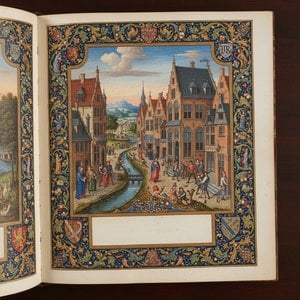
Erasmus de Bie was a Flemish Baroque painter recognized for his lively city views and genre scenes. He specialized in composing animated townscapes, particularly focusing on city squares. His works often depicted large public celebrations in his hometown of Antwerp, such as the Carnival floats on the Meir Square in Antwerp. He was also known for painting religious scenes, compositions featuring animals, winterscapes, and seascapes.
His skill as a painter of figures allowed him to collaborate with other Antwerp artists, providing staffage for their works. His surviving signatures appear in capital letters as ED (in ligature) BIE. Some works attributed to him include:
Întrebări și răspunsuri
Cum pot găsi toate lucrările lui Erasmus de Bie dintr-un anumit tip de tehnică?
Operele lui Erasmus de Bie pot fi explorate pe baza mediului utilizat în pagina de Toate tehnicile a artistului.
Unde pot fi explorate operele lui Erasmus de Bie organizate pe culori?
Operele lui Erasmus de Bie pot fi explorate pe criterii de culoare în pagina Indice Spectral a artistului.
Din ce epocă face parte Erasmus de Bie?
Erasmus de Bie a activat în perioada Early Modern. Această perioadă situează activitatea artistului în context istoric.
În ce perioade este împărțită cariera lui Erasmus de Bie?
Cariera lui Erasmus de Bie se desfășoară etapă cu etapă pe pagina Cronologie a artistului: o cronologie orizontală a operelor de artă, grupate în capitole reprezentative ale perioadelor de activitate.