A Renaissance Polymath of the French Court
Daniel Rabel stands as a remarkable figure of the Renaissance, a true polymath whose talents spanned the delicate realms of painting, engraving, and miniaturist work, alongside the scientific precision of a botanist and natural history illustrator. Born in Paris, France, he carried forward a rich artistic lineage as the son of Jean Rabel, who served as an official artist at the court of Henri III. This early immersion in royal circles paved the way for a career defined by prestigious appointments and a versatile mastery over diverse media.
His professional journey was marked by service to some of the most influential figures of his era. Rabel first found prominence as a portrait painter for Marie de Medicis, the second wife of Henry IV of France. His technical expertise even extended into civil service, where he served as Engineer in Ordinary for the King within the provinces of Brie and Champagne. By 1612, his reputation had secured him the position of official artist to the Duke of Nevers, further cementing his status within the upper echelons of French artistic life.
The Intersection of Art and Nature
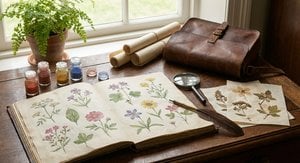
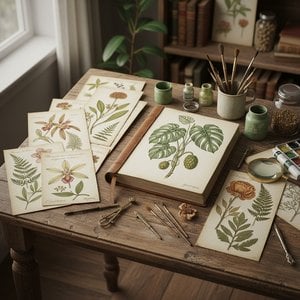
Perhaps one of Rabel’s most enduring legacies lies in his ability to marry aesthetic beauty with scientific observation. As a natural history illustrator, he achieved significant acclaim through works such as the Theatrum Florae. Originally published in Paris in 1622, this collection featured striking botanical illustrations of some of the most notable plants of the time. Commissioned by Gaston of Orléans, these works demonstrated his capacity for meticulous detail and a deep understanding of the natural world.
Beyond the botanical, Rabel’s artistic range included landscapes in oil and evocative hunting scenes. His work often captured a sense of movement and theatricality, particularly through his role as a set designer for theatres and ballets de cour. In these roles, he designed intricate ballet costumes and stage elements, frequently employing a sixteenth-century tradition of the grotesque. This allowed him to experiment with exaggerated, comic figures characterized by extreme facial distortions—such as protruding chins and hooked noses—which added a layer of whimsical complexity to his theatrical contributions.
Artistic Style and Lasting Legacy
The technique of Daniel Rabel was characterized by a profound attention to detail and a mastery of light. His style reflected the sophisticated tastes of the French court, blending the precision required for miniature painting with the dramatic potential of larger compositions. Whether he was capturing the delicate texture of a flower petal or the theatrical grandeur of a ballet performance, his work remained rooted in an unparalleled level of technical precision.
In his later years, Rabel continued to serve significant patrons, including being appointed official artist to Gaston, Duke of Orléans, around 1631. His career even brought him back to Paris under the commission of Louis XIII, where he was tasked with painting a portrait of Anne of Austria. Through his multifaceted contributions as an engraver, illustrator, and painter, Rabel left an indelible mark on the visual culture of the French Renaissance, bridging the gap between the scientific curiosity of the age and the opulent artistry of the royal courts.
Întrebări și răspunsuri
Cum pot găsi lucrările lui Daniel Rabel pe o temă specifică?
Operele lui Daniel Rabel pot fi explorate pe baza cuvintelor cheie, în pagina de După cuvinte cheie a artistului. Fiecare cuvânt cheie grupează operele aferente.
Există o relatare cronologică a carierei lui Daniel Rabel?
Pagina Cronologie a lui Daniel Rabel este o cronologie interactivă, bazată pe derularea paginii, care prezintă lucrările artistului în ordine cronologică, grupate pe perioade reprezentative ale carierei sale.
Unde pot vedea toate operele create de Daniel Rabel?
Toate lucrările lui Daniel Rabel de pe acest site web pot fi explorate în pagina Toate operele de artă a artistului.