


 Vezi în context
 Trimite
 Distribuie
 Detalii
 Ghidul

 Descarcă
 Produse similare
 Radiografie
 Diaporama
 Statistici
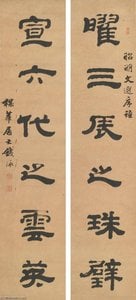
COUPLET IN SEAL SCRIPT
 Traditional Chinese Art
 138.0 x 34.0 cm
 Citește mai mult
Reproducere pictată manual în ulei
Pictură în ulei pe pânză, realizată manual de artiștii noștri la dimensiunea și ramele dorite de dumneavoastră, pe comandă. ( Comută pe versiunea Print Treci la imagine digitală)




































Alegeți dintre dimensiunile noastre prestabilite, care respectă proporțiile originale ale operei de artă.

Puteți introduce propriile dimensiuni pentru a se potrivi unui anumit cadru sau spațiu. Dacă dimensiunea selectată nu corespunde proporțiilor imaginii originale, vom decupa opera de artă sau vom extinde pictura cu elemente suplimentare pictate manual. O simulare digitală vă va fi trimisă pentru aprobare înainte de începerea producției.
Vă rugăm să rețineți că previzualizarea de pe ecran nu reflectă decuparea sau extinderea reală. Doar macheta va arăta cu exactitate compoziția finală.
Deși sunt disponibile dimensiuni personalizate, vă recomandăm să selectați o dimensiune din lista predefinită pentru a păstra proporțiile originale.
După plasarea comenzii, echipa ArtsDot.com va contacta clientul prin e-mail pentru instrucțiuni și îi va furniza o previzualizare a machetei
Livrare în întreaga lume () în 3-4 săptămâni, în loc de cele 5 săptămâni standard. (26 Septembrie). Fără compromisuri în ceea ce privește calitatea.

Livrare expres gratuită la nivel mondial

Pânză de in premium

Asigurare completă pentru transport

Garanție de rambursare a taxelor vamale

Garanția fidelității culorilor

Politica de retur în 100 de zile (doar pentru defecte)

Garanție de rambursare 100%

Reducere pentru comenzi multiple
 Opțiunea cu sticlă este disponibilă doar pentru dimensiuni de sub 110 cm

COUPLET IN SEAL SCRIPT
Tip de reproducere
Dimensiune reproducere
-


Preț total
$ 263
Opere similare




Biografie artist
A Life Etched in Ink: The World of Yang Yisun
Yang Yisun (1813-1881), a name perhaps unfamiliar to many outside the circles of dedicated Chinese art scholars, represents a pinnacle of achievement within the tradition of *seal script calligraphy*. He wasn’t merely a calligrapher; he was a scholar-official deeply immersed in the revival of classical forms, a collector with discerning taste, and an artist who imbued his work with both technical mastery and profound personal meaning. Born into a family of modest means in Anhui province, Yang Yisun's early life foreshadowed little of the artistic renown that would later define him. He passed the imperial examinations, securing a position within the government bureaucracy – a path typical for aspiring intellectuals of his era. However, it was not official duties but an insatiable passion for antiquity and calligraphy that truly consumed him.The Revivalist’s Path: Influences and Early Development
Yang Yisun emerged during a period of burgeoning interest in epigraphy – the study of ancient inscriptions – fueled by the scholarly pursuits of the Qing dynasty. The Jiaqing Emperor's promotion of orthodox Confucianism created an environment ripe for re-examining historical models, and Yang Yisun wholeheartedly embraced this movement. He wasn’t content with simply copying past masters; he sought to *understand* the underlying principles that governed their brushwork, the very spirit of the characters themselves. His early studies focused on the bronze inscriptions of the Zhou dynasty, particularly those found on ritual vessels. These archaic forms, known as *zhuanshu*, captivated him with their solemnity and inherent power. He believed they held a direct connection to the origins of Chinese culture, embodying a purity lost in later, more stylized scripts. Influenced by epigraphers like Luo Zhenyu, Yang Yisun dedicated himself to meticulously recreating these ancient characters, not as mere reproductions but as living expressions of historical consciousness.Mastering the Seal: Technique and Artistic Philosophy
Yang Yisun’s technical skill was exceptional. He possessed an uncanny ability to replicate the textures and nuances of bronze inscriptions using brush and ink on paper. However, his artistry extended far beyond mere imitation. He understood that *zhuanshu* wasn't simply about form; it was about rhythm, balance, and the expressive potential of line. His calligraphy is characterized by a remarkable solidity – each character feels grounded, substantial, yet imbued with a subtle energy. The brushwork is deliberate, controlled, but never rigid. He employed a variety of ink tones, creating depth and visual interest within each inscription. More importantly, Yang Yisun believed that calligraphy should reflect the inner state of the artist. His work wasn’t simply decorative; it was a form of self-cultivation, a means of expressing his moral principles and philosophical beliefs. He often inscribed poems and prose passages alongside his *zhuanshu* compositions, further enriching their meaning and context.A Legacy in Stone and Ink: Major Achievements
While Yang Yisun produced numerous works throughout his career – paintings, poetry, and extensive collections of rubbings from ancient inscriptions – he is best known for his *seal script calligraphy*. His compositions were highly sought after by collectors and connoisseurs. He was commissioned to create inscriptions for steles (stone tablets) in temples and gardens, ensuring that his artistry would endure beyond his lifetime.- The Chung Young Yang Museum Collection: Today, the most comprehensive collection of Yang Yisun’s work resides at the Chung Young Yang Museum in Seoul, South Korea, founded by his descendants. This museum provides invaluable insight into the breadth and depth of his artistic achievements.
- Rubbing Expertise: His meticulous rubbings from ancient bronze vessels are considered benchmarks for accuracy and artistry, providing scholars with crucial resources for studying epigraphy.
- Influence on Later Generations: Yang Yisun’s dedication to the revival of *zhuanshu* inspired a generation of calligraphers to re-examine classical forms. His work helped to elevate the status of seal script calligraphy within the broader landscape of Chinese art.
Historical Significance: A Bridge Between Past and Present
Yang Yisun’s significance lies not only in his technical prowess but also in his role as a cultural bridge. He lived during a period of significant social and political upheaval, yet he remained steadfastly committed to preserving the traditions of the past. His work represents a conscious effort to reconnect with China's ancient heritage, offering a sense of continuity and stability in a rapidly changing world. By mastering *zhuanshu*, Yang Yisun didn’t simply recreate historical forms; he breathed new life into them, imbuing them with his own unique artistic vision. He stands as a testament to the enduring power of calligraphy – not just as a form of aesthetic expression but as a profound reflection of cultural identity and personal integrity. His legacy continues to inspire artists and scholars today, reminding us of the importance of honoring our past while forging new paths for the future.
Informații rapide
- Artistic Movement Or Style: Seal Script Calligraphy
- Date Of Birth: 1813
- Date Of Death: 1888
- Full Name: Yang Yisun
- Nationality: Chinese
- Notable Artworks: ['Calligraphy Zhuanshu']
Articole conexe

Timeless Elegance: Discovering the Soulful Beauty of Chinese Calligraphy for Sophisticated Home Interiors
Elevate your home with the serene beauty of Chinese calligraphy art. Explore our collection of hand-painted ink wash reproductions and bespoke commissions at ArtsDot.com. Discover museum-quality pieces designed to bring cultural elegance and tranquility to your modern interior.

Top 10 Tablouri Celebre Dominante de Negru: Artă, Istorie și Decor Rafinat
Descoperă Top 10 tablouri celebre dominate de negru! Explorează istoria, simbolismul și tehnicile artistice ale unor opere iconice de Rembrandt, Goya și alți maeștri. Reproduceri de artă de calitate muzeală pe ArtsDot.com – inspiră-ți decorul!
Top 10 Capodopere Picturale Dominante de Tonuri 'Mars Black' | Artă & Decor
Descoperă top 10 picturi celebre dominate de tonuri 'Mars Black', de la Rembrandt la Picasso. Explorează istoria, tehnicile și emoțiile din spatele acestor capodopere artistice. Reproduceri tablouri de calitate muzeală pe ArtsDot.com!

Top 10 Capodopere Picturale Dominante de Tonuri Negre Profunde | ArtsDot.ro
Descoperă Top 10 picturi celebre dominate de tonuri negre profunde! Explorează poveștile lui Rembrandt, Caravaggio și alți maeștri. Artă clasică, reproducere tablouri de lux pe ArtsDot.ro. Inspiră-te pentru decorul casei tale!

Top 10 Capodopere Picturale Dominante de Nuanțe de Negru Intens – Artă și Decor
Descoperă Top 10 picturi celebre dominate de nuanțe intense de negru! Explorează poveștile lui Rembrandt, Goya și alți maeștri ai artei. Reproduceri de calitate muzeală & idei decor pe ArtsDot.com