


Imaginea respectă alegerile tale: , .
Descriere obiect de colecție
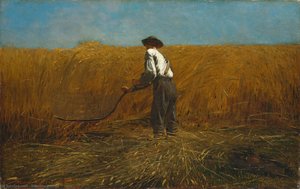
Explore Winslow, River, Logging by Winslow Homer! A stunning watercolor capturing nature & rustic life. Admire its realism, impressionistic touch & serene beauty.
 Vezi mai mult
Biografie artist
Descoperă operele impresionante ale lui Winslow Homer! Pictorul american realist celebru pentru scene marine și peisaje evocatoare, Homer rămâne unul dintre cei mai influenți artiști ai Secolului XIX.
Reproducere pictată manual în ulei
Pictură în ulei pe pânză, pictată manual de artiștii noștri la dimensiunea și ramele dorite de dumneavoastră, pe comandă. ( Comută pe versiunea Print Comută pe Imagine Digitală)
Mai multe detalii despre această pictură
 Previzualizare
 Trimite prin felicitare
 Distribuie
 Detalii despre lucrare
 Ghid
Ghid

 Descarcă imaginea
 Produse similare
 Radiografie
 Galerie foto
 Întrebări și răspunsuri
 Statistici
Comandați tabloul dumneavoastră în patru pași simpli
Nu vă grăbiți. Puteți modifica orice răspuns; prețul din coșul de comandă se actualizează în funcție de fiecare alegere.
1 Pasul unu din patru
Ce dimensiune doriți?
Aceste dimensiuni păstrează proporțiile tabloului original. Ilustrația prezintă alegerea dumneavoastră pe un perete, deasupra unei canapele de doi metri.
Sau introduceți propriile dimensiuni
Alegeți dintre dimensiunile noastre prestabilite, care respectă proporțiile originale ale operei de artă.

Introduceți lățimea și înălțimea necesare pentru a se potrivi ramei sau peretelui dumneavoastră. Această lucrare este pictată manual, așa că, pentru o dimensiune cu o formă diferită, artistul poate picta puțin mai mult în jurul imaginii sau poate tăia puțin din margini — dumneavoastră decideți. Vă vom trimite o simulare digitală pentru aprobare înainte de a începe pictarea. Imaginea afișată pe această pagină nu reprezintă rezultatul real — doar simularea este reprezentativă.
2 Pasul doi din patru
Cum ar trebui pregătită: rulată, întinsă pe pânză sau înramată?
Prețurile de mai jos sunt pentru dimensiunea aleasă la primul pas.
Alege marginile tabloului pe pânză întinsă
Alege cadrul tău

Alb lei1

Margini difuze lei1

Extins lei1

P118B lei10

P118H lei10

P118W lei10

P438Z lei10

P508JH lei12

P508YH lei12

P805H lei10

P805Z lei10

P919BZ lei10

P919G lei10

P919XJ lei10

P959ZH lei10

P968JZ lei12

W106C lei8

W218G lei10

W218JH lei8

W218Y lei10

W307PJ lei10

W316G lei10

W316PJ lei8

W316Y lei10

W398PJ lei8

W4111J lei10

W500HY lei15

W500JH lei15

W692G lei12

W849H lei8

W940BG lei15

W953PJ lei8

H24-GOLD lei30

H24-SILVER lei30

H36-GOLD lei45

H36-SILVER lei45
Înramat
Ramă: . Dimensiuni cu ramă: .
3 Pasul trei din patru
Doriți să modificați ceva în tabloul respectiv?
Majoritatea oamenilor răspund negativ. Deoarece fiecare pictură este realizată manual, artistul nostru poate adapta lucrarea și pentru dumneavoastră.
După plasarea comenzii, echipa ArtsDot.com va contacta clientul prin e-mail pentru instrucțiuni și va furniza o previzualizare (mockup)
4 Pasul patru din patru
Câteva opțiuni de finisare
Toate sunt opționale. Răspunsurile deja selectate nu implică costuri suplimentare.
Cine este autorul?
Livrare în întreaga lume () în 3-4 săptămâni, în loc de cele 5 săptămâni standard. (8 Noiembrie). Fără compromisuri în ceea ce privește calitatea.
O plăcuță de identificare, ca la muzeu?
Detalii plăcuță din bronz gravat
This elegant plaque features the artist's name and the title of the artwork, finely engraved for a timeless presentation.
It is made from bronze with a refined, elegant finish. The text is precisely laser-engraved for a sharp and permanent result. Measuring 9x2 cm, the plaque is compact yet easy to read. It's built to be durable and scratch-resistant, offering a professional, museum-quality look. Mounting is simple thanks to the included adhesive backing.
Detalii plăcuță din acril transparent
The plaque includes essential engraved details such as the artist's name, the title of the artwork, the date it was created, the type of media used-like oil on canvas or watercolor-a brief description of the piece, and a QR code that links to the complete artwork information.
It is crafted from clear acrylic, offering a sleek, modern appearance. The text is UV-engraved in black to ensure strong visual contrast. With a size of 10x15 cm, it ensures optimal readability. It comes equipped with two metal hooks for secure wall mounting. The plaque is designed to be weather-resistant, making it suitable for various environments, and it includes interactive features that work seamlessly with smartphone scanning.
Detalii placă din acril negru
This elegant plaque includes engraved information such as the artist's name, the title of the artwork, the date it was created, the type of media used (like oil on canvas or watercolor), a short description of the artwork, and a QR code for quick access to more information.
The plaque itself is made from refined black acrylic with a premium finish. The text is laser-engraved in white for high contrast and readability. Its size is 10x15 cm, designed to be easy to read. It comes with two metal hooks for professional mounting. The design is sleek and fits any interior style. It is also weather-resistant and durable, with built-in digital integration for mobile compatibility.
Un lac protector?
Când aveți nevoie de el?
✓ Verifică și comandă
Tabloul tău, exact așa cum l-ai comandat

Hudson River, Logging
Tehnică de reproducere
Dimensiune reproducere
-

Selecție de artiști de elită
Mai multe detalii, rafinament și timp suplimentar de execuție
-

Ramă pentru reproducere artistică
-
-
Pentru opere de artă sau reproduceri care depășesc 105 cm (aproximativ 41 de inch) pe oricare dintre laturi, cadrul va fi livrat demontat, sub formă de kit. Această metodă asigură o livrare sigură și previne deteriorarea în timpul transportului.
Este necesară asamblarea profesională – acest produs nu este de tip DIY (de făcut singur).
Kitul trebuie asamblat, iar pânza întinsă, de către un legător de cadre experimentat, utilizând adeziv pentru lemn (neinclus în colet), o cheie pentru întinderea pânzei și cleme pentru a menține barele la unghi drept în timp ce adezivul se usucă. Asamblarea incorectă sau tensiunea neuniformă a pânzei pot deteriora permanent opera de artă și nu sunt acoperite de garanția noastră.
 Pentru opere de artă sau reproduceri care depășesc 105 cm (aproximativ 41 de inch) pe oricare dintre laturi, cadrul va fi livrat demontat, sub formă de kit. Această metodă asigură o livrare sigură și previne deteriorarea în timpul transportului.
Toate barele din lemn masiv sunt incluse, tăiate cu precizie la dimensiunea necesară.
Asamblat cu șuruburile incluse, plus adeziv pentru lemn pentru îmbinările de colț, care nu este furnizat și trebuie achiziționat de către tâmplarul dumneavoastră.
Sunt necesare unelte profesionale care nu sunt incluse: o șipte de întindere a pânzei (tensionator) și cleme pentru a menține barele la unghi drept în timp ce adezivul se usucă.
Important:
Îmbinările de colț necesită adeziv pentru lemn, barele trebuie fixate cu clești de strângere până când adezivul este complet uscat, iar întinderea pânzei pe cadrul asamblat necesită un clește pentru întins pânza. Niciunul dintre aceste elemente nu este inclus în kit. Vă rugăm să consultați un încadrator profesionist cu experiență înainte de a comanda această dimensiune.

Etichetă de prezentare
-
-

Lac de protecție
Lac lucios (intensifică nuanțele și oferă protecție împotriva luminii și a umidității)
-

Personalizează opera mea de artă
Exemple de elemente ce pot fi personalizate: Înlocuirea feței cu fotografia clientului; Adăugarea unui animal de companie (de exemplu, înlocuirea unei pisici cu un câine); Includerea unui mesaj ascuns în fundal; Modificarea peisajului sau a elementelor din fundal.
-

Livrare rapidă
Livrare la nivel mondial () în 3-4 săptămâni, în loc de cele 5 săptămâni standard. (8 Noiembrie). Fără compromisuri când vine vorba de calitate.
-
Livrare rapidă
Livrare la nivel mondial () în 5 săptămâni. (15 Noiembrie).
Inclus
Preț total calculat
lei 1373
Opțiunea cu sticlă este disponibilă doar pentru dimensiuni de sub 110 cm
Inclus în fiecare comandă
- Livrare expres gratuită la nivel mondial
- Pânză de in de înaltă calitate
- Asigurare completă pentru transport
- Garanție de rambursare a taxelor vamale
- Garanția fidelității culorilor
- Politica de retur în 100 de zile (doar pentru defecte de fabricație)
- Garanție de rambursare 100%
- Ofertă pentru comenzi multiple


A Moment Suspended: Winslow Homer’s “Hudson River, Logging”
Winslow Homer's 1897 watercolor, “Hudson River, Logging,” is more than just a depiction of industry; it’s a poignant meditation on humanity’s relationship with the American landscape. The scene unfolds along the majestic Hudson River, showcasing a lone figure skillfully maneuvering a log amidst a backdrop of towering trees and distant mountains. This artwork, currently housed at the Corcoran Gallery of Art, exemplifies Homer's mastery of capturing both the physical beauty and the quiet drama of everyday life.Decoding the Scene: Subject & Composition
The painting centers on a man – likely a lumberjack or riverman – poised atop a substantial log, using an oar to guide its descent downriver. The composition is carefully balanced; the figure and log command attention in the foreground, while the expansive vista of trees and mountains provides depth and context. Homer doesn’t present a bustling scene of industrial activity, but rather a solitary moment of focused labor. This deliberate choice emphasizes the individual's connection to nature and the scale of the surrounding environment. The river itself acts as a visual pathway, drawing the viewer’s eye into the heart of the landscape.Homer’s Watercolor Mastery: Style & Technique
“Hudson River, Logging” is a testament to Homer's exceptional skill with watercolor – a medium he elevated to new heights. His technique is characterized by loose, fluid brushwork and delicate washes of color that create an atmospheric effect. The transparency of the watercolors allows light to permeate the layers, lending a luminous quality to the scene. Notice how Homer uses varying degrees of saturation to suggest depth; distant mountains are rendered in paler tones, creating a sense of atmospheric perspective. The subtle blending of blues and greens evokes the coolness of the water and the lushness of the surrounding foliage.Historical Context: The Logging Industry & American Identity
Painted during a period of significant industrial growth in America, “Hudson River, Logging” reflects both the economic importance and the environmental impact of the logging industry. The Hudson River Valley was a crucial transportation route for timber, fueling the nation’s burgeoning cities and industries. However, Homer doesn't offer a celebratory portrayal of progress. Instead, he presents a more nuanced view – one that acknowledges the labor involved and hints at the potential cost to the natural world. The painting can be seen as part of a broader artistic trend in the late 19th century that sought to capture the essence of American identity through depictions of its landscapes and working people.Symbolism & Emotional Resonance
While seemingly straightforward, “Hudson River, Logging” carries subtle symbolic weight. The lone figure can be interpreted as representing the individual’s struggle against – or harmony with – the forces of nature. The river itself symbolizes the passage of time and the relentless flow of life. *The overall mood is one of quiet contemplation and understated power.* Homer avoids dramatic flourishes, instead relying on subtle details and atmospheric effects to evoke a sense of emotional resonance. The painting invites viewers to reflect on their own relationship with the natural world and the enduring human spirit.Collecting & Interior Design
A reproduction of “Hudson River, Logging” would be a stunning addition to any art collection or interior space. Its muted color palette and serene subject matter make it particularly well-suited for living rooms, studies, or bedrooms. The painting’s timeless quality ensures that it will remain a source of inspiration and beauty for years to come. Its landscape focus complements both traditional and contemporary décor styles, adding a touch of American heritage and artistic sophistication.- Style: American Realism, Landscape Painting
- Medium: Watercolor on paper
- Key Themes: Nature, Industry, Labor, American Identity
- Emotional Impact: Serene, Contemplative, Evocative
Întrebări și răspunsuri
"Hudson River, Logging" de Winslow Homer este o operă de artă luminoasă sau întunecată?
În ceea ce privește luminozitatea percepută, "Hudson River, Logging" de Winslow Homer este bright.
Cine a creat "Hudson River, Logging"?
„Hudson River, Logging” este atribuit lui Winslow Homer.
Ce culoare domină compoziția lucrării "Hudson River, Logging" de Winslow Homer?
Culoarea dominantă a operei "Hudson River, Logging" de Winslow Homer este Gray (#5b6274).
Opere similare


Winslow Homer
1836 - 1910, Statele Unite ale Americii
Biografie artist
A Brush with the American Spirit: The Life and Art of Winslow Homer
Winslow Homer, born in Boston in 1836, wasn’t sculpted by the traditional European art academies that shaped so many of his contemporaries. Instead, he emerged from a distinctly American experience, one rooted in practicality and observation. His journey began not with grand historical canvases, but as a commercial illustrator at the tender age of twelve for Harper's Weekly. This early apprenticeship was formative, honing an exceptional ability to capture scenes with clarity and detail – skills that would become hallmarks of his mature work. He wasn’t learning perspective in Paris; he was learning to *see* America, its people, and its unfolding story. The bustling streets of Boston, the quiet dignity of rural New England life, these were his first subjects, rendered with a precision born of necessity for the demands of print media. This foundation allowed him to transition into painting, initially in watercolor, before fully embracing the expressive potential of oil paints.From Pastoral Scenes to the Raw Power of Nature
Homer’s early paintings often depicted idyllic scenes – children playing, farmers tending their fields, quiet moments of domesticity. These works, while charming, hinted at a deeper artistic sensibility waiting to be unleashed. The catalyst for this transformation was undoubtedly the Civil War. As a war correspondent for Harper's Weekly, Homer witnessed firsthand the brutal realities of conflict. He didn’t focus on heroic battles or grand strategies; instead, he documented the everyday lives of soldiers and civilians, the quiet moments of grief and resilience amidst chaos. This experience profoundly altered his artistic vision. The pastoral scenes gave way to more challenging subjects: veterans grappling with trauma, freed slaves navigating a new world, and the stark beauty of landscapes touched by hardship. He began to explore themes of struggle, isolation, and humanity’s precar He wasn't interested in imitating European styles; he wanted to create an art that was uniquely American, reflecting its landscapes, its people, and its challenges. His style also evolved, becoming bolder and more direct, reflecting the raw emotional impact of what he had witnessed. Breezing Up (A Fair Wind), painted in 1876, exemplifies this skill – a quintessential depiction of American maritime life, brimming with energy and movement. The Gulf Stream, created decades later, is perhaps his most iconic work, a powerful and symbolic portrayal of a lone man battling the forces of nature, a metaphor for human struggle against overwhelming odds. He possessed an extraordinary ability to capture light, whether it was the dazzling glare of the sun on the ocean or the soft glow of twilight over a rural landscape. This mastery extended to his watercolors, where he achieved remarkable atmospheric effects through vibrant colors and delicate washes. Innocence, a poignant portrayal of childhood set against the backdrop of nature, and **Man of Science** demonstrate this commitment.Mastering Light, Texture, and the American Landscape
Winslow Homer's artistic technique is immediately recognizable for its solidity and texture. He wasn’t interested in fleeting impressions; he wanted to build up a sense of tangible reality on the canvas. His oil paintings are characterized by a direct painting approach – layers of paint applied with confidence, creating depth and luminosity. He possessed an extraordinary ability to capture light, whether it was the dazzling glare of the sun on the ocean or the soft glow of twilight over a rural landscape. This mastery extended to his watercolors, where he achieved remarkable atmospheric effects through vibrant colors and delicate washes. His unwavering dedication to observation—a cornerstone of American Realism—allowed him to translate the visual world onto canvas with unparalleled accuracy and emotional resonance.A Legacy Forged in American Realism
Winslow Homer's art offers a profound window into 19th-century America, providing invaluable insights into the social, political, and cultural landscape of his time. His paintings are not merely beautiful representations; they are powerful statements about human resilience, the beauty and power of nature, and the complexities of the American experience. He died in 1910, leaving behind a prolific body of work that continues to resonate with audiences today. His ability to depict America with honesty and authenticity—rejecting romantic idealism for gritty realism—established him as one of America’s most important and enduring artists. He wasn't just painting pictures; he was documenting a moment in time, preserving it for generations to come.- His work continues to inspire contemporary artists.
- Homer remains a pivotal figure in the development of American Realism.




Articole similare

Winslow Homer: Cele Mai Iconice 25 De Opere – Artă, Istorie și Decorațiuni Excepționale
Descoperă cele mai frumoase 25 de picturi Winslow Homer! Explorează operele iconice ale artistului american, acuarele vibrante și peisaje marine impresionante. Găsește inspirație pentru decorul casei tale cu reproduceri artă de calitate muzeală pe ArtsDot.com.

The Sublime Landscape: Exploring the Hudson River School Movement
Explore the captivating world of the Hudson River School! Discover the history, artists, and defining characteristics of this iconic American art movement. Learn about Romanticism's influence & find inspiration for your collection.

Școlile de Artă Hudson River: 10 Capodopere Iconice pentru Decorul Casei | ArtsDot.ro
Descoperă Școala Hudson River prin 10 capodopere iconice! Explorează picturile lui Thomas Cole, Frederic Church și Albert Bierstadt. Reproduceri de artă premium pentru un decor rafinat. Inspiră-te acum pe ArtsDot.com!